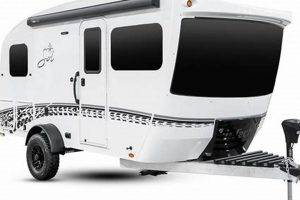
Portable power sources designed for recreational vehicles provide electricity when shore power is unavailable. These devices, typically powered by gasoline or propane, enable operation of appliances, lighting, and other electrical equipment within the trailer. An example includes a compact, fuel-efficient unit capable of running air conditioning and essential electronics simultaneously.
The significance of these units lies in their ability to extend the usability and comfort of travel trailers in remote locations or during power outages. Historically, they have evolved from noisy, heavy machines to quieter, more efficient models, enhancing the overall camping experience and facilitating access to areas without established electrical grids. The benefits range from powering essential medical devices to providing a comfortable climate within the trailer.
The following sections will explore the different types of these power solutions, factors to consider when choosing one, proper maintenance procedures, safety guidelines, and a comparison of leading models currently available on the market.
Essential Usage and Maintenance Recommendations
Proper operation and upkeep extend the lifespan and ensure the safe functioning of portable power units for recreational vehicles. Adhering to the following guidelines is crucial for optimal performance.
Tip 1: Conduct Regular Inspections: Before each trip, examine the unit for any signs of damage, leaks, or loose connections. Pay close attention to fuel lines, electrical cords, and exhaust systems.
Tip 2: Adhere to Manufacturer’s Guidelines: Always follow the manufacturer’s recommendations for fuel type, oil changes, and maintenance schedules. Deviation can void warranties and negatively affect performance.
Tip 3: Ensure Adequate Ventilation: Operate the unit in a well-ventilated area, away from enclosed spaces, to prevent carbon monoxide buildup. Install carbon monoxide detectors inside the travel trailer.
Tip 4: Use Appropriate Fuel Stabilizers: When storing the unit for extended periods, add fuel stabilizer to prevent fuel degradation and carburetor clogging. This ensures reliable starting when needed.
Tip 5: Perform Regular Oil Changes: Regular oil changes are essential for maintaining engine lubrication and preventing premature wear. Refer to the manufacturer’s manual for recommended oil type and change intervals.
Tip 6: Store Properly When Not in Use: Store the unit in a clean, dry environment, protected from the elements. Cover it to prevent dust and debris from accumulating.
Tip 7: Monitor Power Consumption: Be aware of the power consumption of appliances and devices being used simultaneously. Avoid overloading the unit, which can lead to damage and reduced lifespan.
Following these maintenance procedures significantly enhances the reliability and longevity of portable power solutions. Consistent adherence to these practices reduces the risk of malfunctions and ensures a continuous power supply during travel.
The subsequent section will delve into a comparison of leading models, detailing their specific features and capabilities, enabling informed decision-making based on individual requirements.
1. Power Output

Power output is a fundamental characteristic dictating the operational capacity of portable generators for travel trailers. Measured in watts, this specification indicates the total electrical load a generator can sustain simultaneously, thereby influencing which appliances and devices can be powered.
- Starting Watts vs. Running Watts
Many appliances, particularly those with motors like air conditioners or refrigerators, require a significantly higher wattage for initial start-up than for continuous operation. Generators are typically rated for both “starting watts” (the peak wattage they can deliver for a short duration) and “running watts” (the continuous wattage they can sustain). Selecting a generator with sufficient starting watts is critical to avoid overloading and potential damage to the unit or connected appliances.
- Wattage Calculation
Determining the required power output necessitates calculating the total wattage of all devices intended for simultaneous use within the travel trailer. This involves summing the running watts of each device and considering the starting watts of those with motors. Accurate calculation prevents selecting an undersized generator, which may result in tripped breakers or insufficient power supply.
- Inverter Technology and Power Quality
Inverter generators provide a more stable and cleaner power output compared to traditional generators. This is particularly important for sensitive electronic devices like laptops, televisions, and mobile phones. The cleaner power produced by inverter generators minimizes the risk of damage to these devices and ensures optimal performance.
- Impact on Generator Size and Fuel Consumption
Higher power output generally necessitates a larger and heavier generator, leading to increased fuel consumption. Balancing power needs with considerations for portability and fuel efficiency is crucial. Evaluating the typical power demands of the travel trailer and choosing a generator that meets those demands without excessive overcapacity is essential for optimal performance and cost-effectiveness.
The power output of a generator directly impacts its suitability for travel trailer applications. Careful consideration of starting and running watts, power quality, and the trade-offs between power output, size, and fuel consumption is paramount to selecting an appropriate and reliable power solution.
2. Fuel Efficiency

Fuel efficiency is a critical performance parameter for mobile power solutions, directly impacting operational costs and overall usability. The consumption rate influences the duration of operation possible from a single fuel tank, thus affecting the user’s ability to sustain power in remote locations. Inefficient units necessitate frequent refueling, which can be logistically challenging and economically disadvantageous. For example, a generator consuming one gallon per hour requires 24 gallons for a single day of continuous operation, increasing both the fuel expense and the storage capacity required.
Several factors contribute to fuel efficiency variations among power generating devices. Engine design, load management, and the presence of fuel-saving technologies play significant roles. Inverter technology, for instance, optimizes engine speed based on power demand, reducing fuel consumption during periods of low load. Units with eco-throttling capabilities automatically adjust engine speed to match power requirements, thereby minimizing fuel usage and noise levels. Furthermore, regular maintenance, including air filter cleaning and spark plug replacement, ensures optimal combustion efficiency and reduces fuel wastage.
Selecting a fuel-efficient model balances initial cost with long-term operating expenses. While a less efficient unit may have a lower purchase price, the cumulative fuel costs over its lifespan can offset these initial savings. Therefore, evaluating fuel consumption rates and considering the intended usage patterns are essential for making an informed decision that maximizes both cost-effectiveness and operational convenience. A well-chosen, fuel-efficient unit provides a reliable power supply while minimizing the logistical and financial burdens associated with frequent refueling.
3. Noise Level

Acoustic emissions are a critical consideration when evaluating power solutions for recreational vehicles. Elevated noise levels can disrupt the tranquility of outdoor environments, leading to dissatisfaction among users and potential conflicts with campsite regulations. The decibel rating of a power unit significantly impacts its suitability for various camping scenarios.
- Campsite Regulations and Etiquette
Many campgrounds enforce strict noise level restrictions to preserve a peaceful atmosphere. Exceeding these limits can result in warnings or expulsion. Demonstrating consideration for fellow campers through the selection of quieter equipment is an essential aspect of responsible outdoor recreation.
- Inverter Technology and Sound Dampening
Inverter generators often incorporate design features aimed at minimizing noise pollution. Sound-dampening materials, advanced muffler systems, and enclosed designs contribute to quieter operation. Some models offer “quiet mode” settings that further reduce engine speed and noise output during periods of low power demand.
- Distance and Perceived Loudness
Sound intensity diminishes with distance. Locating the power unit further away from the travel trailer and neighboring campsites can mitigate the perceived loudness. However, extending power cords to achieve greater separation should be done with caution, ensuring proper gauge and insulation to avoid voltage drop and safety hazards.
- Impact on User Experience
Excessive noise can detract from the overall camping experience, disrupting sleep and hindering relaxation. Selecting a quieter model enhances comfort and preserves the serenity of the natural environment. Prioritizing acoustic performance demonstrates respect for the environment and fellow outdoor enthusiasts.
The noise emitted by a power source directly influences the quality of the travel trailer experience. Prioritizing quieter operation contributes to harmonious coexistence within shared camping spaces, allowing users to fully appreciate the tranquility of their surroundings.
4. Portability
The characteristic of portability is a crucial attribute in power generating units designed for travel trailers. The ease with which these units can be transported and deployed significantly influences their practicality and usability for recreational applications. Weight, dimensions, and the presence of features facilitating movement are key factors in assessing portability.
- Weight and Physical Dimensions
The mass and size of the generator directly impact its ease of handling and storage within a travel trailer. Lighter and more compact units are preferable, as they minimize strain during lifting and reduce the space required for storage. Exceedingly heavy units may necessitate specialized lifting equipment or multiple individuals for safe handling.
- Integrated Handles and Wheel Kits
The presence of integrated handles or optional wheel kits greatly enhances maneuverability. Handles provide a secure grip for lifting and carrying over short distances, while wheel kits enable easy rolling across various terrains. These features are particularly beneficial for individuals with limited physical strength or when navigating uneven ground.
- Fuel Capacity and Operational Range
Larger fuel tanks extend the operational range of generators, reducing the frequency of refueling. However, increased fuel capacity also adds to the overall weight of the unit, potentially compromising portability. Balancing fuel capacity with considerations for weight is essential for optimizing the trade-off between runtime and ease of transport.
- Storage Considerations within the Travel Trailer
The physical dimensions of the generator must be compatible with the available storage space within the travel trailer. Careful measurement and planning are necessary to ensure the unit can be securely and conveniently stowed during transit. Insufficient storage space may necessitate external mounting solutions, which can expose the generator to the elements and increase the risk of theft.
Portability considerations are paramount in selecting a suitable power generating unit for travel trailers. Balancing the need for sufficient power output and runtime with the practical constraints of weight, size, and maneuverability ensures the chosen unit aligns with the intended usage scenarios and the physical capabilities of the user.
5. Maintenance Needs

Consistent and meticulous maintenance is a prerequisite for the reliable and prolonged operation of power sources used in recreational vehicles. These units, often subjected to varied environmental conditions and intermittent usage patterns, necessitate proactive care to ensure optimal performance and prevent premature failure. Neglecting maintenance protocols can result in decreased efficiency, increased noise levels, and potential safety hazards.
- Oil Changes and Lubrication
Regular oil changes are fundamental to maintaining engine health. Over time, oil degrades, losing its lubricating properties and accumulating contaminants. This can lead to increased friction, overheating, and accelerated wear of engine components. Adhering to manufacturer-recommended oil change intervals, typically ranging from 50 to 100 hours of operation, is crucial. Proper lubrication of other moving parts, such as bearings and linkages, also minimizes friction and extends component lifespan.
- Air Filter Cleaning and Replacement
The air filter prevents dust and debris from entering the engine, ensuring clean combustion. A clogged air filter restricts airflow, reducing engine power and fuel efficiency. Regularly inspecting and cleaning the air filter, typically every 25 hours of operation in dusty environments, maintains optimal airflow. Replacement is necessary when cleaning is no longer effective.
- Spark Plug Inspection and Replacement
The spark plug initiates combustion within the engine cylinder. A worn or fouled spark plug can lead to misfires, reduced engine power, and increased fuel consumption. Inspecting the spark plug for wear, carbon buildup, and proper gap is essential. Replacement is recommended at intervals specified by the manufacturer.
- Fuel System Maintenance
The fuel system is susceptible to contamination and degradation, particularly when the unit is stored for extended periods. Fuel stabilizers prevent the formation of gum and varnish in the fuel tank and carburetor, ensuring reliable starting and smooth operation. Draining the fuel tank before prolonged storage is advisable. Periodically inspecting fuel lines and fuel filters for leaks and blockages is also necessary.
These maintenance procedures are not merely suggestions but imperatives for preserving the functionality and longevity of power units utilized in travel trailers. Consistent adherence to these practices minimizes the risk of operational disruptions and ensures a dependable power supply, thereby enhancing the overall recreational experience. Neglecting these maintenance needs can lead to costly repairs and premature equipment failure, negating any perceived savings from deferred maintenance.
Frequently Asked Questions
The following section addresses common inquiries and concerns regarding power sources for recreational vehicles, providing factual and objective information.
Question 1: What size power generating unit is appropriate for operating the air conditioner in a travel trailer?
The required size is contingent on the air conditioner’s British Thermal Unit (BTU) rating. A 13,500 BTU air conditioner typically requires a generator capable of delivering at least 3,000 starting watts and 2,800 running watts. Consult the air conditioner’s specifications for precise power requirements.
Question 2: Is it permissible to operate power units inside the storage compartment of a travel trailer?
Operation inside enclosed spaces is strictly prohibited due to the risk of carbon monoxide poisoning. These units must be operated in well-ventilated areas, away from occupancy spaces. Carbon monoxide detectors are essential safety devices for travel trailers.
Question 3: What type of fuel is recommended for use in travel trailer power units?
The recommended fuel type is specified by the manufacturer. Typically, unleaded gasoline with an octane rating of 87 or higher is suitable. Some models are designed to operate on propane. Consult the owner’s manual for specific fuel requirements.
Question 4: How frequently should the oil be changed in a travel trailer power unit?
Oil change frequency depends on usage and environmental conditions. As a general guideline, oil should be changed every 50 to 100 hours of operation. Units operating in dusty conditions or under heavy loads may require more frequent oil changes.
Question 5: What measures can be taken to reduce the noise emitted by a travel trailer power unit?
Employing sound-dampening mats beneath the unit, utilizing exhaust extension systems to direct noise away from campsites, and selecting models with integrated noise reduction features are effective measures. Operating the unit at a distance from occupied areas also mitigates noise impact.
Question 6: How should power units be stored when not in use?
Prior to storage, drain the fuel tank or add a fuel stabilizer to prevent fuel degradation. Disconnect the battery, if applicable. Store the unit in a clean, dry environment, protected from the elements. Covering the unit prevents dust accumulation.
These responses offer guidance on critical aspects of mobile power usage. Adherence to these principles promotes safe and efficient operation.
The subsequent section will explore prevalent models, offering a comparative analysis to facilitate informed purchasing decisions.
Travel Trailer Generators
This exposition has delineated essential considerations surrounding power solutions for recreational vehicles. Key aspects explored include power output demands, fuel efficiency implications, acceptable noise levels, portability factors, and crucial maintenance procedures. These elements collectively define the operational effectiveness and long-term viability of these devices in enhancing the travel trailer experience.
A thorough comprehension of these factors empowers informed decision-making, promoting the selection and responsible operation of appropriate equipment. Continuous vigilance regarding safety protocols and adherence to recommended maintenance schedules are paramount. Prioritizing these tenets ensures both optimal performance and the preservation of natural environments, fostering sustainable and enjoyable recreational pursuits.
![Best Travel Trailer Toy Hauler Floor Plans: [Year] Guide! | Best Travel Tips for Adventurers: Explore the World on a Budget](https://detravellers.com/wp-content/uploads/2026/05/th-140-300x200.jpg "Best Travel Trailer Toy Hauler Floor Plans: [Year] Guide! Best Travel Tips for Adventurers: Explore the World on a Budget")



![RV Travel Trailer Blinds: Best Blinds for Trailers [2024] | Best Travel Tips for Adventurers: Explore the World on a Budget](https://detravellers.com/wp-content/uploads/2026/05/th-128-300x200.jpg "RV Travel Trailer Blinds: Best Blinds for Trailers [2024] Best Travel Tips for Adventurers: Explore the World on a Budget")