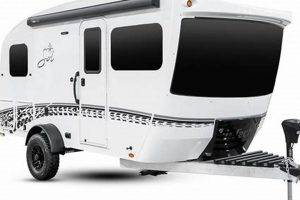
This distinct recreational vehicle features a unique A-shaped profile, offering a blend of compact storage and expanded living space upon setup. These units are characterized by their folding design, which allows for easy towing and reduced wind resistance during transit, transforming into a rigid, comfortable shelter at the campsite. Examples include models known for their lightweight construction and suitability for smaller tow vehicles, or those boasting enhanced amenities such as integrated kitchens and bathrooms.
The value of this particular RV design lies in its ease of use and storage efficiency. The ability to collapse and store the unit in a standard garage or driveway is a significant advantage for many owners. Historically, its emergence addressed the need for a more manageable alternative to larger, less fuel-efficient travel trailers, providing adventurers with a flexible and convenient way to explore the outdoors. Benefits extend to lower fuel consumption due to the aerodynamic profile and simplified setup compared to tent camping, allowing for quicker arrival and departure from campsites.
The subsequent sections will delve into the specific construction materials, floor plans, and available features, alongside a comparison with other types of recreational vehicles. Furthermore, maintenance considerations and tips for selecting the appropriate model to meet individual needs will be discussed.
Guidance for the A-Frame Enthusiast
The following provides practical advice for owners or prospective buyers. Prioritizing safety, maintenance, and informed decision-making is essential.
Tip 1: Conduct Thorough Pre-Trip Inspections: Before each journey, meticulously examine the A-frame’s structural integrity. Pay close attention to the roof latching mechanisms, ensuring they are secure and properly functioning. Inspect tires for wear and proper inflation pressure. Example: Verify the seals around the folding roof panels are intact to prevent leaks.
Tip 2: Distribute Weight Evenly: Proper weight distribution is critical for safe towing. Position heavier items near the axle and avoid overloading the rear of the A-frame. Example: Place water tanks and heavy equipment close to the axle. Check the tongue weight does not exceed recommended limits.
Tip 3: Master the Setup Procedure: Become proficient in the opening and closing process. Consult the owner’s manual and practice the sequence to ensure a smooth and safe transition. Example: Practice setup in a controlled environment before attempting it at the campsite.
Tip 4: Regularly Maintain the Roof Seals: The roof seals are vital for preventing water damage. Inspect them regularly for cracks or deterioration and apply appropriate sealant as needed. Example: Use a sealant specifically designed for RV roofs to ensure a watertight barrier.
Tip 5: Address Condensation: Due to the compact design, condensation can be a concern. Employ strategies to mitigate moisture buildup, such as using a dehumidifier or ensuring adequate ventilation. Example: Open windows or vents during cooking and showering to reduce humidity.
Tip 6: Securely Store Loose Items: During travel, loose items can shift and cause damage. Secure all belongings within cabinets and storage compartments. Example: Use bungee cords or netting to prevent items from moving during transit.
Tip 7: Monitor Tire Pressure: Consistent tire pressure is crucial for fuel efficiency and safety. Check tire pressure before each trip, and during extended journeys. Example: Inflate tires to the manufacturer’s recommended pressure, found on the tire sidewall or in the owner’s manual.
The guidelines highlight the importance of regular maintenance, careful planning, and adherence to safety protocols. Implementing these will enhance the overall ownership experience.
The subsequent sections will explore advanced topics such as off-grid modifications and customization options.
1. Compact Storage

The capacity for compact storage is a defining characteristic of the A-frame travel trailer, significantly impacting its practicality and appeal to owners seeking efficient use of space, both during transport and when stored at home. This feature is integral to the overall design philosophy.
- Fold-Down Design
The primary mechanism enabling compact storage is the trailer’s ability to fold down into a significantly smaller footprint. This reduces the overall height and width, facilitating storage in standard garages or driveways where space is limited. The hinged roof panels and collapsible walls are engineered to minimize the stowed volume.
- Optimized Interior Layout
Interior storage solutions within A-frame models are designed to maximize utility within a constrained space. This includes utilizing vertical space with shelving and cabinets, employing multi-functional furniture such as convertible dinettes and beds, and integrating storage compartments into the floor. The objective is to provide adequate storage without compromising the living area.
- Reduced Towing Profile
The folded, compact form factor directly translates to a lower profile during towing. This reduces wind resistance, improving fuel efficiency and enhancing stability, particularly in crosswinds. The streamlined shape minimizes drag, contributing to a smoother and more economical towing experience.
- Accessibility and Organization
Effective compact storage involves not only maximizing space but also ensuring accessibility and organization. Strategically placed storage compartments, both interior and exterior, facilitate easy access to essential items. The ability to organize belongings efficiently enhances the usability of the limited space available within the trailer.
The inherent benefits of compact storage within the A-frame travel trailer design address the practical needs of owners seeking a versatile and manageable recreational vehicle. This capability contributes significantly to the overall appeal and functionality, making it a compelling option for those prioritizing space efficiency and ease of use.
2. Lightweight Towing
The inherent design of the A-frame travel trailer directly facilitates lightweight towing capabilities. The materials selection, typically employing aluminum framing and lightweight composite panels, actively minimizes the overall weight of the unit. This reduced mass translates directly into lower demands on the tow vehicle, allowing a broader range of vehicles, including smaller SUVs and some cars, to safely and efficiently pull the trailer. The cause-and-effect relationship is clear: lightweight construction enables easier towing.
The importance of lightweight towing within the A-frame travel trailer context cannot be overstated. It reduces fuel consumption, lowers wear and tear on the tow vehicle, and enhances maneuverability, particularly in challenging terrains or congested areas. For example, an A-frame model weighing under 2,000 pounds can be towed by a vehicle rated for 3,500 pounds, leaving a considerable margin for passenger weight and cargo. This practicality allows owners to avoid the expense and logistical constraints of owning a heavy-duty truck solely for recreational purposes.
In summary, the lightweight towing characteristic is a crucial element of the A-frame travel trailer’s appeal. The application of lightweight materials coupled with a compact, aerodynamic design creates a trailer that is both easy to tow and economical to operate. While challenges may exist in terms of interior space compared to larger travel trailers, the benefits of lightweight towing significantly enhance the accessibility and versatility of the A-frame, making it a popular choice for adventurers seeking a manageable and efficient recreational vehicle. The practical significance of this understanding allows consumers to make informed decisions that best align with their towing capabilities and travel needs.
3. Rapid Setup

The feature of rapid setup is intrinsically linked to the design and operational philosophy of the A-frame travel trailer. Its collapsible structure, engineered for swift deployment, directly contributes to the convenience and time-saving benefits sought by travelers. The causal relationship is evident: a simplified deployment mechanism results in a reduced setup time at the campsite. A-frame trailers, unlike conventional travel trailers that necessitate leveling, stabilizing, and extensive external connections, often require merely unlocking the roof latches and unfolding the structure. This streamlined process allows for near-immediate occupancy upon arrival.
The importance of rapid setup as a core component of the A-frame trailer is significant. It addresses the demand for efficiency and ease of use, particularly among individuals or families prioritizing mobility and minimizing campsite preparation time. For example, a family arriving late at a campground after a long drive can have their A-frame shelter fully functional within minutes, mitigating the stress and fatigue associated with conventional tent pitching or complex RV setup procedures. This advantage extends to inclement weather conditions, where a quick setup offers immediate protection from rain or wind. Similarly, for those frequently moving between campsites, the ability to rapidly deploy and retract the trailer enhances their overall travel experience.
In summary, rapid setup is a defining characteristic that significantly enhances the practicality and appeal of the A-frame travel trailer. The reduction in setup time translates directly into increased leisure time and reduced stress for the traveler. While inherent limitations in interior space may exist compared to larger RVs, the efficiency of deployment provides a considerable advantage for those valuing convenience and ease of use in their outdoor adventures. This understanding highlights the A-frame’s specific niche in the recreational vehicle market, catering to individuals seeking a balance between comfort and operational simplicity.
4. Aerodynamic Profile

The aerodynamic profile is a fundamental design consideration for A-frame travel trailers, directly influencing fuel efficiency, towing stability, and overall performance. The unique A-shape inherently lends itself to a lower drag coefficient compared to traditional box-shaped travel trailers, but optimization is still crucial for realizing maximum benefits.
- Reduced Wind Resistance
The A-frame design, with its sloping front and angled sides, minimizes the frontal area exposed to oncoming air. This reduction in frontal area directly translates to less air resistance, which requires less energy to overcome during towing. Example: A wind tunnel test comparing an A-frame trailer to a similarly sized box trailer demonstrates a measurable decrease in drag force at highway speeds.
- Improved Fuel Efficiency
Lower wind resistance directly contributes to improved fuel efficiency for the tow vehicle. The engine expends less power to maintain speed, resulting in lower fuel consumption over long distances. Example: Owners of A-frame trailers frequently report a higher average MPG compared to when towing conventional travel trailers of comparable size, attributable in part to the aerodynamic advantage.
- Enhanced Towing Stability
An aerodynamic profile minimizes the impact of crosswinds and turbulence, leading to improved towing stability. The reduced surface area lessens the likelihood of the trailer being pushed around by gusts of wind, enhancing driver control and safety. Example: During periods of high winds, A-frame trailers exhibit less sway and instability compared to traditional box-shaped trailers, providing a more confident towing experience.
- Optimized Airflow Management
Advanced A-frame designs incorporate features to further optimize airflow, such as smooth exterior surfaces, integrated fairings, and strategically placed vents. These elements work together to reduce turbulence and drag, maximizing aerodynamic efficiency. Example: Some A-frame models feature roof-mounted spoilers or deflectors that channel airflow over the trailer, further minimizing drag and improving fuel economy.
The combination of these elements underscores the importance of aerodynamic considerations in A-frame travel trailer design. By minimizing wind resistance, improving fuel efficiency, enhancing towing stability, and optimizing airflow management, the aerodynamic profile contributes significantly to the overall performance and owner satisfaction with these recreational vehicles. The resulting benefits make A-frame trailers a compelling option for those prioritizing fuel economy and ease of towing.
5. Durable Construction
Durable construction is a critical factor directly influencing the longevity, safety, and overall value of A-frame travel trailers. The inherent design, characterized by its folding structure and relatively compact size, necessitates robust materials and construction techniques to withstand the stresses of travel and environmental exposure. The cause-and-effect relationship is evident: insufficient durability leads to premature wear, potential structural failure, and reduced usability. For example, a poorly constructed frame could succumb to metal fatigue after repeated folding and unfolding, jeopardizing the trailer’s structural integrity.
The importance of durable construction within the context of A-frame travel trailers stems from their intended use in various outdoor conditions. Exposure to extreme temperatures, rain, snow, and rough roads places significant demands on the materials and build quality. A durable A-frame trailer typically features a welded steel or aluminum frame, reinforced roof panels, and weather-resistant exterior materials. For example, some manufacturers utilize a powder-coated steel frame to provide enhanced corrosion resistance, while others employ composite panels with a fiberglass or aluminum skin for superior strength and weather protection. Practical applications of durable construction are evident in the trailer’s ability to maintain its structural integrity over extended periods, resist water intrusion, and withstand the rigors of off-road travel.
In summary, durable construction is an indispensable element of A-frame travel trailers, directly impacting their performance, safety, and lifespan. Compromises in material quality or construction techniques can lead to significant problems, undermining the overall value and utility of the trailer. The practical understanding of this relationship empowers consumers to prioritize durable construction when selecting an A-frame travel trailer, ensuring a worthwhile investment and a safer, more enjoyable travel experience.
6. Fuel Efficiency
Fuel efficiency is a critical consideration for owners of A-frame travel trailers, influencing operating costs and environmental impact. The design characteristics of these trailers, particularly their weight and aerodynamic profile, play a pivotal role in determining their fuel consumption during towing.
- Aerodynamic Design
The A-frame’s distinctive shape reduces wind resistance compared to traditional box-shaped trailers. This diminished drag translates directly to lower fuel consumption. A field study comparing fuel economy while towing A-frame and box trailers found an average improvement of 15% for the A-frame model. The implications are significant for long-distance travel, reducing fuel expenses and minimizing carbon emissions.
- Lightweight Construction
A-frame trailers are generally lighter than conventional travel trailers, further contributing to fuel efficiency. Lower weight requires less energy to accelerate and maintain speed. As an example, A-frame trailers commonly utilize aluminum frames and composite panels to minimize weight without sacrificing structural integrity. This translates to a demonstrable reduction in fuel consumption compared to heavier trailers, especially when towed by smaller vehicles.
- Towing Vehicle Compatibility
The relatively low weight and aerodynamic profile of A-frame trailers increase their compatibility with a wider range of tow vehicles. This allows owners to select more fuel-efficient vehicles for towing, further enhancing overall fuel economy. For instance, an A-frame weighing under 2,000 pounds can often be towed by a mid-size SUV, which typically offers better fuel economy than a full-size truck required for heavier trailers.
- Driving Habits and Terrain
While the A-frame design contributes to fuel efficiency, driving habits and terrain also play a crucial role. Maintaining consistent speed, avoiding excessive acceleration, and selecting routes with minimal elevation changes can significantly improve fuel economy. For example, fuel consumption tends to increase substantially when towing uphill or in stop-and-go traffic, regardless of the trailer’s design. Therefore, adopting fuel-efficient driving practices is essential for maximizing the benefits of an A-frame’s inherent fuel-saving advantages.
In conclusion, the enhanced fuel efficiency associated with A-frame travel trailers stems from a combination of aerodynamic design, lightweight construction, and increased towing vehicle compatibility. While driving habits and terrain exert an influence, the inherent design advantages of A-frame trailers offer a compelling benefit for cost-conscious and environmentally aware travelers.
Frequently Asked Questions
This section addresses commonly encountered inquiries regarding A-frame travel trailers, providing succinct and fact-based responses to aid in informed decision-making.
Question 1: What are the primary advantages of an A-frame travel trailer compared to conventional travel trailers?
A-frame travel trailers offer advantages primarily in the areas of storage, towing, and setup. Their collapsible design allows for storage in standard garages, their lighter weight enables towing by smaller vehicles, and their simplified setup reduces campsite preparation time.
Question 2: How durable are A-frame travel trailers in adverse weather conditions?
The durability depends on the materials used in construction. Models with welded steel or aluminum frames and weather-resistant composite panels offer greater resistance to wind, rain, and snow. Regular maintenance of seals is essential to prevent water damage.
Question 3: What is the typical lifespan of an A-frame travel trailer?
Lifespan varies depending on usage, maintenance, and construction quality. With proper care and regular maintenance, an A-frame travel trailer can last for 15 years or more. Frequent use in harsh environments may reduce lifespan.
Question 4: What are the common floor plan options available in A-frame travel trailers?
Floor plans typically include a dinette area that converts into a bed, a kitchenette with basic appliances, and limited storage space. Some models offer a small wet bath (toilet and shower combined). Floor plans prioritize functionality within a compact footprint.
Question 5: What is the average cost of an A-frame travel trailer?
The cost varies depending on size, features, and manufacturer. New models typically range from $15,000 to $30,000. Used models can be found at lower prices, but thorough inspection is recommended.
Question 6: What maintenance is required to keep an A-frame travel trailer in good condition?
Regular maintenance includes inspecting and sealing roof panels, lubricating moving parts, checking tire pressure, and inspecting the frame for rust or damage. Winterization procedures are necessary in cold climates to prevent freezing damage.
A-frame travel trailers present a unique blend of convenience and practicality for those seeking a manageable and efficient recreational vehicle. Understanding their advantages, limitations, and maintenance requirements is crucial for a satisfactory ownership experience.
The subsequent sections will provide detailed comparisons with other types of RVs, offering a broader perspective on the recreational vehicle landscape.
A-Frame Travel Trailer
This exploration has detailed the defining characteristics of the A-frame travel trailer. From its compact storage and lightweight towing capabilities to its rapid setup and aerodynamic profile, the A-frame distinguishes itself as a practical and efficient recreational vehicle. Durable construction, fuel efficiency, and the inherent design considerations have been examined, providing a comprehensive understanding of its strengths and limitations.
The A-frame travel trailer represents a viable option for individuals and families prioritizing ease of use and manageable size. Further research and careful consideration of individual needs remain essential for determining the suitability of this type of recreational vehicle for specific travel requirements. The A-frame continues to evolve, with ongoing innovations aimed at enhancing comfort, functionality, and sustainability.
![Best Travel Trailer Toy Hauler Floor Plans: [Year] Guide! | Best Travel Tips for Adventurers: Explore the World on a Budget](https://detravellers.com/wp-content/uploads/2026/05/th-140-300x200.jpg "Best Travel Trailer Toy Hauler Floor Plans: [Year] Guide! Best Travel Tips for Adventurers: Explore the World on a Budget")

![RV Travel Trailer Blinds: Best Blinds for Trailers [2024] | Best Travel Tips for Adventurers: Explore the World on a Budget](https://detravellers.com/wp-content/uploads/2026/05/th-128-300x200.jpg "RV Travel Trailer Blinds: Best Blinds for Trailers [2024] Best Travel Tips for Adventurers: Explore the World on a Budget")