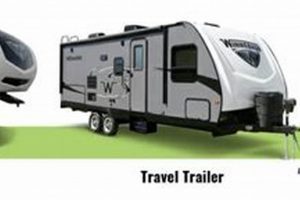
A recreational vehicle equipped with photovoltaic panels to generate electricity from sunlight constitutes a self-sustaining mobile dwelling. These units typically utilize the generated power to operate appliances, lighting, and other onboard systems, reducing reliance on external power sources such as generators or campground electrical hookups. For example, a travel trailer outfitted with rooftop solar panels can provide sufficient energy to run a refrigerator, charge electronic devices, and power interior lighting.
The adoption of this technology offers significant advantages including reduced environmental impact through the utilization of renewable energy. Furthermore, it provides increased independence and flexibility for travelers by minimizing dependence on traditional power infrastructure. Historically, the integration of solar technology into recreational vehicles has evolved from rudimentary setups to sophisticated systems capable of meeting substantial energy demands, reflecting advancements in both photovoltaic technology and energy storage solutions.
The subsequent sections will delve into the components of these self-sufficient mobile habitats, explore factors influencing system design, examine cost considerations, and assess the overall suitability for various travel needs.
Optimizing a Recreational Vehicle with Photovoltaic Systems
The effective implementation of photovoltaic systems in recreational vehicles requires careful consideration of various factors. The following guidance outlines essential aspects to ensure optimal performance and longevity of the integrated system.
Tip 1: Assess Energy Needs Accurately: Conduct a thorough evaluation of power consumption patterns to determine the appropriate system size. Estimate the daily energy requirements of all appliances, lighting, and electronic devices that will be utilized within the recreational vehicle.
Tip 2: Select High-Efficiency Panels: Invest in photovoltaic panels with a high conversion efficiency rating to maximize energy capture within limited roof space. Monocrystalline panels generally offer superior performance compared to polycrystalline alternatives.
Tip 3: Employ an Advanced Charge Controller: Utilize a maximum power point tracking (MPPT) charge controller to optimize the energy transfer from the panels to the battery bank. MPPT controllers adapt to varying voltage and current conditions to enhance charging efficiency.
Tip 4: Choose a Robust Battery Bank: Select a deep-cycle battery bank with sufficient capacity to store the generated solar energy and meet the demands of the load. Lithium-ion batteries offer advantages in terms of energy density, lifespan, and discharge characteristics compared to traditional lead-acid options.
Tip 5: Implement Adequate Wiring and Protection: Employ appropriately sized wiring to minimize voltage drop and ensure safe current carrying capacity. Install overcurrent protection devices, such as fuses or circuit breakers, to safeguard against electrical faults.
Tip 6: Optimize Panel Placement: Carefully consider the orientation and tilt angle of the panels to maximize sun exposure throughout the day. Avoid shading from trees, buildings, or other obstructions that could reduce energy production.
Tip 7: Monitor System Performance: Install a monitoring system to track energy generation, battery voltage, and load consumption. Regularly review the data to identify any performance issues and optimize system settings.
Proper planning, component selection, and installation practices are crucial for realizing the full potential of photovoltaic systems in recreational vehicles. Adherence to these guidelines will contribute to a reliable and efficient power supply for extended off-grid adventures.
The subsequent conclusion will summarize the key benefits and considerations associated with utilizing photovoltaic systems in mobile habitats.
1. Panel Efficiency

Panel efficiency constitutes a pivotal factor in determining the overall effectiveness and practicality within mobile dwelling applications. Higher efficiency ratings translate directly into increased energy harvesting potential from a given surface area, a critical consideration given the limited space available on most recreational vehicles.
- Wattage Maximization
Higher panel efficiency allows for the generation of more power per square foot. For instance, a 300-watt panel with 20% efficiency will produce more electricity than a 300-watt panel with 15% efficiency, given the same physical dimensions and insolation. This is particularly important on a recreational vehicle where roof space is finite. The ability to generate more power from a smaller area means greater energy independence and potentially reduces the need for supplemental power sources.
- Reduced Panel Footprint
Utilizing high-efficiency panels allows for the minimization of the number of panels required to meet a specific energy demand. This translates to weight reduction and a more streamlined installation. For example, if a travel trailer requires 1200 watts of solar power, using 300-watt panels necessitates four units, while using 400-watt high-efficiency panels only requires three. This not only saves space but also reduces installation complexity and associated costs.
- Improved Shading Tolerance
Some high-efficiency panel technologies exhibit improved performance in partially shaded conditions. Standard panels can experience significant power output reductions even with minor shading. Advanced panel designs, such as those incorporating bypass diodes or optimized cell configurations, mitigate the impact of shading, ensuring more consistent energy production throughout the day. This is crucial for recreational vehicle applications where parking locations and environmental factors can introduce shading challenges.
- Cost-Benefit Analysis
While high-efficiency panels typically command a higher initial cost, the long-term benefits can outweigh the increased investment. Increased energy production, reduced panel footprint, and improved shading tolerance contribute to a more robust and reliable system, potentially reducing reliance on auxiliary power sources and extending the lifespan of the battery bank. A comprehensive cost-benefit analysis should consider these factors to determine the optimal panel selection for specific energy needs and budget constraints. This includes factoring in the cost of installation, maintenance, and potential fuel savings from reduced generator use.
The selection of appropriately efficient panels is not merely a technical detail but a fundamental determinant of system performance. It directly affects the ability to effectively utilize “solar powered travel trailer” and attain true energy independence while on the road.
2. Battery Capacity

Battery capacity is a critical determinant of the effectiveness and operational lifespan of any system incorporated into a “solar powered travel trailer”. It dictates the amount of energy that can be stored for later use, thereby influencing the duration for which the unit can operate independently of direct sunlight or supplemental power sources. Insufficient battery capacity results in frequent discharge cycles, potentially shortening battery life and necessitating premature replacement. Consider a scenario where a travel trailer is equipped with solar panels capable of generating ample power during daylight hours, but possesses inadequate battery storage. The inability to store sufficient energy renders the system ineffective during nighttime or periods of prolonged cloud cover, forcing reliance on generators or external power connections. Therefore, aligning battery capacity with anticipated energy consumption is paramount for optimal system performance.
The selection of battery type further impacts the overall suitability for “solar powered travel trailer” applications. Lithium-ion batteries, while typically more expensive than traditional lead-acid alternatives, offer significant advantages in terms of energy density, discharge rate, and cycle life. A lithium-ion battery pack can store more energy per unit of weight and volume, facilitating a more compact and lightweight system. Furthermore, lithium-ion batteries can withstand deeper discharges without significant performance degradation, contributing to a longer operational lifespan. Lead-acid batteries, conversely, are more sensitive to deep discharge and require regular maintenance to prevent sulfation, which reduces their capacity over time. A practical example involves a family utilizing a travel trailer for extended off-grid camping trips. Investing in a lithium-ion battery bank ensures a reliable power supply for lighting, appliances, and electronic devices, minimizing the need for noisy and fuel-consuming generators.
Estimating energy consumption patterns accurately is essential for determining the appropriate battery capacity. This involves accounting for the wattage and usage duration of all appliances, lighting, and electronic devices within the “solar powered travel trailer”. A conservative approach to energy consumption estimates is advisable, as unexpected power demands can arise. Additionally, it is crucial to consider the impact of environmental factors, such as temperature, on battery performance. Extreme temperatures can reduce battery capacity and discharge efficiency. Addressing these challenges through careful planning and component selection ensures the longevity and reliability of the system. Effectively addressing the need for appropriate battery capacity is a vital consideration in realizing the full potential for self-sufficiency.
3. Charge Controller

The charge controller is an indispensable component within a “solar powered travel trailer” system. It serves as the crucial interface between the photovoltaic panels and the battery bank, regulating the flow of electrical current to prevent overcharging and maintain optimal battery health. Without a charge controller, the unregulated voltage from the solar panels could damage the batteries, significantly reducing their lifespan and potentially causing irreparable harm. A charge controller acts as a safeguard, ensuring the battery receives the correct voltage and current, maximizing its charging efficiency and longevity. For instance, during periods of high solar irradiance, the panels may produce a voltage exceeding the battery’s safe charging threshold. The charge controller actively mitigates this risk by limiting the current or voltage, preventing overcharge and extending battery life.
Further differentiation lies in the types of charge controllers employed: Pulse Width Modulation (PWM) and Maximum Power Point Tracking (MPPT). PWM controllers are generally less expensive but also less efficient, particularly in situations where the panel voltage differs significantly from the battery voltage. MPPT controllers, conversely, utilize sophisticated algorithms to optimize the power transfer from the panels to the batteries, maximizing energy harvest even under varying environmental conditions. Consider a “solar powered travel trailer” traversing diverse geographical locations with fluctuating sunlight levels. An MPPT charge controller would adapt to these changing conditions, ensuring the batteries receive the maximum possible charge, thereby enhancing the system’s overall performance and reliability. Moreover, MPPT controllers are advantageous when utilizing higher voltage panels that may not directly match the battery voltage, efficiently converting the panel voltage to the optimal charging voltage for the battery bank.
In summary, the charge controller is not merely an accessory but a vital operational safeguard that determines the effectiveness and longevity of a “solar powered travel trailer” energy system. By preventing overcharging, regulating voltage, and optimizing energy transfer, it ensures the batteries operate within safe parameters and contribute to a reliable and sustainable power supply. Choosing the appropriate type of charge controller, be it PWM or MPPT, depends on the specific system configuration, budget constraints, and anticipated environmental conditions. Understanding the role and functionality of the charge controller is essential for any owner seeking to maximize the efficiency and lifespan of the photovoltaic system in their mobile dwelling.
4. Energy Consumption
Energy consumption directly dictates the sizing and configuration of a “solar powered travel trailer” system. The aggregate energy requirements of all onboard appliances, lighting, and electronic devices form the foundation upon which the solar panel array, battery bank, and charge controller specifications are determined. A failure to accurately assess and account for these demands can result in a system that is incapable of meeting the occupant’s needs, thereby defeating the purpose of adopting solar power. For example, if the combined wattage of the refrigerator, water pump, lights, and various charging devices regularly exceeds the system’s generation and storage capacity, reliance on external power sources or generators becomes inevitable. Thus, meticulous monitoring and reduction of energy consumption are essential for maximizing self-sufficiency. Understanding how each appliance contributes to the overall energy footprint allows for informed decisions regarding appliance selection and usage patterns.
Practical strategies for managing energy consumption within a “solar powered travel trailer” encompass several approaches. Prioritizing energy-efficient appliances, such as LED lighting and high-efficiency refrigerators, significantly reduces the overall demand. Implementing conservative usage habits, such as limiting air conditioning use or opting for propane-powered alternatives, further minimizes the load. Additionally, strategic timing of energy-intensive activities can align consumption with peak solar generation periods. For instance, running the microwave or charging electronic devices during the sunniest part of the day leverages the direct output of the solar panels, reducing the drain on the battery bank. Furthermore, utilizing energy monitoring devices provides real-time feedback on power usage, enabling occupants to make informed adjustments and identify potential areas for optimization. This proactive approach to managing energy is critical for maximizing the system’s performance and extending the period of autonomy.
In conclusion, energy consumption is not merely a factor to be considered, but rather the cornerstone upon which the success of a “solar powered travel trailer” system is built. Accurate assessment, strategic management, and proactive optimization of energy usage are essential for achieving true energy independence and minimizing reliance on external power sources. The ability to effectively manage energy consumption, in conjunction with a well-designed and properly sized solar system, enables owners to fully realize the benefits of sustainable mobile living.
5. System Installation

The installation of a photovoltaic system within a “solar powered travel trailer” directly determines its operational effectiveness and long-term reliability. Improper installation, irrespective of the quality of individual components, can lead to diminished performance, electrical hazards, and premature system failure. The interconnection of solar panels, charge controller, battery bank, and inverter demands adherence to stringent electrical codes and best practices. Inadequate wiring, insufficient grounding, or improper component placement can compromise safety and reduce energy harvesting efficiency. For instance, a poorly secured solar panel is susceptible to damage from wind or vibration, leading to reduced power output and potential system downtime. The competence and experience of the installer are therefore critical determinants of system success.
Proper installation necessitates a comprehensive understanding of electrical systems, structural integrity, and environmental considerations. The mounting of solar panels must account for roof load capacity and wind resistance. Wiring runs should be appropriately sized to minimize voltage drop and protected from abrasion and moisture. The location of the battery bank requires adequate ventilation and temperature control. The integration of the inverter demands proper grounding and protection from overload. Failure to address these factors can result in decreased system efficiency, increased maintenance requirements, and potential safety hazards. An example includes the improper sealing of roof penetrations during panel installation, which can lead to water leaks and structural damage to the travel trailer. A professional installation minimizes such risks and ensures the system operates at its designed performance level.
Effective installation provides a foundation for long-term system reliability and reduces the likelihood of costly repairs. The use of qualified installers and adherence to established standards are paramount. Regular inspections and maintenance, following a professional installation, further contribute to sustained performance and longevity. The synergy between high-quality components and competent installation practices ensures that the “solar powered travel trailer” achieves its intended purpose: providing a reliable and sustainable source of power for mobile living. Ignoring installation best practices undermines the investment in photovoltaic technology and can lead to unsatisfactory results.
6. Weight Distribution
Within the context of a “solar powered travel trailer”, weight distribution assumes critical importance. The addition of photovoltaic panels, batteries, and associated hardware introduces significant weight, which, if improperly managed, can negatively impact handling, stability, and overall safety. Uneven weight distribution can induce trailer sway, increase tire wear, and compromise braking performance. A travel trailer with excessive weight concentrated at the rear, for instance, may exhibit instability at highway speeds, particularly during crosswinds or emergency maneuvers. Therefore, a comprehensive understanding and proactive management of weight distribution are essential when integrating solar power systems into mobile dwellings. Failing to address this aspect can create hazardous conditions for both the towing vehicle and other drivers.
The placement of individual components within a “solar powered travel trailer” significantly affects weight distribution. Installing heavy battery banks towards the front of the trailer, over or slightly ahead of the axles, can help to counteract the added weight of solar panels mounted on the roof. Conversely, positioning batteries at the rear exacerbates existing weight imbalances and increases the risk of trailer sway. Furthermore, the distribution of cargo within the trailer must be considered in conjunction with the added weight of the photovoltaic system. Heavy items should be placed low and centered over the axles to minimize their impact on stability. Regular monitoring of tire pressure and adherence to recommended tongue weight specifications are crucial for maintaining safe towing conditions. A practical example involves a travel trailer owner who initially installed a solar system without considering weight distribution. Subsequent handling issues and increased tire wear prompted a relocation of the battery bank and a redistribution of cargo, resulting in improved stability and safer towing characteristics.
In summary, weight distribution is an indispensable consideration in the design and implementation of “solar powered travel trailer” systems. The addition of photovoltaic components necessitates careful planning and strategic placement to maintain vehicle stability and ensure safe operation. Neglecting this aspect can compromise handling, increase maintenance costs, and create potentially hazardous driving conditions. A holistic approach, encompassing component placement, cargo management, and adherence to recommended towing guidelines, is essential for maximizing the benefits of solar power while preserving the safety and integrity of the travel trailer.
7. Cost Analysis

Cost analysis forms a crucial element in the decision-making process surrounding the adoption of a “solar powered travel trailer”. The initial investment for a photovoltaic system, encompassing panels, batteries, charge controller, and inverter, represents a substantial financial commitment. The cost-effectiveness of this investment hinges on several factors, including energy consumption patterns, geographical location, and the anticipated lifespan of the components. A comprehensive cost analysis must account for both initial expenditures and long-term operational savings. For instance, a detailed examination should compare the cost of installing a system against the projected reduction in campground fees or generator fuel expenses over a defined period. The analysis should also consider potential tax incentives or rebates that may offset the initial investment.
The long-term cost benefits of a “solar powered travel trailer” system are influenced by factors such as battery lifespan and panel degradation. Batteries, in particular, require periodic replacement, representing a recurring expense that must be factored into the overall cost assessment. Panel degradation, while gradual, results in a reduction of power output over time, potentially diminishing the system’s effectiveness. An accurate cost analysis incorporates these factors, estimating the total cost of ownership over the expected lifespan of the system. It should also assess the potential resale value of the travel trailer with the solar power system installed. Some purchasers may be willing to pay a premium for a self-sufficient mobile dwelling, increasing the vehicle’s market value. In practice, a cost analysis might reveal that a higher initial investment in more durable and efficient components yields a lower total cost of ownership compared to cheaper alternatives that require more frequent replacement.
A thorough cost analysis is imperative for determining the viability of a “solar powered travel trailer” system. It provides a framework for evaluating the economic benefits of adopting renewable energy for mobile living and enables informed decision-making regarding system design and component selection. While the initial investment may seem significant, a well-executed cost analysis can demonstrate the long-term financial advantages and provide a clear understanding of the return on investment. Neglecting this analysis can lead to unforeseen expenses and a suboptimal system configuration, undermining the overall value proposition. The exercise must balance upfront costs with projected savings to arrive at a realistic estimate of the total financial impact.
Frequently Asked Questions
This section addresses common inquiries regarding the implementation and operation of solar power systems within travel trailers. It aims to provide concise and informative answers based on industry standards and best practices.
Question 1: What is the typical lifespan of a solar panel installed on a travel trailer?
Most photovoltaic panels have a performance warranty guaranteeing at least 80% power output after 25 years. While panel degradation occurs gradually, they can continue to generate electricity for several decades beyond this period.
Question 2: How much does it typically cost to install a complete solar power system on a travel trailer?
The cost varies significantly based on system size, component quality, and installation complexity. A basic system might range from $2,000 to $5,000, while a more comprehensive setup with lithium batteries and advanced monitoring could exceed $10,000.
Question 3: Is it possible to operate an air conditioner solely on solar power within a travel trailer?
Operating an air conditioner exclusively on solar power requires a substantial photovoltaic array and a large battery bank. While feasible, it is often more practical to supplement solar power with a generator or utilize a more energy-efficient air conditioning unit.
Question 4: What are the primary benefits of using lithium-ion batteries in a solar powered travel trailer?
Lithium-ion batteries offer advantages in terms of energy density, cycle life, and discharge characteristics compared to traditional lead-acid alternatives. They can store more energy per unit of weight and volume, withstand deeper discharges without significant performance degradation, and have a longer operational lifespan.
Question 5: Can solar panels be damaged by hail or extreme weather conditions?
Most photovoltaic panels are designed to withstand moderate hail and extreme weather conditions. However, severe hail storms or high winds can potentially cause damage. Selecting panels with robust construction and impact-resistant glass can mitigate this risk.
Question 6: How often does a solar power system on a travel trailer require maintenance?
Solar power systems typically require minimal maintenance. Regular inspections to ensure panel cleanliness and wiring integrity are recommended. Battery terminals should be cleaned periodically to prevent corrosion, and system performance should be monitored to identify any potential issues.
These FAQs offer a concise overview of key considerations surrounding “solar powered travel trailer” systems. Understanding these aspects contributes to informed decision-making and effective system operation.
The subsequent conclusion will summarize the overall value proposition and future trends associated with these environmentally conscious mobile dwellings.
Conclusion
The preceding exploration of the “solar powered travel trailer” has underscored the multifaceted considerations involved in integrating renewable energy into mobile living. Key points have emphasized the significance of accurate energy consumption assessment, appropriate component selection, meticulous installation practices, and proactive weight management. Furthermore, the economic viability, contingent upon diligent cost analysis and long-term operational benefits, has been elucidated. These elements, when harmonized, determine the efficacy and sustainability of employing photovoltaic systems in recreational vehicles.
The adoption of self-sustaining mobile habitats represents a paradigm shift in recreational travel, offering a pathway towards reduced environmental impact and increased energy independence. Continued advancements in photovoltaic technology, coupled with growing awareness of ecological responsibility, suggest a future where “solar powered travel trailer” integration becomes increasingly prevalent. Further research and development should focus on enhancing panel efficiency, improving battery storage capabilities, and simplifying system installation to facilitate wider adoption and maximize the benefits of sustainable mobile exploration.