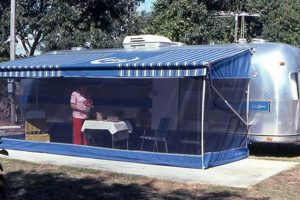
The ideal dimensions of a recreational vehicle designed for two occupants represent a balance between maneuverability and interior living space. A unit of appropriate size provides sufficient room for comfortable sleeping, meal preparation, and relaxation, while also remaining relatively easy to tow and park in a variety of locations. For example, a trailer in the 18- to 25-foot range often proves suitable, offering a dedicated sleeping area, a compact kitchen, and a small bathroom, all within a manageable footprint.
Selecting a unit with optimized dimensions offers numerous advantages. Smaller trailers tend to be lighter, potentially reducing fuel consumption and enabling towing by a wider range of vehicles. Their compact size facilitates access to smaller campsites and simplifies navigation on narrow roads. Historically, the demand for easily manageable recreational vehicles has steadily increased, particularly among couples and solo travelers seeking independent travel experiences without the complexities associated with larger, more cumbersome models.
The selection process involves several key considerations, including floor plan design, storage capacity, and the inclusion of desired amenities. Subsequent sections will delve into these aspects, providing a detailed overview of the factors that contribute to optimal selection and overall travel enjoyment.
Tips for Selecting a Suitably Sized Travel Trailer for Two Occupants
Careful consideration of several factors is essential when choosing a recreational vehicle designed for two people. These tips aim to provide guidance in making an informed decision that aligns with individual needs and travel preferences.
Tip 1: Prioritize Floor Plan Efficiency: Evaluate various floor plans to identify layouts that maximize usable space. Models with convertible dinettes or murphy beds can offer flexibility, providing additional sleeping or living space as needed.
Tip 2: Assess Storage Capacity: Ensure sufficient storage compartments are available for clothing, gear, and supplies. Consider both interior and exterior storage options, including pass-through storage and overhead cabinets.
Tip 3: Evaluate Tow Vehicle Compatibility: Determine the towing capacity of the intended vehicle and select a trailer with a gross vehicle weight rating (GVWR) that falls within the vehicle’s limitations. Exceeding the towing capacity can compromise safety and performance.
Tip 4: Consider Camping Style: Assess the intended camping style whether primarily at established campgrounds with full hookups or more remote, dispersed locations. This assessment will influence the need for onboard water capacity, battery power, and waste management systems.
Tip 5: Research Model Reliability: Investigate the reliability and build quality of various trailer manufacturers and models. Online reviews and consumer reports can provide valuable insights into potential issues and long-term durability.
Tip 6: Inspect Appliances and Systems: Thoroughly inspect all appliances and systems, including the air conditioner, furnace, water heater, and electrical components, to ensure proper functionality and efficient operation.
Tip 7: Factor in Maintenance Considerations: Understand the routine maintenance requirements of the chosen trailer model. Regular inspections, cleaning, and upkeep are essential for preserving its condition and preventing costly repairs.
Selecting a travel trailer that aligns with these considerations contributes to a more enjoyable and trouble-free travel experience. Prioritizing functionality, compatibility, and maintenance facilitates long-term satisfaction with the investment.
The subsequent section will discuss the financial aspects of acquiring a travel trailer, including purchase options, financing, and ongoing operational costs.
1. Towing Capability

Towing capability is a critical consideration when selecting a travel trailer for two individuals. The vehicle’s capacity to safely and effectively tow a trailer of a specific size directly influences the range of suitable trailer options and the overall travel experience. Insufficient towing capacity can lead to compromised safety, reduced fuel efficiency, and potential damage to the tow vehicle.
- Gross Vehicle Weight Rating (GVWR)
The GVWR represents the maximum permissible weight of the trailer when fully loaded, including cargo, water, and propane. Selecting a travel trailer with a GVWR that remains within the tow vehicle’s rated capacity is paramount. Exceeding this limit can strain the vehicle’s suspension, brakes, and engine, creating a hazardous situation. Manufacturers provide GVWR information on a sticker typically located on the trailer’s exterior.
- Tow Vehicle Engine and Transmission
The tow vehicle’s engine and transmission must possess sufficient power and durability to handle the added load of a travel trailer. Underpowered engines may struggle on inclines, leading to decreased speed and increased fuel consumption. Likewise, transmissions not designed for towing can overheat and experience premature wear. Matching the engine and transmission capabilities to the trailer’s weight is essential for safe and efficient towing.
- Hitch System Compatibility
The hitch system connects the travel trailer to the tow vehicle and must be properly rated for the trailer’s weight. Different hitch types, such as weight-carrying and weight-distribution hitches, offer varying levels of support and stability. A weight-distribution hitch is often recommended for heavier trailers to distribute the tongue weight evenly across the tow vehicle’s axles, improving handling and reducing sway. Ensuring compatibility between the hitch system and the trailer is crucial for safe towing.
- Braking System Requirements
Many travel trailers are equipped with electric brakes that supplement the tow vehicle’s braking system. A trailer brake controller, installed in the tow vehicle, allows the driver to adjust the braking force applied to the trailer’s brakes. Proper adjustment and functionality of the trailer brakes are essential for safe stopping distances, particularly in emergency situations. Regular inspection and maintenance of the trailer brakes are critical for ensuring optimal performance.
The interplay between towing capability and trailer size dictates the suitability of a travel trailer for two occupants. While a smaller trailer may offer easier towing with a wider range of vehicles, it may also compromise interior living space and storage capacity. Conversely, a larger trailer may provide greater comfort and amenities but require a more substantial tow vehicle. Careful consideration of these factors enables informed decisions, aligning trailer size with towing capabilities for a safe and enjoyable travel experience.
2. Floor Plan Efficiency

Floor plan efficiency significantly impacts the usability and comfort of a travel trailer, particularly when designed for two occupants. In recreational vehicles, where space is inherently limited, an intelligently designed floor plan maximizes the perceived area and functionality. The efficient arrangement of living, sleeping, cooking, and sanitation areas directly influences the overall travel experience. For example, a poorly designed floor plan might lead to cramped conditions, limited storage, and difficulty in navigating the interior, even if the trailer’s overall length appears adequate. Conversely, a well-optimized layout can create a sense of spaciousness and ease of movement, enhancing the livability of a more compact trailer.
Several design elements contribute to floor plan efficiency. Convertible furniture, such as dinettes that transform into beds, allows for multi-functional use of space. Strategic placement of storage compartments, both overhead and under seating, minimizes clutter and optimizes organization. Compact appliances and fixtures, such as combination sinks and stoves or wet baths, reduce the footprint of essential amenities. For instance, a travel trailer of 20 feet with a thoughtfully designed floor plan, incorporating these elements, may provide a more comfortable and functional living space than a 25-foot model with a less efficient layout. The effective use of vertical space and natural light further enhances the perception of spaciousness, contributing to a more pleasant environment.
In conclusion, floor plan efficiency is a crucial determinant of a travel trailer’s suitability for two people. It directly affects the comfort, convenience, and overall satisfaction derived from the recreational vehicle. Although overall length provides an initial indication of interior space, the intelligent design and arrangement of that space are paramount. Recognizing the importance of floor plan efficiency enables informed decision-making, ensuring that the selected travel trailer provides a functional and enjoyable living environment, regardless of its external dimensions. A well-executed floor plan mitigates the challenges posed by limited space, transforming a potentially cramped environment into a comfortable and practical travel companion.
3. Storage Capacity

Storage capacity constitutes a fundamental element in determining the appropriateness of a travel trailer’s length for two occupants. Insufficient storage directly impacts the feasibility of extended trips and the overall comfort of the living space. A trailer that lacks adequate storage necessitates compromises in packing, potentially limiting the duration of travel or requiring frequent restocking of supplies. The absence of designated storage areas contributes to clutter and disorganization within the living space, diminishing the overall travel experience.
The correlation between trailer length and storage capacity is not always linear. A longer trailer does not invariably equate to more efficient or accessible storage. Instead, the strategic design and utilization of available space are paramount. For instance, a shorter trailer with well-planned storage solutions, such as under-bed compartments, overhead cabinets, and exterior storage bays, may offer superior functionality compared to a longer model with poorly designed storage. Consider a couple embarking on a week-long trip; they require space for clothing, bedding, food supplies, cooking equipment, and personal items. A trailer without sufficient storage forces them to either overpack, leading to disorganization, or to limit the scope of their trip. In contrast, a trailer with ample and well-organized storage enables them to travel comfortably and self-sufficiently for the duration of their vacation.
Ultimately, the adequacy of storage capacity is contingent upon individual needs and travel habits. However, a balance must be struck between trailer length and storage availability to ensure a practical and comfortable travel experience for two people. Prioritizing storage solutions that maximize usable space, such as multi-purpose compartments and adjustable shelving, contributes to a more organized and livable environment. Therefore, evaluating storage capacity as a crucial element ensures that the selected trailer length meets the practical requirements of extended travel, enhancing the overall enjoyment and self-sufficiency of the trip.
4. Bathroom Size

Bathroom size in a recreational vehicle designed for two occupants directly correlates with overall comfort and functionality, thereby influencing the determination of optimal trailer length. Limited bathroom space can compromise convenience and hygiene, while an excessively large bathroom might encroach upon valuable living area. The balance between bathroom dimensions and overall trailer size must accommodate essential fixtures toilet, sink, and shower while remaining ergonomically sound and spatially efficient. The inclusion of a usable bathroom significantly enhances the appeal of travel trailers, particularly for extended trips where access to external facilities may be limited. For example, a couple intending to spend several days in remote locations would likely prioritize a trailer with a fully functional bathroom, even if it necessitates a slightly longer overall length.
The influence of bathroom size extends beyond mere square footage. The layout and features within the bathroom are equally critical. A well-designed bathroom incorporates efficient storage solutions, such as mirrored medicine cabinets and under-sink storage, to maximize usable space. Features like a shower with a curved door or wall-mounted fixtures can enhance the perceived spaciousness. Furthermore, the type of toilet whether a standard flush toilet or a composting toilet impacts both water consumption and the overall dimensions of the bathroom. The incorporation of such features and considerations demonstrates that optimizing the interior design of a bathroom contributes to the overall impression of comfort within the travel trailer. This becomes a key determinant in deciding upon the most appropriate trailer length to accommodate these preferences.
Consequently, determining the ideal bathroom size within a recreational vehicle for two people necessitates a comprehensive evaluation of both spatial constraints and functional requirements. The decision process involves careful consideration of individual preferences, travel patterns, and the availability of alternative facilities. Balancing the need for a comfortable and practical bathroom with the desire for a compact and easily maneuverable trailer involves trade-offs. Ultimately, the optimal trailer length effectively addresses these competing priorities. The selection represents a compromise where practicality and ease of use are well-aligned, maximizing comfort and utility for both occupants.
5. Kitchen Functionality
Kitchen functionality is a significant determinant in selecting a travel trailer of suitable length for two occupants. Adequate kitchen space and appropriately sized appliances directly influence the feasibility of preparing meals within the trailer, impacting the overall travel experience. A well-equipped kitchen fosters self-sufficiency, reducing reliance on external dining options and enhancing budgetary control during extended trips. Conversely, a poorly designed or undersized kitchen can limit meal preparation options, potentially leading to increased expenses and dietary compromises. For example, a travel trailer intended for frequent use might necessitate a larger refrigerator, a multi-burner stove, and ample counter space to accommodate the preparation of diverse meals. Such requirements inherently dictate a minimum length to accommodate these features effectively.
The relationship between kitchen functionality and trailer length is further nuanced by the layout and organization of the kitchen area. A compact trailer can maximize kitchen functionality through innovative design solutions, such as convertible countertops, pull-out pantries, and strategically placed storage compartments. These features optimize the use of available space, enabling efficient meal preparation in a smaller footprint. For example, a 20-foot travel trailer with a well-designed kitchen might offer greater functionality than a 25-foot model with a poorly planned layout. The inclusion of essential appliances, such as a microwave, oven, or range hood, also contributes to kitchen functionality, but these additions often necessitate a longer trailer to accommodate their dimensions.
In conclusion, evaluating kitchen functionality involves a comprehensive assessment of available space, appliance selection, and layout design. While a longer travel trailer often provides more room for kitchen amenities, efficient design and strategic use of space can optimize functionality in smaller models. Therefore, the ideal trailer length is contingent upon individual cooking needs and preferences, necessitating a careful balance between kitchen functionality and overall trailer size. The optimal selection supports dietary requirements, enhances travel convenience, and contributes to a more enjoyable recreational experience for two people.
6. Sleeping Arrangement
The sleeping arrangement within a recreational vehicle significantly influences the determination of an appropriate travel trailer length for two occupants. The type and dimensions of the sleeping area directly affect comfort, space utilization, and overall liveability. Therefore, careful consideration of sleeping arrangement options is paramount when selecting a trailer designed for dual occupancy.
- Bed Size and Configuration
The size and configuration of the bed impact the required length of the travel trailer. Options range from twin beds to queen- or even king-sized beds. A larger bed necessitates a longer trailer to accommodate its dimensions while allowing for adequate space around the bed for movement and access to other areas. For example, a couple prioritizing a queen-sized bed would require a longer trailer than a couple content with twin beds or a smaller full-sized bed.
- Sleeping Area Layout
The layout of the sleeping area also influences the ideal trailer length. Some trailers feature dedicated sleeping areas with permanent beds, while others utilize convertible spaces, such as dinettes or sofas that transform into beds. A dedicated sleeping area offers increased comfort and convenience but requires more space, potentially necessitating a longer trailer. Convertible sleeping areas provide flexibility but may compromise comfort and require daily setup and takedown.
- Privacy Considerations
The level of privacy afforded by the sleeping arrangement impacts the overall comfort and suitability of the travel trailer for two occupants. A separate sleeping area with a door or partition provides increased privacy, which may be desirable for couples traveling together. However, creating a separate sleeping area typically requires a longer trailer to accommodate the additional space requirements. Open-concept layouts offer less privacy but may be more suitable for shorter trailers where space is at a premium.
- Storage Integration
Effective integration of storage within the sleeping area can optimize space utilization and reduce the need for a longer trailer. Under-bed storage compartments, overhead cabinets, and bedside shelves provide convenient storage options for clothing, bedding, and personal items. By maximizing storage capacity within the sleeping area, a shorter trailer can effectively accommodate the needs of two occupants without compromising comfort.
The interplay between bed size, sleeping area layout, privacy considerations, and storage integration dictates the optimal travel trailer length for two individuals. While a longer trailer may offer increased comfort and convenience, efficient design and strategic use of space can optimize sleeping arrangements in shorter models. Thus, the ideal trailer length depends on individual preferences and priorities, necessitating a careful balance between sleeping arrangement features and overall trailer size.
7. Weight Considerations

Weight considerations play a pivotal role in determining the suitability of a travel trailer length for two individuals. The weight of a trailer directly impacts its towability, fuel efficiency, and overall safety, thereby influencing the selection of an appropriate length that balances comfort with practicality.
- Gross Vehicle Weight Rating (GVWR) and Tow Vehicle Capacity
The GVWR, representing the maximum permissible weight of the fully loaded trailer, must align with the tow vehicle’s capacity. Exceeding the tow vehicle’s rated capacity can compromise handling, braking, and overall safety. Selecting a longer trailer without ensuring compatibility with the tow vehicle’s weight limitations negates any potential benefits gained from the increased space. Real-world examples include situations where individuals select a travel trailer based solely on its interior features, only to find that their tow vehicle is incapable of safely handling the load. This can result in reduced fuel efficiency, increased wear and tear on the tow vehicle, and potentially hazardous driving conditions.
- Dry Weight vs. Actual Weight
Dry weight, the weight of the trailer as it leaves the factory without fluids or cargo, is often misleading. The actual weight of the trailer when loaded with water, propane, gear, and personal belongings can significantly exceed the dry weight. Individuals must account for the added weight of these items when calculating the total weight of the trailer. This impacts the selection of a suitable length, as a longer trailer may inherently have a higher dry weight, further reducing the margin for added cargo before exceeding weight limits. Failing to consider the difference between dry weight and actual weight can lead to overloading, negatively affecting handling, braking, and fuel economy.
- Tongue Weight and Weight Distribution
Tongue weight, the amount of the trailer’s weight that presses down on the hitch, affects the stability and handling of the tow vehicle. An improperly distributed load can lead to excessive tongue weight, causing the rear of the tow vehicle to sag and reducing steering control. Maintaining proper weight distribution, achieved through careful packing and load balancing, is essential for safe towing. A longer trailer can exacerbate weight distribution issues if not loaded correctly, necessitating a weight distribution hitch and careful attention to cargo placement. Neglecting tongue weight considerations can result in trailer sway, reduced braking effectiveness, and increased risk of accidents.
- Impact on Fuel Efficiency
The weight of the travel trailer directly impacts fuel efficiency. Heavier trailers require more power to tow, resulting in increased fuel consumption. Selecting a lighter, shorter trailer can improve fuel economy, reducing operating costs and environmental impact. A longer, heavier trailer may offer more interior space but at the expense of increased fuel consumption. Therefore, individuals must balance the desire for additional space with the practical considerations of fuel efficiency and operating costs. Real-world comparisons consistently demonstrate that lighter trailers achieve significantly better fuel economy than heavier models, particularly on long trips.
These weight considerations directly influence the selection of a suitable travel trailer length for two people. While a longer trailer may offer increased comfort and amenities, it also presents challenges related to towing capacity, weight distribution, and fuel efficiency. Therefore, individuals must carefully evaluate their tow vehicle’s capabilities, account for the added weight of cargo, and prioritize weight distribution to ensure a safe and efficient towing experience. Ultimately, the optimal trailer length represents a compromise between comfort, practicality, and weight considerations, tailored to the specific needs and towing capabilities of the individuals involved.
Frequently Asked Questions
This section addresses common inquiries regarding the selection of a travel trailer of appropriate dimensions for two occupants. It aims to provide clear and concise answers to assist in making an informed decision.
Question 1: What is generally considered a “good length travel trailer for 2 people?”
A trailer ranging from 18 to 25 feet often strikes a balance between maneuverability and living space for two individuals. This range typically provides sufficient room for sleeping, cooking, and sanitation while remaining relatively easy to tow and park.
Question 2: How does the tow vehicle’s capacity impact the selection of travel trailer length?
The tow vehicle’s Gross Vehicle Weight Rating (GVWR) dictates the maximum permissible weight of the trailer when fully loaded. Selecting a travel trailer with a GVWR exceeding the tow vehicle’s capacity is unsafe and can damage the vehicle.
Question 3: Is dry weight a reliable indicator of the travel trailer’s actual weight?
Dry weight, the weight of the trailer as it leaves the factory, does not include fluids or cargo. The actual weight when loaded can significantly exceed the dry weight, necessitating careful consideration of added weight when selecting a trailer.
Question 4: How does floor plan efficiency contribute to the perceived space within a travel trailer?
A well-designed floor plan maximizes usable space through strategic placement of storage compartments, convertible furniture, and compact appliances, effectively creating a sense of spaciousness, even in smaller trailers.
Question 5: How important is bathroom size in determining the optimal travel trailer length?
Bathroom size directly impacts comfort and functionality. An adequate bathroom provides essential facilities while remaining ergonomically sound and spatially efficient. The need for a usable bathroom often influences the selection of a slightly longer trailer.
Question 6: How does the sleeping arrangement affect the required length of a travel trailer?
The type and dimensions of the sleeping area, whether a dedicated bed or a convertible dinette, influence the trailer’s required length. A larger bed or a separate sleeping area necessitates more space, potentially requiring a longer trailer.
These FAQs underscore the multifaceted nature of selecting a travel trailer. Considering these factors ensures that the chosen unit aligns with individual needs and provides a safe and enjoyable travel experience.
The subsequent section will explore real-world examples and case studies, illustrating the application of these principles in practical scenarios.
Determining the Optimal Travel Trailer Dimensions
This exploration has highlighted the multifaceted considerations involved in identifying a good length travel trailer for 2 people. The analysis encompassed towing capability, floor plan efficiency, storage capacity, bathroom size, kitchen functionality, sleeping arrangement, and weight considerations. These elements are interconnected and collectively influence the suitability of a recreational vehicle for dual occupancy. A balanced approach, accounting for both practical constraints and individual preferences, is essential for informed decision-making.
The selection of an appropriate travel trailer represents a significant investment. Careful evaluation of the aforementioned factors, coupled with thorough research and due diligence, will contribute to a satisfying and long-lasting recreational experience. Prioritizing safety, functionality, and suitability aligns with the goals of responsible travel and enhances the overall enjoyment of the outdoors.