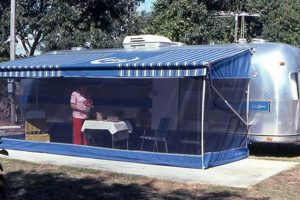
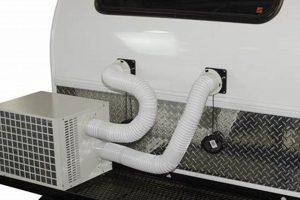
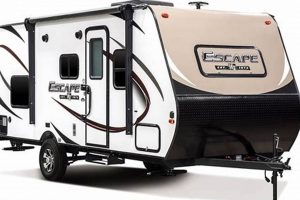
These specialized recreational vehicles are engineered to withstand the rigors of off-pavement travel. They feature robust construction, enhanced suspension systems, and durable tires designed to navigate challenging terrains such as gravel roads, forest trails, and uneven landscapes. A typical example includes models with reinforced frames, skid plates for undercarriage protection, and independent suspension for improved handling on rough surfaces.
The value of these vehicles lies in their ability to expand travel possibilities beyond traditional campgrounds and paved roadways. This allows access to remote and scenic locations, providing opportunities for unique camping and outdoor experiences. Historically, the development of these units mirrors the increasing demand for adventure travel and the desire to explore destinations less accessible to conventional trailers. This trend reflects a growing interest in self-sufficient and off-grid camping.
The following sections will delve into specific aspects of these rugged recreational vehicles, including their key features, selection criteria, maintenance considerations, and popular models available on the market. Further discussion will cover modifications and upgrades to enhance off-road performance, ensuring a safe and enjoyable experience for outdoor enthusiasts.
Essential Considerations for Off-Road Recreational Vehicle Selection and Use
Selecting and maintaining a recreational vehicle designed for off-pavement use requires careful consideration of several factors to ensure safety, longevity, and a positive travel experience.
Tip 1: Frame and Chassis Inspection: Prior to purchase, thoroughly inspect the frame and chassis for signs of welding defects, rust, or previous damage. A robust frame is critical for withstanding the stresses of off-road travel. Models with reinforced frames and heavy-duty axles offer improved durability.
Tip 2: Suspension System Evaluation: The suspension system is paramount for handling rough terrain. Evaluate the type of suspension (e.g., independent suspension, leaf spring) and its load capacity. Consider upgrading to a suspension system specifically designed for off-road use to improve ride quality and handling.
Tip 3: Tire Selection and Maintenance: Equip the unit with tires appropriate for the intended terrain. All-terrain or mud-terrain tires with a high load rating are recommended. Regularly check tire pressure and inspect for damage before and after each trip. Carry a spare tire and the necessary tools for changing a flat.
Tip 4: Ground Clearance Assessment: Ensure sufficient ground clearance to avoid obstacles and prevent damage to the undercarriage. Measure the ground clearance at the lowest point (e.g., axles, tanks) and consider modifications such as axle lifts or larger tires to increase clearance if needed.
Tip 5: Protective Shielding Installation: Install skid plates or rock guards to protect vulnerable components such as water tanks, propane tanks, and plumbing lines from damage. These shields can significantly reduce the risk of punctures or leaks caused by rocks or debris.
Tip 6: Weight Distribution and Management: Properly distribute the weight inside the unit to maintain stability and prevent swaying during travel. Place heavier items closer to the axles and avoid overloading the rear of the unit. Use a weight distribution hitch to evenly distribute the load between the tow vehicle and the trailer.
Tip 7: Water and Dust Intrusion Prevention: Seal all windows, doors, and vents to prevent water and dust from entering the interior. Apply sealant around any penetrations in the exterior walls, such as wiring or plumbing connections. This will help protect the interior from damage and maintain a comfortable living environment.
By carefully adhering to these considerations, owners can maximize the performance and longevity of their off-road recreational vehicles, ensuring safe and enjoyable excursions into remote and challenging environments.
The subsequent sections will explore specific models, modification techniques, and essential gear that further enhance the capabilities and reliability of these specialized trailers.
1. Durability

Durability constitutes a foundational requirement for any recreational vehicle intended for all-terrain use. The capacity to withstand stress, resist damage, and maintain structural integrity across varied and challenging landscapes directly influences the safety and longevity of these specialized trailers.
- Frame Construction Integrity
The frame serves as the skeletal structure, bearing the entire load of the trailer and its contents. All-terrain travel necessitates a robust frame fabricated from high-strength steel or reinforced aluminum alloys. Welding quality and the implementation of gussets at stress points are critical. Frame failures can result in catastrophic structural compromise, rendering the unit unsafe and potentially irreparable.
- Exterior Panel Resilience
Exterior panels, often constructed from fiberglass, aluminum, or composite materials, provide weather protection and contribute to overall structural rigidity. Resistance to impacts from rocks, branches, and other debris encountered during off-pavement travel is paramount. Thicker panels and protective coatings enhance resistance to punctures, dents, and corrosion, extending the lifespan of the trailer’s exterior.
- Underbelly Protection Systems
The undercarriage of an all-terrain travel trailer is particularly vulnerable to damage from ground obstacles. Skid plates, rock guards, and reinforced tank enclosures provide essential protection for critical components such as water tanks, propane tanks, and plumbing lines. These protective measures prevent punctures, leaks, and other damage that can render the trailer unusable or require costly repairs.
- Component Quality and Longevity
The durability of individual components, including axles, suspension systems, tires, and electrical systems, directly impacts the overall reliability of the all-terrain travel trailer. Selecting components designed for heavy-duty use and implementing regular maintenance protocols can significantly extend their lifespan and minimize the risk of failures in remote locations. Corrosion-resistant materials and robust construction are essential considerations.
In summary, durability, encompassing robust frame construction, resilient exterior panels, comprehensive underbelly protection, and high-quality component selection, is a non-negotiable attribute of any all-terrain travel trailer. These elements collectively contribute to the unit’s capacity to withstand the rigors of off-pavement travel, ensuring safety, reliability, and long-term value.
2. Suspension

The suspension system within an all terrain travel trailer is not merely a comfort feature; it is a fundamental determinant of the vehicle’s off-road capability and structural integrity. Its primary function extends beyond providing a smoother ride; it is responsible for absorbing and dissipating the forces generated by uneven terrain, thereby preventing those forces from being directly transmitted to the trailer’s frame and cargo. Inadequate suspension can lead to accelerated wear and tear, component failure, and even structural damage, particularly when subjected to the repeated stresses of off-pavement travel.
Various suspension designs are implemented in all terrain travel trailers, each with its own set of advantages and disadvantages. Leaf spring suspensions, while relatively simple and robust, can offer limited articulation and ride quality compared to more advanced systems. Independent suspension systems, such as those utilizing trailing arms and coil springs or air springs, allow for greater wheel travel and articulation, enabling the trailer to maintain better contact with the ground across uneven surfaces. This enhanced traction and stability are crucial for navigating challenging terrain and reducing the risk of rollovers. A practical example is seen in trailers designed for extreme off-road use, which often incorporate long-travel independent suspension systems derived from off-road racing technology. These systems provide exceptional articulation and control, allowing the trailer to traverse obstacles that would be impassable for trailers with conventional suspension.
The practical significance of understanding the suspension system’s role lies in its impact on both the lifespan and safety of the trailer. Regular inspection and maintenance of suspension components, including shocks, springs, and bushings, are essential for ensuring optimal performance and preventing premature failure. Upgrading the suspension system to a higher-performance design can significantly enhance the all-terrain capabilities of a travel trailer, but it is crucial to consider the compatibility of the upgrade with the trailer’s frame and intended use. Neglecting the suspension system not only compromises the trailer’s performance but also jeopardizes the safety of its occupants and the integrity of its structure, underscoring the critical connection between suspension and the overall viability of an all terrain travel trailer.
3. Ground Clearance

Ground clearance constitutes a critical design parameter for any all-terrain travel trailer. It directly dictates the vehicle’s ability to navigate obstacles and traverse uneven terrain without sustaining damage to its undercarriage or becoming immobilized. Insufficient ground clearance severely restricts the range of environments the trailer can access, effectively negating its intended purpose.
- Obstacle Negotiation Capacity
Adequate ground clearance enables a trailer to clear obstacles such as rocks, tree roots, and uneven ground formations. Insufficient clearance results in these obstacles impacting and potentially damaging critical components located beneath the trailer, including axles, suspension components, plumbing, and holding tanks. For example, a trailer with a ground clearance of only 10 inches will be unable to safely traverse a rocky trail with 12-inch protrusions.
- Approach and Departure Angles
Ground clearance is intrinsically linked to approach and departure angles, which determine the trailer’s ability to ascend or descend steep inclines without the front or rear of the trailer contacting the ground. A higher ground clearance generally translates to improved approach and departure angles. Trailers intended for severe off-road conditions require significantly steeper angles to avoid becoming high-centered or sustaining damage to bumpers and frame components.
- Undercarriage Protection
While ground clearance provides a buffer against direct impacts, supplemental undercarriage protection is often necessary. Skid plates, rock sliders, and reinforced tank enclosures shield vulnerable components from damage caused by unavoidable contact with the ground. Even with substantial ground clearance, unforeseen obstacles can still pose a threat, making undercarriage protection a vital safeguard.
- Suspension Travel and Articulation
The effectiveness of ground clearance is also dependent on the suspension system’s travel and articulation capabilities. A trailer with ample ground clearance but limited suspension travel may still struggle to maintain contact with the ground on severely uneven terrain, potentially compromising stability and traction. Pairing high ground clearance with a suspension system designed for off-road use maximizes the trailer’s ability to navigate challenging environments.
In conclusion, ground clearance represents a fundamental design consideration for all-terrain travel trailers. Its impact extends beyond simply avoiding obstacles; it influences approach and departure angles, necessitates supplemental undercarriage protection, and relies on a capable suspension system to maximize its effectiveness. A comprehensive approach to ground clearance ensures the trailer can safely and reliably access remote and challenging environments, aligning with its intended purpose.
4. Tire Quality

Tire quality is paramount for all-terrain travel trailers, directly influencing safety, performance, and the ability to access remote locations. The tires are the primary point of contact between the trailer and the terrain, and their construction and specifications must be suited to the demands of off-pavement travel.
- Load Capacity and Rating
Tires on all-terrain travel trailers must possess adequate load capacity ratings to safely support the weight of the trailer and its contents. Exceeding the tire’s load rating can lead to tire failure, compromising stability and potentially causing accidents. Examples include situations where a trailer is overloaded with water, gear, or supplies, placing excessive strain on the tires. Proper load capacity is essential for safe and reliable operation.
- Tread Pattern and Traction
The tread pattern of a tire significantly impacts its ability to generate traction on various surfaces, including gravel, dirt, mud, and sand. Aggressive tread patterns with deep lugs provide enhanced grip and prevent slippage, enabling the trailer to navigate challenging terrain. Standard highway tires are ill-suited for off-road conditions due to their limited traction capabilities.
- Construction and Durability
Tire construction plays a critical role in resisting punctures, cuts, and other forms of damage commonly encountered during off-pavement travel. Reinforced sidewalls and durable tread compounds enhance resistance to sharp rocks, branches, and other hazards. Proper tire construction minimizes the risk of flats and ensures the tire can withstand the stresses of uneven terrain.
- Inflation Pressure Management
Maintaining proper inflation pressure is essential for optimizing tire performance and preventing premature wear. Lowering tire pressure can increase the contact patch and improve traction on soft surfaces like sand, while higher pressures are generally required for paved roads to improve fuel efficiency and handling. Monitoring and adjusting tire pressure based on the terrain and load conditions is critical for maximizing tire life and performance.
In summation, tire quality for an all-terrain travel trailer is not merely a matter of brand preference but a critical determinant of safety and capability. Selection of tires with appropriate load ratings, aggressive tread patterns, durable construction, and proper inflation management protocols is essential for ensuring reliable performance and access to remote and challenging destinations. Neglecting tire quality can lead to compromised safety, reduced mobility, and increased maintenance costs.
5. Protection

Protection represents a multifaceted design consideration integral to the functionality and longevity of any all-terrain travel trailer. Its implementation extends beyond merely shielding against physical damage; it encompasses safeguards against environmental factors, component stresses, and security threats. Prioritizing protection ensures sustained operational capacity and minimizes the risk of costly repairs or premature failure in challenging environments.
- Undercarriage Shielding
Undercarriage shielding involves the installation of skid plates, rock guards, and reinforced plating to protect vulnerable components such as water tanks, propane tanks, and plumbing lines from impacts with rocks, tree stumps, and other ground obstacles. For example, a thick steel skid plate positioned beneath a freshwater tank can prevent punctures that would otherwise render the trailer unusable. The implications extend beyond mere repair costs, potentially including a loss of essential water supply in remote locations.
- Weatherproofing and Sealing
Weatherproofing and sealing measures are crucial for preventing water intrusion, dust ingress, and the detrimental effects of prolonged exposure to ultraviolet radiation. Properly sealed windows, doors, and vents minimize the risk of water damage, mold growth, and corrosion within the trailer’s interior. Marine-grade sealants and UV-resistant coatings are often employed to enhance protection against harsh environmental conditions, ensuring the structural integrity of the trailer over time.
- Electrical System Safeguards
Electrical system safeguards protect sensitive components from power surges, short circuits, and the effects of moisture and vibration. Surge protectors, properly grounded wiring, and weatherproof enclosures mitigate the risk of electrical fires, equipment damage, and potential safety hazards. In the context of all-terrain travel, where access to reliable power sources may be limited, a robust and protected electrical system is essential for maintaining functionality and avoiding costly repairs.
- Security Measures
Security measures deter theft and unauthorized access to the trailer and its contents. Robust door and window locks, alarm systems, and GPS tracking devices provide a layered approach to security, minimizing the risk of break-ins and property loss. In remote locations where law enforcement presence may be limited, proactive security measures are particularly important for safeguarding valuables and maintaining peace of mind.
These protective facets, when comprehensively implemented, contribute to the resilience and reliability of all-terrain travel trailers. By safeguarding against physical damage, environmental factors, component stresses, and security threats, protection ensures these vehicles can withstand the rigors of off-pavement travel, providing safe and enjoyable experiences for outdoor enthusiasts. The absence of adequate protection can compromise functionality and diminish the long-term value of all-terrain travel trailers, particularly in environments that place significant demands on their structural integrity.
6. Capacity
Capacity, in the context of an all-terrain travel trailer, directly influences its operational effectiveness and suitability for extended off-grid excursions. It encompasses several critical parameters, including freshwater storage, greywater and blackwater holding tank volumes, cargo carrying capability (CCC), and electrical power storage capacity. Insufficient capacity in any of these areas restricts the duration and comfort of self-sufficient travel. For example, a trailer with limited freshwater capacity may necessitate frequent trips to replenish supplies, negating the benefit of remote location access. Conversely, a trailer with inadequate holding tank volume may restrict the duration of stay in areas lacking wastewater disposal facilities. Therefore, capacity directly impacts the scope and duration of adventures achievable with such a recreational vehicle.
Furthermore, understanding capacity is crucial for safe and responsible operation. Overloading a trailer beyond its specified cargo carrying capacity (CCC) can compromise its structural integrity, increase the risk of tire failure, and negatively affect handling characteristics, especially on uneven terrain. Consider a scenario where an owner adds aftermarket accessories or equipment without accounting for the additional weight, exceeding the CCC. This can lead to axle fatigue, suspension damage, and diminished braking performance, increasing the likelihood of accidents. Likewise, insufficient electrical capacity, particularly in trailers relying on solar power, can lead to depletion of battery reserves, impacting the ability to operate essential appliances, lighting, and communication devices. Careful consideration of individual needs and realistic assessment of cargo weight are thus paramount when selecting an all-terrain travel trailer.
In summary, capacity constitutes a fundamental aspect of an all-terrain travel trailer, dictating its suitability for specific travel styles and destinations. Proper assessment of freshwater, wastewater, cargo, and electrical needs, coupled with adherence to manufacturer-specified weight limits, is essential for ensuring safe, comfortable, and sustainable off-grid travel. Ignoring capacity considerations can lead to operational limitations, safety hazards, and compromised enjoyment of the remote environments these trailers are designed to access. The challenges lie in accurately predicting usage patterns and selecting a trailer that strikes a balance between capacity, size, weight, and maneuverability.
Frequently Asked Questions
The following addresses common inquiries regarding all-terrain travel trailers. The information is intended to provide clarity on aspects of selection, usage, and maintenance.
Question 1: What distinguishes an all-terrain travel trailer from a conventional travel trailer?
All-terrain travel trailers are engineered with reinforced frames, enhanced suspension systems, and durable tires designed to withstand the stresses of off-pavement travel. Conventional travel trailers typically lack these features and are primarily intended for use on paved roads and established campgrounds.
Question 2: What is the recommended maintenance schedule for an all-terrain travel trailer?
A comprehensive maintenance schedule should include regular inspection of the frame, suspension, tires, brakes, and electrical systems. Lubrication of moving parts, tightening of fasteners, and inspection for corrosion are also essential. The specific maintenance schedule should align with the manufacturer’s recommendations.
Question 3: Can the suspension system of a conventional travel trailer be upgraded for off-road use?
While it is possible to upgrade the suspension system of a conventional travel trailer, it may not be sufficient to achieve the same level of durability and performance as a purpose-built all-terrain model. The frame and other components may not be designed to withstand the stresses of off-road travel, potentially leading to structural failure.
Question 4: What are the essential safety precautions for towing an all-terrain travel trailer off-road?
Essential safety precautions include ensuring proper weight distribution, using a weight distribution hitch if necessary, maintaining appropriate tire pressure, driving at a safe speed, and avoiding sharp turns on uneven terrain. Familiarity with off-road driving techniques is also recommended.
Question 5: What is the typical lifespan of an all-terrain travel trailer?
The lifespan of an all-terrain travel trailer depends on several factors, including the quality of construction, the frequency of use, and the level of maintenance. With proper care, an all-terrain travel trailer can last for 10-15 years or more.
Question 6: What modifications can enhance the off-road capabilities of an all-terrain travel trailer?
Modifications that can enhance off-road capabilities include installing larger tires, upgrading the suspension system, adding skid plates or rock guards, installing a lift kit, and reinforcing the frame. These modifications should be performed by qualified professionals to ensure safety and proper functionality.
Understanding these aspects of all-terrain travel trailers is key to making informed decisions and ensuring a safe and enjoyable travel experience. The unique design and features of these vehicles necessitate careful consideration and proactive maintenance.
The subsequent section will explore popular models and manufacturers, providing a comparative analysis of their specifications and features.
Conclusion
The preceding analysis has underscored the critical attributes that define a capable all terrain travel trailer. Durability, suspension, ground clearance, tire quality, protection, and capacity collectively determine a unit’s suitability for navigating challenging environments and providing a sustainable base for remote exploration. Informed selection requires a thorough understanding of these factors and their interdependencies.
Potential buyers are advised to meticulously evaluate their specific needs and intended use before committing to a purchase. A well-chosen and properly maintained all terrain travel trailer can unlock access to unparalleled outdoor experiences, while a poorly considered selection may result in compromised safety and diminished enjoyment. Prudent decision-making is paramount to realizing the full potential of this specialized class of recreational vehicle.