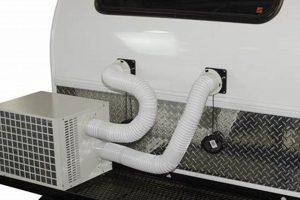
A recreational vehicle designed for towing behind a car, truck, or SUV, offering a living space on wheels, where “mpg” relates to the fuel efficiency that can be achieved while towing. These types of trailers aim to minimize the impact on the towing vehicle’s gas mileage.
Improved fuel economy in a towable recreational vehicle translates to lower fuel costs over the life of the trailer. This provides economic advantages for travelers, making longer trips more affordable. Historically, travel trailers often prioritized size and amenities over aerodynamic design and lightweight construction, leading to significant fuel consumption. Modern designs increasingly focus on reducing weight and improving aerodynamics to mitigate this issue.
The subsequent discussion examines factors influencing the fuel economy of towable recreational vehicles, including construction materials, aerodynamic profiles, and towing vehicle compatibility. Detailed analysis of the construction process, design elements and towing considerations will show the impact on overall efficiency.
Fuel Efficiency Considerations for Towable Recreational Vehicles
Maximizing fuel efficiency when towing a recreational vehicle requires careful planning and execution. The following points highlight critical aspects to consider.
Tip 1: Minimize Weight. Lighter recreational vehicles inherently require less energy to tow. Prioritize models constructed with lightweight materials like aluminum or composite panels.
Tip 2: Optimize Aerodynamics. A streamlined profile reduces wind resistance. Look for recreational vehicles with rounded front caps and minimal external protrusions.
Tip 3: Maintain Proper Tire Inflation. Underinflated tires increase rolling resistance. Regularly check and maintain tire pressure according to the manufacturer’s specifications for both the towing vehicle and the recreational vehicle.
Tip 4: Distribute Weight Evenly. Uneven weight distribution can negatively impact stability and fuel economy. Ensure cargo is distributed evenly within the recreational vehicle to maintain proper balance.
Tip 5: Reduce Speed. Higher speeds significantly increase wind resistance. Maintaining a moderate speed while towing can greatly improve fuel efficiency.
Tip 6: Towing Vehicle Selection. Select a towing vehicle that is appropriately sized and rated for the recreational vehicle’s weight. Avoid exceeding the towing vehicle’s maximum tow rating.
Tip 7: Regular Maintenance. Ensure both the towing vehicle and the recreational vehicle are properly maintained. Regular servicing, including engine tune-ups and wheel bearing lubrication, can improve overall efficiency.
Adhering to these recommendations can significantly improve fuel efficiency and reduce overall operating costs when towing a recreational vehicle.
The subsequent sections will delve into specific design features and technologies that contribute to improved fuel economy in towable recreational vehicles.
1. Aerodynamic profile

An aerodynamic profile is a critical design element directly influencing the fuel efficiency of towable recreational vehicles. The principle is that a streamlined shape reduces air resistance, enabling the towing vehicle to expend less energy to maintain speed. This translates into improved miles per gallon for the towing vehicle.
A recreational vehicle with a boxy, flat front generates significantly more drag than one with a rounded or tapered front. This is analogous to the difference between pushing a sheet of plywood versus a pointed dart through the air. The greater the drag, the more fuel is consumed to overcome it. Modern designs often incorporate features like curved roofs, integrated awnings, and enclosed underbellies to minimize turbulence and further enhance aerodynamics. For example, some high-end models employ computational fluid dynamics (CFD) during the design phase to optimize airflow and minimize drag coefficients.
In conclusion, the aerodynamic profile plays a vital role in the overall fuel economy of towable recreational vehicles. Prioritizing models with optimized aerodynamic features represents a practical strategy for reducing fuel consumption and minimizing the environmental impact of recreational travel. The implementation of aerodynamic improvements poses challenges, for example, the cost of manufacturing, however, the benefit to fuel economy has a significant impact.
2. Lightweight materials

The implementation of lightweight materials constitutes a primary strategy in enhancing the fuel efficiency of towable recreational vehicles. The direct correlation lies in the reduction of the overall weight, thereby decreasing the energy required to propel the recreational vehicle. Consequently, the towing vehicle experiences reduced strain, leading to improved gas mileage.
Traditional recreational vehicles often employ heavier materials, such as wood framing and fiberglass exteriors, which contribute to substantial weight. In contrast, contemporary designs increasingly utilize aluminum alloys for the frame and composite materials for the body panels. For instance, manufacturers like Airstream have long been recognized for their aluminum construction, resulting in lighter and more aerodynamic trailers. Other manufacturers use Azdel composite, a polypropylene and fiberglass composite material, is used as a replacement for wood in sidewalls. The practical significance of understanding this connection is that consumers can make informed decisions when selecting a recreational vehicle, prioritizing models constructed with lightweight materials to optimize fuel economy and minimize environmental impact.
The incorporation of lightweight materials presents both opportunities and challenges. While it offers a pathway to improved fuel efficiency, it may also necessitate higher initial costs and potentially impact the structural integrity of the recreational vehicle if not implemented correctly. It’s imperative to consider the vehicle’s structural design and weight distribution as materials are replaced. Despite these challenges, the long-term benefits of reduced fuel consumption and decreased carbon footprint render the adoption of lightweight materials a crucial consideration in the design and manufacturing of fuel-efficient towable recreational vehicles.
3. Towing vehicle matching
The selection of an appropriately matched towing vehicle is fundamentally linked to achieving optimal fuel efficiency when towing a recreational vehicle. A mismatch, wherein the towing vehicle is either undersized or overpowered for the recreational vehicle, directly affects fuel consumption. An undersized vehicle will struggle to pull the recreational vehicle, resulting in increased engine strain and significantly reduced miles per gallon. Conversely, an overpowered vehicle, while capable of towing with ease, may still exhibit suboptimal fuel economy if its engine is not operating within its most efficient range for the given load. For example, towing a lightweight recreational vehicle with a heavy-duty pickup truck designed for much heavier loads will likely result in lower fuel efficiency compared to using a mid-size SUV specifically rated for the recreational vehicle’s weight.
Factors such as the towing vehicle’s engine size, transmission type, and axle ratio play a significant role in determining its towing capacity and fuel efficiency. Matching these specifications to the recreational vehicle’s gross vehicle weight rating (GVWR) ensures the towing vehicle operates efficiently without being overloaded. Examples include selecting a vehicle with a diesel engine for its torque characteristics when towing heavier recreational vehicles or choosing a vehicle with a lower axle ratio for improved fuel economy when towing lighter loads. The practical significance of this matching process lies in the potential to save significantly on fuel costs over the lifespan of the recreational vehicle. Furthermore, proper matching enhances safety by ensuring stable handling and braking performance.
In summary, the connection between towing vehicle matching and achieving optimal fuel efficiency for a recreational vehicle is undeniable. Careful consideration of the towing vehicle’s specifications and its suitability for the recreational vehicle’s weight is crucial. Overlooking this aspect can lead to increased fuel consumption, compromised safety, and reduced longevity for both the towing vehicle and the recreational vehicle. Prioritizing a properly matched combination is, therefore, an essential component of responsible and economical recreational vehicle ownership.
4. Proper inflation

Maintaining proper tire inflation in both the towing vehicle and the recreational vehicle is inextricably linked to achieving optimal fuel efficiency. Underinflated tires increase rolling resistance, requiring the engine to exert more effort to maintain speed. This increased effort directly translates into higher fuel consumption. Conversely, properly inflated tires minimize rolling resistance, allowing the vehicle to glide more efficiently and improve miles per gallon. As an example, an recreational vehicle with significantly underinflated tires may experience a reduction in fuel efficiency by as much as 1-2 miles per gallon compared to the same vehicle with properly inflated tires. The importance of proper inflation as a component of fuel-efficient recreational vehicle usage stems from its direct impact on energy expenditure, contributing significantly to the overall operational cost.
The practical significance of understanding the connection between proper inflation and fuel efficiency is underscored by the availability of simple tools for monitoring tire pressure. Tire pressure gauges are readily available and inexpensive, allowing vehicle operators to routinely check and adjust tire pressure to the manufacturer’s recommended levels. Moreover, many modern vehicles are equipped with tire pressure monitoring systems (TPMS) that provide real-time alerts when tire pressure falls below a specified threshold. Regular tire pressure checks, combined with prompt inflation adjustments, can contribute to tangible fuel savings over time. For instance, consistently maintaining proper tire inflation can save hundreds of dollars in fuel costs annually, particularly for recreational vehicle owners who undertake frequent and long-distance trips.
In conclusion, proper tire inflation is a fundamental yet often overlooked aspect of maximizing fuel efficiency. Neglecting this simple maintenance task can result in increased fuel consumption and higher operating costs, while proactively maintaining proper tire pressure yields tangible benefits in terms of fuel savings and reduced environmental impact. The challenges associated with maintaining proper inflation are minimal, requiring only routine checks and adjustments, making it an accessible and cost-effective strategy for optimizing fuel efficiency in towable recreational vehicle applications. The need to maintain the vehicle, including tires is the responsibility of the user. The broader theme is responsible vehicle operation.
5. Cargo distribution
Uneven distribution of cargo within a towable recreational vehicle directly influences fuel efficiency. Imbalanced weight creates instability, causing the towing vehicle to work harder to maintain control. This increased effort results in elevated fuel consumption. For instance, if the majority of the weight is concentrated at the rear of the recreational vehicle, it can induce a pendulum effect, forcing the towing vehicle to constantly compensate. This strain on the engine leads to a decline in miles per gallon. The importance of proper cargo distribution is rooted in its ability to minimize unnecessary drag and resistance, ensuring the towing vehicle operates within its optimal efficiency range.
Practical application involves strategically placing heavier items closer to the axle or slightly forward of it. This helps to maintain a balanced tongue weight, typically around 10-15% of the recreational vehicle’s total weight. An accurate tongue weight reduces swaying and improves handling stability, contributing to better fuel economy. Examples of poor distribution include loading the recreational vehicle with heavy equipment in the back, potentially lightening the tongue and making the trailer susceptible to sway. In contrast, distributing weight properly and using weight distribution hitches as needed, enhance stability and fuel economy.
In summary, cargo distribution is an essential consideration for achieving optimal fuel efficiency in a towable recreational vehicle. Imbalance of the vehicle can cause poor handling and affect the “mpg” rating negatively. While challenges may arise in consistently maintaining ideal weight distribution during travel, the benefits of improved fuel economy and enhanced safety outweigh the effort. The link between safe towing and efficient use of fuel hinges on careful planning and execution of cargo loading procedures.
Frequently Asked Questions
This section addresses common inquiries regarding fuel efficiency in towable recreational vehicles. The information provided aims to offer clarity and guidance for informed decision-making.
Question 1: What factors most significantly impact the fuel efficiency of a towable recreational vehicle?
The primary factors include aerodynamic design, overall weight, tire inflation, and the matching of the towing vehicle to the recreational vehicle’s weight. Driving speed and cargo distribution also have a considerable effect.
Question 2: How does the recreational vehicle’s construction material affect fuel consumption?
Lighter materials, such as aluminum or composite panels, reduce the recreational vehicle’s weight, requiring less energy to tow. This results in improved fuel efficiency compared to heavier materials like wood framing and fiberglass.
Question 3: What role does aerodynamics play in fuel efficiency?
A streamlined shape reduces air resistance, allowing the towing vehicle to expend less energy to maintain speed. Recreational vehicles with rounded front caps and minimal external protrusions exhibit improved aerodynamics.
Question 4: Why is proper tire inflation important for fuel economy?
Underinflated tires increase rolling resistance, requiring the engine to work harder. Maintaining proper tire pressure minimizes rolling resistance, improving fuel efficiency.
Question 5: How does cargo distribution impact fuel efficiency when towing a recreational vehicle?
Uneven weight distribution creates instability, forcing the towing vehicle to work harder to maintain control. Distributing heavier items closer to the axle improves stability and fuel efficiency.
Question 6: Is it possible to significantly improve the fuel efficiency of an older, less aerodynamic recreational vehicle?
While it may be challenging to drastically alter the inherent design of an older recreational vehicle, some improvements can be made. Ensuring proper tire inflation, minimizing unnecessary weight, and maintaining a moderate driving speed can contribute to modest improvements in fuel economy.
Optimizing fuel efficiency in towable recreational vehicles necessitates a holistic approach encompassing vehicle design, maintenance practices, and responsible driving habits.
The subsequent section delves into emerging technologies aimed at further enhancing fuel economy in towable recreational vehicles.
Conclusion
The pursuit of fuel efficiency within the context of towable recreational vehicles, specifically concerning the mpg travel trailer, necessitates a multifaceted approach. Design innovations, encompassing aerodynamic profiles and the utilization of lightweight materials, represent critical factors. Furthermore, meticulous attention to maintenance practices, including ensuring proper tire inflation and optimizing cargo distribution, directly contributes to improved fuel economy. Appropriately matching the towing vehicle to the recreational vehicle’s weight and adhering to responsible driving habits are also paramount.
The information in this study emphasizes that the “mpg travel trailer” is dependent on multiple decisions. As the industry progresses, a dedication to these components is necessary. Therefore, continued research and technological advancements aimed at minimizing fuel consumption and enhancing sustainability in recreational travel remain essential.