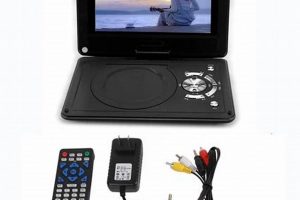
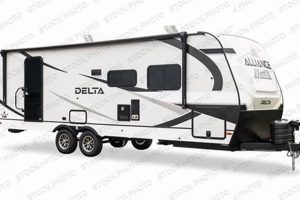
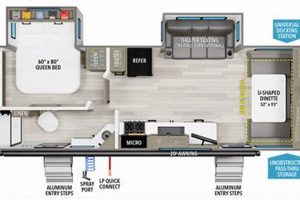
Entertainment systems within recreational vehicles commonly include a video display unit. These devices are designed to provide viewing access to broadcast programming, streamed content, or stored media during travel or while stationary at campsites. A typical installation involves mounting a screen, often an LED or LCD panel, inside the living area of the trailer. For example, occupants might utilize such a screen to watch a movie in the evening or catch up on news broadcasts while preparing meals.
The inclusion of video display technology enhances the overall travel experience, offering opportunities for relaxation and engagement during downtime. Historically, such systems were rudimentary, but advances in display technology and connectivity have dramatically improved the viewing experience. This capability allows for access to a wider range of content, making extended trips more enjoyable and providing a sense of normalcy and connection to the outside world.
The following sections will delve into specific aspects of these onboard video systems. Topics will include size and placement considerations, power requirements and energy efficiency, available connectivity options (including antenna and streaming capabilities), and methods for securing the device for safe travel.
Optimizing Onboard Entertainment
The following recommendations address key considerations for installing and maintaining a television system within a travel trailer, ensuring both functionality and safety during transit and at the campsite.
Tip 1: Secure Mounting is Essential: The chosen mounting bracket must be rated for the weight of the display unit and securely fastened to a structural element of the trailer. Verify that mounting hardware is appropriate for the wall material to prevent detachment during travel.
Tip 2: Consider Viewing Angles and Glare: Prior to installation, evaluate potential viewing angles from various seating positions within the trailer. Position the display to minimize glare from windows or overhead lighting. Adjustable mounting brackets can assist in optimizing the viewing experience.
Tip 3: Power Requirements and Efficiency: Determine the power consumption of the television and ensure the trailer’s electrical system can accommodate the additional load. Consider an energy-efficient model to reduce strain on the battery or generator. Inverters may be required to operate some units from a 12V DC power source.
Tip 4: Antenna and Connectivity Options: Evaluate available antenna options for over-the-air broadcasts. Ensure compatibility with the television’s tuner. Explore streaming options via cellular data or campground Wi-Fi. A robust Wi-Fi extender may be necessary in areas with weak signal strength.
Tip 5: Cable Management and Safety: Organize all cables and wires to prevent tripping hazards and potential damage during travel. Use cable ties or management systems to secure loose wires. Ensure that all electrical connections are properly insulated and protected.
Tip 6: Regular Maintenance and Inspection: Periodically inspect the mounting hardware, cables, and connections to ensure they remain secure and in good working order. Clean the screen with a microfiber cloth to maintain optimal picture quality.
Implementing these measures ensures a safe and functional video display system for improved travel trailer entertainment. Attention to mounting security, viewing considerations, power management, connectivity, and maintenance practices contributes to a more enjoyable and reliable onboard experience.
The subsequent section will explore troubleshooting common issues and providing strategies for resolving technical problems that may arise with an entertainment system during travel.
1. Mounting Stability

The integrity of a video display unit within a travel trailer is intrinsically linked to the robustness of its mounting system. Insufficient support mechanisms can lead to detrimental consequences, ranging from compromised viewing angles to complete detachment during transit. Vibration, acceleration, and sudden braking events exert considerable forces on the mounted display, necessitating a secure and properly engineered solution. Choosing a mounting bracket rated for the television’s weight and designed for mobile applications is thus essential. An improperly installed or inadequate mounting can cause the screen to vibrate excessively during travel, creating a distraction and making viewing uncomfortable. In extreme cases, the unit can detach from the mounting, posing a safety risk to occupants and potentially damaging the display itself, as well as other components inside the trailer.
The materials used in both the mounting bracket and the securing hardware play a critical role in maintaining stability. Heavy-duty steel or aluminum brackets, combined with appropriately sized and rated bolts or screws, provide the necessary resistance to the forces encountered during travel. Furthermore, the method of attachment to the trailer’s wall or cabinetry must be carefully considered. Fastening directly to structural studs or reinforced panels ensures a more secure connection compared to relying solely on thin paneling. For example, reinforcing the wall behind the mounting point with additional wood backing provides greater stability and prevents the screws from stripping out over time due to repeated vibrations. Articulating mounts, while offering flexibility in viewing angles, also introduce additional points of potential failure and therefore require particularly robust construction and secure locking mechanisms.
In conclusion, the stability of a “travel trailer television” mounting system is not merely a matter of convenience but a critical safety and operational consideration. Selecting the appropriate mounting hardware, ensuring proper installation techniques, and regularly inspecting the system are all essential for preventing damage and ensuring a reliable and enjoyable viewing experience. Neglecting these aspects can result in costly repairs, safety hazards, and a compromised entertainment experience, underscoring the significance of a well-engineered and maintained mounting solution.
2. Screen Size
Screen size represents a pivotal factor in the integration of video display units within the confines of a travel trailer. It is a determinant that must be carefully balanced against spatial constraints, viewing distance, power consumption, and overall user experience.
- Spatial Considerations and Ergonomics
The physical dimensions of the viewing screen must correspond proportionally to the available space within the trailer’s living area. Larger screens, while offering enhanced immersion, may overwhelm smaller interiors, creating an uncomfortable viewing environment. Conversely, excessively small screens can strain viewers’ eyes due to the increased viewing distance. The goal is to achieve a balance that maximizes visual impact without compromising the functionality or aesthetics of the space.
- Power Consumption and Energy Efficiency
Screen size directly influences the television’s power consumption. Larger displays typically require more energy to illuminate, potentially straining the travel trailer’s battery system, especially when operating off-grid. Choosing an appropriately sized screen with energy-efficient LED or LCD technology minimizes power draw and extends battery life. Manufacturers’ specifications detailing power consumption are critical for making informed decisions.
- Viewing Distance and Image Resolution
The optimal viewing distance is dictated by the screen size and resolution. Larger screens require greater viewing distances to avoid pixelation and maintain image clarity. Therefore, within the confined space of a travel trailer, the screen size must be carefully matched to the typical seating distance to provide a comfortable and immersive viewing experience. Selecting a higher resolution display can mitigate the effects of closer viewing distances but may also increase cost and power consumption.
- Mounting and Structural Integrity
Larger screens also necessitate stronger and more robust mounting solutions. The added weight and dimensions demand a mounting system capable of withstanding the vibrations and movements inherent to travel, preventing potential damage to the screen and surrounding structures. Reinforcing the wall or cabinetry behind the mounting point is often required to ensure adequate support and prevent detachment during transit.
In summary, the choice of screen size for a video display system in a recreational vehicle represents a multifaceted decision. It encompasses considerations of spatial limitations, power efficiency, viewing comfort, and structural integrity. Striking an equilibrium among these factors yields a viewing solution that enhances the travel experience without compromising safety or functionality.
3. Power Consumption

The power demands of a television significantly impact the operational capabilities of a travel trailer. These vehicles often rely on limited power sources, such as batteries or generators, to sustain electronic appliances. The choice of a television, therefore, necessitates a careful evaluation of its energy consumption. Higher power draw translates to shorter battery life, increased generator run time, and potentially, the need for more frequent recharging or refueling stops. For instance, an older, larger screen model could deplete a standard RV battery in a matter of hours, while a more efficient LED television might operate for an entire evening on the same charge. Consequently, understanding the power characteristics of the television is a crucial factor in ensuring a seamless and sustainable travel experience.
Practical considerations further emphasize the importance of power efficiency. Many campsites offer limited or no electrical hookups, forcing travelers to rely on self-generated power. In these situations, every watt saved contributes to extended operational independence. Furthermore, reduced power consumption translates directly to lower fuel consumption for generators, minimizing both the environmental impact and the operational costs. Selecting a television with energy-saving features, such as adjustable brightness settings and automatic power-down modes, can further mitigate the strain on the power system. Moreover, accurate monitoring of power usage through battery monitors or energy meters provides valuable insights for optimizing energy consumption habits.
In summary, the power consumption of a television is a critical parameter in the context of travel trailer operations. It directly affects battery life, generator usage, and overall energy independence. Prioritizing energy-efficient models and adopting mindful power management practices ensures a more sustainable and enjoyable travel experience, reducing both environmental impact and operational expenses. Ignoring power specifications when selecting a television can lead to significant operational challenges and ultimately detract from the overall travel experience.
4. Antenna Reception

Effective antenna reception constitutes a fundamental element in the utility of a television within a travel trailer. The capacity to receive over-the-air broadcast signals dictates the availability of free, local television programming, especially in locations with limited or non-existent cellular or internet connectivity.
- Antenna Type and Design
The type of antenna employed significantly impacts signal acquisition. Omnidirectional antennas, while convenient due to their ability to receive signals from all directions without manual adjustment, may be less effective in areas with weak or distant broadcast towers. Directional antennas, requiring manual or motorized aiming, offer superior gain and signal clarity in such scenarios. The antenna’s design must also account for the metal construction of the travel trailer, which can interfere with signal propagation.
- Signal Strength and Location
Signal strength varies significantly based on geographical location and proximity to broadcast towers. Rural areas or campsites nestled in valleys may experience weak or intermittent reception. Online resources and signal mapping tools can assist in identifying the location of broadcast towers and assessing potential signal strength at a given location. Terrain, vegetation, and atmospheric conditions further influence signal propagation.
- Antenna Amplification and Distribution
Signal amplifiers can boost weak signals to improve picture quality, particularly in fringe reception areas. However, excessive amplification can also introduce noise and distortion. Signal distribution systems, including splitters and coaxial cabling, allow for multiple televisions within the trailer to receive the antenna signal simultaneously. Proper shielding and grounding of these components are essential to minimize interference and maintain signal integrity.
- Troubleshooting and Maintenance
Antenna reception issues can arise due to various factors, including loose connections, damaged cabling, or antenna misalignment. Regular inspection and maintenance of the antenna system are crucial for ensuring reliable performance. Simple troubleshooting steps, such as checking cable connections and realigning the antenna, can often resolve reception problems. Professional assistance may be required for more complex issues, such as antenna replacement or signal analysis.
The relationship between antenna reception and travel trailer television underscores the importance of a well-designed and properly maintained antenna system. Optimal signal acquisition enhances the viewing experience, providing access to a range of broadcast programming, particularly in remote locations where alternative connectivity options are limited. This integration directly impacts the entertainment value and overall enjoyment of the travel experience.
5. Connectivity Options
The ability of a travel trailer television to access content hinges critically on its connectivity options. These capabilities dictate the range of entertainment sources available, transforming a simple display screen into a versatile entertainment hub. Without diverse connectivity, the television remains limited to over-the-air broadcasts, while robust options enable access to streaming services, stored media, and external devices.
- Over-the-Air (OTA) Antenna Reception
OTA reception provides access to local broadcast channels without recurring subscription fees. A digital antenna is essential for receiving these signals, which can be a primary source of entertainment in areas with limited internet access. Signal quality and channel availability vary based on location and proximity to broadcast towers.
- Wi-Fi Connectivity
Wi-Fi enables streaming services like Netflix, Hulu, and Amazon Prime Video, provided a stable internet connection is available. Campgrounds often offer Wi-Fi, but signal strength and bandwidth can be unreliable. Mobile hotspots or cellular data plans offer alternative internet access, albeit with potential data usage limitations and associated costs.
- HDMI and USB Ports
HDMI ports facilitate connections to external devices such as Blu-ray players, gaming consoles, and laptops, expanding entertainment options beyond streaming and broadcast content. USB ports allow for playback of media files stored on flash drives or external hard drives, providing access to a personal media library.
- Bluetooth Functionality
Bluetooth connectivity enables wireless audio streaming to external speakers or headphones, enhancing the audio experience and minimizing cable clutter. This is particularly useful for creating a more immersive viewing experience or for private listening without disturbing others within the trailer.
The interplay of these connectivity options defines the utility of a travel trailer television. A television equipped with a combination of OTA reception, Wi-Fi, HDMI, USB, and Bluetooth offers the most comprehensive entertainment experience, adapting to various scenarios and providing flexibility in content access. The selection of these options depends on the user’s specific needs, travel destinations, and desired level of technological integration.
6. Viewing Angle
The viewing angle of a video display unit within a travel trailer profoundly affects the user experience. Limited space and fixed seating arrangements within these vehicles necessitate careful consideration of this parameter. A narrow viewing angle results in diminished image quality, color distortion, or complete invisibility of the picture for viewers positioned off-center. This creates an unsatisfactory entertainment experience, particularly when multiple occupants are present. For example, a television with a poor viewing angle may only provide an acceptable picture to a single person seated directly in front of it, while others are left with a washed-out or distorted image.
The underlying cause of this effect lies in the technology of the display panel itself. Older LCD panels, for instance, are known for their restrictive viewing angles, whereas newer technologies like IPS (In-Plane Switching) panels offer significantly wider viewing angles with minimal degradation in image quality. The importance of selecting a “travel trailer television” with a wide viewing angle is therefore paramount to ensuring that all occupants can enjoy a consistent and satisfactory viewing experience, regardless of their seating position. Practical application involves researching and comparing the viewing angle specifications of different models prior to purchase and considering adjustable mounting brackets that can further optimize the viewing position.
In summary, viewing angle represents a critical performance characteristic for video displays installed in travel trailers. Choosing a television with a wide viewing angle, ideally an IPS panel or similar technology, mitigates the challenges posed by limited space and fixed seating. This selection improves overall user satisfaction and contributes to a more enjoyable entertainment experience for all occupants. Neglecting this aspect can lead to frustration and a compromised viewing experience, highlighting the need for careful evaluation and informed decision-making.
7. Durability
The operating environment within a travel trailer presents unique challenges to electronic equipment, thereby making durability a critical attribute of the onboard television. Constant motion, vibrations, temperature fluctuations, and potential exposure to moisture contribute to accelerated wear and tear. Consequently, standard consumer-grade televisions designed for stationary home use may exhibit premature failure when subjected to these conditions. A television lacking robust construction and internal component stabilization is susceptible to damage from the repetitive stresses encountered during travel, potentially leading to screen malfunctions, audio disruptions, or complete system failure. The impact of these failures is magnified by the inconvenience and cost associated with repair or replacement while on the road.
Durable construction manifests in several key features. Reinforced internal frames, vibration-resistant component mounting, and conformal coatings on circuit boards enhance resilience to the rigors of travel. Screens constructed with tempered glass or impact-resistant polymers offer increased protection against accidental damage. Furthermore, models designed with wider operating temperature ranges ensure functionality and longevity in varying climates. For instance, a television rated for operation between -10C and 60C will likely outperform a standard model in the extreme temperatures encountered during summer desert travel or winter mountain excursions. Selecting a “travel trailer television” specifically engineered for mobile applications, often indicated by designations such as “RV-ready” or “mobile-rated,” mitigates the risk of premature failure and extends the operational lifespan of the device.
In conclusion, the durability of a “travel trailer television” is not merely a desirable feature, but a necessity for ensuring reliable performance and long-term value. Robust construction, vibration resistance, temperature tolerance, and impact-resistant materials contribute to extended operational lifespan and minimize the likelihood of malfunction during travel. Investing in a durable model tailored for the mobile environment proves a prudent decision, mitigating the inconvenience and expense associated with premature failure and ensuring a consistent entertainment experience for travel trailer occupants.
Frequently Asked Questions
The following section addresses common inquiries regarding the selection, installation, and operation of video display units in recreational vehicles.
Question 1: What size television is appropriate for a travel trailer?
The optimal screen size depends on the dimensions of the living area and the typical viewing distance. Smaller trailers may necessitate screens of 24 inches or less, while larger models can accommodate displays up to 40 inches. Careful measurement of available space and consideration of comfortable viewing angles are essential.
Question 2: What power source is required for travel trailer televisions?
Most models operate on 120V AC power, requiring connection to shore power or a generator. Alternatively, 12V DC televisions are available, enabling direct operation from the trailer’s battery system. Inverters can convert 12V DC to 120V AC for compatibility with standard televisions, albeit with potential energy losses.
Question 3: How should a television be securely mounted in a travel trailer?
A robust mounting bracket specifically designed for mobile applications is essential. The bracket must be rated for the weight of the television and securely fastened to a structural element of the trailer’s wall. Reinforcing the wall behind the mounting point is recommended for added stability.
Question 4: What antenna options are available for travel trailer television reception?
Over-the-air (OTA) antennas provide access to local broadcast channels. Omnidirectional antennas offer convenient reception from all directions, while directional antennas provide enhanced gain in specific locations. Satellite dishes offer access to subscription-based satellite television services.
Question 5: How can streaming services be accessed on a travel trailer television?
Accessing streaming services requires a stable internet connection, typically provided by campground Wi-Fi, a mobile hotspot, or a cellular data plan. Smart televisions with built-in Wi-Fi connectivity are required. Alternatively, external streaming devices, such as Roku or Amazon Fire Stick, can be connected via HDMI.
Question 6: What measures can be taken to protect a travel trailer television during transit?
Ensure that the television is securely mounted and that all cables are properly secured to prevent damage. Consider using a protective cover or storing the television in a safe location during travel. Avoid exposing the television to extreme temperatures or moisture.
Proper planning, selection, and maintenance of the “travel trailer television” are key to ensuring safe and consistent entertainment during travel.
The next article section will cover troubleshooting common technical issues.
Travel Trailer Television
This examination has elucidated the multifaceted considerations surrounding video display systems in recreational vehicles. Factors spanning mounting stability, screen dimensions, power consumption, signal acquisition, connectivity alternatives, viewing angles, and equipment resilience have been addressed. Proper comprehension of these elements is paramount for selecting and maintaining systems that deliver safety, functionality, and enhanced travel experiences.
In conclusion, the integration of onboard entertainment demands careful planning and execution. The implementation of suggested guidelines, encompassing equipment choice, setup methods, and maintenance routines, promotes user contentment and system longevity. Further developments in display technology and connectivity solutions will likely refine and augment the options available to travel trailer enthusiasts, further cementing the role of onboard video entertainment.