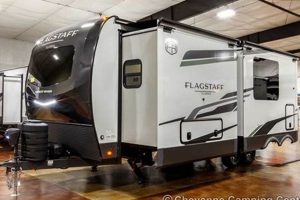
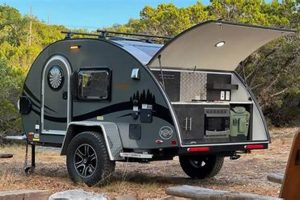
An enclosure made of mesh fabric, attached to the framework of a recreational vehicle’s sunshade, provides an outdoor living space shielded from insects and some weather elements. These additions significantly expand the usable area around a towed camper, offering protection from common outdoor nuisances.
The inclusion of a screened enclosure offers numerous advantages, including enhanced comfort and usability of the campsite area. Historically, these enclosures represented a significant upgrade from open-air setups, addressing concerns about pests and creating a more enjoyable environment. They allow for outdoor dining, relaxation, and storage without the intrusion of bugs or the direct impact of light precipitation, leading to a more comfortable camping experience. Furthermore, such additions can act as a privacy screen, buffering the campsite from neighboring sites.
The following sections will delve into the various types, installation methods, care considerations, and selection criteria for these valuable additions to travel trailers, providing a comprehensive overview for owners and prospective buyers.
Selecting and Maintaining a Protective RV Enclosure
Ensuring optimal performance and longevity requires careful consideration of selection, installation, and maintenance procedures. The following tips offer guidance for maximizing the benefits of an outdoor RV enclosure.
Tip 1: Material Selection: Evaluate the mesh fabric’s durability and resistance to UV degradation. Polyester or vinyl-coated materials offer greater longevity compared to standard nylon mesh, especially in regions with intense sunlight.
Tip 2: Accurate Measurements: Precisely measure the distance between support arms of the sunshade before purchasing a screen room. Incorrect measurements lead to installation difficulties and reduced performance.
Tip 3: Professional Installation: Consider professional installation, particularly for complex or custom-fitted models. Correct installation ensures proper tension, sealing, and structural integrity.
Tip 4: Regular Cleaning: Regularly clean the mesh fabric to remove dirt, debris, and mildew. Use a mild detergent and soft brush to avoid damaging the material. Allow to fully air dry before stowing.
Tip 5: Secure Anchoring: Employ robust anchoring systems to secure the enclosure, especially in windy conditions. Heavy-duty stakes and tie-down straps provide added stability and prevent damage.
Tip 6: Proper Storage: When not in use, store the enclosure in a dry, protected environment. This minimizes the risk of mold growth, UV damage, and physical wear.
Tip 7: Zipper Maintenance: Lubricate zippers regularly with silicone-based lubricant to ensure smooth operation and prevent corrosion. Inspect zippers for damage and repair promptly to avoid complete failure.
Adhering to these guidelines significantly enhances the usefulness and lifespan of screened enclosures, contributing to an improved outdoor recreational vehicle experience.
The subsequent section addresses common issues and troubleshooting techniques associated with protective RV enclosures.
1. Protection from Insects

The primary function of a recreational vehicle sunshade enclosure is to provide a barrier against insects, thereby enhancing the usability and comfort of the adjacent outdoor space. This capability directly addresses a major concern for campers, allowing for relaxed enjoyment of the outdoors without constant exposure to biting pests.
- Mesh Density and Weave
The effectiveness of insect protection is directly correlated to the mesh density and weave tightness. Finer mesh, measured in holes per inch (HPI), prevents smaller insects, such as no-see-ums, from penetrating the barrier. A tighter weave further reduces the likelihood of gaps that could allow insects to enter. For example, a mesh with an HPI of 20×20 offers basic protection against larger insects, while a mesh with an HPI of 30×30 or higher provides superior protection against smaller pests. The material and construction determine the level of insect intrusion prevention.
- Sealed Entry Points
The presence of gaps around entry points, such as zippers, seams, and the connection to the RV, compromises insect protection. Effective designs incorporate features like overlapping fabric flaps, magnetic closures, or tight seals to minimize these vulnerabilities. For instance, a screened enclosure with double zippers and Velcro seals along the edges creates a near-impenetrable barrier against insects. A poorly sealed connection allows easy access for insects, negating the benefits of the mesh itself.
- Material Composition and Treatment
While mesh density is crucial, the material composition and any applied treatments contribute to insect deterrence. Certain materials, such as those infused with insect repellents, offer an additional layer of protection. For example, a mesh treated with permethrin repels insects upon contact, further reducing the likelihood of them entering the enclosure. However, the effectiveness of such treatments may diminish over time and with repeated washing.
- Enclosure Maintenance and Repair
Regular inspection and maintenance of the enclosure are essential for sustained insect protection. Tears, holes, or damaged seams can provide entry points for insects. Prompt repair of any damage, using appropriate patching materials or professional repair services, is critical. Accumulated debris or mold growth can also attract insects, necessitating regular cleaning and upkeep.
These aspects mesh density, sealed entry points, material composition, and ongoing maintenance collectively determine the effectiveness of a recreational vehicle sunshade enclosure in providing protection from insects. Addressing each of these factors ensures a comfortable and insect-free outdoor living space.
2. Increased Living Space
The addition of a recreational vehicle sunshade enclosure to a travel trailer significantly expands the usable living area, effectively creating an outdoor room that complements the limited interior space. This expansion directly addresses the needs of travelers seeking comfortable and versatile accommodations during their trips.
- Extended Functional Area
A sunshade enclosure provides a defined area for activities that may be impractical or undesirable within the confines of a travel trailer. Meal preparation, dining, recreation, and storage can be accommodated within the enclosure, freeing up interior space for sleeping and relaxation. For example, bulky camping gear, muddy boots, or wet clothing can be stored within the enclosure, preventing the introduction of dirt and clutter into the living space.
- Enhanced Social Interaction
The increased space facilitates social interaction among travelers. The enclosure provides a comfortable setting for group activities, such as playing games, sharing meals, or simply relaxing and conversing. This is particularly beneficial for families or groups traveling together, as it allows for shared experiences without overcrowding the interior living quarters.
- Improved Comfort and Convenience
By providing protection from insects and the elements, a sunshade enclosure enhances comfort and convenience. Travelers can enjoy the outdoors without being subjected to biting insects, direct sunlight, or light rain. This allows for extended periods of outdoor enjoyment, regardless of weather conditions. The enclosure also offers a degree of privacy, shielding the campsite from neighboring sites and creating a more secluded atmosphere.
- Versatile Usage Scenarios
The expanded living area provided by a sunshade enclosure can be adapted to various usage scenarios. It can serve as a dining area, a lounge, a play area for children, or a workspace for those who need to remain connected while traveling. This versatility makes it a valuable addition to any travel trailer, enhancing its functionality and adaptability to diverse needs.
These factors the provision of extended functional area, the facilitation of enhanced social interaction, the improvement of comfort and convenience, and the enabling of versatile usage scenarios collectively demonstrate the significant impact of a recreational vehicle sunshade enclosure on expanding the living space of a travel trailer. By creating a comfortable and protected outdoor environment, the enclosure enhances the overall travel experience.
3. Weather Resistance

Weather resistance constitutes a critical performance attribute for recreational vehicle sunshade enclosures. The degree to which these enclosures withstand various environmental conditions directly impacts their utility and longevity, influencing the overall camping experience.
- Material Composition and Construction
The selection of materials and construction methods directly influences the enclosure’s ability to withstand the elements. Durable, water-resistant fabrics, such as vinyl-coated polyester, offer protection from rain and moisture. Reinforced seams and sturdy zippers enhance structural integrity and prevent leaks. For instance, an enclosure constructed with UV-resistant fabric minimizes degradation from prolonged sun exposure, extending its lifespan. Conversely, lightweight, non-waterproof materials offer limited protection and are susceptible to damage in adverse weather.
- Structural Design and Stability
The design and stability of the enclosure determine its ability to withstand wind and maintain its shape. A well-designed enclosure incorporates features such as reinforced corners, adjustable support poles, and secure anchoring systems. These elements distribute stress and prevent the enclosure from collapsing or being blown away in windy conditions. For example, an enclosure with multiple guy lines and ground stakes provides superior stability compared to a freestanding model. An unstable design compromises weather resistance, potentially leading to damage or injury.
- Waterproof Seams and Seals
Even with water-resistant fabrics, seams and seals can be points of water entry. Waterproofing techniques, such as taping or welding seams, are essential for preventing leaks and maintaining a dry interior. Similarly, tight seals around zippers and attachment points minimize water penetration. For example, an enclosure with heat-sealed seams and waterproof zippers offers greater protection from rain compared to one with untreated seams and standard zippers. Defective or poorly sealed seams compromise water resistance, leading to discomfort and potential damage to belongings.
- Ventilation and Condensation Control
While providing weather protection, it is crucial to ensure adequate ventilation to prevent condensation buildup within the enclosure. Ventilation openings allow moisture to escape, reducing the risk of mold growth and improving air quality. For instance, an enclosure with mesh windows or adjustable vents provides airflow while still offering protection from insects and rain. Inadequate ventilation contributes to condensation, creating a damp and uncomfortable environment.
The interplay of material selection, structural design, seam sealing, and ventilation determines the weather resistance of a recreational vehicle sunshade enclosure. Addressing each of these factors ensures a comfortable and protected outdoor space, extending the usability of the travel trailer in diverse weather conditions.
4. Enhanced Privacy
Recreational vehicle campgrounds, characterized by their typically close-quarters arrangements, often present limited opportunities for privacy. A primary benefit of utilizing a travel trailer sunshade enclosure lies in its ability to mitigate this inherent lack of seclusion. The enclosure’s fabric walls and mesh screens effectively create a visual barrier, diminishing the visibility between campsites and thereby enhancing the perceived sense of personal space.
The increased privacy afforded by these enclosures has a direct impact on comfort and relaxation. Campers are less likely to feel exposed or observed, allowing them to engage in activities such as reading, dining, or socializing with greater ease. For instance, an individual wishing to change clothes or simply unwind without feeling conspicuous can readily do so within the confines of a properly installed sunshade screen. This is particularly important in crowded campgrounds or during peak seasons when campsites are densely populated. Without such a barrier, the constant awareness of neighboring campers can diminish the overall enjoyment of the outdoor experience.
The degree of privacy enhancement is contingent upon the specific design and material of the screen. Opaque fabrics offer a higher level of visual obstruction compared to transparent mesh, though they may also reduce airflow and natural light. Ultimately, the selection of a sunshade enclosure should consider the trade-off between privacy, ventilation, and personal preferences. The practical significance of understanding this connection lies in enabling informed decisions when purchasing or utilizing these accessories, ensuring they effectively address the individual’s need for enhanced privacy while camping.
5. Ease of Installation
The “ease of installation” of a travel trailer sunshade enclosure significantly influences its adoption and practical utility. A complex or time-consuming installation process can deter frequent use, effectively negating the benefits of expanded living space, insect protection, and weather resistance. Conversely, a straightforward, intuitive installation encourages regular deployment, maximizing the value of the accessory. For example, a sunshade screen requiring specialized tools or multiple individuals for assembly is less likely to be used for short-term camping trips compared to one that can be erected quickly and easily by a single person.
The design and components of the enclosure play a critical role in determining the simplicity of installation. Features such as pre-attached components, color-coded poles, and clear, concise instructions streamline the process. Moreover, the method of attachment to the travel trailer itself is a key consideration. Enclosures that utilize existing sunshade support structures or integrated attachment systems are generally easier to install than those requiring independent mounting hardware. A practical example would be a screen room that utilizes the sunshade roller to hang from, and clips on to the roller support bars. Additionally, weight and pack size affect “ease of installation” if single person need to carry it.
In summary, “ease of installation” represents a crucial factor in the overall assessment of a travel trailer sunshade enclosure. Its direct impact on user convenience and frequency of use underscores its importance. Manufacturers prioritize simplified installation processes and clear, intuitive designs to enhance the appeal and practicality of these accessories, encouraging their widespread adoption among travel trailer owners. Conversely, the lack of such considerations has negative impact for users who cannot easily setup the “travel trailer awning screen”.
Frequently Asked Questions
The following section addresses common inquiries regarding the selection, usage, and maintenance of recreational vehicle sunshade enclosures, providing factual and objective answers.
Question 1: What are the primary benefits of a travel trailer awning screen?
The primary benefits include protection from insects, expansion of usable living space, enhanced privacy, and a degree of weather resistance. The enclosure creates a comfortable and functional outdoor area adjacent to the travel trailer.
Question 2: How does mesh density affect the effectiveness of an awning screen?
Mesh density, measured in holes per inch (HPI), directly correlates with insect protection. Higher HPI values prevent smaller insects, such as no-see-ums, from penetrating the barrier. A finer mesh offers superior protection against a wider range of pests.
Question 3: What materials are commonly used in the construction of a travel trailer awning screen?
Common materials include polyester, vinyl-coated polyester, and various types of nylon mesh. Polyester and vinyl-coated polyester offer greater durability and UV resistance compared to standard nylon. Frame components typically consist of aluminum or steel.
Question 4: How does one properly maintain a travel trailer awning screen?
Proper maintenance involves regular cleaning with a mild detergent and soft brush to remove dirt, debris, and mildew. Zippers should be lubricated periodically with silicone-based lubricant. Any tears or damage should be repaired promptly to prevent further deterioration.
Question 5: What should be considered when selecting an awning screen for a travel trailer?
Factors to consider include accurate measurements of the sunshade, material durability, mesh density, ease of installation, and weather resistance. The intended use and camping environment should also be taken into account.
Question 6: How can the stability of an awning screen be improved in windy conditions?
Stability can be enhanced by using heavy-duty ground stakes, tie-down straps, and adjustable support poles. Ensuring proper tension and secure anchoring is crucial for preventing the enclosure from collapsing or being blown away in high winds.
In summary, travel trailer sunshade enclosures offer numerous advantages, but careful selection, proper maintenance, and attention to installation are essential for maximizing their benefits.
The subsequent section will discuss alternative solutions and modifications for enhancing the functionality of recreational vehicle outdoor spaces.
Conclusion
The preceding discussion has explored the characteristics, benefits, and considerations associated with a travel trailer awning screen. The provision of insect protection, expansion of living space, and enhancement of privacy, coupled with varying degrees of weather resistance, defines the core value proposition. Effective utilization requires careful consideration of material properties, installation techniques, and ongoing maintenance to ensure optimal performance and longevity.
The selection of a travel trailer awning screen represents a significant decision impacting the overall camping experience. By carefully evaluating individual needs and prioritizing essential features, owners can maximize the utility and enjoyment of their recreational vehicle. The informed application of these principles ensures that investment yields a tangible improvement in outdoor living comfort.