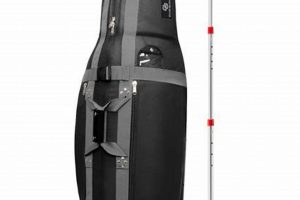
A specialized piece of luggage designed for transporting skiing equipment, most commonly skis, poles, and related gear, is a necessary investment for skiers who travel to different locations to engage in their sport. These bags come in various sizes and constructions, often featuring durable materials and padding to protect the contents during transit. As an example, an individual flying to a mountain resort would utilize this bag to ensure the safe arrival of their equipment.
The use of such specialized luggage offers considerable advantages. It minimizes the risk of damage to expensive ski equipment during handling and transport. Furthermore, a dedicated container allows for efficient organization and prevents individual components from being lost or misplaced. Historically, skiers often relied on improvised methods for transporting equipment, leading to increased wear and tear. The development of purpose-built solutions has significantly improved the experience of skiers who travel.
Understanding the different types available, the key features to consider when selecting the right one, and proper packing techniques are all crucial for maximizing the benefits of this essential piece of ski travel equipment. Further discussion will focus on materials, dimensions, carrying options, and best practices for protecting equipment during transit.
Optimizing the Use of Ski Equipment Luggage
The following recommendations are intended to enhance the protection and convenience associated with transporting skis and related accessories. Careful consideration of these points can minimize the risk of damage and streamline the travel process.
Tip 1: Select Appropriate Dimensions: The length of the bag should adequately accommodate the longest item, typically the skis, without excessive empty space, which can allow for shifting during transit. Measure ski length precisely before purchase.
Tip 2: Prioritize Durable Materials: Ballistic nylon or reinforced polyester are recommended for their resistance to abrasion and tearing. Inspect stitching and zipper quality, as these are common points of failure.
Tip 3: Utilize Internal Padding and Straps: Internal dividers and compression straps secure contents and prevent movement, minimizing the risk of scratches and impacts. Consider bags with padded compartments for poles and boots.
Tip 4: Protect Binding Areas: Ski bindings are particularly vulnerable to damage. Padding around the binding area, either built-in or added separately, is crucial for preventing damage from impacts.
Tip 5: Distribute Weight Evenly: When packing, distribute weight as evenly as possible to maintain balance and prevent strain on handles and zippers. Avoid concentrating heavy items in one area.
Tip 6: Consider Wheeled Options: For ease of maneuvering through airports and other travel hubs, consider a model with integrated wheels and a telescoping handle.
Tip 7: Clearly Label the Exterior: Attach durable identification tags with name, contact information, and destination address to assist in the event of loss or misplacement.
Adherence to these recommendations promotes the longevity of ski equipment and facilitates a more efficient and stress-free travel experience. Proper preparation is essential for safeguarding valuable gear.
The subsequent section will address specific considerations for air travel, including airline regulations and baggage handling procedures.
1. Dimensions

The dimensions of a ski travel bag are a primary consideration in ensuring the safe and practical transport of skiing equipment. The internal and external measurements directly influence the bags suitability for specific skis and related gear, impacting ease of handling and potential for damage during transit.
- Length Accommodation
The internal length is the most critical dimension. It must accommodate the longest item, typically the skis themselves. Insufficient length necessitates forcing skis into the bag, potentially damaging tips or tails. Conversely, excessive length creates unused space, allowing skis to shift during handling, increasing the risk of impact damage. Precise measurement of ski length prior to bag selection is essential.
- Width Capacity
Width affects the bag’s ability to hold multiple pairs of skis or additional gear, such as boots and outerwear. Insufficient width necessitates separate luggage for other items, increasing the overall baggage burden. Conversely, excessive width, while accommodating, can lead to a bulky and unwieldy package, complicating handling in airports or other transport hubs. The intended packing volume should guide width selection.
- Height Consideration
The height, or depth, of the bag determines its capacity to accommodate skis with bindings mounted, as well as bulky clothing or protective gear. Inadequate height can strain zippers and stress bag materials, potentially leading to failure. Sufficient height allows for comfortable packing and prevents pressure on sensitive components. Adjustability in height, offered by some models, provides greater packing flexibility.
- External Size Restrictions
External dimensions are important in relation to airline baggage restrictions. Exceeding specified length, width, or height limits can result in oversized baggage fees or outright refusal of transport. Checking airline regulations before purchasing a is critical to avoid unexpected costs or complications at the airport. Adhering to dimensional guidelines ensures smooth and compliant transport.
These dimensional aspects collectively determine the suitability of a ski travel bag for a particular traveler’s needs. Careful attention to these measurements, in relation to ski length, intended packing volume, and airline restrictions, is crucial for a successful and hassle-free ski trip. Choosing a bag that appropriately balances these factors maximizes protection and convenience.
2. Material Durability
The correlation between material durability and the effectiveness of a ski travel bag is direct and significant. The primary function of such a bag is to protect valuable and often fragile equipment during transit. Inadequate material strength directly translates to a higher risk of damage to the contents. For instance, a bag constructed from thin, unreinforced nylon is susceptible to tearing from sharp ski edges or the impact of rough handling by baggage personnel. This can result in damage to skis, bindings, or other essential equipment, potentially disrupting a planned ski trip.
The importance of material durability extends beyond simple resistance to tearing. It encompasses resistance to abrasion, water damage, and puncture. A bag dragged across a tarmac is subject to considerable abrasion; a durable material will withstand this wear and tear far better than a weaker alternative. Similarly, a waterproof or water-resistant material protects against moisture ingress, which can corrode metal components of skis or bindings, and damage fabric-based equipment. Reinforcements at stress points, such as handle attachments and zipper seams, are critical. A bag with poorly reinforced handles is prone to ripping under the weight of the equipment, rendering the bag unusable. Practical significance lies in understanding that investing in a bag constructed from durable materials, such as ballistic nylon or reinforced polyester, provides a tangible return in the form of reduced risk of equipment damage, and extended bag lifespan.
In summary, material durability is a cornerstone of a functional and reliable ski travel bag. It directly impacts the level of protection afforded to ski equipment, influencing both the immediate success of a ski trip and the long-term usability of the gear. Neglecting this aspect can lead to costly repairs or replacements, while prioritizing durable construction ensures peace of mind and maximizes the value of the investment in ski equipment. Therefore, a thorough evaluation of material specifications is an essential step in selecting the appropriate ski travel bag.
3. Padding Effectiveness

Padding within ski travel bags serves as a critical buffer against impacts and vibrations encountered during transit. The effectiveness of this padding directly correlates with the level of protection afforded to the enclosed skis, poles, and associated equipment. Variations in padding type, density, and placement significantly impact its performance.
- Impact Absorption
The primary role of padding is to absorb and dissipate impact forces. High-density foam, such as closed-cell polyethylene, exhibits superior impact absorption compared to lower-density alternatives. During baggage handling, a ski travel bag might be dropped or subjected to collisions. Effective padding minimizes the transmission of these forces to the skis, reducing the risk of edge damage, delamination, or binding malfunctions. A bag with inadequate padding offers minimal protection in such scenarios.
- Edge Protection
Ski edges are particularly vulnerable to damage during transport. Internal dividers with reinforced padding help prevent skis from rubbing against each other or other hard objects within the bag. Bags featuring dedicated edge protection, often in the form of padded sleeves or guards, offer enhanced security. Without adequate edge protection, skis can sustain nicks, dents, or even more significant structural damage.
- Binding Security
Ski bindings represent a complex and delicate component that requires specialized protection. Padding concentrated around the binding area is essential to prevent damage to the release mechanisms or adjustment settings. Some bags incorporate molded padding designed to conform to the shape of bindings, providing a more secure fit and increased impact resistance. Damaged bindings can render skis unusable and necessitate costly repairs.
- Material Integrity
The long-term effectiveness of padding depends on its ability to retain its structural integrity over repeated use. High-quality padding materials resist compression and degradation, maintaining their protective properties for an extended period. Inferior padding may flatten or crumble with use, significantly reducing its impact absorption capacity. The choice of padding material directly affects the overall lifespan and protective value of the ski travel bag.
The degree to which a ski travel bag incorporates and effectively utilizes padding is a key determinant of its ability to safeguard valuable skiing equipment. Selection of a bag with appropriate padding characteristics is essential for minimizing the risk of damage during transit and ensuring the longevity of the gear.
4. Carrying Options
Carrying options are an integral design element of a ski travel bag, directly influencing ease of transport and overall user experience. The effectiveness of these options correlates with the distance traveled, the weight of the equipment, and the individual’s physical capabilities. Poorly designed carrying options can lead to discomfort, strain, and an increased risk of damage to the bag and its contents due to improper handling. For example, a bag lacking reinforced handles may tear under the weight of skis, boots, and other accessories, necessitating emergency repairs or complete bag replacement. Conversely, well-considered carrying options enhance maneuverability through airports, train stations, and other transport hubs, reducing physical exertion and minimizing the likelihood of accidental damage.
Specific examples of carrying options include padded shoulder straps, grab handles located at strategic points on the bag, and integrated wheel systems with telescoping handles. Padded shoulder straps distribute weight across the shoulders, making it easier to carry the bag over short distances. Grab handles provide convenient lifting points for loading and unloading the bag from vehicles or baggage carousels. Wheel systems transform the bag into a rolling suitcase, significantly reducing strain when traversing long distances. A bag with poorly placed or uncomfortable shoulder straps may cause back pain, while a bag lacking wheels can be excessively burdensome to maneuver through crowded airport terminals. Therefore, the inclusion of robust, ergonomic carrying options is crucial for maximizing the functionality and usability of a ski travel bag.
In summary, the carrying options of a ski travel bag are not merely superficial features; they are essential components that contribute directly to the user’s comfort, convenience, and the overall protection of the equipment. Selecting a bag with carrying options that align with individual needs and travel conditions is a critical aspect of preparing for a ski trip. Challenges such as varying airline baggage requirements and the physical demands of transporting heavy equipment necessitate careful consideration of these features. The integration of durable, well-designed carrying options ultimately enhances the overall value and practicality of the ski travel bag, ensuring a more seamless and enjoyable travel experience.
5. Airline Regulations

Airline regulations exert a significant influence on the selection and utilization of ski travel bags. These regulations, pertaining to size, weight, and permitted contents of checked baggage, directly dictate the dimensions and packing practices applicable to the transportation of ski equipment. Failure to comply with these regulations can result in additional fees, refusal of transport, or damage to the equipment itself due to improper handling. For example, most airlines impose restrictions on the maximum length of checked baggage. A ski travel bag exceeding this length limit may be subject to oversized baggage charges, which can be substantial. Furthermore, regulations concerning the inclusion of certain items, such as avalanche safety equipment, within checked baggage necessitate careful planning and adherence to specific guidelines to avoid confiscation or delays.
Beyond size and weight restrictions, airlines often stipulate requirements for the proper packing and protection of ski equipment. This may include directives regarding the use of padding, the secure fastening of skis and poles within the bag, and the labeling of the bag with appropriate identification information. The underlying rationale for these requirements is to minimize the risk of damage to the equipment and prevent injury to baggage handlers. For instance, airlines may require skis to be packaged in a manner that prevents sharp edges from damaging other luggage or causing injury. Some airlines also impose limits on the number of skis that can be transported within a single bag, requiring skiers traveling with multiple pairs to utilize separate containers or incur additional charges. Understanding and adhering to these specific packing requirements is crucial for ensuring the safe and compliant transport of ski equipment.
In conclusion, a comprehensive understanding of airline regulations is an indispensable component of effective ski travel planning. These regulations directly impact the selection of an appropriate ski travel bag, the manner in which ski equipment is packed, and the overall cost and logistical complexity of transporting skis by air. Proactive research and adherence to airline-specific guidelines are essential for avoiding unnecessary expenses, delays, or complications during travel, ensuring a seamless and stress-free experience. Disregard for these regulations can lead to unforeseen difficulties and potentially compromise the safety and security of valuable ski equipment.
Frequently Asked Questions
This section addresses common inquiries regarding ski luggage, providing succinct and informative answers to assist in selecting and utilizing the appropriate equipment.
Question 1: What materials are recommended for optimal durability in a travel ski bag?
Ballistic nylon and reinforced polyester are preferred due to their resistance to abrasion, tearing, and water damage. Examine stitching and zipper quality for added reinforcement.
Question 2: How should the proper dimensions of a travel ski bag be determined?
The length of the bag must accommodate the longest item, typically the skis, without excessive empty space. Measure ski length accurately before purchase. Consider width for additional gear and check airline restrictions for external size limits.
Question 3: What features contribute to effective padding and protection within a travel ski bag?
High-density foam, internal dividers with reinforced padding, and dedicated edge protection are essential. Padding concentrated around the binding area is crucial for preventing damage to release mechanisms.
Question 4: What are the key considerations for carrying options in a travel ski bag?
Padded shoulder straps, strategically located grab handles, and integrated wheel systems with telescoping handles enhance maneuverability. Evaluate these options based on travel distance, equipment weight, and individual physical capabilities.
Question 5: How do airline regulations impact the selection and packing of a travel ski bag?
Adherence to airline size, weight, and content restrictions is imperative. Research specific guidelines regarding permitted items, packing requirements, and potential oversized baggage fees before travel.
Question 6: What is the best way to protect ski bindings during air travel?
Padding around the binding area, either built-in or added separately, is crucial for preventing damage from impacts. Consider bags with molded padding designed to conform to the shape of bindings for a more secure fit.
Proper equipment selection and adherence to these guidelines will ensure the safe and efficient transport of skiing equipment, minimizing the risk of damage and facilitating a more seamless travel experience.
The following section will delve into best practices for packing a travel ski bag to maximize protection and minimize space.
Concluding Remarks on Ski Equipment Transport
This exploration has underscored the importance of a dedicated solution for transporting skiing equipment. The selection of a suitable equipment involves careful consideration of dimensions, material durability, padding effectiveness, carrying options, and compliance with airline regulations. A thorough evaluation of these factors enables travelers to safeguard their valuable gear against damage during transit, minimizing potential disruptions to planned activities. Proper packing techniques, including the secure fastening of skis and the utilization of internal dividers, further enhance protection and organization.
The information presented serves as a guide for skiers seeking to optimize their travel experience. Selecting and utilizing an appropriate equipment represents a significant investment in the longevity of skiing equipment and the overall success of ski trips. A deliberate approach to equipment selection and packing ensures a smoother, more secure journey, allowing skiers to focus on the enjoyment of their sport, confident that their equipment will arrive safely and ready for use.