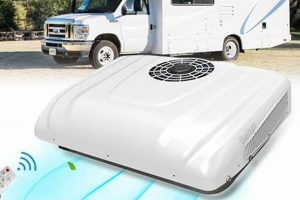
The secure and stable attachment of a portable power source to a recreational vehicle is a process often undertaken to provide electrical power while traveling or camping in locations lacking utility connections. This typically involves affixing a generator to the frame, cargo carrier, or a specifically designed platform on the RV. For example, an individual might choose to fix a gasoline-powered unit to the trailer’s tongue to operate appliances and electronics independently of shore power.
Implementing such a setup offers increased self-sufficiency and comfort during travel. The ability to generate on-demand electricity allows for the use of air conditioning, refrigeration, and other amenities in remote areas. Historically, RV travelers relied heavily on campsites with electrical hookups. Integrating an independent power source provides greater freedom and flexibility in travel destinations.
The following sections will address key considerations related to this practice, including safety protocols, weight distribution, noise mitigation strategies, fuel storage solutions, and compliance with relevant regulations. Proper planning and execution are critical to ensure both the safe operation of the electrical system and the longevity of the recreational vehicle.
Essential Considerations
Implementing this modification to a recreational vehicle requires meticulous attention to detail. Safety, stability, and adherence to regulations are paramount. The following tips provide a foundational understanding for a successful setup.
Tip 1: Weight Distribution Analysis: Prior to installation, conduct a comprehensive weight analysis of the recreational vehicle. Ensure the added weight of the generator does not exceed the vehicle’s gross vehicle weight rating (GVWR) or compromise axle load limits. Improper weight distribution can lead to instability and safety hazards.
Tip 2: Secure Mounting Hardware: Employ high-grade, corrosion-resistant hardware designed for heavy-duty applications. Fasteners should be appropriately sized for the mounting surface and torqued to the manufacturer’s specifications. Regularly inspect the mounting hardware for signs of loosening or corrosion.
Tip 3: Exhaust System Routing: The generator’s exhaust system must be routed safely away from the RV’s occupants, flammable materials, and air intake vents. Use heat-resistant exhaust extensions and secure them to prevent vibration and dislodgement. Consider installing a carbon monoxide detector inside the RV as an additional safety measure.
Tip 4: Fuel Storage Safety: When transporting fuel, utilize approved fuel containers that meet Department of Transportation (DOT) standards. Securely stow fuel containers in a well-ventilated compartment, away from heat sources and potential ignition points. Adhere to all local and federal regulations regarding fuel transportation and storage.
Tip 5: Noise Mitigation Strategies: Generator noise can be disruptive to both the RV’s occupants and nearby individuals. Invest in a generator with a low noise rating or consider using noise-dampening enclosures. Direct the generator’s exhaust away from living areas and campsites.
Tip 6: Electrical System Integration: Integrate the generator’s electrical output into the RV’s electrical system using a transfer switch. This prevents backfeeding electricity into the power grid and ensures a safe and reliable power supply. Consult with a qualified electrician to ensure proper wiring and grounding.
Tip 7: Regulatory Compliance: Research and comply with all relevant local, state, and federal regulations regarding generator use in recreational vehicles. These regulations may pertain to noise levels, emissions, and operating hours. Failure to comply can result in fines or restrictions.
Careful consideration of these points ensures a safer, more reliable, and more enjoyable experience. Implementing these measures mitigates potential risks associated with on-board power generation.
The following section explores specific generator models and their suitability for RV applications.
1. Weight distribution impact

The addition of a generator to a travel trailer significantly alters its existing weight distribution profile. This change, if not properly managed, can lead to a cascade of negative effects affecting vehicle handling, tire wear, and overall structural integrity. The location of the generator, typically on the trailer tongue or rear bumper, introduces a concentrated mass that shifts the center of gravity. A generator placed too far to the rear, for instance, induces trailer sway, making the RV difficult to control, especially at higher speeds or in adverse weather conditions. Conversely, excessive weight on the tongue reduces steering responsiveness and can overload the tow vehicle’s rear axle.
The selection of generator models and mounting locations directly impacts compliance with specified weight limits. Exceeding the Gross Vehicle Weight Rating (GVWR) or individual axle weight ratings compromises safety and can lead to component failure. For example, an RV already near its GVWR that adds a heavy generator without redistributing other cargo might experience premature suspension wear or even structural damage to the frame. Precise calculations, considering the generator’s weight and the existing load distribution, are crucial. Corrective measures, such as relocating water tanks or cargo, may be necessary to achieve a balanced and safe configuration.
Therefore, understanding the “Weight distribution impact” is not merely a theoretical exercise but a practical imperative. Neglecting this aspect when adding a generator increases the risk of accidents and necessitates costly repairs. A well-planned installation, incorporating weight analysis and strategic load balancing, is vital for ensuring safe and predictable handling of the travel trailer, preserving its structural integrity, and enhancing overall travel safety. The success of “mounting a generator on a travel trailer” relies heavily on addressing and mitigating the effects of increased weight.
2. Secure attachment methods

The implementation of secure attachment methods is fundamental to the successful and safe installation of a generator on a travel trailer. The generator, typically a heavy piece of equipment, is subjected to significant forces during transit, including vibrations, impacts from road imperfections, and aerodynamic stresses. Failure to adequately secure the generator can result in its detachment, leading to property damage, personal injury, or even accidents involving other vehicles. A robust attachment system is thus an indispensable component of any generator installation. For instance, a poorly secured generator, relying solely on lightweight straps, could break free during a sudden braking maneuver, creating a hazardous projectile.
The selection of appropriate attachment methods depends on several factors, including the generator’s weight and dimensions, the structural integrity of the mounting location on the travel trailer, and the anticipated operating conditions. Welding a custom steel frame directly to the trailer’s chassis provides a highly secure solution, particularly for larger, heavier generators. Bolting through the frame requires the use of appropriately sized and rated bolts, washers, and locknuts, along with reinforcement plates to distribute the load. Rubber isolators placed between the generator and the frame can further reduce vibration and noise transmission. Regularly scheduled inspections of attachment points are also essential. Case studies involving RVs indicate that neglecting inspections of mounting hardware can result in loose connections and eventual system failure.
In conclusion, the application of proper secure attachment methods transcends mere convenience; it directly impacts safety and operational reliability. By prioritizing robust materials, sound engineering principles, and diligent maintenance practices, the risk of generator detachment is minimized, contributing to a safer and more enjoyable travel experience. The long-term success of “mounting a generator on a travel trailer” hinges on the integrity of the methods employed to ensure its secure attachment.
3. Exhaust system safety

The integration of a generator exhaust system into a travel trailer setup presents critical safety concerns. Improper design or installation can expose occupants to hazardous exhaust gases, including carbon monoxide, creating potentially life-threatening conditions. Careful attention to routing, ventilation, and monitoring is paramount.
- Carbon Monoxide Hazards
Carbon monoxide (CO) is a colorless, odorless gas produced during the combustion process. Inhaling CO can lead to CO poisoning, causing symptoms ranging from headaches and nausea to loss of consciousness and death. The proximity of the generator to the living space in a travel trailer necessitates meticulous exhaust system design to prevent CO from entering the occupied area. A documented instance includes RV owners discovering CO poisoning after installing a generator with an exhaust leak near a window.
- Exhaust Routing and Ventilation
Proper exhaust routing involves directing exhaust gases away from the trailer’s occupants, windows, doors, and ventilation inlets. The exhaust pipe should extend beyond the perimeter of the RV and be angled to prevent gases from accumulating near the vehicle. Natural air currents should be considered to avoid drawing exhaust back towards the trailer. Some RV designs accommodate specific generator exhaust ports, providing a safer, integrated solution.
- Exhaust System Components
The exhaust system should be constructed from heat-resistant materials capable of withstanding high temperatures. Flexible exhaust pipes are often used to accommodate vibration and movement, but they must be securely connected and inspected regularly for leaks or damage. Spark arrestors are often required to prevent the ignition of flammable materials near the exhaust outlet. High-quality clamps and gaskets are essential to maintaining a gas-tight seal throughout the system.
- Carbon Monoxide Detectors
The installation of functional carbon monoxide detectors inside the travel trailer is a crucial safety measure. These detectors provide an audible warning when CO levels exceed safe limits, allowing occupants to take immediate action. Detectors should be placed near sleeping areas and tested regularly to ensure proper operation. Many modern CO detectors incorporate digital displays showing current CO levels, allowing for proactive monitoring of air quality.
Integrating a generator onto a travel trailer requires a comprehensive approach to exhaust system safety. Attention to CO hazards, exhaust routing and ventilation, the use of appropriate components, and the installation of functional CO detectors are essential for protecting the health and safety of occupants. Regular inspection and maintenance of the exhaust system are equally important to prevent leaks and ensure continued safe operation, directly improving the long-term viability of “mounting a generator on a travel trailer”.
4. Vibration and noise reduction
The effective mitigation of vibration and noise is a critical aspect of successfully integrating a generator onto a travel trailer. Generator operation inherently produces both mechanical vibration and acoustic noise, which, if left unaddressed, can lead to structural damage, occupant discomfort, and disturbances to surrounding environments.
- Vibration Isolation Mounts
The strategic placement of vibration isolation mounts between the generator and the travel trailer’s frame is a common technique. These mounts, typically constructed from rubber or other elastomeric materials, absorb and dampen mechanical vibrations before they can be transmitted to the trailer’s structure. Ineffective vibration isolation can result in stress fractures to the trailer frame and premature failure of generator components. For example, using improperly rated mounts may amplify vibrations at certain frequencies, exacerbating the problem.
- Acoustic Enclosures
Acoustic enclosures, designed to encapsulate the generator, significantly reduce noise levels. These enclosures typically feature sound-absorbing materials such as foam or fiberglass, which attenuate sound waves emanating from the generator. However, proper ventilation within the enclosure is essential to prevent overheating. Field tests demonstrate that well-designed enclosures can reduce noise levels by 10-15 decibels, a substantial improvement for both the occupants and nearby campers.
- Exhaust Mufflers
Generator exhaust systems contribute significantly to overall noise output. The installation of a high-quality muffler is crucial for minimizing exhaust noise. Aftermarket mufflers are available in various designs, offering different levels of noise reduction. Some advanced mufflers incorporate resonators and baffling to further attenuate specific noise frequencies. Regular inspection of the muffler is important, as corrosion or damage can compromise its effectiveness.
- Strategic Generator Placement
The physical location of the generator on the travel trailer also influences vibration and noise transmission. Placing the generator as far away from living areas as possible can minimize the impact on occupants. Utilizing the trailer’s existing storage compartments or designing a dedicated generator compartment can provide additional sound insulation. However, accessibility for maintenance and refueling must also be considered.
Addressing vibration and noise reduction holistically is paramount to the responsible implementation of “mounting a generator on a travel trailer”. A combination of vibration isolation, acoustic enclosures, exhaust mufflers, and strategic placement contributes to a more comfortable and less disruptive travel experience, and extends the lifespan of both the generator and the trailer itself.
5. Fuel source management
Effective fuel source management is a non-negotiable component when integrating a generator onto a travel trailer. The safe and reliable supply of fuel directly dictates the operational capabilities of the generator and, consequently, the availability of electrical power for the recreational vehicle. Therefore, a comprehensive fuel management strategy must address storage, handling, and safety considerations.
- Fuel Storage Capacity and Type
The selection of a fuel storage container must align with the generator’s fuel requirements and the anticipated duration of off-grid operation. Gasoline, propane, and diesel each necessitate different storage solutions, compliant with relevant safety regulations. For instance, gasoline requires containers meeting DOT standards, while propane necessitates ASME-certified tanks. An insufficient fuel supply limits the generator’s runtime, potentially compromising essential services like refrigeration or heating.
- Ventilation and Leak Prevention
Adequate ventilation of the fuel storage compartment is critical to prevent the accumulation of flammable vapors. Leaks, whether from the fuel tank or connecting lines, pose a significant fire hazard. Regular inspection of fuel lines, fittings, and the storage container itself is paramount. Incorporating a vapor sensor in the storage compartment can provide an early warning system for potential leaks, allowing for prompt corrective action.
- Fuel Stabilization and Shelf Life
Prolonged storage of fuel, particularly gasoline, can lead to degradation and the formation of gums and varnishes, which can clog fuel lines and carburetor jets. Using a fuel stabilizer additive extends the fuel’s shelf life and prevents these issues. Clearly labeling fuel containers with the date of purchase and stabilizer addition helps track fuel age and ensure optimal performance.
- Safe Refueling Procedures
Refueling the generator demands strict adherence to safety protocols. The generator should be turned off and allowed to cool before refueling to minimize the risk of ignition. Spillage must be avoided, and any spilled fuel should be immediately cleaned up. Refueling should occur in a well-ventilated area, away from potential ignition sources, such as open flames or sparks. Static electricity can also ignite fuel vapors; grounding the fuel container and generator during refueling is advisable.
In summary, a proactive and well-executed fuel source management plan is essential for ensuring the safe and dependable operation of a generator within a travel trailer setup. From selecting the appropriate fuel type and storage containers to implementing rigorous safety procedures, each element contributes to mitigating potential hazards and maximizing the utility of the onboard power system. The overall success and safety of “mounting a generator on a travel trailer” are inextricably linked to the effectiveness of its fuel management practices.
Frequently Asked Questions
This section addresses common inquiries regarding the installation and operation of generators on recreational vehicles. The information provided aims to clarify key considerations and promote safe practices.
Question 1: Is it permissible to operate a generator inside the travel trailer?
Operating a generator inside the travel trailer is strictly prohibited due to the risk of carbon monoxide poisoning. Generators produce carbon monoxide (CO), a colorless and odorless gas that can be fatal. The exhaust system must be located outside the vehicle, and functioning CO detectors should always be present inside the living space.
Question 2: What size generator is appropriate for a travel trailer?
The appropriate generator size depends on the electrical load demands of the appliances and devices used in the travel trailer. Calculating the total wattage required, accounting for startup surges, is crucial. Selecting a generator that exceeds the calculated wattage provides a safety margin and prevents overloading the unit. Consulting with an electrician can assist in determining the optimal generator size.
Question 3: Can a generator be directly connected to the travel trailer’s electrical system?
Direct connection of a generator to the travel trailer’s electrical system without a transfer switch is not recommended. A transfer switch prevents backfeeding electricity into the power grid, protecting utility workers and preventing damage to the electrical system. A qualified electrician should install a properly rated transfer switch.
Question 4: How can generator noise be effectively reduced?
Generator noise can be reduced through various methods, including the use of acoustic enclosures, vibration isolation mounts, and exhaust mufflers. Strategic placement of the generator, away from living areas, also minimizes noise impact. Selecting a generator with a low noise rating, measured in decibels (dB), is advisable.
Question 5: What are the best practices for storing fuel for the generator?
Fuel should be stored in approved containers that meet Department of Transportation (DOT) standards. Containers should be stored in a well-ventilated compartment, away from heat sources and potential ignition points. Fuel stabilizers can extend the shelf life of gasoline. Compliance with all applicable regulations regarding fuel storage and transportation is mandatory.
Question 6: How often should the generator be serviced and maintained?
The generator should be serviced and maintained according to the manufacturer’s recommendations. Regular maintenance typically includes oil changes, air filter cleaning, spark plug replacement, and inspection of fuel lines and electrical connections. Following the maintenance schedule ensures optimal performance and extends the generator’s lifespan.
These frequently asked questions provide foundational knowledge for the safe and effective integration of generators onto travel trailers. Prioritizing safety, compliance, and proper maintenance are paramount.
The subsequent section will provide a comprehensive guide to selecting the appropriate generator model for a travel trailer application.
Conclusion
The preceding discussion has detailed the multifaceted aspects of safely and effectively mounting a generator on a travel trailer. Considerations ranging from weight distribution and secure attachment to exhaust system safety, noise reduction, and fuel source management have been presented. A thorough understanding of these elements is essential for responsible implementation.
The decision to undertake this modification necessitates careful planning and execution. Prioritizing safety, adhering to regulations, and performing regular maintenance are crucial for ensuring long-term reliability and mitigating potential hazards. Independent power generation enhances travel flexibility, but it requires diligence and a commitment to best practices.Mounting a generator on a travel trailer is not merely a mechanical task, it represents a significant commitment to safety and responsible travel practices.