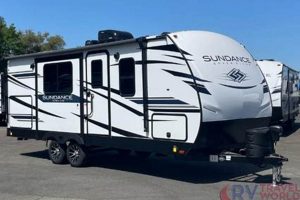
Two common recreational vehicle types offer distinct approaches to mobile living. One is coupled to a tow vehicle via a specialized hitch located in the truck bed, placing a portion of its weight directly over the tow vehicle’s rear axle. The other connects to a vehicle using a ball hitch at the rear of the tow vehicle, distributing its weight differently and influencing handling characteristics.
These RV options provide travel and lodging flexibility. The bed-mounted connection system generally allows for increased stability and maneuverability, especially with larger units. Conversely, the ball hitch system is often more accessible for owners of SUVs and smaller trucks, providing a broader range of compatible tow vehicles. The choice between these systems represents a trade-off between tow vehicle requirements, interior space, and ease of setup at campsites.
Understanding the differences in towing mechanisms, floor plans, and overall suitability for various travel styles is essential for prospective RV buyers. The following sections will delve into specific advantages and disadvantages of each, aiding in an informed decision-making process.
Essential Considerations
Making an informed decision requires careful evaluation of individual needs and priorities. These guidelines aim to clarify key distinctions and potential advantages or disadvantages of each type.
Tip 1: Assess Tow Vehicle Capacity: Verify the tow vehicle’s Gross Vehicle Weight Rating (GVWR) and towing capacity before committing to a specific RV. Exceeding these limits can compromise safety and vehicle performance.
Tip 2: Evaluate Floor Plan Preferences: Examine interior layouts to determine if the living space and storage configurations meet travel requirements. Some RVs prioritize living areas, while others offer more dedicated sleeping or storage spaces.
Tip 3: Consider Maneuverability Constraints: Acknowledge the turning radius and overall length, particularly in congested campgrounds or during challenging road conditions. Practice maneuvering in a controlled environment before embarking on extended trips.
Tip 4: Analyze Budgetary Factors: Factor in purchase price, insurance costs, maintenance expenses, and potential upgrades. A thorough financial assessment ensures long-term affordability and avoids unexpected financial burdens.
Tip 5: Research Hitching System Compatibility: Ensure the chosen hitching system is compatible with both the RV and the tow vehicle. Professional installation is recommended to guarantee secure and reliable connections.
Tip 6: Explore Storage Solutions: Evaluate interior and exterior storage capacity based on travel needs. Consider the size and type of items that will need to be stored, such as camping gear, outdoor equipment, and personal belongings.
Tip 7: Investigate Warranty and Service Availability: Review warranty coverage and the availability of authorized service centers in planned travel areas. This proactive step ensures access to reliable maintenance and repairs when needed.
These considerations assist in determining the RV type that best aligns with personal preferences, logistical requirements, and financial constraints, promoting a more fulfilling and secure travel experience.
Ultimately, the selection process culminates in a choice that harmonizes lifestyle aspirations with practical realities. The subsequent sections will further expand on the broader implications of these choices.
1. Towing Capacity

Towing capacity serves as a fundamental constraint in the selection between RV types. A vehicle’s established towing capacity, as specified by the manufacturer, directly dictates the maximum permissible weight of a trailer it can safely tow. Fifth wheel RVs, typically larger and heavier than their counterparts, often necessitate trucks with substantially higher towing capacities. Overloading a tow vehicle beyond its rated capacity poses significant safety risks, including compromised braking performance, reduced stability, and potential mechanical failures. For example, a half-ton pickup truck, commonly rated for towing up to 10,000 lbs, might only be suitable for smaller trailers, whereas a heavy-duty truck may be required for a larger, fully-equipped fifth wheel.
The impact of exceeding towing capacity extends beyond immediate safety concerns. Repeatedly towing loads exceeding the vehicle’s limits can accelerate wear and tear on critical components such as the engine, transmission, and braking system, leading to premature maintenance and reduced vehicle lifespan. Furthermore, in the event of an accident, insurance companies may deny claims if it is determined that the tow vehicle was operating beyond its specified limits. Therefore, accurately assessing towing capacity is paramount. Drivers should consult their vehicle’s owner’s manual and, if necessary, seek professional advice to determine the appropriate RV for their vehicle. Practical steps include weighing the RV fully loaded and comparing the weight to the tow vehicle’s published towing capacity.
In summary, towing capacity is not merely a number but a critical safety parameter that directly influences the feasible RV choice. The heavier nature of fifth wheels generally requires vehicles with greater towing capabilities compared to lighter trailers. Ignoring this factor carries potential risks and financial consequences. Understanding and adhering to towing capacity guidelines is essential for safe and responsible RV operation, ensuring both personal safety and the longevity of the tow vehicle.
2. Maneuverability Differences

The differing hitching mechanisms inherent in RV types profoundly affect maneuverability. Fifth wheel RVs, with their hitch point positioned over the tow vehicle’s rear axle, exhibit a tighter turning radius compared to trailers, which connect at the rear bumper. This design characteristic translates to improved ease of navigation in confined spaces such as campgrounds, gas stations, and urban environments. The articulation point’s location minimizes the trailer’s swing, allowing for more precise control during turns and reducing the likelihood of collision with obstacles. For example, negotiating a narrow campsite loop becomes significantly easier with the reduced turning radius of a fifth wheel setup.
Conversely, trailers, while potentially easier to connect due to the simpler ball hitch system, generally present a greater challenge when maneuvering. Their longer turning radius necessitates wider turns and increased driver awareness to avoid obstacles. Backing up a trailer often demands more experience and skill due to the amplified effect of steering inputs. Situations such as parallel parking or maneuvering through dense traffic can become considerably more complex. However, smaller trailers offer advantages in some scenarios, enabling access to campsites inaccessible to larger fifth wheels due to size restrictions. This contrast highlights the importance of considering the intended usage and typical travel routes when evaluating maneuverability.
In summary, hitch design is pivotal in determining the maneuvering characteristics of RVs. The tighter turning radius afforded by the fifth wheel hitch contributes to easier navigation in confined spaces. Although some trailers can access tighter locations because of their smaller overall size. The choice between improved maneuverability and potential access to smaller spaces must be weighed against driving experience and preferred travel destinations to arrive at an informed selection.
3. Floor Plan Variety

The correlation between “Floor Plan Variety” and recreational vehicle choice is substantial. RV types exhibit distinct characteristics concerning available interior layouts. Fifth wheel RVs, due to their design, often offer multi-level floor plans, enabling separation of living, sleeping, and kitchen areas. This vertical space utilization provides increased privacy and functionality, mimicking aspects of residential living. For example, some fifth wheel models include a master bedroom suite over the hitch area, effectively creating a separate zone from the main living space. This distinct configuration is often sought by individuals or families prioritizing spatial separation.
Trailers, conversely, typically present single-level floor plans. While this simplifies accessibility, it generally reduces the potential for distinct zoning. The layout is often more compact, integrating living, cooking, and sleeping areas within a single level. However, the variety of trailer floor plans remains extensive, ranging from minimalist designs with basic amenities to more elaborate models incorporating slide-outs to expand living space. A practical application involves families with small children or individuals with mobility constraints, who might favor the ease of movement afforded by a single-level trailer floor plan. Additionally, shorter trailers sometimes offer the option of a rear garage for hauling toys and other adventure equipments.
In summation, floor plan diversity plays a pivotal role in RV selection. Fifth wheel RVs frequently feature multi-level designs, promoting spatial separation, while travel trailers primarily offer single-level layouts, balancing accessibility with space efficiency. Understanding these distinctions is crucial for aligning RV choice with individual lifestyle preferences and practical needs.
4. Storage Considerations
Storage considerations form a critical aspect of recreational vehicle selection, directly impacting the practicality and comfort of extended travel. Disparities in storage capacity and accessibility between RV types necessitate careful assessment to align with individual travel requirements.
- Interior Storage Volume
The sheer volume of interior storage space often differs significantly between RV options. Fifth wheel RVs, benefiting from their elevated design and greater overall size, frequently provide more extensive cabinets, closets, and under-bed storage areas. This abundance allows for organized stowage of clothing, provisions, and personal belongings, promoting a more uncluttered living environment. Travel trailers, while offering varying degrees of storage, generally feature more compact interiors, potentially limiting the quantity of items that can be comfortably accommodated. The selection criteria must therefore hinge on the anticipated duration and intensity of usage.
- Exterior Storage Compartments
Accessibility to exterior storage is another key differentiator. Fifth wheel models frequently incorporate large pass-through storage compartments, facilitating easy access to bulky items such as camping gear, outdoor equipment, and tools. The convenient placement of these compartments streamlines the setup and teardown processes at campsites. Travel trailers, while also equipped with exterior storage, may offer smaller or less accessible compartments, potentially requiring more strategic packing and organization. The availability of slide-out trays and adjustable shelving within these compartments further enhances their utility.
- Weight Distribution and Load Management
Proper weight distribution within the available storage areas is paramount for safe towing. Unevenly distributed loads can negatively impact stability and handling, increasing the risk of sway or loss of control. Both RV types require careful consideration of weight placement to maintain a balanced center of gravity. Heavy items should be positioned low and centered over the axles whenever possible. Exceeding the RV’s maximum cargo carrying capacity (CCC) can also compromise safety and potentially damage the suspension system. Therefore, accurately weighing the RV after loading is recommended to ensure compliance with weight limits.
- Specialized Storage Solutions
Some RVs offer innovative, specialized storage solutions that can significantly enhance functionality. For example, some fifth wheels include dedicated pantry areas, wine racks, or even small office spaces with built-in storage. Travel trailers might feature hidden compartments under seats, bike racks, or roof-mounted cargo carriers. These features can be particularly valuable for individuals with specific needs or hobbies. For instance, a photographer might appreciate a secure and climate-controlled space for storing equipment, while an outdoor enthusiast could benefit from a dedicated gear storage area.
The integration of these distinct storage considerations directly influences the practicality and livability of RV experiences. The enhanced storage capacity and accessible exterior compartments often found in fifth wheel RVs cater to extended trips and active lifestyles, while travel trailers may offer sufficient storage for shorter excursions with careful packing strategies. The evaluation of these aspects should align with personal travel preferences and anticipated usage patterns to facilitate an informed and satisfactory selection.
5. Hitch Type

The connection between hitch type and recreational vehicle selection is foundational, representing a primary differentiating factor between fifth wheel RVs and travel trailers. Hitch type dictates not only the mechanical connection to the tow vehicle but also profoundly influences stability, maneuverability, and overall towing dynamics. A fifth wheel RV employs a specialized hitch, typically a kingpin coupler, that mounts within the bed of a pickup truck. This configuration places a substantial portion of the RV’s weight directly over the truck’s rear axle, enhancing stability and reducing sway, particularly during high-speed travel or adverse weather conditions. Conversely, a travel trailer utilizes a ball hitch, connecting to the tow vehicle at the rear bumper or a frame-mounted receiver. This arrangement distributes the RV’s weight differently, potentially leading to increased sway and a less stable towing experience, especially with larger trailers. The choice of hitch type, therefore, directly impacts safety and ease of handling.
The specific hitch type also determines compatibility between the RV and the tow vehicle. Fifth wheel hitches require a pickup truck with sufficient bed space and payload capacity to accommodate the hitch and the weight of the RV. Installation typically involves modifying the truck bed, potentially requiring professional installation. Travel trailers, on the other hand, offer greater flexibility in terms of tow vehicle compatibility. Smaller trailers can often be towed by SUVs or even some cars equipped with a suitable ball hitch. However, larger trailers necessitate trucks with adequate towing capacity. An example would be comparing a short-bed pickup needing a sliding fifth wheel hitch for turning clearance with a full-size SUV capable of towing a small, lightweight travel trailer. Improper hitch selection or installation can lead to catastrophic failures, resulting in accidents and property damage. Understanding the specific requirements and limitations of each hitch type is crucial for ensuring safe and reliable towing.
In summation, hitch type constitutes a fundamental element in the selection process. The robust, bed-mounted hitch of a fifth wheel RV enhances stability and maneuverability but requires a compatible pickup truck. Travel trailers, with their ball hitch connections, offer greater versatility in tow vehicle options but may compromise stability, especially with larger models. The decision must be predicated on a thorough evaluation of towing capacity, vehicle compatibility, and personal towing experience to mitigate risks and optimize the RV travel experience. Ignoring these factors increases the likelihood of unsafe conditions and ultimately detracts from the enjoyment of recreational travel.
6. Stability

Stability is a paramount consideration when evaluating recreational vehicle options, significantly influencing safety and driving comfort. The inherent design differences between RV types have a direct impact on their stability characteristics during towing, necessitating careful evaluation.
- Hitch Point Location
The position of the hitch point profoundly affects stability. The hitch point location directly impacts the resistance to sway and yaw. The fifth wheel’s design, with its hitch situated over or slightly ahead of the tow vehicle’s rear axle, promotes enhanced stability. This configuration effectively places the weight of the RV closer to the tow vehicle’s center of gravity, minimizing lateral movement and sway. Travel trailers, utilizing a ball hitch at the rear bumper, experience a leverage effect that can amplify sway, particularly in windy conditions or during emergency maneuvers. Real-world examples include easier handling on curved roads and reduced sensitivity to crosswinds with a fifth wheel, compared to a travel trailer requiring sway control devices for similar conditions.
- Weight Distribution Characteristics
Weight distribution characteristics play a crucial role in overall stability. The ability to distribute weight effectively contributes to reduced sway. Fifth wheel RVs, generally heavier in the front portion, transfer a significant portion of their weight to the tow vehicle’s bed, improving traction and stability. This weight transfer minimizes the “tail wagging the dog” effect often associated with travel trailers. Travel trailers rely on proper weight distribution within the trailer itself to mitigate sway, with approximately 10-15% of the trailer’s weight ideally placed on the hitch. Instances of improper weight distribution, such as overloading the rear of a travel trailer, can significantly compromise stability and increase the risk of loss of control. Balancing the load in a fifth wheel will also improve stability.
- Aerodynamic Profile
Aerodynamic profile and drag influence stability at higher speeds. A design to minimizes wind resistance and turbulence is vital. Fifth wheel RVs, often featuring a more streamlined front profile, tend to exhibit better aerodynamic characteristics compared to travel trailers. This reduced drag contributes to improved fuel efficiency and enhanced stability, particularly in windy conditions. Travel trailers, with their typically flatter front surfaces, may experience increased wind resistance, potentially leading to greater sway and reduced fuel economy. Adding aerodynamic aids, such as wind deflectors, can mitigate these effects. Field tests often demonstrate a marked difference in stability and fuel consumption between the two types, especially during crosswind scenarios.
- Sway Control Technologies
Sway control technologies mitigate instability in trailers. While inherent design differences contribute to stability, technology enhance safety. Travel trailers often require the use of sway control devices to improve stability and reduce the likelihood of sway. These devices, which include friction sway control and electronic sway control systems, counteract the effects of lateral forces on the trailer. Fifth wheel RVs, due to their inherent stability advantages, may not require sway control devices in many situations. The effectiveness of sway control technologies can vary depending on the specific system used and the severity of the conditions. Implementing these technologies serves to bolster stability in potentially challenging situations.
In summary, the stability characteristics of RVs are intrinsically linked to their design, hitch type, and weight distribution. Fifth wheel RVs typically offer enhanced stability due to their hitch location and weight transfer, whereas travel trailers may require sway control devices to mitigate potential instability. A thorough understanding of these factors is crucial for selecting the RV type best suited to individual needs and ensuring a safe and enjoyable travel experience. Considerations about the tow vehicle are also essential as any of these design factors could overwhelm the tow vehicle’s design limits.
Frequently Asked Questions
This section addresses common inquiries regarding the distinctions between fifth wheel RVs and travel trailers, providing factual information to aid in decision-making.
Question 1: What are the primary differences in towing requirements?
Fifth wheel RVs necessitate a pickup truck equipped with a bed-mounted hitch and adequate payload capacity. Travel trailers can be towed by a wider range of vehicles, including SUVs and trucks, provided the vehicle’s towing capacity meets or exceeds the trailer’s gross vehicle weight rating (GVWR).
Question 2: Which RV type offers superior maneuverability?
Fifth wheel RVs generally offer tighter turning radiuses due to the hitch point being located over the tow vehicle’s rear axle. Travel trailers, with their rear bumper hitch, require wider turns and may present more challenges in confined spaces.
Question 3: How do floor plan options differ between the two types?
Fifth wheel RVs often feature multi-level floor plans, providing spatial separation between living, sleeping, and kitchen areas. Travel trailers primarily offer single-level floor plans, maximizing space efficiency and accessibility.
Question 4: Which RV type generally provides more storage capacity?
Fifth wheel RVs typically offer greater interior and exterior storage capacity due to their larger overall size and design. Travel trailers provide varying degrees of storage, but tend to be more compact.
Question 5: How does hitch type influence stability during towing?
The bed-mounted hitch of a fifth wheel RV enhances stability by placing weight over the tow vehicle’s rear axle, reducing sway. Travel trailers, with their ball hitch connections, may require sway control devices to mitigate potential instability.
Question 6: What are the typical cost implications for each RV type?
Fifth wheel RVs often command a higher purchase price due to their larger size, more elaborate features, and specialized hitch requirements. Travel trailers generally offer a more accessible entry point in terms of initial cost, but expenses can vary widely depending on size and amenities.
These answers highlight key distinctions relevant to prospective buyers. Individual circumstances and preferences ultimately determine the most suitable choice.
The ensuing section will explore real-world scenarios and case studies to further illustrate the practical implications of these differences.
Fifth Wheel RV vs Travel Trailer
This exploration has detailed critical distinctions between fifth wheel RVs and travel trailers. Key considerations encompass towing capacity, maneuverability, floor plan variety, storage solutions, hitch type, and stability. The suitability of either RV type is intrinsically linked to individual requirements, towing vehicle capabilities, and travel preferences. Disregarding these factors can lead to diminished safety and compromised operational efficiency.
Prospective buyers are urged to undertake comprehensive research, assess their specific needs, and, if necessary, seek expert consultation. An informed decision ensures long-term satisfaction and facilitates safe, enjoyable travel experiences. Understanding these crucial differences enables individuals to select the optimal RV solution aligned with their unique circumstances, underscoring the significance of careful deliberation in this significant investment.