A recreational vehicle engineered for use in a wide range of environmental conditions, including extreme temperatures, offers enhanced insulation, specialized heating and cooling systems, and protective features to withstand the elements. These vehicles are designed to provide comfortable living spaces regardless of the external climate. As an example, the frame may incorporate enclosed and heated underbellies to protect water lines from freezing.
The value of a recreational vehicle designed for year-round use lies in its ability to facilitate travel and outdoor activities regardless of seasonal constraints. This capability extends travel opportunities and ensures comfort and safety in diverse climates. Historically, recreational vehicles were primarily designed for fair-weather use, but evolving consumer demand and technological advancements have led to the development of models specifically engineered for all-weather performance.
The following sections will delve into the construction, features, and maintenance considerations vital for ensuring the reliability and longevity of these specialized recreational vehicles. Key aspects to be addressed include insulation types, heating and cooling systems, plumbing protection, and structural integrity.
Maximizing Utility
The following guidance focuses on optimizing the use and maintenance of recreational vehicles engineered for year-round use, ensuring lasting performance and comfort in varied climates.
Tip 1: Insulation Inspection. Regularly inspect insulation for damage, compression, or moisture. Compromised insulation diminishes climate control effectiveness and can lead to energy inefficiency and potential structural issues.
Tip 2: Plumbing Protection Protocols. Implement winterization procedures, including draining water lines and using RV antifreeze, to prevent freezing damage to plumbing systems in cold weather conditions. Regularly inspect heat tape on water lines and tanks for proper function.
Tip 3: HVAC System Maintenance. Schedule routine maintenance for heating and cooling systems, including filter replacements and professional inspections, to ensure optimal performance and energy efficiency.
Tip 4: Sealant Integrity Assessment. Inspect all seals and seams, including windows, doors, and roof components, for cracks or deterioration. Apply appropriate sealant as needed to prevent water intrusion and maintain insulation effectiveness.
Tip 5: Tire Pressure Monitoring. Maintain proper tire pressure to enhance fuel efficiency, ensure safe handling, and prevent tire damage. Adjust pressure according to manufacturer specifications and ambient temperature conditions.
Tip 6: Ventilation Strategies. Utilize ventilation systems to manage moisture levels and prevent condensation buildup, particularly during periods of high humidity or temperature fluctuations. Consider using a dehumidifier in particularly damp environments.
Tip 7: Roof Care Regimen. Regularly inspect the roof for signs of damage, such as punctures, tears, or ponding water. Apply appropriate roof sealant or coating as recommended by the manufacturer to maintain weather resistance.
Adhering to these recommendations will contribute to the longevity and effectiveness of your investment, facilitating comfortable and safe travel regardless of the prevailing climate.
The subsequent section will address common challenges and troubleshooting techniques associated with these specialized vehicles.
1. Insulation Value (R-Value)

Insulation Value, denoted by the R-value, is a critical factor in the performance of recreational vehicles intended for use in all four seasons. The R-value quantifies a material’s resistance to conductive heat transfer. A higher R-value signifies greater insulation effectiveness. In the context of a recreational vehicle, inadequate insulation results in significant heat loss during cold weather and heat gain during warm weather, causing discomfort for occupants and increased energy consumption for heating or cooling systems. For instance, a recreational vehicle with a low R-value may struggle to maintain a comfortable interior temperature in sub-freezing conditions, potentially leading to frozen pipes and compromised structural integrity due to condensation.
The implementation of high R-value insulation in the walls, roof, and floor of a recreational vehicle dramatically enhances its ability to maintain a stable internal environment, irrespective of external temperature extremes. This improved thermal regulation reduces the workload on heating and cooling systems, leading to reduced energy costs and extended operational lifespan of those systems. Furthermore, effective insulation mitigates condensation buildup, preventing mold growth and preserving the structural integrity of the vehicle. Consider a scenario where two identical recreational vehicles are subjected to the same sub-zero temperatures; the unit with a superior R-value will demonstrably consume less energy to maintain a set internal temperature and exhibit less internal condensation.
In summary, the R-value is a key indicator of a recreational vehicle’s suitability for year-round use. Understanding the relationship between R-value and environmental conditions allows informed decision-making when selecting a unit. While higher R-value insulation often increases initial cost, the long-term benefits of improved energy efficiency, enhanced comfort, and reduced maintenance requirements justify the investment. The challenge lies in accurately assessing the advertised R-value and verifying its performance under real-world conditions.
2. Heating System Capacity

The heating system capacity is a paramount consideration for recreational vehicles designed for use across all seasons, particularly in regions experiencing prolonged periods of sub-freezing temperatures. Adequate heating capacity directly correlates with the habitability and operational integrity of the unit during cold weather.
- BTU Rating and Interior Volume
The British Thermal Unit (BTU) rating of a heating system specifies its capacity to generate heat. A mismatch between the BTU rating and the interior volume of the recreational vehicle results in either insufficient heating or inefficient energy consumption. For example, a small heating unit in a large recreational vehicle will struggle to maintain a comfortable temperature during winter months, leading to auxiliary heating requirements and increased energy costs. Conversely, an oversized heating unit in a small vehicle cycles frequently, reducing its lifespan and consuming excessive energy.
- Fuel Source and Availability
The type and availability of fuel dictate the practicality and cost-effectiveness of the heating system. Propane is a common fuel source for recreational vehicle heaters, but its availability can be limited in certain remote locations. Electric heaters offer a convenient alternative when connected to shore power, but their effectiveness diminishes in the absence of an external power source. Diesel heaters provide a reliable and efficient option, particularly in areas where diesel fuel is readily accessible. A thoughtful evaluation of fuel source availability and cost is essential for selecting a heating system appropriate for intended travel destinations.
- Heating System Efficiency and Heat Distribution
The efficiency of a heating system affects its fuel consumption and overall operating costs. High-efficiency furnaces minimize heat loss, maximizing the amount of heat delivered to the interior. Effective heat distribution is equally important, preventing cold spots and ensuring uniform temperature throughout the recreational vehicle. Ducted heating systems distribute warm air more evenly than systems relying solely on radiant heat, but they may require more energy to operate. Considerations include the presence of insulated ductwork to minimize heat loss and the strategic placement of vents to optimize heat circulation.
- Low Temperature Operational Limits
The operational limits of the heating system must be evaluated in relation to anticipated ambient temperatures. Some heating systems exhibit reduced performance or complete failure at extreme low temperatures. The system’s ability to ignite and maintain a flame in cold conditions is a critical factor. Specifications indicating the lowest operating temperature are essential for ensuring reliable heating during winter travel. Furthermore, the heating system’s capacity to protect plumbing and other vital components from freezing should be carefully considered.
In conclusion, the heating system capacity is not merely a comfort feature but an integral element ensuring the functionality and longevity of a recreational vehicle designed for year-round use. A judicious selection of heating system, predicated on considerations of BTU rating, fuel source, efficiency, and low-temperature operational limits, is paramount for safe and enjoyable travel across diverse climates. Proper integration of the heating system with other protective measures, such as insulation and plumbing protection, constitutes a comprehensive approach to mitigating the challenges of cold-weather travel.
3. Plumbing Freeze Protection

Plumbing freeze protection is a critical engineering consideration in the design and operation of recreational vehicles intended for use in sub-freezing temperatures. Failure to adequately protect plumbing systems can result in burst pipes, damaged components, and significant repair costs, rendering the vehicle uninhabitable. The following discussion outlines essential facets of plumbing freeze protection relevant to the reliable operation of all-season recreational vehicles.
- Insulated and Heated Underbelly
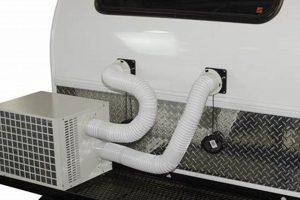
An insulated and heated underbelly constitutes a primary defense against freezing. Enclosing the water tanks, pipes, and associated plumbing within an insulated compartment mitigates exposure to ambient air temperatures. Integrating a heating source, often in the form of electric heating pads or forced-air ducts, further elevates the temperature within the compartment, preventing freezing. This approach is particularly effective in maintaining positive temperatures even when external conditions are severely cold. However, the effectiveness hinges on the integrity of the insulation and the reliability of the heating source.
- Heated Water Hoses
External water connections, such as the hose connecting the recreational vehicle to a municipal water supply, are particularly vulnerable to freezing. Heated water hoses incorporate an electric heating element within the hose wall, preventing the water within from reaching freezing temperatures. These hoses require a continuous power supply and are most effective when used in conjunction with other freeze protection measures. Proper installation and monitoring of the heating element are crucial to ensure reliable operation and prevent electrical hazards.
- RV Antifreeze Usage
RV antifreeze, a non-toxic formulation designed for plumbing systems, provides an alternative freeze protection method when water supply is not required. Draining the water system and introducing RV antifreeze into the pipes, tanks, and fixtures displaces the water, preventing freezing. This method is commonly employed during winter storage or when operating in conditions where water availability is uncertain. Complete drainage of the water system is essential to prevent dilution of the antifreeze and subsequent freezing. Furthermore, selecting the appropriate concentration of antifreeze is crucial to ensure adequate freeze protection for the anticipated temperature range.
- Tank Heating Pads
Water tanks, particularly those mounted externally, are susceptible to freezing. Tank heating pads are electrically powered heating elements affixed directly to the tank’s surface, providing localized heat to prevent freezing. These pads are typically thermostatically controlled, activating only when the tank temperature drops below a pre-set threshold. Consistent power supply and reliable thermostat function are essential for ensuring effective freeze protection. Furthermore, the size and placement of the heating pads must be matched to the tank’s dimensions and material for optimal performance.
The integration of these facets, tailored to specific environmental conditions and operational requirements, is essential for safeguarding the plumbing systems of recreational vehicles intended for year-round use. A comprehensive approach, encompassing insulation, heating, and preventative measures, ensures consistent water supply and prevents costly damage in sub-freezing environments. Regular inspection and maintenance of all freeze protection components are crucial for maintaining their effectiveness and ensuring reliable operation throughout the cold-weather season.
4. Roof Load Rating

Roof load rating, expressed in pounds per square foot (PSF), represents the maximum weight a recreational vehicle’s roof structure can safely bear. This specification is particularly relevant to units designed for all-season use, where snow accumulation can exert significant pressure. Inadequate roof load capacity can lead to structural damage, compromising the integrity of the vehicle and posing safety risks. The rating reflects the materials used in roof construction, the support structure’s design, and the overall engineering of the vehicle. Selecting a recreational vehicle with a roof load rating appropriate for the intended geographic region is critical to prevent catastrophic failure during periods of heavy snowfall. For instance, a recreational vehicle intended for use in mountainous areas with high snowfall should possess a significantly higher roof load rating than one intended for use in southern climates.
Manufacturers determine roof load ratings through a combination of engineering calculations and physical testing. These tests simulate the effects of snow accumulation, wind, and other environmental factors. A higher roof load rating often necessitates a more robust roof structure, potentially increasing the vehicle’s overall weight and cost. However, this investment provides a crucial margin of safety, minimizing the risk of roof collapse or deformation. Furthermore, exceeding the roof load rating can void warranties and compromise insurance coverage. The rating is typically displayed on a placard within the vehicle, providing occupants with essential information regarding the vehicle’s structural limitations. Real-world examples illustrate the consequences of neglecting the roof load rating: units parked for extended periods in snowy regions without snow removal have experienced significant roof damage, requiring extensive and costly repairs.
In conclusion, roof load rating is an indispensable specification for recreational vehicles designed for year-round use. Understanding this metric and selecting a vehicle with an appropriate rating mitigates the risk of structural damage due to snow accumulation and other environmental stressors. Regular inspection of the roof, combined with proactive snow removal, further enhances safety and extends the vehicle’s lifespan. The challenge lies in accurately assessing the anticipated snow load for the intended travel destinations and selecting a vehicle with a sufficient safety margin. Prioritizing roof load rating as a key selection criterion ensures the longevity and structural integrity of the investment, facilitating safe and enjoyable travel across diverse climates.
5. Window Glazing Quality

Window glazing quality is a critical determinant of thermal performance in recreational vehicles engineered for four-season use. Single-pane windows, common in older or less expensive models, offer minimal insulation, leading to substantial heat loss in cold conditions and heat gain in warm conditions. This necessitates increased reliance on heating and cooling systems, driving up energy consumption and reducing interior comfort. Conversely, dual-pane or multi-pane windows with inert gas fills and low-emissivity (Low-E) coatings significantly reduce conductive and radiant heat transfer. As an example, consider two identical recreational vehicles parked in direct sunlight: the unit equipped with high-quality, Low-E coated dual-pane windows will maintain a demonstrably cooler interior temperature, reducing the need for air conditioning and enhancing occupant comfort.
The practical significance of superior window glazing extends beyond mere comfort. Reduced energy consumption translates directly into cost savings, particularly for individuals relying on shore power at campgrounds. Furthermore, improved thermal performance minimizes condensation buildup on window surfaces, mitigating the risk of mold growth and preserving the structural integrity of the surrounding wall components. A failure to invest in high-quality glazing can result in long-term maintenance costs associated with moisture damage and increased energy bills. Consider the experience of recreational vehicle owners who upgraded from single-pane to dual-pane windows; they consistently report reduced heating and cooling requirements, along with a noticeable decrease in interior noise levels.
In summary, window glazing quality is not a superficial amenity but a foundational element contributing to the overall performance and efficiency of all-season recreational vehicles. The investment in high-quality glazing directly translates into enhanced comfort, reduced energy costs, and improved long-term durability. While initial cost may be higher, the long-term benefits, including reduced maintenance and improved energy efficiency, justify the expenditure. The selection of a recreational vehicle should prioritize glazing quality commensurate with the intended operating conditions and anticipated climate extremes. The challenge lies in accurately assessing the glazing’s performance specifications and verifying its effectiveness under real-world conditions.
6. Underbelly Enclosure

The underbelly enclosure is a critical component in recreational vehicles designed for four-season use, providing a protective barrier against environmental extremes that can compromise essential systems.
- Thermal Barrier Performance
The enclosure’s primary function is to provide thermal insulation, minimizing heat loss in cold climates and preventing heat gain in warm climates. This insulation is achieved through a combination of materials, including rigid foam boards, fiberglass batts, or spray foam. Effective thermal insulation reduces the workload on the recreational vehicle’s heating and cooling systems, conserving energy and maintaining a more stable interior temperature. Inadequate insulation can lead to frozen pipes, condensation buildup, and discomfort for occupants. As an example, a recreational vehicle lacking a properly sealed underbelly experiences significantly higher heating costs during winter months compared to a unit with an effective enclosure.
- Protection Against Environmental Elements
The underbelly enclosure shields vital components, such as water tanks, plumbing lines, and electrical wiring, from physical damage caused by road debris, moisture, and pests. Exposure to these elements can lead to corrosion, leaks, and system failures. A robust enclosure prevents the intrusion of water, minimizing the risk of frozen pipes during winter and protecting electrical connections from short circuits. Furthermore, the enclosure deters rodents and insects from nesting within the undercarriage, preventing damage to wiring and insulation. Instances of damaged plumbing due to road debris are significantly reduced in recreational vehicles equipped with durable underbelly enclosures.
- Moisture Management and Ventilation
While providing a protective barrier, an effective underbelly enclosure also incorporates features to manage moisture and promote ventilation. Trapped moisture can lead to mold growth, corrosion, and structural damage. Ventilation openings allow for airflow, preventing the buildup of humidity and promoting drying. Some enclosures incorporate drainage systems to remove any water that may accumulate. The proper balance between protection and ventilation is crucial to maintain a healthy and durable undercarriage. The absence of ventilation in an underbelly enclosure can lead to condensation problems, resulting in premature deterioration of structural components.
- Accessibility for Maintenance and Repairs
The design of the underbelly enclosure should allow for reasonable access to plumbing and electrical systems for maintenance and repairs. A completely sealed enclosure, while providing maximum protection, can hinder access to essential components, making troubleshooting and repairs more difficult and costly. Removable panels or access hatches facilitate inspection and maintenance without requiring complete removal of the enclosure. The trade-off between protection and accessibility is a key consideration in the design of effective underbelly enclosures. Recreational vehicles with easily accessible underbelly components typically incur lower maintenance costs over their lifespan.
The underbelly enclosure represents an integral design element of recreational vehicles intended for four-season use. Its effectiveness in providing thermal insulation, environmental protection, moisture management, and accessibility directly impacts the vehicle’s performance, longevity, and habitability across diverse climates. Properly designed and maintained, the underbelly enclosure contributes significantly to the overall value and utility of the recreational vehicle. The absence of, or deficiencies in, the underbelly enclosure undermines a recreational vehicles four-season capabilities and its occupant comfort.
7. Ventilation Effectiveness

Ventilation effectiveness directly influences the performance and habitability of recreational vehicles engineered for year-round use. Its primary function is to regulate interior air quality by removing moisture, pollutants, and stale air, while simultaneously introducing fresh air. Insufficient ventilation leads to condensation buildup, fostering mold growth, compromising air quality, and potentially damaging the structural integrity of the recreational vehicle. Consider the scenario of a recreational vehicle occupied during cold weather conditions; respiration and cooking activities generate significant levels of humidity. Without adequate ventilation, this humidity condenses on interior surfaces, creating an environment conducive to mold proliferation. A direct consequence of ineffective ventilation is the degradation of insulation materials, diminishing their thermal performance and escalating heating costs. Furthermore, the accumulation of pollutants, such as carbon dioxide and volatile organic compounds (VOCs) released from building materials and furnishings, negatively impacts occupant health and comfort. The effectiveness of the ventilation system directly influences the overall suitability of a recreational vehicle for sustained occupancy in diverse climates.
Effective ventilation strategies in all-season recreational vehicles often involve a combination of passive and active systems. Passive ventilation relies on natural airflow driven by temperature and pressure differentials. Roof vents, strategically positioned to facilitate air circulation, are a common example. Active ventilation systems employ mechanical fans to force air exchange. These systems are particularly useful in situations where natural airflow is limited or when rapid air exchange is required to mitigate humidity spikes. Furthermore, specialized ventilation systems, such as those incorporating heat recovery ventilators (HRVs), can improve energy efficiency by preheating incoming fresh air with outgoing stale air. Regular maintenance of ventilation systems, including cleaning and filter replacement, is essential to ensure optimal performance. A poorly maintained ventilation system can become a breeding ground for mold and bacteria, exacerbating air quality problems. Real-world scenarios highlight the benefits of well-designed ventilation systems; recreational vehicle owners who prioritize ventilation report reduced condensation issues, improved air quality, and enhanced overall comfort.
In summary, ventilation effectiveness is not merely an ancillary feature but a foundational requirement for all-season recreational vehicles. Its impact extends beyond occupant comfort to encompass structural integrity, air quality, and energy efficiency. The selection of a recreational vehicle should prioritize ventilation systems that are appropriately sized for the unit’s volume, equipped with effective air filtration, and designed for ease of maintenance. Addressing ventilation challenges proactively mitigates potential problems associated with moisture buildup, pollutant accumulation, and compromised indoor air quality. The design and integration of effective ventilation systems represent a critical engineering consideration in the development of recreational vehicles capable of providing comfortable and healthy living spaces across diverse climates.
Frequently Asked Questions
The following questions address common concerns regarding recreational vehicles designed for use in a wide range of environmental conditions. Answers are intended to provide clarity and facilitate informed decision-making.
Question 1: How does the insulation in an all-season recreational vehicle differ from that in a standard model?
All-season recreational vehicles typically utilize higher R-value insulation materials in the walls, roof, and floor. This enhanced insulation minimizes heat transfer, maintaining a more consistent interior temperature regardless of external conditions. Standard models often employ less effective insulation, resulting in increased energy consumption and reduced comfort in extreme climates.
Question 2: What measures are taken to protect the plumbing system from freezing in an all-season recreational vehicle?
Plumbing protection in these vehicles typically includes an insulated and heated underbelly, heated water hoses, and the option to use RV antifreeze. The insulated underbelly shields pipes and tanks from exposure to ambient temperatures, while heated hoses prevent freezing in external water connections. RV antifreeze provides an alternative when water supply is not required.
Question 3: Is a specialized heating system necessary for an all-season recreational vehicle?
Yes, an adequately sized and efficient heating system is essential. These vehicles often incorporate high-BTU furnaces or alternative heating systems capable of maintaining a comfortable interior temperature even in sub-freezing conditions. The heating system’s capacity should be matched to the interior volume of the recreational vehicle.
Question 4: Does an all-season recreational vehicle require additional maintenance compared to a standard model?
While the maintenance requirements are generally similar, certain aspects demand greater attention. Regular inspection of insulation, plumbing, and heating systems is crucial. Furthermore, sealant integrity should be monitored to prevent water intrusion. Winterization procedures are essential in cold climates to prevent freezing damage.
Question 5: What is the significance of the roof load rating in an all-season recreational vehicle?
The roof load rating indicates the maximum weight the roof structure can safely bear, particularly relevant in regions with heavy snowfall. Exceeding the roof load rating can lead to structural damage. Selecting a vehicle with an appropriate roof load rating mitigates this risk.
Question 6: How does ventilation contribute to the performance of an all-season recreational vehicle?
Effective ventilation regulates interior air quality, removing moisture and pollutants. Insufficient ventilation leads to condensation buildup, fostering mold growth and potentially damaging the structure. A combination of passive and active ventilation systems is often employed to maintain a healthy interior environment.
In summary, all-season recreational vehicles require specialized engineering and construction to withstand diverse environmental conditions. Understanding the key features and maintenance requirements is essential for ensuring long-term performance and comfort.
The subsequent section will delve into cost considerations and investment analysis related to these vehicles.
Comprehensive Assessment
This exploration of the 4 season travel trailer underscores the critical design and engineering considerations necessary for reliable performance in varied climates. Key areas highlighted encompass insulation effectiveness, plumbing freeze protection, robust heating capacity, structural resilience, and the importance of proper ventilation. Successfully integrating these elements ensures extended usability and occupant comfort under diverse conditions.
The informed selection and diligent maintenance of a recreational vehicle optimized for year-round travel represent a significant investment. Continued advancements in materials and construction techniques promise enhanced durability and efficiency in future models. Prioritizing thorough research and adhering to established maintenance protocols will maximize the longevity and value of this versatile asset, facilitating sustained exploration regardless of seasonal constraints.