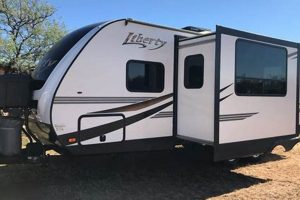
A recreational vehicle designed for temporary habitation which includes a self-actuating system to achieve a horizontal resting position, irrespective of the ground’s slope. This system typically involves electronically controlled jacks or hydraulic mechanisms that automatically adjust to compensate for uneven terrain. For example, upon arrival at a campsite, the system engages, eliminating the need for manual leveling blocks and tools.
The advent of such systems provides enhanced convenience and stability, diminishing setup time and improving overall user experience. Historically, achieving a level position required significant effort and time, often impacting the enjoyment of the camping experience. The integration of automated technology has alleviated these concerns, contributing to the growing popularity of recreational travel.
The subsequent discussion will delve into the specific components of these systems, examine operational principles, outline maintenance considerations, and evaluate common issues encountered by owners and prospective purchasers.
Tips for Maintaining Automatic Leveling Systems on Recreational Vehicles
Proper maintenance ensures the longevity and reliable performance of automatic leveling systems found on recreational vehicles. Adherence to recommended practices is critical for avoiding costly repairs and maximizing the utility of the technology.
Tip 1: Inspect Hydraulic Fluid Levels Regularly: Low fluid levels can cause system malfunction. Consult the manufacturer’s specifications for the correct fluid type and fill level. Check for leaks around hoses and fittings, addressing any identified issues promptly.
Tip 2: Clean and Lubricate Jack Components: Dirt and debris accumulation can impede jack operation. Periodically clean the jack legs with a mild detergent and apply a silicone-based lubricant to moving parts to ensure smooth extension and retraction.
Tip 3: Examine Wiring and Electrical Connections: Loose or corroded connections can disrupt the system’s electrical signals. Inspect wiring harnesses and connectors for damage or corrosion, and secure any loose connections. Apply dielectric grease to connections to prevent corrosion.
Tip 4: Verify Proper Grounding: A secure ground connection is essential for the system’s electrical integrity. Ensure that the ground wire is securely attached to the vehicle’s frame and free from corrosion.
Tip 5: Perform Routine System Calibrations: Over time, the system’s calibration may drift, leading to inaccurate leveling. Follow the manufacturer’s instructions for recalibrating the system, typically involving a simple series of steps.
Tip 6: Protect the System During Storage: When the recreational vehicle is not in use, retract the jacks fully and cover them to protect them from the elements. Consider using jack pads to distribute weight and prevent damage to the jacks on soft surfaces.
Tip 7: Address Error Codes Promptly: Familiarize yourself with the system’s error codes and consult the manufacturer’s manual for troubleshooting steps. Ignoring error codes can lead to more significant problems.
Implementing these preventative measures minimizes the risk of system failure and ensures the automatic leveling system remains in optimal condition, providing a convenient and stable platform for recreational travel.
The subsequent section will explore common troubleshooting scenarios and their respective resolutions.
1. Stability

The incorporation of automatic leveling systems within recreational vehicles directly influences stability, providing a consistent and secure foundation regardless of terrain variations. Uneven ground conditions introduce instability, which can lead to uncomfortable living conditions, potential damage to the unit’s frame and internal components, and the malfunctioning of appliances. The primary function of such a system is to counteract these issues by automatically adjusting the vehicle’s position until a level plane is achieved.
Consider the scenario of parking a recreational vehicle on a campsite with a significant slope. Without automatic leveling, occupants may experience difficulty sleeping, doors may swing open or closed unexpectedly, and plumbing systems may not drain correctly. The system mitigates these problems by extending or retracting jacks at various points under the frame. The leveling process creates a stable platform, preventing movement caused by wind or internal activity. In mobile medical units, for example, this stability is crucial for the operation of sensitive equipment.
Therefore, the link between stability and these automatic systems is fundamental. These systems provide practical benefits that directly improve the usability and longevity of the recreational vehicle. This stability influences not only the comfort of the occupants but also the operational reliability and safety of the entire vehicle.
2. Convenience

The integration of automated leveling systems into recreational vehicles represents a significant enhancement in user convenience, streamlining setup procedures and minimizing the physical effort associated with preparing the vehicle for habitation.
- Elimination of Manual Labor
The primary contribution to convenience lies in the removal of manual leveling processes. Traditionally, achieving a level position required utilizing leveling blocks, a spirit level, and repeated adjustments to compensate for ground irregularities. Automatic systems eliminate this labor, allowing users to initiate the leveling sequence with a simple push of a button. This feature is particularly advantageous for individuals with mobility limitations or those seeking a quicker, less strenuous setup.
- Reduced Setup Time
Manual leveling can be a time-consuming process, especially on challenging terrain. Automated systems significantly reduce the time required to prepare the recreational vehicle for use. The automatic system completes the entire leveling sequence in a fraction of the time. This advantage allows occupants to focus on other aspects of their camping experience, improving the overall enjoyment of recreational travel.
- Simplified Operation
The user interface for automatic leveling systems is typically designed for ease of use. Most systems feature a control panel with clearly labeled buttons or a touchscreen interface. The user simply initiates the leveling process, and the system automatically adjusts the jacks until the vehicle is level. This simplified operation reduces the learning curve for new recreational vehicle owners and minimizes the potential for errors during setup.
- Increased Accessibility
The automated function increases accessibility for individuals with physical limitations. With the touch of a button, the system takes over the task, offering a more inclusive travel experience.
The advancements in automation directly address the historical inconveniences associated with recreational vehicle setup. This technological integration fosters a more accessible and user-friendly experience, promoting broader participation in recreational travel.
3. Time Savings

The integration of automatic leveling systems into recreational vehicles directly translates to considerable time savings, a factor of paramount importance for maximizing the efficiency and enjoyment of travel endeavors. These systems automate processes that traditionally demanded substantial time investment.
- Elimination of Manual Adjustments
Traditional leveling methodologies involve a sequence of manual adjustments using leveling blocks and a spirit level to achieve a horizontal plane. This process often requires multiple attempts and can be particularly protracted on uneven or sloping terrain. Automatic systems eliminate these iterative steps, reducing setup time from potentially thirty minutes or more to a matter of minutes. This is beneficial, for example, when arriving at a campsite late in the evening.
- Automated Precision
Automatic leveling systems employ sensors and actuators to precisely achieve a level position, thereby eliminating the need for manual assessment and readjustment. The automation ensures a uniform and accurate leveling process, optimizing the time required for setup. The integrated system, guided by sensors, executes precise adjustments swiftly.
- Streamlined Setup Procedure
The activation of an automatic leveling system typically involves a single initiation command, after which the system autonomously executes the leveling sequence. This streamlined procedure contrasts sharply with the multi-step process of manual leveling, allowing users to allocate their time to other aspects of campsite setup and recreational activities. For example, time savings can be used to prepare meals and set up furniture to be used during their vacation.
- Expedited Departure
When preparing for departure, retracting the leveling jacks is also automated, contributing to overall time savings. Manual retraction can be cumbersome, particularly in adverse weather conditions or when dealing with jacks that are difficult to access. The automated retraction process streamlines the departure sequence, facilitating a more rapid and efficient transition between campsites.
The cumulative effect of these factors establishes automatic leveling systems as a significant contributor to time efficiency in recreational vehicle travel. The expedited setup and departure procedures allow users to dedicate more time to their intended activities, enhancing the overall value and enjoyment of their travel experiences.
4. Damage Prevention

The incorporation of automatic leveling systems into recreational vehicles is intrinsically linked to the mitigation of potential structural damage, safeguarding the longevity and integrity of the unit. This system is proactive in minimizing stress factors that, over time, can compromise the vehicle’s framework and internal components.
- Frame Stress Reduction
Uneven ground conditions induce torsional stress on the vehicle’s frame. Manual leveling, if performed inadequately, can exacerbate this issue. Automatic leveling systems distribute weight evenly across the frame, reducing localized stress concentrations that can lead to fatigue, cracking, and eventual structural failure. Precise leveling ensures the vehicle’s frame is supported evenly, reducing stress.
- Slide-Out Mechanism Protection
Slide-out mechanisms are particularly vulnerable to damage when a recreational vehicle is not level. Misalignment can cause binding, placing undue strain on the slide-out’s motors, gears, and supporting structures. Automatic leveling ensures proper alignment, enabling smooth and effortless extension and retraction of slide-outs, thereby preventing premature wear and tear or failure of the mechanism. When extending these features on a non-level plane, it is very common for the slide-outs not to fully extend and or retract without issue.
- Appliance Stability and Functionality
Refrigerators, stoves, and other appliances within a recreational vehicle are designed to operate within specific tolerances regarding inclination. Operation outside of these parameters can impair functionality and, in some cases, cause permanent damage. Automatic leveling ensures these appliances operate within their designed limits, preserving their operational efficiency and extending their lifespan. If a refrigerator is not level, it may not cool as intended, and damage the coils over time.
- Plumbing and Drainage Integrity
The effectiveness of a recreational vehicle’s plumbing system relies on proper slope for drainage. When the vehicle is not level, wastewater can accumulate in undesired locations, leading to potential leaks, corrosion, and unsanitary conditions. Automatic leveling ensures proper drainage, preventing these issues and maintaining the integrity of the plumbing system. Furthermore, improperly drained water could freeze if left inside the plumbing in low temperatures.
Collectively, these factors underscore the critical role of automatic leveling systems in preserving the structural integrity and operational efficiency of recreational vehicles. By mitigating stress, protecting slide-out mechanisms, ensuring appliance stability, and maintaining plumbing integrity, these systems contribute significantly to the longevity and overall value of the vehicle, preventing costly repairs and maximizing the enjoyment of recreational travel.
5. Component Longevity

The longevity of components within a recreational vehicle is significantly influenced by the presence and functionality of an automatic leveling system. The sustained operational life of various systems and structural elements directly correlates with the stress and strain experienced during use. Proper leveling mitigates these stresses, contributing to increased component durability.
- Tire and Suspension Systems
Uneven weight distribution, a common consequence of unlevel parking, places disproportionate stress on tires and suspension components. This can lead to premature tire wear, suspension fatigue, and potential damage to axles. Automatic leveling distributes the load evenly, minimizing stress on these critical components, thus extending their lifespan and reducing the frequency of replacements. For example, if the front of the RV is sloped down, this can add more weight to the tires and suspension on the front of the RV.
- Chassis and Frame Elements
Prolonged exposure to uneven terrain, absent adequate leveling, induces torsional stress on the chassis and frame of the recreational vehicle. This stress can lead to metal fatigue, weld failures, and overall structural weakening over time. Automatic leveling minimizes these stresses, preserving the integrity of the chassis and frame, and preventing costly repairs or replacements. Frame damage can be very expensive to repair.
- Cabinetry and Interior Fittings
When a recreational vehicle is not level, the structural integrity of cabinetry and interior fittings can be compromised. Doors and drawers may become misaligned, latches may fail, and connections may loosen due to constant shifting. Automatic leveling maintains a stable and level environment, preventing these issues and extending the lifespan of interior components. Furthermore, the overall quality of the interior appearance will suffer from cabinets and drawers not being aligned and latched properly.
- Plumbing and Utility Connections
Stress on plumbing lines and utility connections (electrical and gas) can be exacerbated by unleveled conditions. This can lead to leaks, connection failures, and potential safety hazards. Automatic leveling reduces stress on these systems, minimizing the risk of damage and extending their operational lifespan. These lines should always be checked and serviced to ensure proper working order.
The interplay between automatic leveling systems and component longevity is evident across a spectrum of recreational vehicle systems. By mitigating stress, strain, and misalignment, these systems contribute significantly to the sustained operational life of critical components, reducing maintenance costs and enhancing the overall value and reliability of the recreational vehicle. The proper planning and use of automatic leveling components will benefit users throughout the full lifecycle of RV ownership.
Frequently Asked Questions
This section addresses common inquiries regarding automated leveling systems for recreational vehicles. The purpose is to provide clear and concise answers, facilitating informed decision-making.
Question 1: What defines an auto leveling travel trailer?
An auto leveling travel trailer is a towable recreational vehicle equipped with an integrated system that automatically adjusts the vehicle’s position to achieve a level resting state, irrespective of the terrain’s slope.
Question 2: What are the primary benefits of an auto leveling system?
The primary benefits include enhanced stability, increased convenience, reduced setup time, prevention of structural damage, and extended component longevity.
Question 3: How does an auto leveling system function?
The system typically employs electronically controlled jacks or hydraulic mechanisms, which are activated by a control panel or user interface. Sensors detect the vehicle’s inclination, and the system automatically adjusts the jacks to achieve a level plane.
Question 4: Can an auto leveling system be retrofitted to an existing travel trailer?
Retrofitting is possible, but it requires professional installation and may involve modifications to the vehicle’s frame and electrical system. Compatibility and cost considerations must be carefully evaluated.
Question 5: What maintenance is required for an auto leveling system?
Regular maintenance includes inspecting hydraulic fluid levels, cleaning and lubricating jack components, examining wiring and electrical connections, verifying proper grounding, and performing routine system calibrations.
Question 6: What are common problems associated with auto leveling systems?
Common problems include hydraulic leaks, electrical malfunctions, sensor failures, and jack malfunctions. Addressing error codes promptly and adhering to recommended maintenance practices can mitigate these issues.
In summary, automated leveling systems offer substantial advantages in terms of convenience and vehicle preservation. However, proper maintenance and understanding of system functionality are critical for ensuring reliable performance.
The subsequent section will provide a comparative analysis of different auto leveling system models and their respective features.
Auto Leveling Travel Trailer
The preceding discussion has comprehensively explored the features, benefits, and maintenance considerations associated with recreational vehicles equipped with automatic leveling systems. The integration of automated technology offers significant advantages, streamlining setup procedures, enhancing stability, and contributing to the long-term preservation of the vehicle’s structural integrity and internal components. These systems represent a marked improvement over traditional manual leveling methods, reducing the time and effort required to prepare a recreational vehicle for use.
While the implementation of automated leveling systems represents a considerable investment, the long-term benefits, encompassing increased convenience, reduced maintenance costs, and enhanced resale value, warrant careful consideration. Prospective purchasers should diligently evaluate their specific needs and priorities before making a decision, ensuring that the selected system aligns with their intended usage patterns and maintenance capabilities. Further research into specific models and manufacturers is strongly recommended to make the most informed purchasing decision.