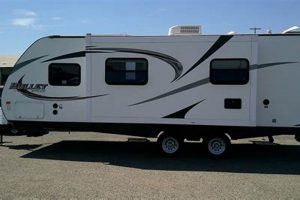
Devices designed to mitigate movement in recreational vehicles, particularly when stationary, provide enhanced stability. These systems typically consist of adjustable supports placed under the frame or chassis, minimizing rocking and swaying. For example, a set of extendable jacks positioned at the trailer’s corners creates a more secure and level platform.
The application of these supports significantly improves the user experience by reducing motion caused by wind, occupants moving inside, or uneven ground. This enhanced stability contributes to a more comfortable and secure environment for resting, cooking, and other activities within the vehicle. Historically, rudimentary methods like chocks and wooden blocks were used, but modern systems offer improved adjustability, strength, and ease of use.
The following sections will delve into the various types available, factors to consider when selecting appropriate equipment, proper installation techniques, and maintenance recommendations to ensure longevity and effectiveness. Understanding these aspects is crucial for optimizing the performance and overall stability of a recreational vehicle.
Essential Usage Tips
The following guidelines are provided to ensure optimal performance and longevity of stabilizing equipment.
Tip 1: Select Appropriate Capacity: Prior to purchase, verify the weight rating of the chosen devices aligns with or exceeds the laden weight of the recreational vehicle. Exceeding the weight capacity can lead to structural failure and instability.
Tip 2: Employ a Leveling Device First: Prior to deploying stabilizers, ensure the recreational vehicle is as level as possible using leveling blocks or ramps. This minimizes stress on the stabilizers and maximizes their effectiveness.
Tip 3: Distribute Weight Evenly: Strive to distribute the weight inside the recreational vehicle evenly to minimize imbalances that could compromise stability. Shifting heavy items can significantly improve performance.
Tip 4: Avoid Over-Extension: When deploying screw-type or scissor-type stabilizers, avoid extending them beyond the manufacturer’s recommended limit. Over-extension can reduce their structural integrity and increase the risk of failure.
Tip 5: Tighten Securely, but Not Excessively: Tighten the stabilizers until they make firm contact with the ground and provide noticeable stability. Avoid over-tightening, as this can damage the recreational vehicle’s frame or the stabilizer itself.
Tip 6: Conduct Regular Inspections: Regularly inspect the stabilizers for signs of damage, such as bending, cracking, or corrosion. Replace any damaged components immediately to maintain safety and performance.
Tip 7: Lubricate Moving Parts: Periodically lubricate the moving parts of the stabilizers, such as threads and hinges, with a suitable lubricant. This helps prevent corrosion and ensures smooth operation.
These tips offer insight into the correct utilization of these devices, optimizing stability and reducing the risk of damage, thus improving overall user experience.
The subsequent section will elaborate on troubleshooting common issues and provide guidance on long-term storage practices.
1. Weight Capacity

Weight capacity represents a critical parameter in the selection and utilization of stabilizing equipment. It defines the maximum load that a given stabilizer can safely support without compromising its structural integrity or effectiveness. Exceeding the weight capacity creates a direct cause-and-effect relationship, potentially leading to bent supports, compromised leveling, or even complete failure. For instance, if a device rated for 5,000 lbs is used on a recreational vehicle weighing 6,000 lbs, the excess weight can induce stress fractures in the metal, diminishing its ability to minimize movement. Thus, weight capacity is not merely a specification; it’s a fundamental component ensuring the safe and reliable operation of stabilization systems.
The practical significance of understanding weight capacity extends beyond avoiding immediate equipment failure. Consistently overloading stabilizers, even if not to the point of visible damage, can accelerate wear and tear, shortening their lifespan and reducing their overall effectiveness over time. Regular inspection of the equipment, cross-referenced with the actual weight of the vehicle (including cargo and occupants), is essential. Consider a family traveling with a fully loaded recreational vehicle; their stabilizer system must be appropriately rated to handle the combined weight, accounting for potential weight distribution imbalances. Inadequate attention to this factor can translate to an unstable, unsafe, and uncomfortable environment within the recreational vehicle.
In conclusion, weight capacity is an indispensable aspect of stabilizing equipment. Selecting devices with appropriate weight ratings is not merely a matter of compliance but a direct determinant of safety, longevity, and performance. Neglecting this essential factor can precipitate equipment failure, compromise stability, and detract from the overall experience. The correlation underscores the necessity for careful consideration and adherence to manufacturer specifications to ensure optimal and dependable stabilizing performance. The implications extends beyond the product into ensuring users safety.
2. Ground Contact

Ground contact, in the context of stabilizing equipment, refers to the interface between the stabilizer and the supporting surface. This connection is paramount in effectively transferring the load from the recreational vehicle to the ground, thereby reducing movement and enhancing stability.
- Surface Area
The surface area of the stabilizer’s foot directly influences its ability to distribute weight. A larger surface area reduces the pressure exerted on the ground, minimizing the risk of sinking or shifting, especially on softer surfaces such as grass or sand. Examples of this would be using wider stabilizer feet on sand vs. standard stabilizer feet.
- Material Composition
The material of the stabilizer foot affects its grip and durability. Rubber or textured surfaces provide increased friction, preventing slippage on smooth or inclined ground. A stabilizer with high-quality material will resist wear and tear and contribute to better long-term performance.
- Adjustability
Adjustable stabilizer feet allow for adaptation to uneven terrain. This feature enables the system to maintain consistent contact with the ground, even when the recreational vehicle is parked on a slope or irregular surface. Adjustable features increase the ability to distribute the weight evenly.
- Load Distribution
The effectiveness of ground contact is directly related to the distribution of the recreational vehicle’s weight across all stabilizers. Uneven weight distribution can overload individual stabilizers, compromising their contact with the ground and reducing overall stability. Understanding the load distribution ensures the longevity of stabilizers.
These facets of ground contact are crucial to the effective performance. Ensuring adequate surface area, selecting appropriate materials, maintaining adjustability, and achieving even load distribution are vital for maximizing stability and minimizing movement. Attention to these elements contributes to a more stable and secure recreational vehicle experience.
3. Leveling Integration

The integration of leveling systems with stabilization mechanisms represents a fundamental aspect of ensuring stability in recreational vehicles. Precise leveling minimizes stress on the frame and ensures that stabilizers function optimally. Without proper leveling, stabilizers may be subjected to uneven loads, compromising their effectiveness and potentially causing damage.
- Pre-Stabilization Leveling
Pre-stabilization leveling involves the use of leveling blocks or automatic leveling systems to bring the recreational vehicle as close to level as possible before deploying stabilizers. This step is crucial as it establishes a balanced foundation, reducing the strain on individual stabilizers. Failure to level prior to stabilization can result in excessive force being applied to one or more stabilizers, leading to premature wear or failure.
- Integrated Leveling and Stabilization Systems
Some recreational vehicles are equipped with integrated systems that combine leveling and stabilization functions. These systems typically utilize hydraulic or electric jacks that can both level the vehicle and provide stabilization. Integrated systems offer convenience and often provide more precise control over the leveling process, enhancing the overall stability of the recreational vehicle.
- Sensor-Based Leveling
Modern leveling systems often incorporate sensors that detect the angle and orientation of the recreational vehicle. These sensors provide feedback to the leveling system, allowing it to automatically adjust the jacks or leveling blocks to achieve a perfectly level position. Sensor-based leveling systems improve accuracy and reduce the need for manual adjustments, resulting in a more stable and comfortable environment inside the recreational vehicle.
- Manual Leveling with Visual Aids
Manual leveling involves the use of bubble levels or other visual aids to determine the degree of unlevelness. The operator then manually adjusts leveling blocks or ramps to bring the recreational vehicle to a level position. While manual leveling requires more effort and skill than automatic systems, it remains a viable option, especially for smaller recreational vehicles or those without integrated leveling systems. However, it requires diligent attention to ensure accurate and even weight distribution.
The preceding facets illuminate the importance of leveling integration in conjunction with stabilization efforts. Proper leveling, whether achieved through manual methods, sensor-based systems, or integrated units, serves to optimize the performance and longevity of stabilizing equipment. Ignoring the leveling aspect introduces undue stress and can significantly diminish the effectiveness of the entire system, emphasizing the need for careful consideration and implementation of appropriate leveling techniques.
4. Material Durability

Material durability directly influences the longevity and reliability of stabilizing equipment. The selection of robust materials ensures that the stabilizers can withstand the rigors of frequent use, exposure to environmental elements, and the sustained pressure of supporting a recreational vehicle. For example, stabilizers constructed from high-strength steel alloys exhibit greater resistance to bending, corrosion, and fatigue compared to those made from lower-grade metals. The cause-and-effect relationship is clear: inferior materials lead to premature failure, while durable materials provide extended service life and consistent performance.
The importance of material durability extends beyond mere longevity. Compromised stabilizers can create hazardous conditions, leading to instability, vehicle damage, or even injury. Consider a scenario where a stabilizer made from substandard material fails under load, causing the recreational vehicle to shift unexpectedly. Such incidents highlight the practical significance of understanding material properties and selecting stabilizers that meet stringent durability standards. Galvanized or powder-coated finishes, for instance, provide added protection against rust and corrosion, preserving the structural integrity of the stabilizer over time. Regular inspection and maintenance, coupled with the use of high-quality materials, are essential for ensuring the long-term effectiveness of stabilization systems.
In summary, material durability is a critical determinant of the overall performance and safety of stabilizing equipment. Investing in stabilizers made from robust materials is a prudent decision that can mitigate the risk of failure, extend service life, and enhance the safety and stability of recreational vehicles. Neglecting this aspect can result in compromised performance, increased maintenance costs, and potential safety hazards. Consequently, careful consideration of material properties is essential when selecting and maintaining stabilizing systems.
5. Deployment Mechanism
The deployment mechanism is a critical component of stabilizing equipment, directly influencing ease of use, speed of setup, and overall effectiveness. The method by which these devices are extended and secured significantly impacts the user experience and the resultant stability of the recreational vehicle.
- Manual Crank Systems
Manual crank systems rely on mechanical force applied by the user to extend and retract the stabilizer. These systems are typically simple and reliable but require physical effort. The effectiveness of manual systems depends on the gear ratio and the strength of the user. Example: A scissor jack with a hand crank. Manual systems provide the user with direct control over the deployment process.
- Electric Powered Systems
Electric powered systems utilize electric motors to extend and retract the stabilizers, offering increased convenience and reduced physical exertion. These systems often include remote control functionality, allowing for deployment from a distance. Electric stabilizers can be more expensive than manual options, but they provide a significant advantage in terms of ease of use. Example: An electric stabilizer jack that can be operated from inside the trailer.
- Hydraulic Systems
Hydraulic systems employ hydraulic pressure to deploy and retract the stabilizers. These systems are known for their high lifting capacity and precise control, making them suitable for larger recreational vehicles. Hydraulic stabilizers typically require a power source, such as a hydraulic pump, and can be more complex than manual or electric systems. Example: Leveling systems that utilize hydraulic jacks to stabilize and level the trailer simultaneously.
- Automatic Leveling Systems
Automatic leveling systems integrate sensors and computerized controls to automatically level and stabilize the recreational vehicle. These systems typically use electric or hydraulic jacks that adjust independently to achieve a level position. Automatic leveling systems offer the highest level of convenience and precision, but they also tend to be the most expensive option. Example: A system that automatically levels the trailer at the push of a button.
These deployment mechanisms highlight the range of options available for stabilizing equipment. The choice of deployment mechanism should consider factors such as user preferences, budget, the size and weight of the recreational vehicle, and the desired level of convenience. An appropriate deployment system ensures stability is achieved efficiently and safely.
Frequently Asked Questions
The following questions address common concerns regarding the use and selection of stabilizing equipment for recreational vehicles. These answers aim to clarify misconceptions and provide pertinent information.
Question 1: Is stabilizing equipment necessary for all recreational vehicles?
The implementation of stabilizing equipment is highly recommended, irrespective of recreational vehicle size or type. These devices mitigate movement, enhancing comfort and safety while the vehicle is stationary. The degree of improvement is significant, making them a worthwhile addition.
Question 2: Can stabilizing equipment compensate for unlevel ground?
While stabilizing equipment can offer some adjustment, it is primarily designed to enhance stability on relatively level surfaces. Extreme unlevelness should be addressed with leveling blocks or ramps before deploying stabilizers. The primary purpose is to provide stable ground, not to replace leveling systems.
Question 3: How often should stabilizing equipment be inspected?
Stabilizing equipment should be inspected before each use and periodically throughout the camping season. Examine all components for signs of wear, damage, or corrosion. Timely inspections help preempt potential equipment failures and maintain optimal performance.
Question 4: Is it acceptable to use stabilizing equipment to lift a recreational vehicle for tire changes?
Stabilizing equipment is not engineered for lifting purposes. Utilizing them for tire changes or other maintenance tasks can result in equipment failure, recreational vehicle damage, or personal injury. Implement properly rated jacks for lifting operations.
Question 5: Can over-tightening stabilizing equipment damage the recreational vehicle’s frame?
Over-tightening stabilizing equipment can indeed induce undue stress on the recreational vehicle’s frame, potentially leading to bending, cracking, or other structural damage. Tighten the stabilizers until they make firm contact with the ground and provide stability, but avoid excessive force.
Question 6: Does the type of ground surface affect the performance of stabilizing equipment?
Yes, the type of ground surface significantly influences the effectiveness of stabilizing equipment. Soft surfaces, such as sand or loose soil, may require the use of larger footpads or support structures to prevent sinking. Hard, uneven surfaces necessitate careful leveling to ensure consistent contact and load distribution.
Stabilizing equipment offers a tangible improvement to the recreational vehicle experience. However, understanding the limitations and proper usage protocols is crucial for maximizing its benefits and minimizing potential risks. Prioritize safety and diligence in the use of these systems.
The following section addresses troubleshooting common issues encountered when utilizing stabilizing equipment.
Concluding Assessment
This exploration of “travel trailer stabilizer” technology has underscored its crucial role in ensuring safety, comfort, and stability for recreational vehicles. We have emphasized the importance of selecting equipment based on weight capacity, the necessity of effective ground contact, the benefits of leveling integration, the significance of material durability, and the impact of the deployment mechanism. Each factor contributes directly to the overall performance and reliability of the stabilization system.
The responsible selection and utilization of “travel trailer stabilizer” devices represent a commitment to both user experience and structural integrity. Prioritizing these considerations can significantly enhance the enjoyment and longevity of recreational travel, ensuring a secure and stable environment. Continuous evaluation and adherence to manufacturer guidelines remain essential for maximizing the benefits and minimizing the risks associated with these critical components.