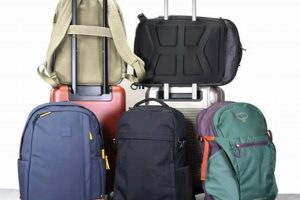
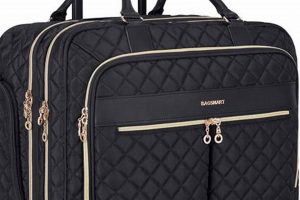
Bags designed with security features to protect belongings during transit are crucial for travelers. These items often incorporate elements such as lockable zippers, slash-resistant materials, and RFID-blocking technology. An example includes a backpack featuring a steel cable running through the straps to prevent theft.
The utilization of enhanced security measures offers significant advantages, mitigating the risk of theft and unauthorized access to personal items. Historically, travelers relied on simple locks and vigilance. However, contemporary travel necessitates more sophisticated security provisions due to increased opportunities for theft in crowded transit hubs and tourist locations. This heightened protection allows for a more relaxed and secure travel experience.
The following sections will elaborate on different types of secure baggage, common security features, and practical considerations when choosing the most suitable option for individual travel needs.
Guidance on Secure Baggage Selection and Usage
The following recommendations will aid in selecting and utilizing baggage with enhanced security features to minimize risk during travel.
Tip 1: Assess Security Needs: Evaluate travel destination and itinerary to determine appropriate security level. High-risk areas necessitate more robust security features.
Tip 2: Investigate Material Construction: Prioritize baggage constructed from slash-resistant materials such as ballistic nylon or reinforced fabrics. Verify the integrity of seams and stress points.
Tip 3: Examine Locking Mechanisms: Select baggage with robust locking systems, including TSA-approved locks and tamper-evident zippers. Ensure the locking mechanisms are durable and resistant to forced entry.
Tip 4: Consider RFID Blocking: For electronic devices and cards, utilize baggage with Radio-Frequency Identification (RFID) blocking technology. This prevents unauthorized scanning and data theft.
Tip 5: Distribute Valuables: Avoid consolidating all valuables in a single location. Distribute them across different compartments and carry personal documents separately.
Tip 6: Maintain Visual Contact: Keep baggage within sight whenever possible. Avoid leaving bags unattended, particularly in public spaces.
Tip 7: Register Baggage: Consider registering baggage with a global tracking service. This can facilitate recovery in the event of loss or theft.
Following these guidelines can significantly enhance the security of belongings during travel, reducing vulnerability to theft and loss.
The subsequent section will provide an overview of available resources and vendors specializing in security-enhanced travel equipment.
1. Material Durability

Material durability constitutes a foundational element in the effectiveness of baggage intended to safeguard possessions during travel. The correlation between the structural integrity of the materials and the overall security is direct; stronger materials provide enhanced resistance against attempts at forced entry, cutting, or general wear and tear. Consequently, the choice of material directly impacts the degree of protection a bag offers. For instance, ballistic nylon or high-denier polyester are frequently employed due to their inherent resistance to abrasion and tearing, hindering attempts to compromise the bag’s structure and access its contents.
The significance of material durability extends beyond merely resisting physical intrusion. It also affects the longevity and reliability of the baggage. A bag constructed from inferior materials may be more susceptible to damage during routine handling, potentially leading to a compromised state where theft is facilitated. In practical terms, a traveler relying on a bag with weak seams or easily cut fabric exposes their belongings to a greater risk of loss. Conversely, a bag built to withstand rigorous use in transit provides sustained protection over an extended period.
In conclusion, material durability is indispensable for baggage designed for security. The resistance to physical damage directly influences the effectiveness of the bag in deterring theft and safeguarding belongings. Therefore, prioritizing bags constructed from robust, high-quality materials is crucial for ensuring the safety and security of possessions during travel.
2. Locking Mechanisms

Locking mechanisms are a crucial component in secure travel baggage, serving as a primary deterrent against unauthorized access. Their integration enhances the overall security, protecting belongings from theft and tampering.
- TSA-Approved Locks
Transportation Security Administration (TSA)-approved locks are designed to be opened by security personnel using a master key, eliminating the need to cut the lock for inspection. This facilitates security checks while maintaining the integrity of the baggage. For example, a traveler using a TSA-approved lock on their suitcase allows airport security to inspect the contents without damaging the lock, thereby ensuring continued protection.
- Combination Locks
Combination locks provide a user-defined code to secure baggage. These can range from simple three-digit dials to more complex alphanumeric systems, increasing the difficulty for unauthorized individuals to gain access. A briefcase secured with a combination lock, for instance, protects sensitive documents and personal items during transit.
- Cable Locks
Cable locks offer an additional layer of security by allowing the user to secure the bag to a fixed object, preventing theft of the entire bag. This is particularly useful in situations where the bag must be left unattended briefly. For example, a cyclist might use a cable lock to secure a backpack containing valuables to a bike rack while making a quick stop.
- Tamper-Evident Zippers
Tamper-evident zippers are designed to show visible signs of tampering, alerting the owner if the bag has been accessed without authorization. These zippers often incorporate interlocking mechanisms or unique markings that are disrupted upon opening. Consider a medical supply bag with tamper-evident zippers, ensuring that any unauthorized access is immediately apparent, protecting the integrity of the contents.
The effectiveness of locking mechanisms depends on their quality, design, and proper use. Integrating robust locking systems into baggage enhances security, providing peace of mind for travelers. Choosing appropriate locking solutions tailored to the specific travel context is essential for maximizing protection.
3. RFID Protection

Radio-Frequency Identification (RFID) protection is a crucial security feature integrated into baggage intended to safeguard sensitive information during travel. Its presence mitigates the risk of unauthorized access to personal data stored on RFID-enabled cards and documents, a growing concern in contemporary travel scenarios.
- Data Theft Prevention
RFID technology allows for contactless scanning of embedded chips in passports, credit cards, and identification cards. RFID-blocking materials incorporated into bags create a Faraday cage, preventing electromagnetic fields from reaching the chips, thereby preventing data theft. For instance, a wallet or passport holder lined with RFID-blocking fabric prevents unauthorized scanning of credit card information in a crowded airport.
- Security Layer Reinforcement
RFID protection adds a layer of security beyond physical barriers such as locks and slash-resistant materials. While locks deter physical theft, RFID blocking addresses electronic data breaches, providing comprehensive security. A travel backpack may incorporate both locking zippers and RFID-blocking compartments to protect against various forms of theft.
- Global Standards Compliance
Certain RFID-blocking materials and products adhere to recognized industry standards, ensuring a verified level of protection. Compliance with standards provides assurance that the material effectively blocks RFID signals across a range of frequencies. Certified RFID-blocking sleeves or wallets offer a measurable and reliable defense against data skimming.
- Integration into Travel Essentials
RFID protection is increasingly integrated into various travel accessories, including wallets, passport holders, and entire bag compartments. This allows travelers to consolidate security measures within essential items. A secure travel wallet may combine RFID-blocking technology with compartments for cash, cards, and travel documents.
The incorporation of RFID protection into secure travel baggage demonstrates a proactive approach to addressing evolving security threats. By preventing unauthorized access to electronic data, this technology enhances the overall security of belongings during travel. Its integration with other security features provides a multifaceted defense against theft and data breaches, ensuring greater peace of mind for travelers.
4. Concealed Compartments
Concealed compartments, as incorporated into secure travel baggage, represent a deliberate design strategy to enhance the safety and security of valuables during transit. These features serve to obfuscate the presence of sensitive items, reducing the likelihood of opportunistic theft.
- Discreet Storage
Concealed compartments provide storage locations within baggage that are not immediately apparent to an observer. This design discourages casual theft by requiring a higher level of scrutiny to identify and access concealed items. An example includes a hidden pocket behind the lining of a backpack, suitable for storing passports or cash.
- Layered Security
These compartments add a layer of security that complements other protective measures, such as locking mechanisms and slash-resistant materials. By physically separating valuables from readily accessible areas, the risk of theft is mitigated. Secure briefcases with hidden compartments under false bottoms exemplify this principle.
- Strategic Placement
The effectiveness of concealed compartments relies on strategic placement within the baggage design. Locations that are difficult to access or require manipulation of other components enhance security. For instance, a compartment integrated into the padding of a laptop sleeve provides a less obvious storage option.
- Design Integration
Effective concealed compartments are seamlessly integrated into the overall design of the baggage, minimizing visual cues that might reveal their presence. Designs that maintain the bag’s aesthetic integrity while providing hidden storage are more likely to be effective. An example would be a duffel bag with a concealed side pocket accessible only from within the main compartment.
The strategic use of concealed compartments within baggage contributes significantly to its overall security profile. These features, when properly designed and integrated, serve as a valuable deterrent against theft by increasing the difficulty of identifying and accessing valuables.
5. Slash Resistance
Slash resistance is a critical security feature in baggage designed for travel, particularly in high-risk environments. It directly addresses the threat of theft via cutting, where thieves attempt to slice open bags to access contents quickly and discreetly. The incorporation of slash-resistant materials and construction techniques serves as a significant deterrent, substantially increasing the time and effort required to breach the bag’s integrity. This resistance offers a crucial advantage, often allowing the owner or bystanders time to intervene, preventing the theft. Real-world examples include travelers in crowded public transportation or tourist destinations where opportunistic thieves commonly employ this tactic.
The practical significance of slash resistance lies in its ability to protect valuables and personal belongings from a specific and increasingly prevalent method of theft. Materials like tightly woven ballistic nylon, reinforced fabrics with embedded steel mesh, or specialized polyethylene blends are utilized to achieve this. The effectiveness of these materials is further enhanced by strategic seam placement and reinforced stitching, which prevent the fabric from unraveling even if a cut is initiated. Moreover, slash-resistant straps are vital, as straps are often targeted for quick bag removal. These straps typically incorporate internal wiring or layering of robust materials, preventing them from being easily severed.
In summary, slash resistance is an indispensable component of any bag intended to offer comprehensive security during travel. Its integration serves as a powerful deterrent against slash-and-grab theft techniques, safeguarding belongings and providing travelers with enhanced peace of mind. Despite advancements in bag design, slash resistance continues to be a fundamental requirement for ensuring the protection of valuables in transit, especially in environments where the risk of theft is elevated.
6. Tamper-Evident Design
Tamper-evident design in secure travel baggage serves as a critical deterrent to unauthorized access and a clear indicator of potential breaches. This design approach focuses on features that provide visible and irreversible evidence if the bag has been opened or accessed without permission. Its relevance lies in providing immediate feedback to the traveler regarding the integrity of their belongings.
- Sealed Zippers and Closures
Sealed zippers and closures are engineered to leave a clear indication if they have been opened. Examples include zippers with numbered tags that must be broken to gain entry, or interlocking systems that, once separated, cannot be rejoined without noticeable signs. In the context of secure travel baggage, these mechanisms offer a direct visual confirmation that the bag has not been tampered with during transit, fostering confidence in the security of its contents.
- Unique Serialization
Unique serialization involves assigning a distinct identification number to each bag or its components, like locks and seals. This number is recorded and can be used to verify the authenticity of the bag and confirm that no unauthorized replacements have occurred. High-value items or diplomatic pouches often utilize serialization to maintain a chain of custody and easily detect any tampering or substitution of parts.
- Specialized Tapes and Seals
Specialized tamper-evident tapes and seals are designed to fracture, distort, or leave residue when removed or manipulated. These are applied across access points, such as zippers or seams, and provide immediate visual evidence of tampering. In shipping and handling of sensitive materials, these seals are commonplace, indicating whether the container has been opened during transportation. Similarly, in secure travel bags, such seals assure travelers of the bags untouched condition since its last secure closure.
- Color-Changing Indicators
Color-changing indicators involve materials that alter in color or appearance when exposed to specific conditions or tampering. These indicators can be integrated into the bag’s construction or applied as a separate component. For instance, a seal might change color if exposed to excessive heat or moisture, revealing attempts to compromise its integrity. In practical terms, a bag with color-changing indicators might reveal attempts to access its contents using non-standard methods, alerting the traveler to potential security breaches.
These aspects of tamper-evident design collectively enhance the security profile of travel baggage. By providing immediate and unambiguous evidence of tampering, they empower travelers to take informed action, whether it involves inspecting the bag’s contents, reporting a potential security breach, or implementing additional security measures. The incorporation of such features is a critical step in safeguarding belongings and maintaining peace of mind during travel.
Frequently Asked Questions
The following addresses common inquiries regarding baggage engineered to enhance security during travel. Information presented aims to clarify functionality, benefits, and appropriate usage of such items.
Question 1: What defines a “travel safe bag” and differentiates it from standard baggage?
Baggage classified as “travel safe bags” incorporates integrated security features, such as locking mechanisms, slash-resistant materials, RFID-blocking technology, and tamper-evident designs. Standard baggage typically lacks these security enhancements.
Question 2: How effective is RFID-blocking technology in preventing electronic theft?
RFID-blocking technology, when properly implemented using certified materials, effectively prevents unauthorized scanning of RFID-enabled cards and documents. The technology creates a Faraday cage, blocking electromagnetic fields used to transmit data.
Question 3: What are the limitations of TSA-approved locks on travel safe bags?
TSA-approved locks allow Transportation Security Administration personnel to open the lock without damage using a master key. While this facilitates security inspections, it also means the lock is not impervious to unauthorized access by individuals possessing the master key or using lock-picking methods.
Question 4: How should the durability of materials in travel safe bags be assessed?
Material durability should be evaluated based on the denier rating, weave density, and resistance to abrasion and tearing. High-denier ballistic nylon or reinforced fabrics with embedded steel mesh offer increased protection against cutting and physical damage.
Question 5: Can concealed compartments guarantee complete security of stored items?
Concealed compartments deter opportunistic theft by making items less visible. However, these compartments are not impenetrable and should be used in conjunction with other security measures, such as locks and surveillance.
Question 6: What steps should be taken if a travel safe bag is suspected of being tampered with?
If a travel safe bag shows signs of tampering, its contents should be inspected immediately. Law enforcement and travel authorities should be notified, and detailed documentation, including photographs, should be retained. Credit card companies and relevant financial institutions should also be contacted if financial information is potentially compromised.
These answers provide a foundational understanding of security-enhanced baggage. Selecting appropriate equipment requires careful consideration of individual travel needs and risk factors.
The subsequent segment will explore current trends in travel security and emerging technologies impacting baggage design.
Conclusion
This exploration of “travel safe bags” has detailed essential security features and considerations. Material durability, locking mechanisms, RFID protection, concealed compartments, slash resistance, and tamper-evident design are crucial components. Proper selection and utilization of these features contribute significantly to safeguarding personal belongings during transit.
The integration of advanced security measures into travel baggage reflects a necessary adaptation to contemporary risks. Vigilance and informed decision-making remain paramount. Travelers should prioritize security when selecting baggage to mitigate potential threats effectively. The future of baggage design will likely see further innovations in materials and technology aimed at enhancing security and minimizing vulnerability.