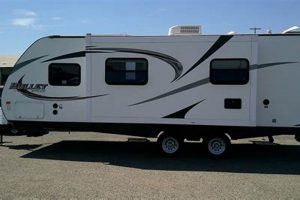
The practice of substituting timber components in recreational vehicle construction with a corrosion-resistant metal alloy offers a durable alternative. This modification primarily targets structural elements prone to degradation from moisture, pests, or physical impact. For instance, exterior sidewalls or flooring subject to environmental exposure are often prime candidates for this type of material conversion.
Employing metallic materials in this context can significantly extend the lifespan of a mobile dwelling. The inherent resistance to rot, insect infestation, and water damage reduces the need for frequent repairs and maintenance. This durability can translate to long-term cost savings and enhanced structural integrity, particularly in regions with harsh climates or frequent use.
This article will examine the considerations for undertaking such a conversion, including material selection, fabrication techniques, potential challenges, and the tools and expertise required for a successful implementation. Furthermore, it will explore the impact of this modification on overall weight distribution, insulation properties, and the aesthetic considerations involved in altering a travel trailer’s original design.
Guidance on Substituting Timber with Metal in Travel Trailers
The following guidance addresses critical aspects when considering the replacement of wood components with stainless steel in travel trailer construction. Careful planning and execution are essential for a durable and safe modification.
Tip 1: Material Grade Selection: Choose a stainless steel grade appropriate for structural applications and environmental exposure. Consider factors like tensile strength, corrosion resistance (particularly against chlorides if near coastal areas), and weldability. 304 or 316 stainless steel are commonly used, with 316 offering superior corrosion resistance.
Tip 2: Structural Integrity Assessment: Before initiating work, conduct a thorough assessment of the existing structural design. Identify load-bearing members and ensure that the steel replacement can adequately handle the original design loads. Consult with a structural engineer if necessary.
Tip 3: Accurate Measurements and Fabrication: Precise measurements and fabrication are crucial for proper fitment. Use appropriate cutting and welding techniques for stainless steel, employing specialized equipment and consumables to prevent corrosion and maintain strength. Prioritize accurate fitting to minimize stress points.
Tip 4: Corrosion Prevention at Contact Points: When interfacing steel with dissimilar metals (e.g., aluminum trailer frame), employ isolation techniques to prevent galvanic corrosion. This may involve using non-conductive barriers, coatings, or sacrificial anodes.
Tip 5: Weight Considerations: Stainless steel is denser than wood. Account for the increased weight in the overall trailer design, ensuring that the axle load ratings, tire specifications, and towing capacity of the vehicle are not exceeded. Redistribute weight strategically if necessary.
Tip 6: Insulation and Thermal Bridging: Steel is a good conductor of heat. Implement effective insulation strategies to mitigate thermal bridging and prevent condensation. Consider using thermal breaks or applying insulation to the steel components.
Tip 7: Professional Welding and Installation: Employ qualified welders and fabricators experienced in stainless steel work. Improper welding can compromise the structural integrity and corrosion resistance of the material. Ensure all connections are robust and meet relevant safety standards.
Replacing wooden elements with stainless steel can significantly enhance the durability and longevity of a travel trailer, provided that it is executed with meticulous planning and skilled craftsmanship. Proper material selection, design considerations, and installation techniques are paramount.
The subsequent sections of this article will further detail the practical aspects of performing this type of material conversion, emphasizing the importance of adhering to industry best practices and safety guidelines.
1. Material Corrosion Resistance
The selection of corrosion-resistant materials is paramount when substituting wood with metal in travel trailer construction. This choice directly influences the lifespan, structural integrity, and maintenance requirements of the modified structure. Neglecting this aspect can lead to premature failure and costly repairs.
- Stainless Steel Grade Selection
The specific grade of stainless steel chosen dictates its resistance to various corrosive agents. Grades like 304 and 316 offer different levels of protection against chlorides, acids, and other environmental factors. Selecting an inappropriate grade can result in localized corrosion, weakening the structure over time. Marine environments necessitate higher grades of stainless steel due to increased salt exposure.
- Galvanic Corrosion Mitigation
The interaction between stainless steel and other metals used in the trailer’s construction (e.g., aluminum) can initiate galvanic corrosion. This electrochemical process accelerates the degradation of the less noble metal. Effective strategies to mitigate this include using insulating barriers, applying protective coatings, or employing sacrificial anodes to preferentially corrode instead of the primary structural components.
- Surface Treatment and Passivation
The surface condition of the stainless steel significantly impacts its corrosion resistance. Passivation, a process that forms a thin, protective oxide layer on the surface, enhances resistance to corrosion. Mechanical damage or contamination can disrupt this layer, creating sites for corrosion to initiate. Regular cleaning and maintenance are crucial for preserving the passive layer’s integrity.
- Weld Quality and Technique
The welding process can compromise the corrosion resistance of stainless steel if not executed correctly. Improper welding techniques can introduce contaminants, create heat-affected zones with altered microstructure, and leave behind crevices that trap corrosive agents. Using appropriate welding procedures, filler metals, and post-weld cleaning processes are essential for maintaining the material’s inherent corrosion resistance.
The long-term success of replacing wooden elements with metal alloy components in travel trailers hinges on a comprehensive understanding and implementation of corrosion prevention strategies. These strategies extend beyond initial material selection and encompass design considerations, fabrication techniques, and ongoing maintenance practices to ensure the structural integrity of the modified trailer is maintained over its operational life.
2. Structural Load Capacity

When substituting timber components with stainless steel in a travel trailer, the consideration of structural load capacity is paramount. The original wooden structure is engineered to withstand specific loads, including static weight, dynamic forces during transit, and environmental stresses. Altering the material necessitates a reevaluation of these load-bearing capabilities to ensure continued safety and structural integrity. A failure to adequately assess and address load capacity can lead to catastrophic structural failures, particularly during travel. For example, replacing a wooden floor with a thinner gauge of stainless steel, without accounting for the original load distribution, could result in buckling or collapse under the weight of occupants or cargo.
The increased density of stainless steel, compared to wood, significantly impacts the overall weight distribution. This weight increase must be factored into the calculations to avoid exceeding axle load ratings and compromising the towing vehicle’s performance. Furthermore, the points of attachment and the method of joining the steel to the existing frame require meticulous attention. Welding, bolting, or adhesive bonding must be executed correctly to create a strong and durable connection that can withstand the stresses of travel. For instance, inadequately welded seams on a stainless steel frame replacement can fatigue and fail under the constant vibrations experienced during road travel.
In summary, modifying a travel trailer by replacing wooden elements with stainless steel demands a comprehensive understanding of structural load capacity. Accurate calculations, appropriate material selection, and skilled fabrication are essential to maintain the trailer’s structural integrity and ensure the safety of its occupants. Neglecting these considerations can have severe consequences. Consulting with a structural engineer is recommended to guarantee the modification meets required safety standards and design specifications. Addressing this specific aspect links directly to the broader theme of responsible and safe modification practices in recreational vehicles.
3. Welding and Fabrication

When undertaking the replacement of timber components with stainless steel in a travel trailer, welding and fabrication assume a critical role in ensuring structural integrity and longevity. The efficacy of the modification is directly proportional to the quality of the welding and fabrication processes employed. Poor welding or imprecise fabrication can lead to premature failure, compromising the overall safety and durability of the trailer. For example, replacing a wooden support beam with a stainless steel counterpart necessitates precise cutting, shaping, and welding to ensure a seamless and load-bearing connection to the existing trailer frame. Any deviation from stringent welding standards risks introducing stress points and weakening the joint, potentially leading to cracking or complete detachment under the dynamic stresses of travel.
The selection of appropriate welding techniques and filler materials is equally crucial. Stainless steel requires specialized welding processes, such as Gas Tungsten Arc Welding (GTAW) or Gas Metal Arc Welding (GMAW) with appropriate shielding gases, to prevent oxidation and maintain the material’s corrosion resistance. Using incorrect welding parameters or filler metals can compromise the weld’s strength and corrosion resistance, making it susceptible to failure. Furthermore, meticulous attention to detail during fabrication is necessary to ensure accurate fitment and alignment. Misaligned components or improperly sized joints can introduce stress concentrations and reduce the overall structural capacity. Proper preparation, including cleaning and degreasing the metal surfaces, is essential for achieving sound welds and preventing contamination.
In conclusion, welding and fabrication are indispensable components when replacing timber with stainless steel in travel trailers. Achieving a structurally sound and durable modification requires skilled welders, precise fabrication techniques, and a thorough understanding of stainless steel metallurgy. Substandard welding and fabrication practices inevitably lead to compromised structural integrity and reduced service life. Adherence to industry best practices and the use of qualified professionals are essential for ensuring a successful and safe modification. This emphasizes the importance of specialized skills to ensure quality and safety for mobile home’s modification.
4. Weight Distribution Impacts

The substitution of timber with stainless steel in recreational vehicles fundamentally alters inherent weight distribution characteristics. This modification necessitates careful consideration of existing load capacities and their implications for overall vehicle stability and safety.
- Axle Load Considerations
The increased density of stainless steel compared to wood directly affects axle load. Each axle has a maximum load rating, and exceeding this rating compromises braking performance, tire life, and overall stability. A floor replacement with stainless steel, for example, concentrated towards the rear of the trailer, could overload the rear axle and necessitate either weight redistribution or axle reinforcement.
- Center of Gravity Shift
Replacing wooden components with stainless steel can shift the travel trailer’s center of gravity. A higher center of gravity increases the risk of rollover, particularly during cornering or in windy conditions. Modifications should aim to maintain or lower the center of gravity. Strategic placement of heavier components can counter the effects of the weight added above the original center of gravity.
- Tongue Weight Alteration
The weight exerted on the towing vehicle’s hitch, or tongue weight, is crucial for stable towing. Altering the weight distribution can significantly impact tongue weight. Insufficient tongue weight leads to trailer sway, while excessive tongue weight can overload the towing vehicle’s rear axle. A stainless steel modification must maintain the appropriate tongue weight for safe towing.
- Frame Stress Concentration
The increased weight resulting from a stainless steel modification can induce stress concentrations in the trailer frame. Areas where the steel is attached to the original frame are particularly vulnerable. Reinforcing the frame in these areas may be necessary to prevent fatigue and cracking over time. Finite element analysis can identify these stress points prior to modification.
Therefore, modifying a travel trailer by replacing wooden elements with stainless steel requires a thorough understanding of weight distribution principles. Accurate calculations, strategic placement of heavier components, and potential frame reinforcement are essential for maintaining stability and ensuring safe towing. Weight distribution considerations significantly contribute to the overall success and safety of converting a trailer’s material composition.
5. Thermal Conductivity
The thermal conductivity disparity between wood and stainless steel represents a critical factor when considering material substitution in travel trailers. Wood, a relatively poor conductor of heat, provides inherent insulation properties, mitigating temperature fluctuations within the trailer. Stainless steel, conversely, exhibits significantly higher thermal conductivity, facilitating heat transfer more readily. The replacement of wooden components with stainless steel, therefore, substantially alters the thermal behavior of the structure. Without proper mitigation strategies, this change can lead to increased heat gain in warm climates, requiring greater energy expenditure for cooling, and increased heat loss in cold climates, demanding more energy for heating. This has obvious implications for energy efficiency and passenger comfort.
Consider, for example, replacing wooden wall studs with stainless steel. The steel studs act as thermal bridges, conducting heat directly through the wall assembly. This diminishes the effectiveness of any insulation installed between the studs, reducing its overall R-value. Condensation can also form on the interior surface of the steel studs in cold weather, potentially leading to mold growth and material degradation. Practical application demands the incorporation of thermal breaks or robust insulation techniques to minimize heat transfer through the steel components. This can involve using specialized insulation materials with high thermal resistance, employing strategies to decouple the steel from the interior surfaces, or incorporating radiant barriers to reflect thermal energy.
In conclusion, the thermal conductivity of stainless steel necessitates careful design and implementation when it is used to replace wooden elements in travel trailers. A failure to address this property can result in decreased energy efficiency, compromised comfort levels, and potential moisture-related problems. Employing appropriate insulation techniques and thermal break strategies is essential for mitigating the negative effects of stainless steel’s higher thermal conductivity and ensuring the long-term performance of the modified travel trailer.
Frequently Asked Questions
This section addresses common inquiries regarding the substitution of wooden components with stainless steel in recreational vehicles, providing concise and informative answers based on established engineering principles and practical considerations.
Question 1: Is replacing wooden structural components with stainless steel a structurally sound modification for a travel trailer?
The structural soundness of this modification hinges on meticulous planning, accurate load calculations, and proficient execution. Inadequate planning can compromise structural integrity.
Question 2: What grade of stainless steel is most appropriate for replacing wood in a travel trailer frame?
Grades 304 and 316 stainless steel are commonly employed. Grade 316 offers superior corrosion resistance, particularly in marine environments.
Question 3: Does substituting wood with stainless steel significantly increase the overall weight of the travel trailer?
Stainless steel is considerably denser than wood, resulting in a weight increase. Axle load ratings and towing capacities must be carefully considered and not exceeded.
Question 4: How is galvanic corrosion prevented when using stainless steel in conjunction with other metals in a travel trailer?
Galvanic corrosion can be mitigated through the use of insulating barriers, protective coatings, and sacrificial anodes.
Question 5: What welding techniques are recommended when working with stainless steel in travel trailer modifications?
Gas Tungsten Arc Welding (GTAW) and Gas Metal Arc Welding (GMAW) are recommended, employing appropriate shielding gases to prevent oxidation and maintain corrosion resistance.
Question 6: How does replacing wood with stainless steel affect the thermal properties of a travel trailer?
Stainless steel’s higher thermal conductivity necessitates the implementation of effective insulation strategies to mitigate heat transfer and prevent condensation.
Careful consideration of material properties, structural integrity, and environmental factors is paramount when undertaking this modification.
The subsequent section will discuss specific case studies illustrating the application of this process, highlighting challenges and successful outcomes.
Conclusion
This exploration has detailed the considerations and challenges associated with executing material conversions, specifically addressing the practice of metal alloy substitution in recreational vehicle construction. Careful analysis of structural load, thermal properties, and corrosion resistance is crucial for a successful implementation.
The practice of replacing travel trailer wood to stainless steel represents a significant engineering undertaking that demands meticulous planning and skilled execution. Understanding the implications and incorporating industry best practices is paramount to ensure the vehicle’s structural integrity, safety, and longevity.