Vehicles engineered for use in both extremely cold and hot climates, designed to provide a comfortable living environment regardless of external weather conditions, are the subject of this discussion. These recreational vehicles are equipped with enhanced insulation, heating, and cooling systems compared to standard models. An example includes models specifically built to withstand sub-freezing temperatures while maintaining a heated interior.
The value of these specialized recreational vehicles stems from their capacity to enable travel and lodging independent of seasonal limitations. This offers greater freedom for exploration and outdoor activities throughout the year. The development of such robust vehicles reflects an evolution in recreational vehicle technology, driven by the demand for increased comfort and reliability in diverse environments.
The subsequent sections will delve into specific manufacturers known for producing these all-weather recreational vehicles, examining their distinguishing features, common attributes, and the aspects to consider when making a purchase.
Considerations for All-Weather Recreational Vehicle Selection
This section outlines crucial factors to evaluate when choosing a recreational vehicle designed for operation in all four seasons. Attention to these details will help ensure the chosen vehicle meets specific needs and withstands diverse environmental conditions.
Tip 1: Insulation Assessment: Scrutinize the insulation R-value of the walls, roof, and floor. Higher R-values indicate superior thermal resistance, reducing heat loss in cold climates and minimizing heat gain in warm climates. For example, vehicles with an R-value of R-16 or higher in the walls are recommended for colder regions.
Tip 2: Heating System Evaluation: Examine the BTU output of the furnace and its efficiency. Ensure the furnace is adequately sized for the vehicle’s square footage to maintain a comfortable interior temperature in sub-freezing conditions. Models with dual furnaces provide redundancy and improved heating capacity.
Tip 3: Plumbing Protection Review: Verify that all water lines and holding tanks are insulated and heated to prevent freezing. Inspect the location and accessibility of winterization valves for draining the water system before storage in freezing temperatures. Some models include heated underbellies for added protection.
Tip 4: Window and Door Quality Inspection: Assess the quality and sealing of windows and doors. Dual-pane windows with thermal breaks minimize heat transfer and condensation. Check for tight seals around doors to prevent drafts and water leaks.
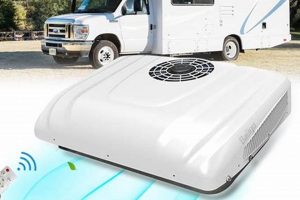
Tip 5: Air Conditioning Capacity Determination: Evaluate the BTU rating of the air conditioning unit to ensure it can effectively cool the vehicle in hot weather. Consider a model with multiple air conditioning units for larger floor plans or use in extremely hot climates.
Tip 6: Ventilation System Analysis: Investigate the ventilation system’s effectiveness in reducing condensation and maintaining air quality. Look for models with multiple roof vents and a powered vent fan to circulate air throughout the vehicle.
Tip 7: Construction Material Scrutiny: Analyze the construction materials used in the frame and exterior. Aluminum frames are lightweight and corrosion-resistant, while fiberglass exteriors offer durability and insulation benefits. Avoid models with excessive wood framing, which is susceptible to rot and moisture damage.
Selecting a recreational vehicle designed for use in all four seasons requires careful consideration of insulation, heating, plumbing protection, window and door quality, air conditioning capacity, ventilation, and construction materials. Thorough evaluation of these factors will ensure a comfortable and reliable experience in diverse weather conditions.
The following section will provide a concluding overview of the key considerations discussed.
1. Insulation R-value

The insulation R-value is a crucial metric in determining the suitability of “four season travel trailer brands” for operation in diverse climatic conditions. R-value quantifies thermal resistance, indicating a material’s ability to impede heat flow. In the context of these recreational vehicles, a higher R-value signifies superior insulation, minimizing heat transfer between the interior and exterior. This is of significant importance in both cold and hot environments. For example, a travel trailer with an insufficient R-value will experience substantial heat loss during winter, necessitating increased energy consumption for heating and potentially leading to frozen pipes. Conversely, in summer, inadequate insulation allows excessive heat gain, straining the air conditioning system and compromising interior comfort. The insulation used in “four season travel trailer brands” plays a direct role in the vehicle’s ability to maintain a stable internal temperature, therefore enhancing usability year-round.
Manufacturers of “four season travel trailer brands” employ various insulation materials, including fiberglass, rigid foam, and spray foam, each possessing distinct R-values per inch of thickness. The selection and application of these materials are critical design considerations. For instance, spray foam insulation typically offers a higher R-value and superior sealing capabilities compared to fiberglass batts, but it also presents a higher initial cost. In practice, “four season travel trailer brands” often incorporate a combination of insulation types in different areas of the vehicle to optimize thermal performance while balancing cost and weight. The R-value requirements will also change depending on the intended climate zone, with colder regions requiring higher R-values than temperate regions.
Ultimately, understanding the insulation R-value is essential for consumers evaluating “four season travel trailer brands.” It directly impacts energy efficiency, interior comfort, and the overall suitability of the vehicle for year-round travel. While higher R-values generally indicate superior performance, they also contribute to increased weight and cost. Selecting the appropriate insulation level involves a trade-off, balancing thermal performance with budgetary and practical constraints. Furthermore, proper installation is as important as the R-value of the material itself; gaps or voids in insulation can significantly reduce its effectiveness. “Four season travel trailer brands” must address both material selection and meticulous installation to ensure reliable performance across all seasons.
2. Furnace BTU Output

Furnace BTU (British Thermal Unit) output represents a critical specification in the design and selection of “four season travel trailer brands.” It defines the heating capacity of the furnace, directly impacting the vehicle’s ability to maintain a comfortable interior temperature in cold climates. An inadequate BTU output can lead to inefficient heating, increased energy consumption, and potential discomfort for occupants during winter months.
- BTU Calculation and Vehicle Size
Furnace BTU output is intrinsically linked to the square footage and insulation characteristics of the travel trailer. A larger trailer necessitates a higher BTU output to effectively heat the entire space. For example, a small travel trailer with 200 square feet of living space might require a furnace with 20,000 BTU, while a larger unit exceeding 300 square feet could necessitate a furnace with 30,000 BTU or higher. Manufacturers of “four season travel trailer brands” perform calculations based on vehicle size, insulation R-value, and anticipated ambient temperatures to determine the appropriate furnace BTU output.
- Impact of Climate on BTU Requirements
Geographical location and anticipated travel destinations significantly influence furnace BTU requirements. A travel trailer intended for use in regions with consistently sub-freezing temperatures will demand a more powerful furnace than one used in milder climates. “Four season travel trailer brands” designed for extreme cold often incorporate furnaces with higher BTU outputs and enhanced insulation to counteract significant heat loss. Failure to account for climate conditions can result in insufficient heating capacity and compromised comfort.
- Furnace Efficiency and Fuel Consumption
While BTU output defines heating capacity, furnace efficiency dictates fuel consumption. A high-efficiency furnace maximizes heat output per unit of fuel, reducing energy waste and extending the duration of fuel supplies. “Four season travel trailer brands” often feature furnaces with electronic ignition and variable speed blowers to enhance efficiency. Lower efficiency furnaces consume more propane or electricity to achieve the same heating level, resulting in increased operating costs.
- Dual Furnace Systems and Redundancy
Some “four season travel trailer brands,” particularly larger or more luxurious models, incorporate dual furnace systems. This configuration offers increased heating capacity and redundancy in case of component failure. If one furnace malfunctions, the other can maintain a minimum level of heating, preventing frozen pipes and ensuring occupant comfort. Dual furnace systems are especially beneficial for extended stays in cold climates or for individuals who prioritize reliability.
In conclusion, furnace BTU output is a critical consideration in evaluating “four season travel trailer brands.” Matching the BTU output to the vehicle size, insulation characteristics, and anticipated climate conditions is essential for maintaining comfortable interior temperatures, minimizing energy consumption, and ensuring reliable operation in cold weather. Manufacturers must carefully calculate and select appropriate furnace sizes, while consumers should assess their individual needs and travel plans to make informed decisions.
3. Plumbing freeze protection

Plumbing freeze protection is a critical design element in “four season travel trailer brands.” The absence of adequate protection mechanisms invariably leads to pipe bursting, water tank damage, and overall system failure when exposed to sub-freezing temperatures. The link between the absence of protection and system failure is a direct cause-and-effect relationship. For “four season travel trailer brands,” this consideration elevates from mere convenience to essential operational reliability. A trailer rendered unusable due to frozen and broken plumbing negates the entire purpose of a “four season” designation.
Effective plumbing freeze protection in “four season travel trailer brands” involves several integrated strategies. These often include: insulating water lines, encasing water tanks within heated compartments, employing heat tape on exposed pipes, and implementing low-point drain systems for complete water removal. Some models also incorporate circulating pumps that continuously move water through the system during extremely cold periods, preventing stagnation and subsequent freezing. For example, Arctic Fox travel trailers are known for their heated and enclosed underbellies, which protect the water tanks and plumbing lines. Failure of any single element within this protective system can compromise the entire arrangement, increasing the risk of freeze damage. Regular inspection and maintenance are essential to ensure the continuing effectiveness of these components. Furthermore, understanding the specific winterization procedures recommended by the manufacturer is vital for preventing freeze-related damage.
In summary, robust plumbing freeze protection is an indispensable component of “four season travel trailer brands.” Its effectiveness hinges on a multi-faceted approach encompassing insulation, heating, circulation, and the option for complete drainage. Neglecting this aspect results in significant operational impairment and costly repairs. A proactive approach involving regular inspections, adherence to recommended winterization procedures, and an understanding of the design principles behind the plumbing freeze protection system is paramount for maintaining the functionality and value of “four season travel trailer brands.”
4. Window thermal performance

Window thermal performance is a critical factor influencing the overall energy efficiency and comfort of “four season travel trailer brands.” It quantifies the rate of heat transfer through the window assembly, directly impacting the ability of the recreational vehicle to maintain a stable interior temperature regardless of external weather conditions. Substandard window thermal performance results in increased energy consumption for heating and cooling, along with potential condensation issues and reduced occupant comfort.
- U-Factor and Solar Heat Gain Coefficient (SHGC)
U-factor measures the rate of heat flow through a window; lower values indicate superior insulation. SHGC represents the fraction of solar radiation admitted through a window; lower values are desirable in hot climates to minimize heat gain. “Four season travel trailer brands” often specify windows with low U-factors and SHGC values to optimize thermal performance. For example, dual-pane windows with low-emissivity (low-e) coatings significantly reduce heat transfer and solar heat gain compared to single-pane windows.
- Window Construction and Materials
Window construction materials and design profoundly affect thermal performance. Aluminum frames conduct heat more readily than vinyl or fiberglass frames, necessitating thermal breaks to mitigate heat transfer. “Four season travel trailer brands” may utilize insulated frames and gas fills (e.g., argon or krypton) between window panes to further enhance insulation. For instance, windows with argon gas fill exhibit lower U-factors than air-filled windows.
- Condensation Resistance
Condensation on window surfaces indicates high humidity and poor thermal performance. “Four season travel trailer brands” benefit from windows with high condensation resistance ratings to prevent moisture buildup, which can lead to mold growth and structural damage. Dual-pane windows with warm-edge spacers minimize temperature differences between the glass surface and the room air, reducing condensation potential.
- Impact on HVAC System Load
Poor window thermal performance places a greater burden on the heating, ventilation, and air conditioning (HVAC) system. Inefficient windows necessitate increased HVAC capacity to maintain desired interior temperatures. “Four season travel trailer brands” equipped with high-performance windows experience reduced HVAC system runtime, resulting in lower energy consumption and extended equipment lifespan. A travel trailer with poorly insulated windows in a cold climate might require a significantly larger furnace than one with well-insulated windows.
In conclusion, selecting “four season travel trailer brands” requires careful evaluation of window thermal performance characteristics. U-factor, SHGC, window construction materials, and condensation resistance all contribute to the overall energy efficiency and comfort of the recreational vehicle. High-performance windows minimize heat transfer, reduce HVAC system load, and prevent condensation issues, ensuring a comfortable and sustainable travel experience in diverse climates.
5. Air conditioning capacity

The appropriate air conditioning capacity is a decisive factor for “four season travel trailer brands,” particularly when considering operation in warm climates. Mismatched capacity impacts the ability to maintain a comfortable interior environment. Adequate capacity necessitates a careful consideration of variables such as trailer size, insulation levels, and expected ambient temperatures.
- BTU Rating and Trailer Volume
Air conditioning capacity is measured in British Thermal Units (BTUs). A higher BTU rating indicates a greater cooling capacity. The required BTU rating directly correlates to the interior volume of the travel trailer. A larger trailer demands a higher BTU output to effectively cool the space. As an example, a 30-foot travel trailer may necessitate a 15,000 BTU air conditioner, whereas a smaller 20-foot model may only require 13,500 BTU. Manufacturers typically provide recommendations based on trailer specifications. These recommendations should be viewed as minimums, potentially requiring upward adjustment based on geographic location.
- Insulation and Thermal Load
Insulation levels significantly impact the air conditioning load. Trailers with superior insulation require less cooling capacity compared to those with minimal insulation. Solar heat gain through windows and walls contributes to the thermal load. “Four season travel trailer brands” marketed for use in hot climates typically incorporate enhanced insulation and reflective window coatings to reduce solar heat gain and minimize the required air conditioning capacity. The thermal load calculation is crucial for selecting the optimal air conditioner, ensuring efficient cooling and minimizing energy consumption.
- Ambient Temperature and Cooling Efficiency
Air conditioner performance degrades as ambient temperatures increase. An air conditioner rated at 15,000 BTU may deliver less cooling capacity in extremely hot conditions. “Four season travel trailer brands” intended for use in desert regions or during summer months should consider air conditioners with higher BTU ratings to compensate for this performance reduction. Furthermore, the efficiency of the air conditioner, measured by its Energy Efficiency Ratio (EER) or Seasonal Energy Efficiency Ratio (SEER), impacts its operating cost. Higher EER/SEER ratings indicate greater energy efficiency.
- Multiple Air Conditioners and Zone Cooling
Larger “four season travel trailer brands” may incorporate multiple air conditioning units to provide zone cooling and redundancy. This allows occupants to cool only the areas of the trailer that are in use, reducing energy consumption and improving comfort. Redundancy ensures that cooling capacity remains available even if one air conditioner malfunctions. A zoned system can be particularly advantageous in trailers with separate living and sleeping areas, enabling individualized temperature control.
In conclusion, the selection of an air conditioner for “four season travel trailer brands” involves careful consideration of BTU rating, insulation levels, ambient temperatures, and efficiency. Matching the air conditioning capacity to the specific needs of the trailer and its intended use is essential for maintaining a comfortable and energy-efficient interior environment. Overlooking this aspect can lead to compromised comfort and increased operating costs.
6. Construction materials

The selection of construction materials in “four season travel trailer brands” directly influences the vehicle’s durability, insulation effectiveness, and resistance to environmental stressors. The materials employed dictate the unit’s long-term performance and suitability for operation across diverse climatic conditions.
- Frame Composition and Structural Integrity
The frame constitutes the skeletal structure of the recreational vehicle. Materials commonly used include steel and aluminum. Steel frames offer high tensile strength and are typically more cost-effective, but they are susceptible to corrosion. Aluminum frames are lighter and corrosion-resistant but can be more expensive. The choice of frame material impacts the overall weight of the vehicle, fuel efficiency, and resistance to structural fatigue. For example, a heavier steel frame may provide increased stability in high winds, while a lighter aluminum frame improves towing capabilities and reduces fuel consumption. The structural integrity of the frame is paramount for withstanding the stresses of travel and varying environmental conditions.
- Exterior Shell Materials and Weather Resistance
The exterior shell provides a protective barrier against the elements. Common materials include fiberglass, aluminum, and composite panels. Fiberglass offers good insulation properties and resistance to impact damage but can be prone to fading and chalking over time. Aluminum is lightweight and durable but conducts heat readily, requiring effective insulation strategies. Composite panels offer a balance of strength, insulation, and weather resistance. The exterior shell’s ability to withstand UV radiation, moisture penetration, and extreme temperature fluctuations is critical for maintaining the vehicle’s integrity and preventing water damage. Properly sealed seams and durable coatings are essential for long-term weather resistance.
- Insulation Materials and Thermal Performance
Insulation materials play a central role in regulating interior temperature and minimizing energy consumption. Common options include fiberglass batts, rigid foam boards, and spray foam. Fiberglass batts are cost-effective but can settle over time, reducing their effectiveness. Rigid foam boards offer higher R-values per inch of thickness and resist moisture absorption. Spray foam provides superior insulation and sealing capabilities but can be more expensive. The type and thickness of insulation used directly impact the vehicle’s ability to maintain a comfortable interior temperature in both hot and cold climates. Inadequate insulation leads to increased heating and cooling costs and reduced occupant comfort. For instance, models designed for extreme cold environments often utilize spray foam insulation to minimize heat loss.
- Roofing Materials and Water Intrusion Prevention
The roofing material serves as the primary defense against water intrusion. Common options include rubber (EPDM), thermoplastic olefin (TPO), and fiberglass. Rubber roofs are durable and flexible but can be susceptible to punctures and require regular maintenance. TPO roofs are lightweight, reflective, and resistant to UV radiation. Fiberglass roofs offer good durability and weather resistance but can be more expensive. Proper installation and sealing are essential for preventing water leaks, which can lead to significant structural damage. Regularly inspecting and maintaining the roof is critical for ensuring its long-term integrity.
The selection of construction materials represents a critical engineering decision in the design and manufacturing of “four season travel trailer brands.” Each material presents a trade-off between cost, weight, durability, insulation effectiveness, and weather resistance. Manufacturers must carefully consider these factors to create vehicles that can withstand the rigors of year-round travel and provide a comfortable and reliable living environment in diverse climates.
Frequently Asked Questions Regarding All-Season Recreational Vehicles
This section addresses common inquiries concerning recreational vehicles specifically designed for use in diverse climatic conditions.
Question 1: How does the insulation in these vehicles differ from standard recreational vehicles?
Recreational vehicles designed for four-season use typically incorporate higher R-value insulation in the walls, roof, and floor compared to standard models. This enhanced insulation minimizes heat transfer, maintaining a more stable interior temperature in both cold and hot environments.
Question 2: Are the water lines and tanks protected from freezing temperatures?
Vehicles intended for four-season operation generally feature insulated and heated water lines and tanks. This protection prevents freezing and ensures a consistent water supply even in sub-freezing conditions. Some models incorporate heated underbellies for added protection.
Question 3: What heating systems are typically used in these recreational vehicles?
Four-season recreational vehicles typically employ high-output furnaces fueled by propane or electricity. Some models incorporate dual furnace systems for increased heating capacity and redundancy. The furnace BTU rating is matched to the vehicle’s size and insulation characteristics.
Question 4: Do these recreational vehicles require special winterization procedures?
Proper winterization is crucial for preventing freeze damage in four-season recreational vehicles. This typically involves draining the water system, adding antifreeze to the plumbing lines, and insulating exposed pipes. Manufacturer-specific winterization procedures should be followed diligently.
Question 5: How is air conditioning capacity determined for these recreational vehicles?
Air conditioning capacity is determined based on the vehicle’s interior volume, insulation levels, and expected ambient temperatures. A higher BTU rating is required for larger vehicles and those intended for use in hot climates. Some models feature multiple air conditioning units for zoned cooling.
Question 6: What construction materials are commonly used in four-season recreational vehicles?
Four-season recreational vehicles often utilize durable and weather-resistant construction materials such as aluminum frames, fiberglass exteriors, and composite panels. These materials provide structural integrity and resistance to environmental stressors. The selection prioritizes minimizing thermal bridging and enhancing insulation performance.
Understanding the specific features and maintenance requirements of all-season recreational vehicles is essential for maximizing their performance and longevity. Diligent adherence to manufacturer recommendations ensures continued operation in diverse climatic conditions.
The subsequent section offers concluding remarks on the significance of selecting appropriate four-season recreational vehicles.
Conclusion
The preceding discussion has explored the essential attributes of recreational vehicles engineered for year-round use, specifically “four season travel trailer brands.” Factors such as insulation R-value, furnace BTU output, plumbing freeze protection, window thermal performance, air conditioning capacity, and construction materials have been identified as critical determinants of a vehicle’s suitability for operation in diverse climates. Careful evaluation of these parameters is paramount for ensuring occupant comfort and preventing equipment failure in extreme weather conditions.
The selection of a “four season travel trailer brands” should not be undertaken lightly. Given the significant investment involved and the potential for operational disruption due to inadequate design or construction, a thorough assessment of individual needs and environmental considerations is essential. Future developments in materials science and HVAC technology may further enhance the capabilities of these vehicles, expanding the possibilities for year-round recreational travel. Prioritize informed decision-making to secure a recreational vehicle that meets specific requirements and delivers sustained performance.