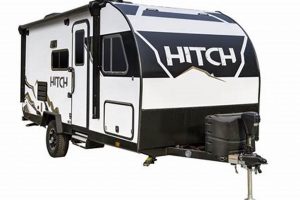
These compact towables are designed for use behind motorcycles, providing a lightweight and aerodynamic solution for individuals seeking to combine the thrill of motorcycling with the convenience of camping or extended travel. Examples include teardrop-shaped models and those with pop-up tent features. These offerings provide shelter and storage solutions for motorcycle-based journeys.
The appeal of this setup lies in its ability to extend the range and comfort of motorcycle touring. It enables individuals to carry essential gear, supplies, and even sleeping accommodations without sacrificing the agility and fuel efficiency associated with motorcycles. Historically, innovations in lightweight materials and trailer design have fueled their increasing popularity, catering to a growing segment of riders seeking enhanced touring capabilities.
The subsequent sections will examine different types of towable units suited for motorcycles, factors to consider when selecting one, safety considerations for towing, and maintenance practices to ensure longevity and reliable performance.
Motorcycle Travel Trailer
Proper utilization of a towable unit behind a motorcycle requires careful planning and execution. The following tips provide guidance for safe and effective operation.
Tip 1: Matching Tow Vehicle and Trailer. Ensure the motorcycles towing capacity, as specified by the manufacturer, exceeds the fully loaded weight of the trailer. Exceeding this limit compromises handling and braking capabilities.
Tip 2: Prioritizing Weight Distribution. Distribute cargo evenly within the trailer to maintain a balanced load. Uneven weight distribution can lead to instability and sway during transit.
Tip 3: Selecting a Compatible Hitch. Employ a hitch system specifically designed for motorcycle towing. Ensure proper installation and regular inspection for wear or damage.
Tip 4: Pre-Trip Inspection. Conduct a thorough inspection of the trailer before each journey. Check tire pressure, lighting, and all connections to guarantee operational readiness.
Tip 5: Adjusting Riding Style. Modify the riding technique to account for the added weight and length. This includes increasing following distance, reducing speed, and executing turns more cautiously.
Tip 6: Practicing Maneuvers. Practice turning, braking, and reversing in a controlled environment before embarking on a trip. Familiarity with these maneuvers is essential for safe handling.
Tip 7: Monitoring Tire Pressure. Regularly check tire pressure on both the motorcycle and the trailer. Maintaining proper inflation improves fuel efficiency and reduces the risk of tire failure.
Adhering to these guidelines promotes enhanced safety, handling, and overall satisfaction when utilizing a towable unit with a motorcycle. These practices reduce the risk of accidents and mechanical issues.
The following sections will delve into specific maintenance procedures and troubleshooting techniques related to these specialized trailers.
1. Weight Capacity

Weight capacity is a paramount consideration when selecting a towable unit for use with a motorcycle. It dictates the maximum load the trailer can safely carry, directly influencing the motorcycle’s handling, braking performance, and overall stability.
- Gross Trailer Weight (GTW)
GTW is the total weight of the trailer when fully loaded, including all cargo, fluids, and accessories. This figure must not exceed the motorcycle’s specified towing capacity. Exceeding the GTW rating places undue stress on the motorcycle’s frame, suspension, and braking system, leading to potential mechanical failure and hazardous handling characteristics. For example, if a motorcycle has a towing capacity of 500 lbs, the fully loaded weight of the trailer must be at or below this limit.
- Tongue Weight
Tongue weight refers to the downward force exerted by the trailer’s hitch on the motorcycle’s hitch receiver. Optimal tongue weight is typically around 10-15% of the GTW. Insufficient tongue weight can cause trailer sway, while excessive tongue weight can overload the motorcycle’s rear suspension, negatively impacting steering and stability. Adjusting cargo placement within the trailer is crucial to maintaining the appropriate tongue weight.
- Motorcycle Towing Capacity
Motorcycle manufacturers assign a maximum towing capacity based on factors like engine size, frame strength, and braking system effectiveness. This limit is rigorously tested to ensure safe operation. Operating beyond the motorcycle’s specified towing capacity voids warranties and drastically increases the risk of accidents. Consulting the owner’s manual and adhering strictly to the manufacturer’s recommendations is essential.
- Impact on Handling and Safety
Exceeding weight limits directly affects the motorcycle’s ability to accelerate, brake, and corner safely. Increased stopping distances, reduced maneuverability, and a higher risk of trailer sway are common consequences of overloading. In emergency situations, the compromised handling can significantly increase the likelihood of accidents. Maintaining awareness of weight limits and proper loading practices is crucial for ensuring rider safety and the longevity of the motorcycle and trailer.
In summary, understanding and respecting weight capacity limits are indispensable for the safe and reliable operation of any setup designed for use behind a motorcycle. Accurate assessment of trailer weight, adherence to the motorcycle manufacturer’s specifications, and proper loading techniques are vital to mitigate risks and ensure a positive riding experience.
2. Hitch Compatibility

Hitch compatibility represents a critical interface between the motorcycle and the towable unit, directly affecting stability, handling, and overall safety. Proper matching of hitch components is essential for secure connection and predictable towing dynamics.
- Hitch Receiver Type
Motorcycles typically utilize specialized hitch receivers designed to accommodate the unique geometry and load characteristics of these vehicles. Common types include ball hitches, swivel hitches, and multi-axis couplers. The chosen receiver must be rated for the intended trailer weight and feature a secure locking mechanism. An improperly sized or incompatible receiver can lead to detachment and loss of control.
- Hitch Ball Size
For ball hitch systems, the hitch ball size must precisely match the coupler size on the towable unit. Standard ball sizes range from 1 7/8 inches to 2 inches. Mismatched ball and coupler sizes create excessive play, resulting in noise, wear, and potentially catastrophic failure. Periodic inspection of the ball and coupler for signs of wear or damage is crucial.
- Wiring and Electrical Connections
Functional trailer lights are legally mandated and essential for safe towing. The motorcycle’s electrical system must be properly wired to supply power to the trailer’s brake lights, turn signals, and running lights. Incorrect wiring can lead to electrical shorts, bulb failures, and compromised visibility. Standard wiring configurations, such as 4-pin flat connectors or 7-pin round connectors, should be employed and maintained.
- Safety Chains
Safety chains provide a secondary connection between the motorcycle and the towable unit in the event of hitch failure. These chains must be securely attached to both the motorcycle frame and the trailer tongue, using appropriate S-hooks or shackles. The chains should be long enough to allow for turning but short enough to prevent the trailer tongue from contacting the ground. Properly installed safety chains can prevent a runaway trailer in the event of a hitch separation.
The integration of appropriate hitch components with a suitable towable unit for motorcycles demands careful attention to detail. Correct selection, installation, and maintenance of hitch systems directly contribute to a secure and controlled towing experience, reducing the risk of accidents and promoting overall rider safety.
3. Aerodynamic Profile

Aerodynamic profile constitutes a significant factor in the design and performance of towable units for motorcycles. The shape and contours of the trailer directly influence air resistance, impacting fuel efficiency, stability, and handling. A streamlined design minimizes drag, reducing the energy required to pull the trailer and improving the motorcycle’s overall performance. In contrast, a poorly designed, boxy trailer can create substantial drag, leading to reduced fuel economy and increased strain on the motorcycle’s engine. For instance, teardrop-shaped trailers exemplify optimized aerodynamic profiles, minimizing air resistance and enhancing stability at highway speeds.
Effective aerodynamic design translates into tangible benefits for the rider. Improved fuel efficiency reduces fuel costs and extends the motorcycle’s range. Enhanced stability minimizes trailer sway, contributing to safer and more comfortable handling. Reduced engine strain prolongs the lifespan of the motorcycle and minimizes the risk of mechanical failures. Practical applications include employing wind tunnel testing during the design phase to identify and mitigate areas of high drag. Additionally, incorporating features like smooth surfaces, rounded edges, and tapered rears further enhance the aerodynamic efficiency of these units.
Optimizing the aerodynamic profile presents challenges, including balancing aerodynamic efficiency with storage capacity and structural integrity. Despite these challenges, advancements in materials and design techniques continually improve the aerodynamic performance of motorcycle trailers. A thorough understanding of aerodynamic principles and their application in trailer design is crucial for riders seeking to maximize the benefits of towable units without compromising safety or performance. Ignoring aerodynamic considerations results in diminished fuel economy and increases the risk of handling-related incidents.
4. Storage Volume

Storage volume is a critical design parameter in towable units for motorcycles, directly impacting the practicality and usability of these trailers for travel and camping. The available space determines the amount of gear, supplies, and personal belongings that can be transported, influencing the duration and comfort of motorcycle touring trips. Insufficient storage limits the ability to carry essential items, potentially compromising safety and convenience. Conversely, an optimized storage volume balances carrying capacity with weight constraints, preserving the motorcycle’s handling characteristics.
The correlation between storage volume and user experience is significant. A well-designed storage area facilitates organization and accessibility, enabling riders to quickly locate and retrieve needed items. Considerations include the configuration of compartments, the presence of tie-down points, and the weather-resistance of the storage enclosure. For instance, a unit with multiple compartments allows for the segregation of clothing, cooking equipment, and tools, preventing damage and simplifying packing and unpacking. Examples are available, such as lightweight trailers offering specialized areas for sleeping bags and cooking supplies, each secured against the elements.
Storage volume limitations necessitate strategic packing and gear selection. Riders must prioritize essential items, opt for lightweight and compact equipment, and minimize unnecessary bulk. Efficient utilization of space is crucial, often involving compression sacks, nesting cookware, and multi-purpose tools. The selection of a towable unit with appropriate storage volume is a fundamental consideration that dictates the rider’s ability to embark on extended journeys with confidence and self-sufficiency. This element of travel trailer is essential for a successfull travel by motorcycle
5. Suspension System

The suspension system of a towable unit designed for motorcycles is a critical element influencing ride quality, stability, and the longevity of both the unit and its contents. Its design and functionality significantly impact the dynamics of towing, requiring careful consideration during the selection process.
- Spring Type and Rate
The type of springs employed, whether leaf springs, coil springs, or torsion axles, dictates the unit’s ability to absorb road shocks and maintain a consistent ride height. The spring rate, measured in pounds per inch, determines the stiffness of the suspension. A spring rate mismatched to the typical load can lead to excessive bouncing or bottoming out, compromising stability and potentially damaging cargo. Proper spring selection ensures a smooth and controlled ride, particularly on uneven surfaces.
- Damping Mechanism
Damping mechanisms, such as shock absorbers or dampers, control the oscillation of the springs, preventing excessive bouncing and maintaining stability. The quality and effectiveness of the damping system directly influence handling, especially during cornering and braking. Insufficient damping can result in trailer sway and reduced control, while excessive damping can create a harsh and uncomfortable ride. High-quality dampers provide consistent performance across a range of conditions, improving the overall towing experience.
- Independent vs. Solid Axle Suspension
Independent suspension allows each wheel to move independently, improving ride quality and handling on uneven surfaces. This design typically offers superior stability compared to solid axle systems, particularly when encountering potholes or bumps. Solid axle suspension, while simpler in design, transmits shocks from one wheel to the other, potentially affecting stability. The choice between independent and solid axle systems depends on the intended usage and the desired level of performance.
- Load Capacity and Adjustment
The suspension system’s load capacity must be sufficient to handle the maximum weight of the trailer and its contents. Adjustable suspension systems allow riders to fine-tune the ride height and damping characteristics to accommodate varying loads and road conditions. This adjustability ensures optimal performance and stability, regardless of the cargo weight. Regular inspection and maintenance of the suspension components are crucial to maintaining load-carrying capacity and ensuring safe operation.
These facets of the suspension system collectively define the performance characteristics of a motorcycle towable unit. Proper selection and maintenance of these components are paramount to ensuring a safe, comfortable, and reliable towing experience. Neglecting the suspension system can lead to compromised handling, increased risk of accidents, and accelerated wear and tear on the unit and the towing motorcycle.
Frequently Asked Questions
The following section addresses common inquiries regarding towable units for motorcycles, providing factual and objective answers to assist in informed decision-making.
Question 1: What is the typical weight range of towable units designed for use behind motorcycles?
The weight of these units varies significantly based on size, materials, and features. Typically, they range from 200 pounds to 500 pounds when empty. However, the fully loaded weight, including cargo, must not exceed the motorcycle’s specified towing capacity.
Question 2: Are specialized hitches required for towing with a motorcycle?
Yes, a dedicated hitch system is essential. These hitches are engineered to accommodate the unique geometry and stress points of motorcycles. Standard automotive hitches are not suitable and may compromise safety.
Question 3: How does towing impact a motorcycle’s fuel economy?
Towing invariably reduces fuel economy due to the added weight and aerodynamic drag. The extent of the reduction depends on the trailer’s design, the load, and the riding conditions. Riders should anticipate a decrease in miles per gallon and adjust their fuel stops accordingly.
Question 4: What safety precautions are paramount when towing with a motorcycle?
Several safety measures are critical. These include verifying proper tire pressure on both the motorcycle and the trailer, ensuring functional lighting, maintaining adequate following distance, and adjusting riding technique to account for the added weight and length. Regular inspection of the hitch and connections is also crucial.
Question 5: Are there legal restrictions on towing trailers with motorcycles?
Regulations vary by jurisdiction. Some regions impose restrictions on trailer width, length, and lighting requirements. It is incumbent upon the rider to research and comply with all applicable laws and regulations in their area.
Question 6: How does storage impact the overall stability?
Unevenly distributed cargo can induce trailer sway and compromise handling. Heavier items must be positioned low and centered over the axle. Proper weight distribution is essential for maintaining stability, especially at higher speeds.
These questions are presented to provide baseline clarity. Further investigation and research are encouraged for comprehensive knowledge.
The next section will detail specific models and manufacturers in the context of their features and applications.
Conclusion
This examination of the motorcycle travel trailer has underscored its utility in expanding the possibilities for motorcycle-based travel. Factors such as weight capacity, hitch compatibility, aerodynamic profile, storage volume, and suspension system directly influence the safety, stability, and overall experience of utilizing such a configuration. Adherence to established guidelines and regulations is paramount for mitigating risks and ensuring responsible operation.
As the pursuit of adventure and extended motorcycle touring continues to evolve, the responsible and informed adoption of motorcycle travel trailers will play an increasingly significant role. Continued research and development in trailer design, materials, and safety technologies are essential for further enhancing the capabilities and accessibility of this specialized form of transport. Prioritizing safety and informed decision-making will ensure the continued viability of motorcycle travel trailers as a means of extending the boundaries of motorcycle exploration.