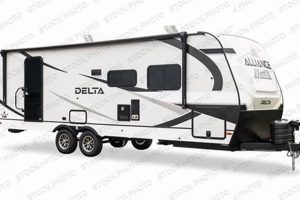
The central question concerns the legality of occupying a towable recreational vehicle, such as a camper or fifth-wheel, while it is in motion. Regulations governing vehicle passenger safety vary significantly based on jurisdiction, encompassing federal guidelines and individual state laws. These laws are primarily concerned with minimizing potential risks associated with unrestrained occupants during transit.
Ensuring passenger safety is paramount. The dynamic forces exerted on a trailer in motion, particularly during sudden stops or turns, pose significant hazards to unrestrained individuals. Furthermore, differing construction standards between passenger vehicles and towable recreational units may not provide equivalent levels of protection in the event of an accident. Historically, the absence of uniform regulations has contributed to confusion and inconsistency across regions.
The remainder of this discussion will explore the specific legal landscape in various jurisdictions, focusing on the prevailing regulations concerning passengers within towable recreational vehicles. Furthermore, consideration will be given to safety recommendations and alternative travel strategies to mitigate potential risks associated with travel in these vehicles.
Guidance on Towable Recreational Vehicle Occupancy
Understanding the legal implications of inhabiting a towable recreational vehicle while it is in motion is crucial for responsible and safe travel planning. Adherence to relevant regulations and implementation of appropriate safety measures are paramount.
Tip 1: Research Jurisdictional Regulations: Prior to embarking on a journey, meticulously investigate the specific laws pertaining to towable RV occupancy in each state or province along the intended route. Regulations concerning this vary considerably.
Tip 2: Prioritize Passenger Restraint: Should the applicable laws permit occupancy, ensure that all individuals within the trailer are securely restrained using seatbelts or other approved safety devices. The specific restraints required may also be dictated by law.
Tip 3: Monitor Vehicle Dynamics: The driver of the towing vehicle must maintain constant awareness of the trailer’s movement and stability. Adjust speed and driving style to accommodate the trailer’s weight and handling characteristics.
Tip 4: Maintain Communication: Establish clear communication protocols between the driver and any occupants within the trailer. Hand signals or electronic communication devices can be utilized to convey critical information.
Tip 5: Secure Interior Items: Thoroughly secure all loose items within the trailer to prevent them from becoming projectiles during sudden stops or maneuvers. This includes appliances, furniture, and personal belongings.
Tip 6: Plan Regular Stops: Schedule frequent stops during the journey to allow trailer occupants to stretch, use restroom facilities, and address any potential concerns. This promotes alertness and reduces fatigue for both driver and passengers.
Tip 7: Inspect Towing Connections: Regularly inspect all connections between the towing vehicle and the trailer, including the hitch, safety chains, and electrical wiring. Any signs of wear or damage should be addressed immediately.
Compliance with legal mandates and the adoption of robust safety protocols will significantly mitigate the risks associated with inhabiting towable recreational vehicles while in transit. These measures ensure the well-being of all travelers and promote responsible RV operation.
The following sections will address potential legal consequences and practical safety strategies in further detail.
1. Varying State Regulations

The permissibility of occupying a travel trailer during transit is heavily influenced by disparate state regulations. This inconsistency necessitates careful scrutiny of the laws of each jurisdiction through which travel is planned, as a practice legal in one state may be a violation in another. Ignorance of these varying regulations does not constitute a valid defense against potential legal repercussions.
- Explicit Prohibitions
Several states explicitly prohibit occupancy of a travel trailer while in motion. These prohibitions are typically codified within state motor vehicle laws and carry associated penalties, ranging from fines to more severe consequences in the event of an accident. For example, a state may impose a monetary penalty and assign points against the driver’s license for violating the occupancy ban.
- Conditional Allowances
Other states permit occupancy under specific conditions, often contingent upon the presence and proper use of safety restraints. These conditions may also stipulate requirements regarding the age or physical condition of the occupants. Furthermore, some states differentiate between types of trailers, allowing occupancy in certain models while prohibiting it in others.
- Enforcement Discretion
Even in states where occupancy is not explicitly prohibited, law enforcement officers retain discretion in enforcing general safety regulations. An officer may deem occupancy unsafe based on factors such as road conditions, traffic density, or the apparent condition of the trailer. This discretionary power adds another layer of complexity to the legal landscape.
- Lack of Uniformity
The absence of uniform federal standards contributes significantly to the existing state-by-state variation. The lack of federal oversight leaves individual states to independently determine the legality of trailer occupancy, resulting in a patchwork of regulations across the nation. This lack of uniformity necessitates proactive research on the part of RV travelers.
The diverse legal framework governing travel trailer occupancy underscores the importance of comprehensive preparation prior to any journey. Travelers must be aware of the specific laws in each state or region to ensure compliance and avoid potential legal ramifications. This proactive approach is essential for ensuring both the safety of all occupants and adherence to applicable regulations.
2. Passenger Restraint Systems

The presence and utilization of passenger restraint systems, such as seatbelts, directly correlate with the legality and safety of occupying a travel trailer while in motion. Where occupancy is legally permissible, the mandatory use of such restraints is often a critical stipulation. The logic is rooted in mitigating the inherent dangers associated with sudden stops, collisions, or even routine maneuvering, within a vehicle not designed to withstand impacts with the same safety standards as a passenger car. For instance, some states allow travel trailer occupancy solely if every occupant is securely fastened with a seatbelt approved for highway use. Without these restraints, the risk of injury, even in minor incidents, escalates dramatically.
Furthermore, the type and installation of these restraint systems are crucial. Simply having a seatbelt does not guarantee safety; it must be properly installed, maintained, and appropriately sized for the occupant. In situations where travel trailer occupancy is legal, specific requirements regarding restraint system certification and placement may exist. For example, a state might mandate that seatbelts be installed by a certified RV technician to ensure adherence to safety standards. Similarly, child safety seats must meet federal motor vehicle safety standards and be correctly installed to protect young passengers. Proper adherence to these requirements transforms the restraint system from a mere legal compliance issue to an essential safety feature.
In conclusion, the relationship between passenger restraint systems and travel trailer occupancy is multi-faceted. It encompasses legal compliance, risk mitigation, and the potential for significantly reducing injury severity in the event of an accident. While some jurisdictions prohibit occupancy altogether, those that permit it often do so contingent upon the availability and proper use of certified passenger restraint systems. Understanding and adhering to these regulations is paramount for ensuring the safety and legality of travel trailer occupancy.
3. Trailer Construction Standards

The inherent construction standards of travel trailers directly influence the legality and safety considerations concerning occupancy during transit. The structural integrity, safety features, and overall design of these vehicles are critical factors when assessing the risks associated with passenger presence while in motion, and often dictate the permissibility of such practices.
- Structural Integrity and Crashworthiness
Travel trailers are generally constructed with lighter materials and less robust framing compared to passenger vehicles. This results in reduced crashworthiness and a higher susceptibility to damage during collisions. Occupancy during transit elevates the risk of injury due to the limited structural protection offered by the trailer’s construction. States may prohibit occupancy based on the understanding that trailers are not designed to protect occupants in the event of a crash.
- Restraint System Integration
The integration of passenger restraint systems, such as seatbelts, varies significantly across different trailer models and manufacturers. Some trailers may lack designated seating positions with integrated seatbelts, while others may feature poorly designed or inadequately anchored restraints. The absence of proper restraint systems contributes to increased injury potential and may render occupancy illegal in certain jurisdictions. States that permit occupancy often require approved restraint systems.
- Egress and Emergency Exits
The design and placement of emergency exits in travel trailers can impact occupant safety during emergencies. Limited or poorly accessible exits may impede rapid evacuation in the event of a fire, accident, or other hazardous situation. Occupancy during transit increases the reliance on these emergency exits, as occupants may be further from the towing vehicle and less able to evacuate quickly. States may factor in the number and accessibility of emergency exits when determining occupancy legality.
- Material Safety and Flammability
The materials used in travel trailer construction, including interior finishes and furnishings, can pose fire hazards. Many commonly used materials are highly flammable and can release toxic fumes when burned. Occupancy during transit increases the risk of exposure to these hazards in the event of a fire. Building material regulations directly impact risk mitigation for trailer occupants.
The construction standards of travel trailers present inherent limitations regarding occupant safety. These limitations, ranging from structural integrity to the availability of restraint systems and emergency exits, influence legal regulations and contribute to the overall risk assessment of allowing occupancy during transit. Understanding these construction-related factors is essential for both travelers and lawmakers when addressing the issue of occupancy legality and safety.
4. Towing Dynamics Impact

The impact of towing dynamics significantly informs legal considerations concerning occupancy in travel trailers. The inherent physics governing the interaction between a towing vehicle and a trailer directly affect stability, maneuverability, and overall safety. These dynamic forces, if not properly managed, can lead to hazardous situations, influencing whether occupancy is deemed permissible by law. States often factor in the potential for instability and loss of control when formulating regulations regarding travel trailer occupancy, with stricter limitations imposed where the inherent towing dynamics pose a greater risk. For instance, a shorter wheelbase towing vehicle pulling a long, heavy trailer can create a “tail wagging the dog” scenario, increasing sway and the potential for accidents, which could contribute to an occupancy ban in some states.
Weight distribution within the travel trailer is a critical element of towing dynamics. Improperly loaded trailers, where the center of gravity is too far rearward, are more prone to sway and instability. This instability is amplified at higher speeds or during sudden maneuvers, increasing the risk of accidents. States that permit travel trailer occupancy may mandate specific weight distribution guidelines and require the use of sway control devices to mitigate these risks. Furthermore, the skill and experience of the driver play a crucial role. Novice drivers may be less adept at recognizing and correcting for trailer sway, increasing the likelihood of accidents. This skill level influences the safety profile and therefore the regulatory allowance of trailer occupants. Consider a scenario where a sudden gust of wind impacts a poorly loaded trailer being towed by an inexperienced driver; the resultant sway could easily lead to a loss of control, rendering the presence of occupants within the trailer exceptionally dangerous and potentially illegal.
In summary, the influence of towing dynamics on travel trailer stability and safety is a primary factor in determining the legality of occupancy. The potential for instability, exacerbated by improper weight distribution, driver inexperience, or adverse weather conditions, directly informs regulatory decisions regarding the permissibility of passengers within these vehicles. Understanding and mitigating the risks associated with towing dynamics is thus essential for ensuring both the legality and safety of travel trailer occupancy.
5. Insurance Liability Concerns

Insurance liability constitutes a significant consideration in the context of travel trailer occupancy. Whether occupying a travel trailer while in motion is legally permissible directly influences the potential for liability claims in the event of an accident. If a state prohibits occupancy, and an accident occurs resulting in injuries to occupants, the insurance implications become considerably more complex. The insurance company may deny claims based on the violation of state law, placing the financial burden squarely on the vehicle owner or driver. For instance, consider a scenario where an accident occurs in a state where trailer occupancy is illegal; the injured occupants’ medical expenses and other damages may not be covered by the insurance policy, leading to personal financial hardship and potential legal action against the responsible party.
Furthermore, even in states where occupancy is legal, the extent of insurance coverage can be affected by the specific circumstances of the accident. If occupants are not using seatbelts, as required by law, the insurance company may reduce or deny coverage, arguing that the injuries were exacerbated by the occupants’ negligence. The type of insurance policy held also plays a crucial role. Standard auto insurance policies may not adequately cover injuries sustained by occupants of a travel trailer, necessitating specialized RV insurance. The absence of appropriate RV insurance can leave the vehicle owner financially vulnerable in the event of an accident. For example, a basic auto insurance policy may only cover damage to the towing vehicle and not extend coverage to injuries sustained by occupants of the trailer itself.
In summary, insurance liability concerns are inextricably linked to the legality of occupying a travel trailer during transit. Violation of state laws prohibiting occupancy can lead to claim denials and significant financial burdens. Even when occupancy is legal, compliance with safety regulations and the possession of adequate RV insurance are essential to mitigate potential liability risks. A proactive approach to understanding both state laws and insurance policy provisions is critical for responsible travel trailer ownership and operation.
Frequently Asked Questions
This section addresses common inquiries regarding the legal and safety aspects of occupying a travel trailer while it is in motion. The information provided aims to clarify misconceptions and offer factual guidance.
Question 1: Is it universally legal to ride in a travel trailer across all states?
No, uniformity does not exist. Regulations governing travel trailer occupancy vary significantly by state. Some jurisdictions explicitly prohibit occupancy, while others permit it under specific conditions, such as mandatory seatbelt usage.
Question 2: What factors contribute to the legality or illegality of travel trailer occupancy?
Several factors influence legal determinations, including the presence of seatbelts, the construction standards of the trailer, and state-specific motor vehicle laws. These elements collectively define the legal framework in each jurisdiction.
Question 3: Are there specific safety measures that can make travel trailer occupancy safer, even if legal?
Even when legally permissible, adherence to safety protocols is crucial. These include proper weight distribution within the trailer, the use of sway control devices, and ensuring that all occupants are securely restrained with seatbelts.
Question 4: What are the potential legal ramifications of violating a state’s travel trailer occupancy laws?
Violating occupancy laws can result in fines, points against the driver’s license, and potential liability issues in the event of an accident. Insurance claims may be denied if the accident occurs while the occupants are in violation of state law.
Question 5: Does the type of travel trailer influence the legality of occupancy?
Yes, in some states. Regulations may differentiate between various trailer types, such as fifth-wheel trailers and conventional travel trailers, potentially allowing occupancy in some models while prohibiting it in others.
Question 6: If travel trailer occupancy is legal in a given state, is insurance coverage automatically guaranteed in the event of an accident?
No, insurance coverage is not automatically guaranteed. The specific terms of the insurance policy, compliance with safety regulations (e.g., seatbelt usage), and the circumstances of the accident can all influence coverage decisions.
This FAQ section emphasizes the importance of researching and understanding the specific laws and safety considerations relevant to travel trailer occupancy. Prior preparation and adherence to established guidelines are paramount for responsible and safe travel.
The next section will provide actionable steps to ensure compliance with relevant regulations and mitigate potential risks associated with this particular mode of travel.
Legality and Safety of Travel Trailer Occupancy
The preceding analysis has demonstrated that the legality of “is it legal to ride in a travel trailer” is not a straightforward question, but rather one heavily contingent upon specific jurisdictional regulations, adherence to established safety protocols, and a thorough understanding of inherent risks. The variable nature of state laws, the importance of passenger restraint systems, the limitations imposed by trailer construction standards, the influence of towing dynamics, and the complexities of insurance liability collectively frame this issue. A consistent theme emerges: the need for meticulous preparation and informed decision-making.
Ultimately, responsible travel trailer ownership and operation demand a commitment to compliance with all applicable laws and a proactive approach to mitigating potential hazards. The absence of a universal legal standard underscores the individual traveler’s responsibility to ascertain and adhere to the regulations of each jurisdiction traversed. Prioritizing safety through the implementation of appropriate measures, such as secure restraint systems and careful weight distribution, is paramount, irrespective of legal allowances. The safety and well-being of all occupants should remain the foremost consideration, guiding all decisions related to travel trailer occupancy.