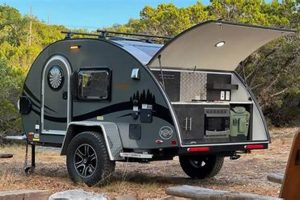
A recreational vehicle designed for towing behind a car or truck, commonly used for camping and travel within a specific country. These vehicles typically include amenities such as sleeping quarters, cooking facilities, and storage space. An example would be a compact, off-road capable unit manufactured and sold for use in the Outback.
These units play a significant role in enabling accessible and comfortable exploration of remote and diverse landscapes. Their popularity stems from offering a balance between mobility and self-sufficiency, allowing travelers to bring essential comforts while experiencing outdoor adventures. Their development is closely linked to the evolution of the automotive industry and the increasing demand for leisure travel options.
The subsequent sections will delve into the construction, features, types, and considerations involved in selecting the appropriate model for individual travel needs. Further details concerning maintenance, safety precautions, and popular destinations will also be addressed.
Tips Regarding the Selection and Use of Australian Travel Trailers
This section provides guidance to aid in the responsible selection, maintenance, and utilization of mobile living solutions designed for use within the Australian landscape.
Tip 1: Assess Towing Capacity: Verify the vehicle’s maximum towing capacity and ensure it exceeds the fully loaded weight of the selected unit. Overloading can compromise vehicle handling and safety. Refer to the vehicle manufacturer’s specifications for accurate information.
Tip 2: Evaluate Off-Road Capabilities: Consider the intended travel terrain. If off-road excursions are planned, select a model with appropriate suspension, ground clearance, and tire specifications. Examples include independent suspension systems and reinforced chassis.
Tip 3: Prioritize Water Storage: Adequate water storage is crucial, especially in remote areas. Calculate anticipated water consumption and choose a model with sufficient tank capacity. Supplement with portable water containers for extended trips.
Tip 4: Examine Power Management: Evaluate the unit’s power system, including battery capacity, solar panel integration, and generator compatibility. Consider energy-efficient appliances to maximize power availability.
Tip 5: Implement Regular Maintenance: Adhere to a strict maintenance schedule, including regular inspections of tires, brakes, bearings, and electrical systems. Proper maintenance extends the lifespan and ensures safety.
Tip 6: Secure Adequate Insurance: Obtain comprehensive insurance coverage that includes damage, theft, and liability. Review policy terms carefully to understand coverage limitations and exclusions.
Tip 7: Plan Routes and Campsites: Before embarking on a journey, carefully plan routes and reserve campsites where necessary. Consider road conditions, accessibility, and available amenities.Utilize maps and navigational tools to guide your route.
Adhering to these suggestions will contribute to a safer and more enjoyable travel experience. Careful planning and diligent maintenance are essential for responsible vehicle operation.
The following section will conclude by summarizing the core aspects of Australian travel, reinforcing the importance of proper selection and responsible usage practices.
1. Off-road capability

Off-road capability represents a critical design and functional consideration for mobile living solutions purposed for the diverse and often challenging terrains prevalent within Australia. This characteristic dictates the range of accessible destinations and the degree of self-sufficiency achievable during extended travels.
- Suspension Systems
The suspension system directly influences a mobile living solution’s ability to traverse uneven surfaces. Independent suspension configurations, coupled with heavy-duty shock absorbers, offer enhanced articulation and damping, mitigating the transfer of stress to the chassis and occupants. Vehicles lacking appropriate suspension are prone to damage and offer reduced passenger comfort on corrugated or rocky tracks.
- Ground Clearance and Departure Angles
Adequate ground clearance, coupled with favorable approach and departure angles, is essential for navigating obstacles such as creek crossings, rocky outcrops, and steep inclines. Insufficient clearance risks undercarriage damage, potentially disabling the vehicle and stranding occupants in remote locations. Approach and departure angles minimize the likelihood of front or rear overhangs contacting the terrain.
- Chassis and Frame Reinforcement
The chassis and frame must possess sufficient structural integrity to withstand the stresses imposed by off-road conditions. Reinforcement, achieved through the use of high-strength steel and strategic bracing, prevents deformation and failure. Units with inadequately reinforced frames are susceptible to cracking and component separation, compromising structural integrity.
- Tire Selection and Traction Aids
Tire selection directly impacts traction and stability on varied surfaces. All-terrain or mud-terrain tires, characterized by aggressive tread patterns and reinforced sidewalls, provide superior grip on loose gravel, sand, and mud. Supplemental traction aids, such as electronic traction control systems or limited-slip differentials, further enhance off-road performance by optimizing power distribution to the wheels with the most grip.
The integration of these elements determines the extent to which a mobile living solution can confidently and reliably access remote Australian landscapes. Selection of a unit lacking these features may severely restrict travel opportunities and increase the risk of vehicle damage. Therefore, a thorough assessment of off-road capabilities is paramount prior to acquisition.
2. Water storage capacity

Water storage capacity constitutes a critical parameter in mobile living solutions designed for Australian conditions. Arid and semi-arid environments predominate across much of the continent, necessitating a self-sufficient water supply for potable use, sanitation, and cooking. The absence of readily accessible water sources in remote regions directly correlates with the volume of onboard storage required. Selecting a unit with insufficient capacity can severely limit travel duration and compromise hygiene, while excessive capacity adds unnecessary weight and reduces fuel efficiency. For example, traversing the Simpson Desert demands significantly more onboard water than traveling along the Eastern coastline.
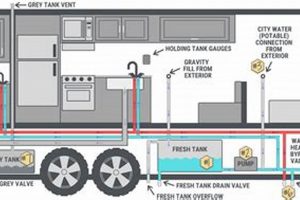
Mobile living solutions typically incorporate one or more tanks fabricated from food-grade polyethylene or stainless steel, with capacities ranging from 50 to over 200 liters. Placement within the unit is carefully considered to maintain weight distribution and minimize sloshing. Water level indicators and filtration systems are commonly integrated. Further enhancement may include grey water tanks, permitting the responsible disposal of wastewater in designated areas. Careful water management practices, such as minimizing shower duration and utilizing water-efficient fixtures, can extend the usable duration of onboard reserves.
Effectively, appropriate water storage capacity represents a determinant factor in the operational utility of mobile living solutions in Australia. Underestimation directly impacts travel viability in remote locations, while overestimation imposes efficiency penalties. Thoughtful consideration of anticipated water consumption patterns, coupled with a comprehensive assessment of available water sources along planned routes, is essential in specifying a unit with adequate and appropriate storage capability. Efficient usage practices, coupled with careful monitoring, further enhance self-sufficiency and minimize environmental impact.
3. Power system efficiency

Power system efficiency is intrinsically linked to the practicality and self-sufficiency of a mobile living solution, given the remote nature of many Australian travel destinations. Inefficient power utilization directly translates to increased reliance on external power sources (generators or grid connections), reduced operational autonomy, and potentially compromised safety. For instance, operating a high-draw appliance from a poorly designed power system can quickly deplete battery reserves, leaving occupants without lighting, refrigeration, or critical communication capabilities. The design and implementation of an efficient power system should prioritize minimizing energy waste, maximizing battery lifespan, and effectively harnessing renewable energy sources.
The core components impacting power system efficiency include battery type and capacity, solar panel integration, inverter performance, and appliance selection. Lithium-ion batteries, for example, offer superior energy density and discharge characteristics compared to traditional lead-acid batteries, resulting in longer usable power reserves. Solar panel systems, when properly sized and installed, can significantly reduce generator dependence and extend off-grid capabilities. Inverter efficiency directly affects the conversion of DC power from batteries to AC power for household appliances; higher efficiency inverters minimize energy loss during this process. Finally, selecting appliances with high energy star ratings reduces overall power consumption.
Effective power system management is paramount. Monitoring energy consumption, utilizing power-saving modes, and regularly maintaining system components are critical to optimizing efficiency. Furthermore, careful consideration of appliance usage patterns and strategic load shedding can significantly extend battery lifespan. In conclusion, power system efficiency is not merely an ancillary feature but a fundamental requirement for a comfortable and sustainable mobile living experience in the Australian context. Prioritizing efficiency translates to increased independence, reduced environmental impact, and enhanced overall functionality.
4. Maintenance schedule adherence

Adherence to a rigorous maintenance schedule is not merely a suggestion but a fundamental necessity for the safe and reliable operation of mobile living solutions operating within Australia. The vast distances, variable road conditions, and often harsh environmental factors encountered necessitate proactive measures to mitigate potential equipment failures. Deviation from recommended maintenance protocols can lead to component degradation, system malfunctions, and ultimately, compromised occupant safety.
- Wheel Bearing Servicing
Wheel bearings are subjected to continuous stress, particularly on unsealed roads. Regular inspection, lubrication, and replacement as needed are critical. Failure to maintain wheel bearings can result in overheating, bearing seizure, and potential wheel detachment, posing a significant safety hazard. Example: pre-trip inspection of a travel unit prior to a journey across the Nullarbor Plain.
- Brake System Inspections
The brake system is a primary safety component, and its functionality must be assured. Regular inspection of brake pads, rotors/drums, and hydraulic lines is essential. Degradation of braking performance due to worn components or fluid contamination increases stopping distances and compromises control. Example: Inspecting brake lines for leaks or damage after traversing corrugated roads.
- Electrical System Assessment
The electrical system powers essential amenities and safety equipment. Routine inspection of wiring, connections, and battery condition is necessary. Corrosion, loose connections, and battery degradation can lead to system failures, potentially impacting lighting, refrigeration, and communication devices. Example: Checking the voltage and connections of solar panels to maintain efficient charging.
- Chassis and Suspension Examination
The chassis and suspension bear the brunt of road shocks and stresses. Regular inspection for cracks, corrosion, and component wear is vital. Deterioration of the chassis or suspension can compromise structural integrity and handling, leading to instability and potential accidents. Example: Evaluating the condition of shock absorbers and leaf springs following extended travel on rough terrain.
These facets, when consistently addressed through diligent adherence to a documented maintenance schedule, collectively ensure the continued reliability and safety of mobile living solutions traversing the Australian landscape. Neglecting scheduled maintenance increases the likelihood of component failures, necessitating costly repairs and potentially jeopardizing the well-being of occupants. Proactive maintenance, conversely, prolongs the lifespan of the unit, enhances its resale value, and contributes to a safer and more enjoyable travel experience.
5. Towing vehicle compatibility

Towing vehicle compatibility represents a foundational element in the successful and safe utilization of mobile living solutions within the Australian context. The characteristics of the towing vehicle must align with the physical and operational parameters of the mobile living solution to ensure stability, control, and legal compliance. Disregard for compatibility can lead to compromised handling, increased accident risk, and potential damage to both vehicles. For instance, attempting to tow a large, heavy unit with a vehicle possessing insufficient power or braking capacity can result in instability, particularly during emergency maneuvers or on steep gradients. In practical usage, this may result in trailer sway, jackknifing, or an inability to maintain safe speeds.
The primary factors governing compatibility include the vehicle’s maximum towing capacity, ball weight (or tongue weight), and braking system capabilities. Towing capacity, as specified by the vehicle manufacturer, dictates the maximum permissible weight of the trailer. Ball weight, the downward force exerted by the trailer’s coupling on the tow ball, must fall within the vehicle’s specified range to maintain proper weight distribution and prevent instability. Braking system compatibility is crucial, as trailers exceeding a certain weight threshold are legally required to have their own independent braking systems. Failure to ensure proper brake synchronization can result in delayed braking, increased stopping distances, and potential collisions. Practical implication: A lightweight mobile unit designed for off-road travel may require minimal changes in the tow vehicle, whereas a heavy unit with all amenities will require additional work.
In summary, towing vehicle compatibility is not a mere formality but a critical determinant of safety and operational effectiveness. Careful consideration of vehicle specifications, trailer characteristics, and legal requirements is essential prior to embarking on any journey. Disregarding these factors can have severe consequences, ranging from mechanical damage to life-threatening accidents. A thorough assessment, often involving professional consultation, is strongly recommended to ensure a safe and enjoyable experience. Achieving compatibility contributes to the longevity of both towing and towed vehicle and the safety of the users.
Frequently Asked Questions
The subsequent section addresses common inquiries regarding the selection, operation, and maintenance of recreational vehicles designed for travel within Australia.
Question 1: What constitutes the primary advantage of employing a purpose-built “australian travel trailer” versus a general-purpose campervan?
The primary advantage resides in the separation of living space from the towing vehicle. An “australian travel trailer” permits the towing vehicle to be uncoupled and utilized for independent exploration, errands, or accessing terrain unsuitable for the entire combined unit. Campervans, conversely, necessitate relocating the entire living space for any such activities.
Question 2: How does the regulatory environment impact the use of “australian travel trailer” in different states and territories?
Regulations governing the use of vary across Australian jurisdictions, encompassing aspects such as vehicle registration, speed limits, permitted campsites, and waste disposal protocols. Adherence to local regulations is mandatory; failure to comply can result in fines or legal penalties. Consultation with relevant state or territory authorities is advised prior to commencing travel.
Question 3: What are the key considerations in mitigating the risk of “australian travel trailer” sway while towing?
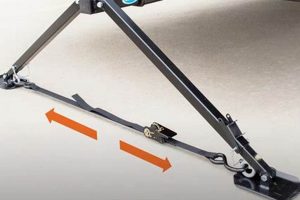
Mitigating trailer sway involves ensuring proper weight distribution within the unit, verifying adequate tire inflation pressures, maintaining a moderate towing speed, and utilizing sway control devices. Improper loading, underinflated tires, excessive speed, and the absence of sway control mechanisms can exacerbate the risk of instability.
Question 4: How frequently should critical components of an “australian travel trailer”, such as wheel bearings and brakes, undergo inspection and maintenance?
Critical components should undergo inspection and maintenance at intervals dictated by the manufacturer’s recommendations or more frequently if subjected to demanding conditions, such as prolonged off-road travel. Regular maintenance is essential to ensure component integrity and prevent catastrophic failures.
Question 5: What strategies are available for minimizing the environmental impact associated with “australian travel trailer” travel?
Minimizing environmental impact involves adhering to responsible waste disposal practices, conserving water and energy, utilizing designated campsites, and avoiding disturbance to native flora and fauna. Respectful and conscientious behavior is paramount to preserving the natural environment.
Question 6: What insurance coverage is essential for comprehensive protection of an “australian travel trailer”?
Comprehensive insurance coverage should encompass damage resulting from accidents, theft, vandalism, and natural disasters. Liability coverage is also crucial to protect against potential claims arising from property damage or personal injury caused by the unit. A thorough review of policy terms and conditions is imperative to understand coverage limitations.
These answers provide fundamental insights into the responsible ownership and operation of mobile living solutions within the Australian landscape.
The subsequent segment will focus on practical considerations for preparing for an extended journey.
Australian Travel Trailers
This exploration has underscored the critical factors influencing the selection, maintenance, and utilization of Australian travel trailers. From evaluating off-road capabilities and water storage to ensuring power system efficiency and adherence to maintenance schedules, a meticulous approach is paramount. Towing vehicle compatibility further ensures safe and controlled operation. Practical considerations, combined with adherence to legal and environmental standards, guarantee responsible ownership.
Effective operation demands comprehensive planning and responsible execution. Prioritizing safety, respecting the environment, and adhering to established guidelines ensures these units remain valuable tools for experiencing the vast Australian landscape. Continued vigilance and proactive maintenance are essential for maximizing the lifespan and utility of these assets. The future of remote exploration depends on informed, responsible practices, ensuring the long-term sustainability of both the units and the environments they traverse.