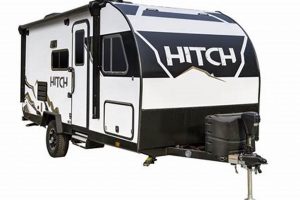
A lightweight recreational vehicle designed for towing, such models typically weigh approximately 1500 pounds when empty. This weight class allows for greater flexibility in towing vehicle selection, potentially enabling the use of smaller SUVs or even some passenger cars, depending on their tow rating. These units often feature essential amenities such as a sleeping area, basic cooking facilities, and sometimes a compact toilet.
The appeal of a low-weight towable lies in its enhanced fuel efficiency during transport and its reduced impact on the towing vehicle’s performance. Historically, the desire for accessible camping options without the need for heavy-duty trucks has driven the development and popularity of this type of trailer. The benefits extend to easier maneuverability, storage, and lower registration fees in some regions.
The subsequent sections will delve into specific models within this weight range, examine key features to consider during purchase, and provide guidance on selecting the appropriate towing vehicle and hitch system to ensure safe and enjoyable travel. Furthermore, maintenance considerations and common upgrades will be discussed.
Tips for Selecting and Using a Lightweight Towable
Considerations are paramount when selecting and utilizing a towable unit within this weight class to ensure a safe and satisfying experience.
Tip 1: Verify Tow Vehicle Capacity: Consult the tow vehicle’s owner’s manual and door jamb sticker to confirm its Gross Vehicle Weight Rating (GVWR) and maximum towing capacity. Exceeding these limits compromises safety and can damage the vehicle.
Tip 2: Calculate Tongue Weight: Tongue weight, the downward force exerted on the hitch, should be between 10-15% of the total weight of the towable. An improperly balanced load can lead to trailer sway.
Tip 3: Invest in a Quality Hitch: A properly sized and installed hitch receiver is essential. Consider weight distribution hitches for added stability, particularly when towing near the vehicle’s maximum capacity.
Tip 4: Practice Safe Loading: Distribute cargo evenly within the towable to maintain balance. Secure all items to prevent shifting during transit. Avoid overloading one side or the front/rear of the trailer.
Tip 5: Conduct Regular Maintenance: Inspect tires, brakes, lights, and bearings before each trip. Address any issues promptly to prevent breakdowns and ensure safe operation.
Tip 6: Plan Routes Carefully: Consider the tow vehicle’s capabilities and the towable’s dimensions when planning routes. Avoid steep grades, narrow roads, and low-clearance bridges.
Tip 7: Practice Driving Skills: Familiarize yourself with towing maneuvers, such as turning, backing up, and merging, in a controlled environment before embarking on a long trip.
These guidelines are critical for maximizing the utility and safety afforded by lightweight towable options. Adherence to these principles promotes responsible towing and a secure travel experience.
The following sections will elaborate on specific aspects of maintaining and upgrading these trailers.
1. Tow Vehicle Compatibility

The selection of a tow vehicle for a recreational vehicle weighing approximately 1500 pounds is a critical decision, directly influencing safety, performance, and overall towing experience. Matching the correct vehicle to the trailer is not merely a matter of meeting a minimum weight threshold; it encompasses a broader evaluation of vehicle capabilities.
- Tow Rating Assessment
The tow rating of a vehicle, as specified by the manufacturer, represents the maximum permissible weight it can safely tow. Exceeding this rating can lead to compromised braking performance, reduced vehicle control, and potential mechanical damage. When considering a 1500-pound trailer, it is imperative to select a vehicle with a tow rating that comfortably exceeds this weight, accounting for cargo and passengers in both the tow vehicle and the trailer.
- Gross Combined Weight Rating (GCWR) Consideration
The GCWR represents the maximum permissible weight of the tow vehicle, the trailer, and all occupants and cargo. Ensuring that the combined weight remains within the GCWR is crucial for safe operation. Even if a vehicle’s tow rating appears sufficient, exceeding the GCWR can strain the powertrain, suspension, and braking systems. Calculating the anticipated GCWR is essential before finalizing the towing setup.
- Hitch System Compatibility
The type and class of hitch receiver must be compatible with both the tow vehicle and the trailer. Hitches are rated based on their maximum weight capacity and tongue weight. Selecting a hitch that is properly matched to the trailer’s weight and designed for the tow vehicle’s frame is essential for secure attachment. A weight-distribution hitch may be necessary for heavier loads to improve stability and reduce sway.
- Braking System Considerations
The tow vehicle’s braking system must be adequate to handle the additional weight of the trailer. Many jurisdictions require trailers exceeding a certain weight to have their own braking systems. Electric brakes, controlled by a brake controller in the tow vehicle, provide synchronized braking and enhanced stopping power. Ensuring proper brake function on both the tow vehicle and the trailer is paramount for safe deceleration.
The interplay between these facets underscores the significance of informed decision-making when selecting a tow vehicle for a 1500-pound trailer. Diligent assessment of tow ratings, GCWR, hitch compatibility, and braking systems contributes directly to a secure and controlled towing experience. Ignoring these factors can have serious safety consequences, emphasizing the need for meticulous planning and vehicle selection.
2. Weight Distribution

Proper weight distribution is critically important when towing any trailer, especially one within the 1500 lb weight class. The balance of the load significantly impacts stability, handling, and overall safety during transit. An improperly distributed load can lead to trailer sway, reduced braking effectiveness, and compromised control of the tow vehicle.
- Tongue Weight Management
Tongue weight, the downward force exerted by the trailer on the hitch, should ideally fall between 10% and 15% of the trailer’s total weight. For a 1500 lb trailer, this translates to a tongue weight range of 150 to 225 lbs. Insufficient tongue weight can induce trailer sway, while excessive tongue weight can overload the rear axle of the tow vehicle. Proper cargo placement within the trailer is essential to achieving the correct tongue weight.
- Axle Loading Considerations
Even weight distribution across the trailer’s axle is crucial for preventing uneven tire wear and maintaining stability. Overloading one side of the trailer can cause the tires on that side to overheat and potentially fail. When loading a 1500 lb trailer, care should be taken to distribute heavy items evenly between the left and right sides, ensuring that the axle is not subjected to imbalanced forces.
- Fore-Aft Balance
Maintaining balance along the length of the trailer is as important as side-to-side distribution. Placing heavy items too far to the front or rear of the trailer can negatively affect handling. A general guideline is to position heavier items near the axle, with lighter items distributed towards the front and rear, while staying within the established tongue weight range. This approach minimizes the pendulum effect and contributes to a more stable towing experience.
- Impact on Tow Vehicle Dynamics
Improper weight distribution affects the dynamics of the tow vehicle. Insufficient tongue weight can lift the rear of the vehicle, reducing traction on the rear tires and impairing steering. Excessive tongue weight can compress the rear suspension, potentially causing the vehicle to bottom out over bumps. Both scenarios compromise vehicle control. A balanced load minimizes these effects, preserving the tow vehicle’s handling characteristics and braking effectiveness.
These considerations underscore the direct correlation between weight distribution and the safe operation of a 1500 lb trailer. Careful attention to tongue weight, axle loading, fore-aft balance, and their combined impact on the tow vehicle is essential for achieving a stable, controlled, and secure towing experience. Prioritizing proper loading practices mitigates risks and promotes safe travel.
3. Compact Design

The concept of compact design is intrinsically linked to recreational vehicles in the 1500 lb weight class. The design constraints imposed by the target weight necessitate innovative solutions for maximizing functionality within a minimal footprint. This influences all aspects of construction, from material selection to interior layout.
- Space Optimization
Within a 1500 lb trailer, every square inch counts. Compact design emphasizes multi-functional furniture, such as convertible beds and tables, to optimize living space. Storage is often integrated into unexpected areas, like under-bed compartments or vertical wall organizers. Examples include folding sinks and portable toilets that minimize the space occupied when not in use, allowing occupants to move around more freely. The implication is a more usable interior within the confines of a small shell.
- Material Selection and Weight Reduction
Compact design demands a focus on lightweight materials. Aluminum framing, thin-gauge paneling, and composite materials replace heavier alternatives such as traditional wood framing and solid wood cabinetry. Reducing weight is paramount to achieving the 1500 lb target, which in turn impacts the types of features and amenities that can be included. For instance, acrylic windows replace glass, and lithium batteries replace lead-acid ones, contributing to significant weight savings while maintaining functionality.
- Aerodynamic Profiling
The smaller size of these towables facilitates more aerodynamic designs. A streamlined profile reduces wind resistance, improving fuel economy for the tow vehicle and enhancing stability during transit. Examples include teardrop shapes or rounded front ends that minimize drag. The implications are not just fuel savings but also reduced strain on the tow vehicle’s engine and transmission, especially during long trips or in windy conditions.
- Simplified Systems and Appliances
Complex electrical, plumbing, and heating systems add weight and consume space. Compact design favors simpler, more efficient alternatives. Smaller, more energy-efficient appliances, such as portable stoves and compact refrigerators, are common. The need to conserve weight and space often leads to the omission of features found in larger trailers, such as onboard generators or extensive water tanks. This requires users to adapt and utilize external resources or adopt minimalist camping practices.
In essence, compact design is not merely about shrinking dimensions; it represents a holistic approach to building a functional and towable living space within strict weight limitations. The examples provided illustrate the trade-offs and innovative solutions necessary to create a viable recreational vehicle in the 1500 lb class, offering a lightweight and mobile camping experience while acknowledging the inherent constraints of size and weight.
4. Fuel Efficiency

The relationship between fuel efficiency and towable recreational vehicles weighing approximately 1500 pounds is significant due to the direct impact of added weight on a tow vehicle’s fuel consumption. A lighter trailer inherently requires less energy to move, translating to improved fuel economy compared to towing heavier loads. This benefit is particularly pronounced on long journeys and in hilly terrain where the engine works harder to overcome gravitational forces and increased drag. For example, a standard SUV towing a 1500 lb trailer might experience a 20-30% reduction in fuel economy compared to its unladen state, while a heavier trailer could easily double that reduction. The selection of a lightweight option, therefore, offers a tangible economic advantage.
Practical considerations further emphasize the importance of fuel efficiency. The cost of gasoline or diesel fuel can represent a significant portion of overall travel expenses. Improved fuel economy not only reduces these direct costs but also extends the range between refueling stops, providing greater flexibility in route planning and destination selection. Furthermore, reduced fuel consumption translates to lower carbon emissions, aligning with environmental sustainability goals. This is particularly relevant for individuals seeking to minimize their ecological footprint while enjoying recreational travel. The decision to opt for a lighter trailer is, thus, often influenced by a desire for both economic and environmental responsibility.
In summary, the correlation between lightweight towables and fuel efficiency is a key factor driving consumer choice. Reduced fuel consumption translates to tangible cost savings, extended travel ranges, and a diminished environmental impact. While other factors, such as trailer features and towing vehicle capabilities, also play a role, the fuel efficiency advantage offered by a 1500 lb trailer remains a compelling consideration for individuals seeking a balance between recreational enjoyment and responsible resource management.
5. Maneuverability
Maneuverability is a paramount consideration when evaluating recreational vehicles, particularly those in the 1500 lb weight class. The ease with which a trailer can be navigated in various situations directly affects the driver’s confidence and the overall safety of the towing experience. This aspect encompasses not only on-road handling but also off-road navigation and parking.
- Turning Radius and Cornering
A shorter turning radius is advantageous in confined spaces, such as campgrounds and urban areas. The lightweight design of a 1500 lb trailer, combined with a shorter overall length, generally results in improved cornering compared to larger, heavier trailers. This allows for easier navigation of tight turns and reduced risk of striking obstacles. For instance, maneuvering through a narrow campground loop is significantly less challenging with a compact towable.
- Backing and Parking Ease
Backing up a trailer requires skill and precision. A smaller trailer is inherently easier to control during reversing maneuvers due to its reduced length and weight. This translates to improved visibility and responsiveness, allowing for more accurate placement in parking spaces or campsites. The reduced inertia makes minor adjustments easier to execute, minimizing the risk of miscalculations that could lead to collisions. The practical application is that inexperienced towers can more easily master backing up with a 1500lb trailer than with a larger one.
- Off-Road Capability
While not all 1500 lb trailers are designed for off-road use, their lighter weight enhances their potential for navigating unpaved roads and uneven terrain. Reduced ground clearance remains a limiting factor, but the lower weight minimizes the risk of getting stuck or causing damage to the trailer’s frame and suspension. Towing a lighter trailer over rough surfaces also places less stress on the tow vehicle’s components, contributing to improved durability. Consider, as an example, accessing remote campsites or traversing gravel roads that would be inaccessible to larger, heavier units.
- Wind Resistance and Stability
While smaller, lighter trailers are generally more susceptible to wind gusts, their reduced surface area also minimizes the overall force exerted by the wind. Proper loading and weight distribution become even more critical in windy conditions to maintain stability. The lighter weight makes it easier for the tow vehicle to counteract the effects of wind, reducing the risk of trailer sway and loss of control. In this context, correct tongue weight can be critical to preventing dangerous swaying on open roads.
The multifaceted aspects of maneuverability underscore the benefits of selecting a 1500 lb trailer, particularly for those prioritizing ease of handling in diverse environments. The reduced size and weight contribute to improved turning radius, backing ease, off-road capability, and stability in windy conditions. These factors collectively enhance the overall towing experience and promote safer travel.
6. Storage Solutions

Storage solutions within recreational vehicles weighing approximately 1500 pounds are a critical design consideration dictated by the inherent space limitations. The restricted volume necessitates efficient and often multi-functional storage provisions to accommodate essential gear, supplies, and personal belongings. A direct consequence of the limited space is the prioritization of vertical storage utilization, under-seat compartments, and convertible furniture that serves dual purposes, such as sleeping and storage. For example, galleys typically incorporate pull-out drawers, overhead cabinets, and specialized racks for cookware and utensils, maximizing every available cubic inch.
The importance of optimized storage solutions in this class of towable extends beyond mere convenience; it directly impacts the usability and liveability of the unit. Inadequate storage leads to clutter, impedes movement, and compromises the overall comfort of the occupants. Manufacturers often implement innovative strategies, such as integrated exterior storage compartments accessible from outside the trailer, to supplement interior capacity. Furthermore, the careful selection of lightweight and compact gear is paramount for users to make the most of the available space. This includes collapsible containers, stackable organizers, and multi-purpose tools that minimize bulk and maximize utility.
Effective storage solutions within 1500 lb recreational vehicles are not simply a matter of providing more space, but rather a strategic approach to maximizing the usability of the existing footprint. The challenges inherent in designing and utilizing storage within these compact units underscore the need for careful planning, innovative design, and mindful packing. The resulting organization contributes significantly to the functionality and enjoyment of the trailer, directly influencing the overall travel experience and enabling users to comfortably pursue their recreational activities.
Frequently Asked Questions
The following addresses common inquiries and clarifies misconceptions regarding recreational vehicles weighing approximately 1500 pounds.
Question 1: What are the typical dimensions of a recreational vehicle in this weight class?
Dimensions vary by manufacturer and model, but generally, expect lengths between 10 and 16 feet, widths around 6 to 7 feet, and heights under 8 feet. These compact dimensions contribute to their towability and storage convenience.
Question 2: What type of tow vehicle is generally required for a 1500 lb travel trailer?
While specific requirements depend on the tow vehicle’s specifications, smaller SUVs and some properly equipped passenger cars may be suitable. Always consult the tow vehicle’s owner’s manual for its Gross Vehicle Weight Rating (GVWR) and maximum tow rating.
Question 3: What essential features are commonly found in this weight class of towable?
Expect basic amenities, including a sleeping area (often convertible), a small cooking area (typically with a portable stove or microwave), and sometimes a compact toilet or portable toilet. Water storage is usually limited, and electrical systems are often designed for basic lighting and appliance operation.
Question 4: How does the fuel economy of a tow vehicle typically change when towing a 1500 lb trailer?
Fuel economy will decrease compared to the vehicle’s unladen state. The degree of reduction depends on factors such as the vehicle’s engine size, driving speed, and terrain. However, a 1500 lb trailer generally results in less fuel consumption than towing a heavier unit.
Question 5: What are some common maintenance considerations specific to these lightweight trailers?
Regular maintenance includes inspecting tires, brakes, lights, and wheel bearings. Sealing roof seams and checking for water leaks are crucial to prevent damage. Maintaining proper tire pressure and ensuring the proper functioning of all safety systems are also essential.
Question 6: What are the potential drawbacks of choosing a towable unit in this weight class?
The limited space can be a challenge for extended trips or larger groups. Feature sets are typically more basic compared to larger trailers. Water and waste tank capacities are often smaller, requiring more frequent dumping. Careful planning is often necessary to accommodate these limitations.
In conclusion, while units in this weight class offer distinct advantages in towability and fuel efficiency, it is vital to consider the trade-offs in space and features. Thorough assessment of individual needs and towing vehicle capabilities is essential.
The following sections will further investigate the various options available within the 1500 lb category.
Conclusion
This exploration of the 1500 lb travel trailer segment has highlighted key considerations surrounding tow vehicle compatibility, weight distribution, compact design, fuel efficiency, maneuverability, and storage solutions. The analysis has revealed a trade-off between ease of towing and limitations in space and amenities. Potential owners must carefully weigh these factors against their individual needs and circumstances.
The ongoing demand for lightweight and fuel-efficient recreational options ensures the continued relevance of the 1500 lb travel trailer category. Informed decision-making, based on a thorough understanding of these trade-offs, remains crucial for maximizing satisfaction and safety. The future may bring further advancements in materials and design, potentially mitigating some of the current limitations, thereby enhancing the appeal and functionality of these compact towables.