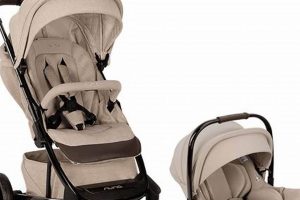
A compact and lightweight conveyance designed to transport infants and toddlers, particularly during journeys, represents a significant product category within juvenile goods. These products prioritize portability and ease of use while maintaining safety standards for the child occupant. For instance, a model that folds down to fit in an overhead compartment of an aircraft is a prime example.
The value of these products stems from their ability to facilitate mobility for parents or caregivers while ensuring the child’s comfort and security. Historically, such devices have evolved from larger, less maneuverable prams to the streamlined designs seen today, reflecting advancements in materials and engineering. This evolution addresses the growing need for travel-friendly solutions in an increasingly mobile society.
The subsequent sections will delve into specific features, performance metrics, and relevant selection criteria for these essential travel companions, providing a comprehensive overview for discerning consumers. Understanding these aspects is crucial for making an informed purchasing decision.
Selection Guidance for Travel-Optimized Child Carriers
Careful consideration of several key factors is paramount when procuring a travel-optimized child carrier. The following guidelines aim to assist in making an informed decision.
Tip 1: Weight and Dimensions: Prioritize models exhibiting a low weight and compact folded dimensions. A unit exceeding 15 pounds may prove unwieldy during air travel. Verify that folded dimensions adhere to standard airline carry-on restrictions, typically around 22 x 14 x 9 inches.
Tip 2: Folding Mechanism: Evaluate the ease and speed of the folding mechanism. A one-hand folding operation is advantageous, especially when managing a child and luggage simultaneously. Ensure the mechanism locks securely to prevent accidental unfolding during transit.
Tip 3: Maneuverability and Wheel Quality: Assess the unit’s maneuverability on various surfaces. High-quality wheels, preferably with swivel and locking capabilities, are essential for navigating crowded airports or uneven terrain. Seek models with suspension systems for enhanced ride comfort.
Tip 4: Safety Features: Confirm adherence to established safety standards, such as ASTM certification. A five-point harness is critical for securing the child. Examine the braking system for reliability and ease of use.
Tip 5: Comfort and Ventilation: Prioritize child comfort by selecting a model with adequate padding and breathable fabrics. Ensure sufficient ventilation to prevent overheating, particularly in warmer climates. A reclining seat can enhance comfort during extended travel.
Tip 6: Storage and Accessories: Consider the availability of storage compartments for essential items such as diapers, bottles, or snacks. Assess the compatibility with essential accessories, such as rain covers or travel bags.
These guidelines should assist in selecting a child conveyance that effectively balances portability, safety, and convenience. Choosing a product that meets these criteria contributes to a more streamlined and enjoyable travel experience.
The subsequent section will address common misconceptions surrounding these specialized child carriers.
1. Lightweight Design

Lightweight design is a primary determinant of suitability for a product categorized as a “best travel stroller.” The weight of the unit directly impacts its portability and ease of handling during transit, influencing the overall user experience.
- Reduced Physical Burden
A lighter stroller minimizes the physical strain on caregivers during airport transfers, navigating public transportation, or carrying the unit up stairs. This is particularly relevant for single parents or caregivers with physical limitations. A stroller weighing under 15 pounds significantly reduces this burden compared to heavier, full-sized models.
- Compliance with Airline Regulations
Many airlines impose weight restrictions on carry-on luggage. A lightweight design increases the likelihood that the stroller will meet these requirements, allowing it to be gate-checked or stored in overhead compartments, avoiding checked baggage fees and potential damage. Exceeding weight limits can result in additional charges or the necessity of checking the stroller, negating the benefits of a travel-specific design.
- Enhanced Maneuverability
A lighter weight contributes to improved maneuverability, particularly in confined spaces such as airport terminals or crowded city streets. The reduced inertia allows for easier steering and quicker responses to obstacles. This is crucial for maintaining control and ensuring the child’s safety in dynamic environments.
- Simplified Folding and Unfolding
Lightweight materials typically facilitate easier folding and unfolding mechanisms. This is essential for quick transitions between use and storage, such as when boarding a bus or entering a taxi. A simpler folding process reduces the risk of frustration and delays, especially when managing a child simultaneously.
In summary, the lightweight design of a stroller significantly contributes to its classification as a “best travel stroller” by directly impacting its portability, airline compliance, maneuverability, and ease of use. These factors collectively enhance the convenience and practicality of the product for travel purposes.
2. Compact Foldability

Compact foldability represents a pivotal characteristic for a stroller to be considered suitable for travel. The ability to minimize dimensions during periods of non-use directly addresses the logistical challenges inherent in transportation and storage, making it a key differentiator among available models.
- Space Optimization During Transit
A compact fold allows for efficient storage in overhead compartments of aircraft or in the limited cargo space of automobiles. This reduces reliance on baggage handlers and minimizes the risk of damage that may occur during standard baggage processing. A stroller that folds to dimensions compliant with airline carry-on guidelines provides a tangible advantage.
- Ease of Navigation in Confined Environments
When navigating crowded airports, public transportation systems, or narrow city streets, a stroller with a small footprint is advantageous. The ability to quickly fold the stroller to a compact size allows for easier passage through security checkpoints, doorways, and congested walkways. This enhances the overall travel experience.
- Simplified Storage at Destination
Upon arrival at the destination, a compact fold facilitates storage in hotel rooms, rental cars, or other lodging spaces where room may be limited. A smaller folded profile allows the stroller to be stored out of the way, preventing it from becoming an obstacle or taking up valuable living space. This is especially relevant for extended trips or stays in smaller accommodations.
- Reduced Physical Strain on Caregivers
A stroller that folds compactly is typically easier to lift and carry, reducing the physical strain on caregivers. This is particularly important when navigating stairs, escalators, or other situations where the stroller must be transported manually. A lightweight, compact folded unit contributes to a more comfortable and manageable travel experience for the accompanying adult.
The attributes of space optimization, ease of navigation, simplified storage, and reduced physical strain collectively underscore the importance of compact foldability in the context of the “best travel stroller”. These considerations directly impact the practicality and convenience of the stroller, making it a critical factor in purchasing decisions.
3. Durability

Durability, in the context of a travel stroller, signifies the capacity to withstand the stresses and demands inherent in frequent transport and varied usage conditions. It is a primary consideration when assessing the value and long-term utility of a product intended for travel, directly impacting its lifespan and overall cost-effectiveness.
- Frame Integrity
The structural integrity of the frame dictates the stroller’s ability to endure the rigors of baggage handling, repetitive folding and unfolding, and exposure to diverse environmental conditions. A robust frame, often constructed from aircraft-grade aluminum or high-strength alloys, resists bending, cracking, or deformation under stress. For instance, a stroller subjected to the impact forces of airport conveyors should maintain its structural integrity to ensure continued safe operation.
- Fabric Resilience
The textiles used in the stroller’s construction must exhibit resistance to tearing, abrasion, and fading from ultraviolet (UV) radiation. Durable fabrics, typically high-denier polyesters or nylons, can withstand the wear and tear of daily use, including contact with rough surfaces and exposure to spills or stains. A stroller fabric that retains its color and structural integrity after repeated cleaning and exposure to sunlight is indicative of high-quality materials.
- Wheel and Suspension System Longevity
The wheels and suspension system are critical components that directly influence the stroller’s maneuverability and ride comfort. Durable wheels, constructed from puncture-resistant materials, maintain their shape and rolling efficiency over extended use. A well-designed suspension system absorbs shocks and vibrations, reducing stress on the frame and enhancing the child’s comfort. Regular maintenance and high-quality components contribute to the long-term performance of these systems.
- Fastener and Mechanism Reliability
The reliability of folding mechanisms, buckles, straps, and other fasteners is essential for safe and convenient operation. High-quality fasteners, constructed from durable plastics or metals, resist breakage or malfunction under repeated use. Secure locking mechanisms ensure the stroller remains safely assembled during operation and prevents accidental unfolding during transport. A stroller with robust and reliable fasteners provides peace of mind and enhances the overall user experience.
In essence, the durability of a travel stroller is not merely a matter of longevity, but a critical factor influencing safety, performance, and overall value. A product exhibiting robust construction, resilient materials, and reliable mechanisms will provide years of dependable service, making it a worthwhile investment for families who travel frequently.
4. Maneuverability

Maneuverability constitutes a critical performance attribute that significantly influences a travel stroller’s practicality and user satisfaction. Its correlation with the classification of a “best travel stroller” warrants detailed examination.
- Wheel Design and Configuration
Wheel design directly impacts the ease with which the stroller can be navigated across various surfaces. Swivel front wheels enhance turning radius and directional control in confined spaces, such as airport terminals. Locking mechanisms for front wheels provide stability on uneven terrain, preventing unwanted swiveling. Wheel diameter influences rolling resistance and obstacle clearance. Larger diameter wheels generally offer smoother transit over rough surfaces. The configuration of wheels, such as single versus dual wheel designs, also affects stability and maneuverability. A three-wheel configuration often excels in tight turns, while a four-wheel design prioritizes stability.
- Weight Distribution and Balance
Optimal weight distribution is essential for maintaining balance and ease of steering. A low center of gravity enhances stability and reduces the effort required to push the stroller, particularly when navigating inclines or uneven surfaces. Poor weight distribution can result in a stroller that is difficult to control, requiring excessive force to turn or maintain a straight trajectory. The position of the child’s seat relative to the wheels impacts weight distribution and overall maneuverability. A well-balanced stroller promotes a more comfortable and controlled pushing experience.
- Steering Effort and Responsiveness
The steering effort required to change direction and the responsiveness of the stroller to steering inputs directly influence the user’s ability to navigate efficiently and safely. A stroller with minimal steering effort reduces fatigue and enhances control, particularly during extended use. Responsive steering allows for quick adjustments to avoid obstacles or navigate crowded areas. The design of the handlebar, including its height and grip, also affects steering comfort and efficiency. An ergonomically designed handlebar promotes a more natural and comfortable hand position, reducing strain and improving control.
- Turning Radius and Spatial Constraints
The turning radius defines the minimum space required to execute a 180-degree turn. A smaller turning radius enhances maneuverability in tight spaces, such as narrow aisles or crowded sidewalks. Travel strollers are often used in spatially constrained environments, making a compact turning radius a highly desirable feature. The stroller’s dimensions also influence its ability to fit through doorways, elevators, and other narrow passages. A compact design minimizes spatial constraints and enhances overall usability in diverse environments.
These aspects collectively underscore the critical role of maneuverability in defining the “best travel stroller”. Superior maneuverability translates to a smoother, safer, and more convenient travel experience for both the child and the caregiver.
5. Safety Features

The inclusion of robust safety features is a non-negotiable prerequisite for a travel stroller to be deemed among the best in its category. These features directly mitigate risks associated with infant and toddler transport, especially in the dynamic and often unpredictable environments encountered during travel. The absence or inadequacy of such safeguards can have severe consequences, rendering the stroller unsuitable regardless of its other attributes. A five-point harness, for example, prevents a child from slipping out of the seat, a hazard particularly pronounced during sudden stops or on uneven terrain. Likewise, a reliable braking system is essential to prevent unintended movement, particularly on inclines or in crowded areas. These features are not merely conveniences; they are fundamental to ensuring child safety.
Effective safety mechanisms extend beyond basic restraints. Features such as a sturdy frame construction contribute significantly to overall safety by withstanding impact forces. Reflective materials enhance visibility in low-light conditions, mitigating the risk of accidents involving vehicles or pedestrians. The presence of a canopy with adequate UV protection safeguards the child from harmful solar radiation. Furthermore, compliance with established safety standards, such as those set by ASTM International, provides assurance that the stroller has undergone rigorous testing and meets minimum safety requirements. Real-world incidents involving stroller malfunctions underscore the importance of these measures. Reports of strollers collapsing due to faulty frames or children sustaining injuries due to inadequate harnesses serve as stark reminders of the potential risks associated with compromised safety features.
In summation, the incorporation of comprehensive safety features is paramount in the design and selection of a travel stroller. These elements are not optional add-ons but essential components that directly contribute to the well-being of the child occupant. Prioritizing safety features not only minimizes the risk of accidents and injuries but also provides peace of mind for caregivers. Ultimately, the presence of robust safety features distinguishes a truly exceptional travel stroller from a merely adequate one, solidifying its position as a top-tier choice for discerning consumers.
6. Storage Capacity

Adequate storage capacity is a significant factor in evaluating the practicality of a travel stroller. It allows caregivers to transport essential items, contributing to a more seamless travel experience. Limited storage can necessitate carrying additional bags, diminishing the stroller’s convenience. Therefore, the availability and configuration of storage spaces are crucial determinants in assessing the value of a travel stroller.
- Basket Dimensions and Accessibility
The size and accessibility of the under-seat storage basket directly impact its utility. A larger basket accommodates more items, such as diaper bags, shopping purchases, or travel necessities. Easy access to the basket, even when the seat is reclined, is essential. The design should prevent items from falling out during transit, particularly over uneven surfaces. A well-designed basket maximizes storage potential without compromising the stroller’s maneuverability or stability. For example, a deep basket with a secure closure mechanism enhances the functionality of the stroller by providing a safe and accessible space for essential belongings.
- Parent Console and Pockets
The presence of a parent console or integrated pockets near the handlebar offers convenient storage for smaller items, such as keys, wallets, mobile phones, and drinks. A secure cup holder prevents spills, while zippered pockets provide secure storage for valuables. The accessibility of these compartments allows caregivers to quickly retrieve frequently used items without disrupting the child. Parent consoles contribute significantly to the user-friendliness of a travel stroller by providing readily accessible storage for personal belongings.
- Weight Capacity of Storage Areas
The maximum weight capacity of storage areas is a critical consideration. Overloading storage compartments can compromise the stroller’s stability and maneuverability. Exceeding the weight limit can also damage the stroller’s frame or suspension system. Manufacturers typically specify weight limits for both the under-seat basket and any additional storage pockets. Adhering to these limits is essential for maintaining the stroller’s structural integrity and ensuring safe operation. A stroller with a robust frame and a high weight capacity for storage areas provides greater versatility and utility for caregivers.
- Configuration and Compartmentalization
The configuration and compartmentalization of storage areas enhance organization and prevent items from shifting during transit. Separate compartments for different types of items, such as diapers, bottles, and snacks, facilitate efficient packing and retrieval. Insulated compartments for beverages help maintain temperature. The presence of mesh pockets allows for visibility and ventilation. A well-organized storage system optimizes space utilization and contributes to a more streamlined travel experience. For example, a stroller with dedicated compartments for baby wipes, bottles, and snacks simplifies the task of caring for the child while on the move.
The integration of these storage facets significantly enhances the practicality and user satisfaction associated with a travel stroller. Prioritizing adequate and well-designed storage contributes to a more organized and enjoyable travel experience for both the caregiver and the child. These factors should be carefully considered when selecting a stroller intended for travel purposes.
Frequently Asked Questions About Travel Strollers
The following section addresses common inquiries regarding travel strollers, providing clear and concise answers to aid in informed decision-making.
Question 1: What criteria define a “best travel stroller”?
The designation “best travel stroller” typically implies a combination of lightweight design, compact foldability, durability, maneuverability, integrated safety features, and sufficient storage capacity. These attributes collectively contribute to ease of transport and usability during travel.
Question 2: Are travel strollers suitable for everyday use, or are they exclusively for travel?
While primarily designed for travel, many travel strollers can function effectively for everyday use. However, the suitability for daily use depends on individual needs and preferences. Some models may sacrifice certain features, such as suspension or seat padding, to achieve greater portability.
Question 3: What are the typical weight and size restrictions for travel strollers on airlines?
Weight and size restrictions vary among airlines. As a general guideline, travel strollers should weigh less than 15 pounds and fold down to dimensions compliant with standard carry-on restrictions (approximately 22 x 14 x 9 inches). Always verify specific airline policies prior to travel.
Question 4: How important is the folding mechanism of a travel stroller?
The folding mechanism is a crucial consideration. A one-hand folding mechanism is highly desirable for ease of use, particularly when managing a child and luggage simultaneously. Ensure the mechanism locks securely to prevent accidental unfolding during transit.
Question 5: What safety certifications should one look for when purchasing a travel stroller?
Compliance with established safety standards, such as ASTM International (ASTM F833 for strollers), is essential. These certifications indicate that the stroller has undergone rigorous testing and meets minimum safety requirements.
Question 6: How does the price of a travel stroller correlate with its quality and features?
While price is not always a definitive indicator of quality, it often reflects the materials used, the complexity of the design, and the inclusion of advanced features. Higher-priced models may offer enhanced durability, improved suspension, and more convenient features. However, it is possible to find reliable and functional travel strollers at more affordable price points.
Selecting a travel stroller necessitates carefully evaluating these factors to align with specific travel needs and priorities. Prioritizing portability, safety, and convenience ensures a more streamlined travel experience.
The subsequent section will summarize the key takeaways from this comprehensive overview of travel strollers.
Concluding Remarks on Travel-Optimized Child Conveyances
This exploration of the “best travel stroller” category underscores the importance of a multifaceted approach to product evaluation. Criteria such as lightweight design, compact foldability, durability, maneuverability, safety features, and storage capacity each contribute significantly to the overall suitability of a stroller for travel-related purposes. A comprehensive assessment, considering the interplay of these factors, is essential for making an informed purchasing decision.
The selection of a travel stroller represents a consequential investment in both convenience and safety. It is incumbent upon the consumer to rigorously evaluate available options, ensuring that the chosen product aligns with specific travel needs and prioritizes the well-being of the child occupant. Continued advancements in stroller technology and design promise to further refine the travel experience; therefore, ongoing research and informed consumerism are crucial for maximizing the benefits offered by this essential product category.
![Guide: Best Car Seat for Air Travel [Safety Tips] | Best Travel Tips for Adventurers: Explore the World on a Budget](https://detravellers.com/wp-content/uploads/2026/05/th-35-300x200.jpg "Guide: Best Car Seat for Air Travel [Safety Tips] Best Travel Tips for Adventurers: Explore the World on a Budget")