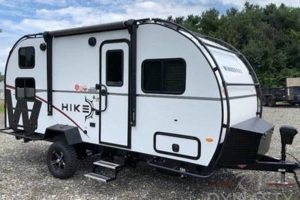
This recreational vehicle configuration prioritizes the living space, positioning it at the front of the trailer. Typically, this area features large windows, comfortable seating, and entertainment systems, offering panoramic views and a spacious area for relaxation and socializing. For example, a model might include a sofa, recliners, and a fireplace in the forward section, separate from the kitchen and bedroom areas.
The advantage of this layout lies in its ability to maximize comfort and enjoyment during travel. By positioning the living area at the front, occupants can take full advantage of scenic views at campgrounds. Historically, travel trailer designs often relegated the living area to a smaller, less desirable space. This particular floorplan represents a shift toward prioritizing the user experience and creating a more residential feel within the mobile dwelling. Increased natural light and a larger, more open area for entertaining are key benefits.
The remainder of this discourse will delve into the specific features, advantages, and considerations associated with selecting a travel trailer that emphasizes this front-oriented living space, including floorplan variations, weight distribution implications, and suitability for different travel styles.
Considerations for a Front Living Travel Trailer Purchase
This section offers practical advice for prospective buyers of a travel trailer featuring a front living area. Prudent decision-making throughout the acquisition process is crucial for optimal satisfaction.
Tip 1: Weight Distribution Assessment: Evaluate the potential impact of the front-loaded living area on overall weight distribution. Ensure the tow vehicle is appropriately sized and equipped to handle the trailer’s weight and tongue weight. A weight distribution hitch may be necessary for safe and stable towing.
Tip 2: Floorplan Evaluation: Scrutinize various floorplan configurations to identify one that aligns with individual needs and travel style. Consider the number of occupants, preferred sleeping arrangements, and storage requirements. Some layouts may offer more efficient use of space than others.
Tip 3: Window Placement and Insulation: Examine the size and placement of windows in the front living area. Large windows offer expansive views but may also impact insulation and temperature regulation. Assess the quality of window seals and insulation materials to ensure energy efficiency and comfort in varying climates.
Tip 4: Furniture Quality and Durability: Assess the quality and durability of furniture in the front living area. Opt for materials that are resistant to wear and tear and easy to clean. Consider the weight and dimensions of furniture to ensure they are suitable for mobile living.
Tip 5: Storage Solutions: Evaluate available storage options in the front living area. Sufficient storage is essential for maintaining a clutter-free and organized living space. Look for models with integrated storage compartments, overhead cabinets, and under-seat storage.
Tip 6: Accessibility Considerations: For individuals with mobility limitations, assess the accessibility of the front living area. Consider the height of furniture, the width of doorways, and the presence of steps or ramps. Modifications may be necessary to ensure comfortable and safe access.
Tip 7: Climate Control System: The front area, often with large windows, can be subject to temperature fluctuations. Evaluate the efficiency of the heating and cooling system. Ensure it is adequately sized to maintain a comfortable temperature in the living space, especially during extreme weather conditions.
Selecting a model requires careful consideration of weight, layout, window insulation, furniture durability, accessible storage, and efficient climate control. Adhering to these points can result in a positive ownership experience.
The following section will explore the long-term considerations and maintenance requirements associated with ownership.
1. Panoramic View

The panoramic view is a primary selling point and functional characteristic of the front living travel trailer. This configuration places the main living area at the forward-most point of the trailer, enabling the incorporation of large windows offering expansive vistas. The cause is the deliberate design choice to prioritize the living space and capitalize on potential campground scenery. The effect is an enhanced camping experience characterized by increased natural light and connection to the surrounding environment. The panoramic view significantly contributes to the perceived value and desirability of this style of trailer. It transforms the interior space from a purely functional area into an immersive recreational environment.
As a practical example, consider a family traveling through a national park. With a conventionally designed travel trailer, views might be limited to the side or rear windows. A front living model, however, provides unobstructed views of the surrounding landscape directly from the main seating area. This eliminates the need to constantly move outside to appreciate the scenery. Furthermore, this design can increase the resale value, where the view can be the most important thing for the next owner.
In conclusion, the panoramic view is not merely an aesthetic addition, but a core element of the front living travel trailer design. It profoundly influences the user experience, contributing significantly to comfort, relaxation, and enjoyment. Understanding this connection allows potential buyers to better assess the value proposition of these models and make informed purchasing decisions, bearing in mind the enhanced visual and experiential elements they prioritize. The relationship presents a balance between architectural design and mobile living where the user benefit from both ends.
2. Spacious Layout

The spacious layout within a front living travel trailer is a direct consequence of prioritizing the living area’s dimensions and configuration. This design philosophy allocates a significant portion of the trailer’s overall square footage to the forward section, creating a more expansive and comfortable living environment. This contrasts with traditional travel trailer layouts where living space may be compressed to accommodate larger bedrooms or bathrooms.
- Enhanced Living Area Dimensions
The core characteristic of a spacious layout is the increased dimensions of the living area itself. This manifests in wider walkways, larger seating arrangements, and greater overall floor space. In a typical front living model, the living area might occupy up to 40% of the trailer’s length, permitting the inclusion of full-sized furniture and creating a more residential feel. This contrasts sharply with smaller trailers, where space constraints limit seating options and create a more cramped environment.
- Open Concept Design
Many front living travel trailers employ an open concept design, merging the living area with the kitchen or dining space to further enhance the sense of spaciousness. By minimizing physical barriers and maximizing sightlines, these layouts create a more airy and inviting atmosphere. For instance, a front living model might feature a kitchen island that seamlessly transitions into the living area, providing additional counter space and creating a natural flow between the two zones. This promotes social interaction and allows for easier movement within the trailer.
- Optimized Furniture Placement
The larger living area in these trailers allows for greater flexibility in furniture placement. Owners can arrange seating, tables, and entertainment centers in a way that optimizes comfort and functionality. For example, a large sectional sofa can be positioned to take advantage of the panoramic view offered by the front windows, while a separate entertainment center can house a large television and sound system. This flexibility allows owners to personalize their living space and create an environment that suits their individual needs and preferences.
- Increased Storage Capacity
While the primary focus is on living space, a spacious layout often incorporates increased storage capacity. This can include larger overhead cabinets, under-seat storage compartments, and dedicated pantry space. By maximizing storage options, owners can minimize clutter and maintain a more organized living environment. For example, some models feature walk-in closets or dedicated storage areas for outdoor gear, ensuring that essential items are easily accessible without encroaching on the living space.
These components coalesce to create a living environment characterized by enhanced comfort, functionality, and livability. The decision to prioritize space directly reflects the understanding that many travel trailer occupants spend a significant portion of their time in the living area. This emphasis on space allows for more relaxing living and travel experience.
3. Entertainment Focus

The incorporation of entertainment features is a prominent aspect of front living travel trailer design, reflecting the desire to create a comfortable and engaging recreational environment. The location of the primary living space at the front of the trailer lends itself to integrating various entertainment systems and amenities.
- Integrated Audio-Visual Systems
Many front living models feature pre-wired or fully integrated audio-visual systems. This may include a large-screen television, surround sound speakers, and a DVD or Blu-ray player. The positioning of the living area at the front allows for optimal placement of these components, creating a home-theater-like experience within the trailer. For instance, a model might include a retractable television screen that can be concealed when not in use, preserving the panoramic view.
- Dedicated Gaming Zones
The spacious layout of the front living area can be adapted to create dedicated gaming zones. This might involve setting up a gaming console, a comfortable gaming chair, and a large display screen. Some models even feature built-in gaming storage compartments. This caters to the growing popularity of video games and provides a recreational activity for travelers of all ages. An example is an entertainment console built with specific bays for different consoles.
- Connectivity and Media Streaming
Modern front living travel trailers often incorporate advanced connectivity features, such as Wi-Fi boosters and satellite receivers. These features enable occupants to stream movies, television shows, and music from their favorite online services. The availability of reliable internet connectivity is increasingly important for travelers who want to stay connected to the outside world while on the road. An integrated cellular antenna boosting signal is an example.
- Fireplace Integration
The integration of an electric fireplace is a common feature in front living travel trailers. While providing supplemental heating, the fireplace also enhances the ambiance of the living area, creating a cozy and inviting atmosphere. Many models feature fireplaces with adjustable flame settings and remote controls, adding to the convenience and comfort. A fireplace with color settings or simulated sound can be added to this example.
These entertainment features collectively contribute to the overall recreational value of front living travel trailers. They transform the living area into a versatile space that can be used for relaxation, entertainment, and socializing. The integration of these features reflects a growing trend towards creating more comfortable and engaging mobile living environments.
4. Natural Light
The design of a front living travel trailer intrinsically emphasizes the integration of natural light. The placement of the primary living space at the front of the trailer facilitates the incorporation of large windows, skylights, and other openings, maximizing the influx of sunlight. This deliberate architectural choice reflects an understanding of natural light’s positive impact on occupants’ well-being and the overall ambiance of the living space. The increased exposure to natural light has been linked to improved mood, reduced eye strain, and enhanced productivity. The front positioning enables the possibility for oversized or wraparound windows not easily integrated into the sides of the trailer.
Consider a family utilizing a front living model for extended travel. Without the ample natural light provided by the front-facing windows, the interior could feel confined and artificial, particularly during inclement weather when outdoor activities are limited. With natural light, the living area transforms into a brighter, more inviting space, promoting relaxation and a sense of connection to the surrounding environment. This is practically significant for individuals who spend extended periods indoors, as they can still benefit from exposure to sunlight. Furthermore, this design helps to reduce the reliance on artificial lighting, leading to energy savings and a more environmentally sustainable travel experience. The angle of the sun at the front of the trailer, depending on the direction faced, can offer unique opportunities for capturing morning or evening light.
In conclusion, the relationship between the front living layout and natural light is not merely coincidental, but a strategically designed element. The maximization of natural light enhances the livability and recreational value of the trailer, positively impacting the occupants’ comfort and well-being. Understanding this connection allows potential buyers to prioritize this feature and make informed decisions that align with their individual needs and preferences. The challenge lies in balancing the benefits of natural light with effective insulation and UV protection to mitigate heat gain and prevent fading of interior materials. The goal is to create an open and relaxing space.
5. Social Zone

The front living travel trailer configuration inherently establishes the forward portion of the recreational vehicle as a primary social zone. This arises from the deliberate design choice to position the living area, including seating, entertainment systems, and often a dining space, at the front. The effect is a designated area conducive to interaction, conversation, and shared activities among occupants. A traditional travel trailer might relegate the living area to a smaller, less prominent space, whereas the front living design prioritizes social interaction by providing a larger, more comfortable area for gathering. For example, a family traveling together might utilize the front living area for playing games, watching movies, or simply relaxing and conversing. This configuration fosters a sense of togetherness and enhances the overall travel experience. The expanded space allows to more people to mingle together and share the experience.
The importance of the social zone within a front living travel trailer extends beyond mere spatial allocation. The configuration often incorporates features that enhance social interaction, such as wraparound seating, centrally located entertainment centers, and open-concept layouts that seamlessly connect the living area with the kitchen. For instance, a model might feature a U-shaped dinette that can comfortably seat several people, facilitating shared meals and conversations. Similarly, the placement of the television and sound system in the center of the living area ensures that all occupants can easily view and hear the entertainment. Such design choices contribute to a more cohesive and engaging social experience. One should understand this when buying such a trailer.
In conclusion, the designation of the front living area as a social zone is a defining characteristic of this travel trailer configuration. It fosters interaction and enhances the overall travel experience. The challenge lies in balancing the social aspects of the space with individual needs for privacy and personal space. Nevertheless, a strategically designed social zone contributes significantly to the appeal and functionality of the front living travel trailer. The benefits can be enjoyed by a wide range of travellers, and those who spend time around the trailer will find many uses for the area.
6. Weight Distribution
The configuration of a front living travel trailer intrinsically affects weight distribution due to the concentration of living amenities in the forward section. The placement of furniture, entertainment systems, and often larger windows at the front shifts a significant portion of the trailer’s overall weight towards the hitch. The cause is the deliberate design prioritizing a spacious and feature-rich front living area. The effect is a potential imbalance in weight distribution, which can negatively impact towing stability and safety. Improper weight distribution can lead to trailer sway, reduced braking effectiveness, and increased wear on tires and suspension components of both the trailer and tow vehicle. The proper weight distribution is therefore an important component of the overall quality of the driving/towing experience of such trailers.
The practical significance of understanding weight distribution in relation to a front living travel trailer is multi-faceted. Firstly, it informs the selection of an appropriate tow vehicle. A front-loaded trailer necessitates a tow vehicle with sufficient towing capacity and tongue weight rating to handle the added weight at the hitch. Secondly, it highlights the importance of using a weight distribution hitch. This device transfers a portion of the tongue weight from the rear axle of the tow vehicle to the front axle and the trailer axles, leveling the vehicle and improving stability. For example, a family purchasing a front living trailer must ensure their SUV or truck is rated for the trailer’s loaded weight and tongue weight, and that they invest in a properly adjusted weight distribution hitch to mitigate the potential for sway. Thirdly, it emphasizes the need for careful loading practices. When loading the trailer, heavier items should be placed over or slightly ahead of the axles to maintain a balanced weight distribution. Items placed in the rear can cause sway, and the front may lift up if the items are too far back. The benefits of proper planning cannot be overstated in light of the risk involved with improperly distributed weight.
In summary, weight distribution is a critical consideration when purchasing and towing a front living travel trailer. The design, which emphasizes a front living space, inherently increases the weight at the hitch, necessitating careful attention to tow vehicle selection, hitch configuration, and loading practices. Failure to address weight distribution concerns can compromise towing safety and reduce the lifespan of towing components. Balancing the benefits of a spacious and comfortable front living area with the need for proper weight distribution is paramount for a safe and enjoyable towing experience. The awareness of issues involved will increase the likelihood of a safe journey.
7. Floorplan Variety

The concept of “Floorplan Variety” is inextricably linked to the “front living travel trailer” due to consumer demand and design flexibility. The cause is the desire to cater to diverse travel styles, family sizes, and lifestyle preferences. The design of this trailer readily lends itself to multiple configurations, allowing manufacturers to offer a spectrum of options. The effect is an increased market appeal, as prospective buyers can select a model that closely aligns with their specific needs. Without floorplan variety, the market reach of the “front living travel trailer” would be significantly limited. As an illustration, one floorplan might prioritize sleeping capacity, featuring multiple bunk beds in the rear, while another might focus on maximizing kitchen space, incorporating a large pantry and extended countertops. Examples, floorplan for a couple traveling, one with kids. The possibility for such options would allow for families in need of space to enjoy and make the most of their camping experience.
The practical significance of understanding floorplan variety lies in the ability to make an informed purchase decision. A thorough evaluation of available floorplans allows buyers to identify a model that optimizes space utilization, storage capacity, and functionality. For instance, individuals who prioritize outdoor cooking might seek a floorplan with an exterior kitchen, while those who require a dedicated workspace might opt for a model with a built-in desk. The increasing need to meet the customer needs has been driving the variety of floorplan for the “front living travel trailer.”
In conclusion, “Floorplan Variety” is a crucial component of the “front living travel trailer” concept. It caters to diverse needs and enhances market appeal. The key challenge lies in balancing the desire for variety with the constraints of trailer size and weight. Nevertheless, a wide array of floorplans ensures that prospective buyers can find a “front living travel trailer” that perfectly suits their individual requirements and preferences. It allows families of all shapes and sizes to make the most of what the trailer offers.
Frequently Asked Questions About Front Living Travel Trailers
The following addresses common inquiries regarding front living travel trailers, providing concise and factual information to assist potential buyers and current owners.
Question 1: What distinguishes a front living travel trailer from other travel trailer configurations?
A front living travel trailer prioritizes the living area, positioning it at the front of the unit. This typically involves a larger, more open living space with enhanced views, contrasting with designs that place bedrooms or kitchens in the forward section.
Question 2: Are front living travel trailers heavier than other types of travel trailers?
While weight varies by model, the concentration of living amenities in the front can contribute to a higher tongue weight. Potential buyers should carefully review the specifications and ensure their tow vehicle is adequately rated.
Question 3: Do front living travel trailers offer different floorplan options?
Yes, floorplan variety is a significant aspect. Models can range from those optimized for couples to those accommodating larger families, with variations in sleeping arrangements, kitchen layouts, and storage solutions.
Question 4: Are front living travel trailers suitable for all weather conditions?
Suitability depends on insulation and climate control features. Models with upgraded insulation packages and efficient heating/cooling systems are better equipped for extreme temperatures. Window placement should also be considered for solar heat gain.
Question 5: Does the front living configuration impact towing stability?
Improper weight distribution due to the front-loaded living area can affect towing stability. A weight distribution hitch is often recommended to improve handling and reduce sway.
Question 6: What are the typical maintenance requirements for a front living travel trailer?
Maintenance requirements are similar to other travel trailers, including regular inspection of tires, brakes, seals, and appliances. Specific attention should be paid to window seals and roof integrity due to the larger window areas in the front.
In summary, front living travel trailers offer unique advantages in terms of living space and views, but require careful consideration of weight distribution and towing capacity. Understanding these aspects is crucial for a safe and enjoyable travel experience.
The subsequent section delves into specific model recommendations and brand comparisons.
Conclusion
This exploration has delineated the attributes and considerations inherent in the selection and operation of a front living travel trailer. It has addressed the importance of weight distribution, floorplan varieties, and the inherent advantages and disadvantages of prioritizing the living space within a mobile dwelling. Careful evaluation of these factors is essential for prospective purchasers.
The decision to acquire a front living travel trailer should be predicated upon a thorough understanding of individual needs and travel preferences. Continued advancements in design and technology will likely refine the features and capabilities of these recreational vehicles, requiring ongoing awareness for informed ownership and optimal utilization. Future research will be needed for more innovation.