A recreational vehicle configured as a towable trailer designed to accommodate up to eight individuals for sleeping. This type of trailer provides a mobile lodging solution, offering amenities such as sleeping quarters, a kitchen area, and often a bathroom, within a compact, towable structure. As an example, families or groups seeking cost-effective vacation options often consider models featuring multiple bunks, convertible dinettes, and sofa sleepers to maximize sleeping capacity.
The significance of these units lies in their ability to facilitate group travel while minimizing accommodation expenses. They provide a self-contained living space, allowing for flexibility in travel itineraries and access to campgrounds or remote locations. Historically, demand for larger capacity travel trailers has grown alongside the increase in family sizes and the popularity of outdoor recreational activities, leading manufacturers to develop innovative layouts and features to optimize space and comfort.
The subsequent discussion will delve into the various floor plan configurations available within this category, examining factors such as weight considerations, towing requirements, and essential features to consider when selecting an appropriate model for intended use. Further analysis will cover maintenance best practices and potential long-term cost implications associated with ownership.
Considerations for Accommodating Eight Individuals in a Towable Recreational Vehicle
The selection of a trailer designed for eight occupants necessitates careful evaluation of several key factors to ensure comfort, safety, and practicality.
Tip 1: Evaluate Tow Vehicle Capacity: Prior to purchase, verify the tow vehicle’s Gross Vehicle Weight Rating (GVWR) and towing capacity. Overloading can compromise handling and braking performance, posing a significant safety risk. Consult the vehicle’s owner’s manual and a qualified mechanic for accurate assessment.
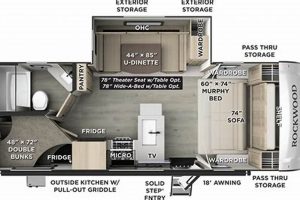
Tip 2: Prioritize Functional Floor Plans: Opt for layouts that effectively separate sleeping areas and common spaces. Bunkhouse models or those featuring dedicated sleeping zones offer improved privacy and minimize disruptions during sleep hours.
Tip 3: Assess Bathroom and Kitchen Facilities: Verify the suitability of onboard bathroom facilities for the intended usage. Consider tank capacities for fresh water, gray water, and black water. Additionally, evaluate the kitchen’s countertop space, storage capacity, and appliance functionality.
Tip 4: Investigate Storage Solutions: With eight occupants, storage space becomes paramount. Explore models with ample interior cabinets, under-bed storage compartments, and exterior pass-through storage areas. Maximize space utilization through organizational aids such as shelving units and hanging organizers.
Tip 5: Consider Climate Control Options: Evaluate the air conditioning and heating systems. Larger units typically require more robust climate control. Determine the BTU (British Thermal Units) rating appropriate for the trailer’s size and the intended camping locations.
Tip 6: Inspect Construction Quality: Thoroughly examine the trailer’s construction materials and build quality. Look for sturdy framing, durable siding, and well-sealed seams to prevent water damage and ensure longevity.
These considerations facilitate the selection of a suitable trailer, ensuring a more comfortable and safe travel experience for all occupants. Careful planning and a comprehensive understanding of the vehicle’s capabilities are essential.
The subsequent sections will address specific models commonly available in the market and provide a detailed comparison of their features and specifications.
1. Floorplan Efficiency

Floorplan efficiency is a critical determinant of the livability and practicality of a travel trailer intended to accommodate eight occupants. A well-designed floorplan optimizes the use of available space, providing adequate sleeping arrangements, living areas, and storage solutions without compromising maneuverability or comfort.
- Sleeping Zone Segregation
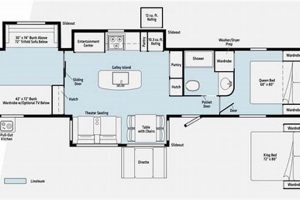
Effective floorplans dedicate specific areas to sleeping, minimizing disruption between individuals. This might involve bunk rooms at the rear of the trailer, a master bedroom in the front, and convertible dinettes or sofas in the central living area. Failure to adequately separate sleeping zones can lead to overcrowding and reduced privacy, negatively impacting the overall experience.
- Multi-Use Space Optimization
In a “travel trailer sleeps 8” configuration, maximizing multi-use spaces is crucial. Dinettes that convert into beds, sofas that double as sleeping surfaces, and foldable furniture contribute to efficient space utilization. The design should allow for easy transition between different functions without requiring extensive rearrangement of the trailer’s interior.
- Traffic Flow and Accessibility
A well-designed floorplan facilitates smooth traffic flow within the trailer. Adequate aisle widths and strategically placed doorways prevent bottlenecks and ensure ease of movement, particularly when multiple occupants are present. Accessibility to essential amenities such as the kitchen and bathroom should be maintained regardless of sleeping arrangements.
- Storage Solution Integration
Floorplan efficiency is inextricably linked to storage. Integrated storage solutions, such as under-bed compartments, overhead cabinets, and exterior storage bays, are essential for managing the belongings of eight individuals. The layout should prioritize storage space without encroaching on living areas or impeding movement.
The overall success of a “travel trailer sleeps 8” hinges on the degree to which the floorplan effectively balances sleeping capacity, living space, and storage needs. A carefully considered design maximizes comfort, convenience, and functionality, transforming a potentially cramped environment into a livable and enjoyable space for group travel.
2. Weight Constraints

Weight constraints are paramount considerations when selecting a travel trailer designed to accommodate eight individuals. The gross vehicle weight rating (GVWR) and the dry weight of the trailer, in conjunction with the weight of passengers, cargo, and fluids, directly impact tow vehicle compatibility, safety, and overall performance.
- Tow Vehicle Capacity
The tow vehicle’s maximum towing capacity must exceed the travel trailer’s GVWR. Exceeding the tow vehicle’s limits compromises braking effectiveness, stability, and handling, potentially leading to accidents. Manufacturers specify GVWR and towing capacity; adherence to these specifications is non-negotiable.
- Payload Considerations
Payload refers to the combined weight of passengers, cargo, water, propane, and other items added to the trailer after it leaves the factory. A travel trailer designed for eight occupants necessitates careful management of payload. Overloading can damage axles, tires, and other structural components, voiding warranties and creating hazardous conditions.
- Weight Distribution
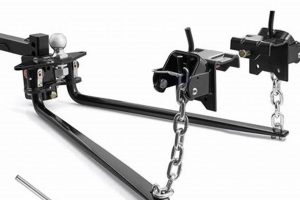
Proper weight distribution is critical for safe towing. Uneven loading can cause trailer sway, a dangerous condition that compromises control. Weight distribution hitches can mitigate sway by transferring weight from the rear of the tow vehicle to the front axle, improving stability and handling.
- Fuel Efficiency Impact
The weight of a travel trailer directly affects fuel efficiency. Heavier trailers require more power to tow, resulting in lower miles per gallon. Optimizing weight through careful packing and selecting a trailer with a suitable weight-to-size ratio can improve fuel economy and reduce travel costs.
In summary, understanding and respecting weight constraints are crucial when selecting a “travel trailer sleeps 8.” The interplay between tow vehicle capacity, payload management, weight distribution, and fuel efficiency significantly impacts safety, performance, and overall satisfaction. Neglecting these factors can lead to compromised handling, mechanical failures, and potentially dangerous situations.
3. Sleeping Configurations

Sleeping configurations within a travel trailer designed to accommodate eight individuals are central to its functionality and comfort. The arrangement and types of sleeping surfaces directly affect the usability of the space, influencing occupant satisfaction and the practicality of the trailer for extended trips.
- Bunk Bed Systems
Bunk beds are a common space-saving solution in these units. They typically consist of two or more stacked beds, often located in a dedicated bunkhouse area. Bunk systems provide individual sleeping spaces without requiring the conversion of common areas, an advantage for families with children. However, accessibility to upper bunks can be a concern, and weight limits must be strictly observed.
- Convertible Dinettes and Sofas
Many travel trailers incorporate dinettes and sofas that can be converted into sleeping surfaces. While these offer flexibility in accommodating varying numbers of occupants, they require daily conversion, potentially disrupting living space during the day. The comfort level of these convertible beds can vary significantly depending on the mattress quality and support system.
- Private Bedrooms
Some models feature a separate master bedroom, typically located at the front of the trailer, offering a degree of privacy and separation from other sleeping areas. These bedrooms often include a queen-sized bed and dedicated storage. However, the inclusion of a private bedroom may reduce the overall living space available to other occupants.
- Sleeping Capacity Versus Living Space Trade-offs
Increasing sleeping capacity often involves trade-offs in living space. Trailers designed to sleep eight may feel cramped if the sleeping arrangements dominate the floorplan. A careful balance must be struck between sleeping accommodations and common areas to ensure a comfortable experience for all occupants.
The selection of a travel trailer to sleep eight necessitates a thorough evaluation of the available sleeping configurations. The suitability of different arrangements depends on the intended users, their preferences, and the relative importance of sleeping space versus living space. Models that effectively balance these considerations will provide the most satisfying and practical travel experience.
4. Storage Capacity

Adequate storage capacity is a critical element in the practical functionality of a travel trailer designed to accommodate eight individuals. The relationship is causative: insufficient storage directly results in a diminished living experience due to clutter, disorganization, and limited accessibility to essential items. For example, consider a family embarking on a week-long trip; clothing, bedding, kitchen supplies, recreational equipment, and personal belongings must be accommodated. Without sufficient designated storage, these items occupy living spaces, creating discomfort and impeding movement. The importance of storage capacity is, therefore, amplified by the number of occupants and the duration of intended use.
Real-world examples illustrate this connection. Travel trailers marketed for larger groups often incorporate under-bed storage, overhead cabinets, exterior pass-through compartments, and strategically placed drawers. These features mitigate the challenges of limited space by providing dedicated locations for various items. Some manufacturers even include innovative solutions such as hidden compartments or modular storage systems to maximize utility. Understanding this connection has practical significance for both consumers and manufacturers. Prospective buyers must carefully assess their storage needs and select a model accordingly. Manufacturers should prioritize storage optimization during the design phase to enhance the appeal and functionality of their products.
In summary, the connection between storage capacity and a “travel trailer sleeps 8” is inextricable. The degree to which a trailer effectively addresses the storage demands of a large group directly impacts its livability and overall suitability for extended travel. Challenges arise in balancing storage needs with other design considerations such as weight, floorplan, and cost. Nevertheless, prioritizing storage is essential to creating a comfortable and functional mobile living space. The ability to efficiently manage personal belongings within a confined environment ultimately determines the success of a travel trailer designed for eight occupants.
5. Towing Requirements

The selection of a tow vehicle for a travel trailer designed to accommodate eight individuals is governed by a complex interplay of factors that directly impact safety, performance, and legal compliance. Proper matching of the tow vehicle to the trailer is not merely a recommendation, but a critical requirement.
- Gross Vehicle Weight Rating (GVWR) Adherence
The trailer’s GVWR represents the maximum permissible weight of the trailer when fully loaded. The tow vehicle must possess a towing capacity that equals or exceeds the trailer’s GVWR. Exceeding the tow vehicle’s towing capacity places undue stress on its engine, transmission, brakes, and suspension, increasing the risk of mechanical failure and accidents. For example, a travel trailer with a GVWR of 7,000 lbs necessitates a tow vehicle rated to tow at least 7,000 lbs.
- Hitch System Compatibility
The hitch system connecting the tow vehicle and the trailer must be appropriately rated for the trailer’s weight and tongue weight. Tongue weight, the downward force exerted by the trailer’s tongue on the hitch, should fall within the tow vehicle manufacturer’s specified range. Weight distribution hitches can improve stability and handling, especially with heavier trailers, by distributing weight more evenly across the axles of both the tow vehicle and the trailer. Incompatibility or improper installation of the hitch system compromises safety and can lead to separation of the trailer from the tow vehicle.
- Braking System Synchronization
Travel trailers exceeding a certain weight typically require electric brakes, which must be properly wired and synchronized with the tow vehicle’s braking system. An electronic brake controller, installed in the tow vehicle, allows the driver to adjust the trailer’s braking force for optimal stopping performance. Failure to properly connect and calibrate the trailer’s brakes increases stopping distances and the risk of rear-end collisions. In some jurisdictions, operating a trailer without functional brakes is illegal.
- Vehicle Stability Control (VSC) and Trailer Sway Control (TSC)
Modern tow vehicles often incorporate VSC and TSC systems, which automatically detect and mitigate trailer sway. These systems use sensors to monitor vehicle stability and selectively apply brakes to individual wheels to counteract sway. While VSC and TSC enhance safety, they are not a substitute for proper loading, weight distribution, and responsible driving practices. It is important to verify that the tow vehicle is equipped with these systems or consider aftermarket upgrades.
The towing requirements associated with a travel trailer designed to accommodate eight individuals are significant. Strict adherence to weight limits, proper hitch system selection, braking system synchronization, and utilization of vehicle stability technologies are crucial for ensuring safe and compliant towing. Neglecting these considerations increases the risk of accidents, mechanical failures, and legal penalties. Responsible selection of a tow vehicle, coupled with proper maintenance and driving practices, is essential for a safe and enjoyable travel experience.
6. Appliance Functionality

The functional capacity of onboard appliances is directly proportional to the usability and overall satisfaction derived from a travel trailer designed to accommodate eight individuals. A travel trailer sleeping eight occupants presents unique demands on its appliance infrastructure. Refrigeration, cooking, and climate control systems, for example, must be robust enough to support the needs of a larger group. Insufficient appliance capacity creates significant challenges, potentially diminishing the travel experience. For instance, a small refrigerator may struggle to maintain adequate cooling with frequent openings by multiple users, leading to food spoilage. Similarly, a low-BTU air conditioning unit may be inadequate to cool a large trailer effectively in hot climates, resulting in discomfort.
Consider the practical implications of cooking appliances. A microwave oven and a two-burner stove, standard in some smaller trailers, may prove insufficient for preparing meals for eight people. More elaborate meal preparation often necessitates an oven or a larger cooktop. Similarly, a limited water heater capacity results in short, staggered showers, negatively impacting convenience and sanitation. From a design perspective, appliance selection should align with the anticipated usage patterns of a larger group. Manufacturers must integrate appliances capable of sustained, high-volume operation to meet the demands of eight occupants. Furthermore, energy efficiency becomes a key consideration, as appliances consume propane and electricity, impacting resource consumption and operating costs.
In summary, appliance functionality is not merely a feature, but a critical component in the overall utility of a “travel trailer sleeps 8.” The ability to adequately refrigerate food, prepare meals, and maintain a comfortable climate is essential for a positive travel experience. The design of such trailers necessitates appliances capable of handling the demands of a larger group, considering both capacity and energy efficiency. Trade-offs may exist, requiring careful evaluation of individual needs versus available space and resources. Ultimately, a well-equipped trailer contributes significantly to the comfort and practicality of traveling with a larger group.
7. Budget Considerations

The acquisition of a travel trailer designed to accommodate eight individuals represents a substantial financial commitment. Budget considerations are therefore paramount in the selection process. Cost is a determining factor not only in the initial purchase, but also in ongoing maintenance, insurance, and operational expenses. Purchasing decisions should reflect a comprehensive assessment of affordability, aligning with long-term financial goals and avoiding budgetary overextension. The relationship is causative: insufficient budget planning directly results in compromised choices, potentially leading to dissatisfaction or financial strain. For instance, neglecting to factor in depreciation, storage fees, or potential repairs can lead to unexpected expenses that significantly alter the perceived value proposition of the trailer.
Real-world examples illustrate the importance of this budgetary connection. A family seeking a travel trailer to accommodate their six children may be drawn to a larger model with multiple bunks and a spacious living area. However, if their budget is limited, they may be forced to choose a smaller, more basic model with fewer amenities or less durable construction. Alternatively, they might opt for a used trailer, accepting potential maintenance challenges in exchange for a lower initial cost. The practicality of this understanding lies in its ability to guide prospective buyers towards realistic expectations and informed decisions. By establishing a clear budget and understanding the various cost components, individuals can avoid overspending and select a trailer that aligns with their financial capabilities without sacrificing essential features.
In summary, budget considerations are inextricably linked to the purchase and ownership of a “travel trailer sleeps 8”. The initial purchase price represents only a portion of the total cost. Ongoing expenses such as maintenance, insurance, fuel, and campground fees must also be considered. Challenges often arise in balancing desired features with budgetary constraints. However, a well-defined budget and a thorough understanding of the total cost of ownership are essential for making a sound financial decision and ensuring a positive travel trailer experience. The ability to realistically assess financial capabilities ultimately determines the feasibility and sustainability of owning a “travel trailer sleeps 8”.
Frequently Asked Questions
The following questions address common inquiries and concerns regarding travel trailers specifically designed to sleep eight occupants. This information aims to provide clarity and facilitate informed decision-making.
Question 1: How does sleeping capacity impact the overall size and weight of a travel trailer?
Increasing sleeping capacity directly correlates with larger dimensions and greater weight. A travel trailer designed for eight requires more sleeping surfaces, whether in the form of bunk beds, convertible furniture, or separate bedrooms. This necessitates a larger floorplan, which in turn increases the trailer’s dry weight and GVWR. Prospective buyers must carefully consider the tow vehicle’s capabilities in relation to the trailer’s weight specifications.
Question 2: What are the common floorplan configurations for travel trailers that sleep eight?
Common configurations include bunkhouse models, which feature dedicated bunk rooms; models with convertible dinettes and sofas; and those with a combination of both. Bunkhouse models typically offer greater sleeping capacity in a compact space, while convertible furniture provides flexibility but requires daily setup and takedown. The selection of a floorplan should align with the specific needs and preferences of the occupants.
Question 3: What are the essential amenities to consider when selecting a travel trailer for eight?
Essential amenities include adequate refrigeration capacity, a functional kitchen with sufficient cooking surfaces and storage, a bathroom with a toilet and shower, and a climate control system capable of maintaining a comfortable temperature. Water tank capacity (fresh, gray, and black) is also critical, as is the availability of sufficient storage space for personal belongings and supplies.
Question 4: How does the number of occupants affect water usage and waste management?
A greater number of occupants significantly increases water consumption and waste generation. This places greater demand on fresh water tank capacity and requires more frequent emptying of gray and black water tanks. Careful water conservation practices are essential, and the proximity of dump stations should be considered when planning travel routes.
Question 5: What are the safety considerations specific to travel trailers accommodating larger groups?
Safety considerations include ensuring that all occupants are aware of emergency procedures, such as fire evacuation routes and the location of safety equipment (fire extinguisher, smoke detector, carbon monoxide detector). Weight distribution is critical for safe towing, and all occupants should be seated and secured during travel. Regular maintenance checks of tires, brakes, and other essential systems are also paramount.
Question 6: Are there specific regulations or restrictions pertaining to travel trailers with larger sleeping capacities?
Regulations vary by jurisdiction. Some campgrounds may have restrictions on the size or type of recreational vehicles allowed. Additionally, some states may have specific requirements for trailer brakes, lighting, or safety equipment. It is the owner’s responsibility to familiarize themselves with all applicable regulations before traveling.
In summary, selecting a “travel trailer sleeps 8” requires careful consideration of size, weight, floorplan, amenities, safety features, and regulatory compliance. A thorough understanding of these factors will facilitate a safe and enjoyable travel experience for all occupants.
The subsequent section will provide a comparative analysis of popular models available in the market, highlighting their key features and specifications.
Conclusion
The preceding analysis has explored critical facets of recreational vehicles designed to accommodate eight individuals. Key considerations encompass floorplan efficiency, weight constraints, sleeping configurations, storage capacity, towing requirements, appliance functionality, and budget limitations. Each element contributes to the overall suitability of a “travel trailer sleeps 8” for its intended purpose. The interplay among these factors necessitates careful evaluation to ensure a comfortable, safe, and financially responsible ownership experience.
Potential purchasers are encouraged to apply this information to their individual needs, conducting thorough research and seeking expert guidance when necessary. The selection of a suitable model demands diligent planning and a comprehensive understanding of the trade-offs involved. Failure to address these considerations adequately may result in dissatisfaction or compromised safety. Consequently, informed decision-making is essential for maximizing the utility and longevity of a “travel trailer sleeps 8” investment.

![Best Travel Trailer Toy Hauler Floor Plans: [Year] Guide! | Best Travel Tips for Adventurers: Explore the World on a Budget](https://detravellers.com/wp-content/uploads/2026/05/th-140-300x200.jpg "Best Travel Trailer Toy Hauler Floor Plans: [Year] Guide! Best Travel Tips for Adventurers: Explore the World on a Budget")