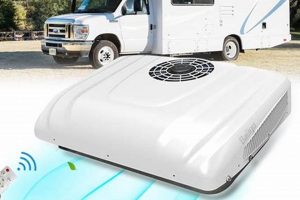
Attaching a portable power source to a recreational vehicle offers mobile electrical capabilities. This process typically involves securing the energy-generating device to a designated area on the trailer, often the tongue or rear bumper, using specialized mounting hardware and vibration-dampening materials.
The ability to operate appliances and electronics remotely is a key advantage. Historically, relying on campsite hookups limited travel destinations; self-contained power broadens opportunities for boondocking and off-grid experiences. Benefits include increased comfort and convenience, particularly for extended trips or when electrical grid access is unavailable. A securely fastened unit ensures safe operation during travel, minimizing risk of damage or detachment.
Key aspects to consider include selecting the appropriate generator size and type for the intended load, determining the optimal mounting location for weight distribution and accessibility, and adhering to safety regulations regarding exhaust ventilation and fuel storage. Proper installation is vital for ensuring reliable performance and preventing potential hazards.
Mounting a Generator on a Travel Trailer
Proper installation ensures safe and reliable operation of an onboard power source. Several considerations impact the longevity and efficacy of the installed unit.
Tip 1: Generator Selection: Choose a generator with sufficient wattage to meet anticipated power demands. Overloading a generator can lead to damage or failure. Calculate the combined wattage of frequently used appliances and electronics to determine the required capacity.
Tip 2: Mounting Location: Consider weight distribution when selecting a mounting location. Placing the generator on the tongue of the trailer can affect towing stability. Rear bumper mounts may require reinforcement. Ensure adequate clearance from obstacles and access for maintenance.
Tip 3: Vibration Isolation: Implement vibration-dampening mounts to reduce noise and prevent damage to the generator and the trailer frame. Rubber isolators or specialized generator mounting pads can mitigate vibrations caused by the generator’s operation.
Tip 4: Exhaust Ventilation: Ensure proper exhaust ventilation to prevent carbon monoxide buildup. Install an exhaust extension kit to direct exhaust fumes away from the trailer’s living area. Regularly inspect the exhaust system for leaks or damage.
Tip 5: Fuel Storage: Store fuel safely in approved containers, away from heat sources and ignition sources. Secure the fuel containers during transport to prevent spills. Consider the generator’s fuel consumption rate and plan accordingly.
Tip 6: Security Measures: Implement security measures to deter theft. Secure the generator with a locking mechanism or cable. Consider installing an alarm system. Regularly check the generator’s condition and security.
Tip 7: Regulatory Compliance: Adhere to all applicable federal, state, and local regulations regarding generator operation and installation. Consult with a qualified technician to ensure compliance. Understand noise ordinances and generator usage restrictions in campgrounds or other areas.
Properly installing a power-generating device enhances the travel experience by providing mobile power capability. Adhering to these guidelines promotes safety, reliability, and longevity.
Following this advice is crucial for a safe and efficient mobile power setup.
1. Weight distribution.

Weight distribution is a critical factor when considering the installation of an onboard power source. Improper weight distribution can significantly impact the handling characteristics of the travel trailer, potentially compromising safety and stability during transit.
- Tongue Weight Impact
Placing a substantial power unit on the trailer tongue increases tongue weight. Excessive tongue weight can overload the tow vehicle’s rear axle, leading to reduced steering control and braking effectiveness. Conversely, insufficient tongue weight can cause trailer sway, a dangerous instability that can result in loss of control. A properly balanced tongue weight, typically 10-15% of the total trailer weight, is essential for safe towing.
- Axle Load Considerations
The placement of the power source affects the load on the trailer axles. Uneven weight distribution can overload one axle, leading to premature wear, axle failure, or tire blowouts. Ensuring that the load is distributed evenly across both axles is crucial for maintaining structural integrity and preventing component failure.
- Frame Stress and Integrity
Concentrated weight from the power generating device can induce stress on the trailer frame, particularly if the mounting location is not adequately reinforced. Over time, this stress can lead to cracks, bending, or complete frame failure. Distributing the weight over a larger area, using appropriate mounting hardware, and reinforcing the frame as necessary are essential for preserving structural integrity.
- Handling and Stability
Altering the distribution of mass inevitably impacts a trailer’s driving characteristics. Poor weight distribution can make the trailer more susceptible to crosswinds, uneven road surfaces, and sudden maneuvers. It’s important to consider the impact on stability and maneuverability when selecting a mounting location. After installation, test drives are often necessary to evaluate and adjust weight distribution as needed.
The connection between weight distribution and safe, efficient travel is undeniable. Thoughtful assessment of placement and potential modifications to the supporting structure are fundamental to long-term reliability and stability when integrating a power source with a recreational vehicle.
2. Vibration mitigation.

Effective vibration mitigation is a critical engineering consideration when integrating a generator with a travel trailer. Uncontrolled vibrations can lead to component failure, structural damage, and unacceptable noise levels, impacting both the longevity of the equipment and the user experience.
- Material Fatigue Reduction
Continuous vibration induces cyclic stress on mounting hardware, the generator frame, and the trailer structure. This cyclic stress contributes to material fatigue, potentially leading to cracks, fractures, and component failure. Vibration mitigation techniques, such as the use of vibration-dampening mounts and reinforced structures, significantly reduce these stresses, extending the lifespan of the affected components.
- Noise Reduction
Operating generators produce significant noise. These vibrations are transferred to the travel trailer’s frame, amplifying the sound. Vibration isolation minimizes the transmission of these vibrations, resulting in a quieter operating environment. Implementing specialized mounts and sound-deadening materials are common methods for attenuating vibration-induced noise.
- Component Protection
Sensitive generator components, such as the engine, alternator, and control systems, are susceptible to damage from excessive vibration. Vibration mitigation safeguards these components from premature wear and failure. The use of rubber isolators, flexible connectors, and secure mounting methods prevents the transmission of high-frequency vibrations that can disrupt sensitive electronic equipment.
- Structural Integrity Preservation
Continuous exposure to vibration can weaken the travel trailer’s frame, particularly at the mounting points. Vibration mitigation strategies prevent the transfer of vibration energy to the frame, preserving its structural integrity over time. Reinforcing mounting locations and using vibration-absorbing materials minimize stress concentrations and prevent fatigue cracks.
The successful integration of a generator with a travel trailer necessitates a comprehensive approach to vibration mitigation. By minimizing vibration transmission, component longevity is enhanced, noise pollution is reduced, and the structural integrity of both the generator and the trailer is preserved, ensuring a reliable and enjoyable travel experience.
3. Exhaust routing.

Exhaust routing is a crucial safety and operational consideration when installing a generator on a recreational vehicle. Improper exhaust management can lead to carbon monoxide poisoning, fire hazards, and equipment damage, underscoring the necessity of a well-designed and executed exhaust system.
- Carbon Monoxide Mitigation
Generators produce carbon monoxide (CO), a colorless and odorless gas that is highly toxic. Exhaust systems must be designed to effectively vent CO away from the living areas of the travel trailer. Extension pipes, strategically positioned exhaust outlets, and CO detectors are essential components of a safe installation. The placement of the exhaust outlet must account for prevailing wind conditions and potential recirculation patterns to prevent CO from entering the trailer.
- Thermal Management
Exhaust gases can reach high temperatures, posing a fire hazard to combustible materials. Exhaust routing must ensure adequate clearance from flammable surfaces, such as wood, fabric, and plastic. Heat shields, insulated exhaust pipes, and non-combustible mounting materials minimize the risk of ignition. Regular inspection of the exhaust system for leaks or damage is essential to prevent thermal hazards.
- Noise Reduction Strategies
Generator exhaust is a primary source of noise pollution. Incorporating mufflers or resonators into the exhaust system reduces noise levels, improving the user experience and minimizing disturbance to others. Proper exhaust routing can also direct noise away from living areas and neighboring campsites. Compliance with noise ordinances is a critical consideration when designing the exhaust system.
- System Integrity and Maintenance
Exhaust systems are subject to corrosion, vibration, and thermal stress. Durable materials, secure connections, and proper support structures are essential for maintaining system integrity. Regular inspection and maintenance of the exhaust system are critical for detecting and addressing potential issues, such as leaks, cracks, or loose connections. Addressing these issues promptly prevents costly repairs and ensures continued safe operation.
Effective management of exhaust is an indispensable component of safely and reliably integrating a generator with a recreational vehicle. Addressing carbon monoxide risks, thermal hazards, noise pollution, and system integrity ensures a safe and environmentally conscious mobile power solution.
4. Fuel security.

Fuel security, when considered in the context of installing a power-generating device on a recreational vehicle, encompasses the measures taken to prevent fuel theft, spillage, or unauthorized access. Securing the fuel source is essential for several reasons: it protects the fuel supply for its intended purpose, prevents environmental contamination, and reduces the risk of fire or explosion. This involves appropriate storage containers, secure mounting locations, and tamper-resistant locking mechanisms.
The selection of fuel containment methods depends on the type of fuel used. Gasoline requires specialized containers designed to prevent vapor leakage and withstand pressure changes. Propane, frequently used in recreational vehicles, must be stored in certified tanks equipped with pressure relief valves and secured to prevent movement during transit. Integrating these fuel containment systems with the generator mounting strategy is crucial. For example, a generator mounted on the trailer tongue necessitates a secure enclosure for fuel containers, shielded from direct sunlight and potential impact during towing. Furthermore, anti-siphon devices and lockable fuel caps deter theft, especially in public campgrounds or storage facilities. Examples of inadequate fuel security have resulted in fuel theft, environmental damage from spills, and even fires caused by improper handling of volatile fuels.
Effective fuel security for a generator-equipped travel trailer demands a multi-faceted approach. It includes selecting appropriate fuel containers, implementing secure mounting and storage solutions, and incorporating anti-theft measures. Ignoring fuel security introduces risks ranging from inconvenience and financial loss to environmental damage and physical harm. Therefore, fuel security should be an integral part of the planning and execution of the whole installation.
5. Noise reduction.

Noise reduction is a significant consideration when integrating a generator with a travel trailer. The operational noise generated by the generator can be disruptive to occupants and neighboring campers, necessitating effective mitigation strategies.
- Enclosure Design
Generator enclosures play a critical role in noise reduction. These enclosures are typically constructed from sound-absorbing materials that dampen the noise emanating from the generator’s engine and mechanical components. The design should balance noise attenuation with adequate ventilation to prevent overheating. For example, a well-designed enclosure can reduce noise levels by 10-15 decibels, significantly improving the acoustic environment.
- Vibration Isolation
Vibrations from the generator can transmit through the travel trailer’s frame, amplifying noise. Vibration isolation techniques, such as the use of rubber isolators or specialized mounting pads, minimize the transfer of vibrations, thereby reducing noise levels inside and outside the trailer. Effective vibration isolation can reduce structure-borne noise, leading to a more comfortable experience.
- Exhaust System Modification
The exhaust system is a major source of generator noise. Replacing the stock muffler with a quieter aftermarket muffler can significantly reduce exhaust noise. Some mufflers incorporate advanced noise-canceling technologies to further minimize noise pollution. Furthermore, directing the exhaust away from living areas and neighboring campsites can also improve the acoustic environment.
- Strategic Placement
The location of the power source on the RV impacts noise propagation. Mounting the generator further away from living spaces may reduce noise transmission. Additionally, consider the orientation of the unit, positioning the exhaust outlet away from sensitive areas. Vegetation or terrain can be used to mitigate the spread of noise; positioning with natural sound barriers provides additional attenuation.
Effective noise reduction strategies are indispensable for ensuring a pleasant camping experience when using a generator-equipped travel trailer. Employing these techniques minimizes disruption and promotes a harmonious environment for both the occupants and those in the vicinity. Careful attention to enclosure design, vibration isolation, exhaust system modification, and strategic generator placement enables a balance between power convenience and noise mitigation, enhancing overall satisfaction.
6. Theft prevention.
Securing a power source to a recreational vehicle necessitates robust theft prevention measures. Portable power units represent valuable assets, making them vulnerable to theft, particularly in unsecured environments such as campgrounds and storage facilities.
- Physical Security Devices
Physical security devices, such as heavy-duty chains, cables, and locking mechanisms, constitute the first line of defense against theft. These devices physically restrain the generator, making it difficult to remove without specialized tools. For example, a hardened steel chain secured to the trailer frame and looped through the generator’s handles or frame provides a significant deterrent. The effectiveness of these devices depends on the strength of the materials used and the quality of the locking mechanism. Weak or easily compromised locks offer minimal protection.
- Alarm Systems
Alarm systems offer an additional layer of security by providing an audible or electronic alert when unauthorized access is attempted. These systems can be integrated with the power source itself or with the travel trailer’s existing security system. Motion sensors, vibration sensors, and perimeter alarms can detect tampering or attempted removal, triggering an alarm that alerts the owner or nearby individuals. The effectiveness of alarm systems depends on their sensitivity, reliability, and the audibility of the alarm signal. A well-designed alarm system can deter opportunistic thieves and alert authorities to ongoing theft attempts.
- Mounting System Security
The design and construction of the mounting system itself can contribute to theft prevention. Tamper-resistant fasteners, hidden mounting hardware, and reinforced mounting plates make it more difficult to detach the generator from the trailer. For example, using security bolts that require specialized tools for removal can deter thieves who are not equipped with the necessary equipment. Welding the power unit directly to the trailer frame, although more permanent, provides a high level of physical security. A secure mounting system increases the time and effort required to steal the generator, making it a less attractive target.
- GPS Tracking Devices
GPS tracking devices offer a means of recovering a stolen generator. These devices transmit the generator’s location to a central monitoring system, allowing the owner to track its movements and alert authorities. GPS trackers can be concealed within the generator’s housing or mounted externally. The effectiveness of GPS tracking depends on the device’s accuracy, battery life, and connectivity. A GPS tracker can significantly increase the chances of recovering a stolen generator, particularly if it is reported to the authorities promptly.
Integrating robust security measures is paramount to protecting the power source and preserving peace of mind. Employing a combination of physical security devices, alarm systems, secure mounting systems, and GPS tracking devices provides a comprehensive approach to deterring theft and maximizing the chances of recovery in the event of a theft. This layered security strategy ensures that a valuable and essential asset remains secure, enhancing the overall experience.
Frequently Asked Questions
The following addresses common inquiries regarding the installation and operation of power-generating devices on recreational vehicles. Considerations are primarily focused on safety, performance, and regulatory compliance.
Question 1: What generator size is appropriate for a travel trailer?
The appropriate power unit size depends on the anticipated electrical load. Calculate the total wattage of appliances and electronics intended for simultaneous use. Select a generator with a continuous wattage rating exceeding this total. Account for surge wattage requirements for devices with electric motors, such as air conditioners.
Question 2: Where is the optimal location for placing an electrical power unit on a trailer?
Optimal placement balances several factors. The unit must be positioned to maintain acceptable weight distribution, be readily accessible for maintenance, and allow for safe exhaust ventilation. The front A-frame is a typical location but requires careful balancing. Rear bumper mounts are possible, yet may require reinforcement. Consult with a qualified technician to assess specific trailer characteristics and determine suitability.
Question 3: What measures mitigate vibration during operation?
Vibration mitigation involves using specialized mounting hardware. Rubber isolators and vibration-dampening pads reduce the transmission of vibrations from the generator to the trailer frame. Secure all components of the mounting system to prevent loosening during travel. Regular inspection of mounting hardware ensures continued effectiveness.
Question 4: What exhaust system considerations are essential for safety?
Exhaust systems must safely vent carbon monoxide away from the trailer’s living area. Install an exhaust extension kit to direct exhaust fumes away from windows, doors, and ventilation intakes. Inspect the exhaust system regularly for leaks. Carbon monoxide detectors are mandatory safety devices.
Question 5: What fuel storage practices ensure security and prevent hazards?
Fuel must be stored in approved containers designed for the specific fuel type. Secure fuel containers during transit to prevent spills. Store fuel away from heat sources and potential ignition sources. Consider installing a locking fuel cap to deter theft.
Question 6: What security measures deter power unit theft?
Implement multiple security measures to deter theft. Use heavy-duty chains or cables to secure the unit to the trailer frame. Consider installing an alarm system to alert to unauthorized access. Remove the generator when the travel trailer is in unattended storage.
The installation and operation of a power unit on a recreational vehicle necessitate careful consideration of safety, performance, and security. These guidelines support informed decision-making and responsible implementation.
Subsequent sections will address specific considerations related to generator maintenance and troubleshooting.
Mount Generator on Travel Trailer
Mounting a power-generating device onto a recreational vehicle presents a multifaceted undertaking. It demands careful evaluation of generator sizing, optimal positioning, vibration attenuation, exhaust system design, fuel storage protocols, and security measures. Improper execution in any of these areas can compromise user safety, equipment longevity, and overall system functionality.
Therefore, adherence to established best practices and regulatory guidelines is paramount. Thorough planning, professional installation where applicable, and ongoing maintenance are essential to ensure safe, reliable, and compliant operation. The informed integration of a power source with a travel trailer extends the capabilities and usability of the vehicle, permitting extended operation away from conventional grid power while acknowledging associated responsibilities.