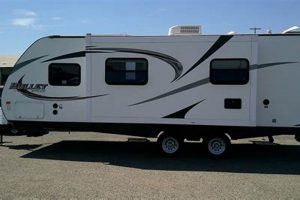
One recreational vehicle option features a specialized coupling mechanism located in the bed of a pickup truck. Another, more traditional configuration connects to a hitch at the rear of a tow vehicle. Each design offers unique advantages related to towing stability, interior space, and overall maneuverability.
These distinct construction approaches impact not only the driving experience but also the floor plan options available to consumers. The method of attachment and the resulting weight distribution affect the ease of towing, particularly for those new to RV travel. Understanding these differences is crucial for selecting the appropriate recreational vehicle based on individual needs and preferences. The longevity and widespread adoption of both types underscores their respective value propositions within the RV market.
The subsequent sections will delve into the specific characteristics of each design, examining factors such as size, weight, towing requirements, and the pros and cons associated with each type. This comprehensive comparison will provide readers with the information necessary to make an informed decision when choosing between these popular recreational vehicle styles.
Essential Considerations
Careful evaluation of several key factors is critical when determining the appropriate recreational vehicle. Weight, towing capacity, and storage needs must be carefully assessed prior to purchase. The following guidance offers actionable insights to aid in this process.
Tip 1: Assess Tow Vehicle Compatibility: Ensure the selected tow vehicle possesses the requisite towing capacity for the intended recreational vehicle. Overloading the tow vehicle can compromise safety and vehicle performance. Consult the vehicle manufacturer’s specifications for accurate towing limits.
Tip 2: Evaluate Maneuverability Requirements: Fifth wheel trailers, due to their hitch configuration, generally offer superior maneuverability compared to travel trailers, particularly when reversing. Consider campsite accessibility and preferred travel routes when evaluating this factor.
Tip 3: Analyze Interior Space Needs: Fifth wheel trailers often provide greater interior living space due to their vertical height and unique floor plan configurations. If ample living space is a priority, a fifth wheel trailer may be the more suitable option.
Tip 4: Consider Storage Solutions: Assess the availability of interior and exterior storage compartments. Travel trailers may offer more accessible exterior storage, while fifth wheel trailers may prioritize interior storage for extended stays.
Tip 5: Evaluate Hitching Procedures: Fifth wheel hitches require installation in the bed of a pickup truck, while travel trailer hitches attach to the rear of a tow vehicle. Consider the complexity of the hitching process and the vehicle modifications required.
Tip 6: Weight Distribution Awareness: Understand the weight distribution characteristics of each trailer type. Fifth wheel trailers generally distribute weight more evenly, contributing to improved towing stability. Proper weight distribution is crucial for safe and controlled towing.
A thorough consideration of these factors will enable a more informed decision, leading to enhanced safety and enjoyment during recreational travel. Prioritizing safety and suitability are paramount for a positive RV experience.
The next section will summarize the key differentiators between these two recreational vehicle types, providing a concise overview for final decision-making.
1. Stability

Stability is a paramount consideration when evaluating recreational vehicle options. The design and weight distribution characteristics directly influence the handling and safety of the towing setup, particularly under varying road conditions or during emergency maneuvers. Differences in hitch type and weight placement distinguish the stability profiles.
- Hitch Point Location and Weight Distribution
Fifth wheel trailers connect to a hitch located in the bed of the tow vehicle, positioning the hitch point over or slightly ahead of the rear axle. This configuration results in a more balanced weight distribution, reducing sway and enhancing stability compared to travel trailers, which connect to a hitch at the rear bumper. The proximity of the fifth wheel hitch to the tow vehicle’s center of gravity minimizes the lever effect, contributing to improved handling.
- Center of Gravity Height
Travel trailers often have a higher center of gravity compared to fifth wheel trailers. This elevated center of gravity can increase the susceptibility to sway, especially in crosswinds or during sudden braking. Fifth wheel trailers, with their lower profile and hitch point, generally exhibit greater resistance to these destabilizing forces.
- Trailer Length and Sway Control
Longer travel trailers are inherently more prone to sway than shorter models. While sway control devices can mitigate this issue, they are not always a complete solution. Fifth wheel trailers, due to their hitch design and resulting stability, often require less reliance on aftermarket sway control systems, particularly for shorter lengths.
- Impact of Road Conditions and Wind Resistance
Uneven road surfaces, strong winds, and passing vehicles can exert destabilizing forces on both fifth wheel and travel trailers. However, the superior weight distribution and lower center of gravity of fifth wheel trailers generally translate to better handling under adverse conditions, reducing the driver’s workload and enhancing overall safety.
In summary, stability advantages are crucial in determining the appropriateness. The fifth wheel’s inherent design promotes increased stability, whereas travel trailers may necessitate additional measures to achieve comparable handling characteristics. These stability considerations must factor into the decision-making process.
2. Maneuverability
Maneuverability represents a critical aspect when comparing recreational vehicles, impacting ease of navigation, parking, and overall driving experience. Differences in turning radius, visibility, and handling characteristics distinguish these trailer types. The hitching system and resulting vehicle dynamics significantly influence the driver’s ability to navigate diverse road conditions and tight spaces.
- Turning Radius and Pivot Point
Fifth wheel trailers exhibit a tighter turning radius compared to travel trailers due to the hitch location directly over or slightly ahead of the tow vehicle’s rear axle. This pivot point allows for sharper turns and easier navigation in confined areas, such as campgrounds or gas stations. Travel trailers, with their hitch located at the rear bumper, require a wider turning arc, potentially complicating maneuvers in restricted spaces.
- Visibility and Blind Spots
The height and profile of fifth wheel trailers can sometimes create larger blind spots compared to travel trailers. While modern towing mirrors can mitigate this issue, awareness of blind spots remains essential for safe maneuvering. Travel trailers, being generally lower in profile, may offer slightly improved rear visibility, although this depends on the specific model and tow vehicle combination.
- Reversing and Precision Placement
Reversing a fifth wheel trailer is often considered easier due to the pivot point and improved responsiveness. Drivers can typically achieve more precise placement when backing into campsites or parking spaces. Travel trailers, however, require greater driver skill and anticipation when reversing, as the longer lever arm can lead to more pronounced deviations and adjustments.
- Handling in Congested Areas
Fifth wheel trailers, due to their shorter overall length for a given interior space, tend to be easier to handle in congested areas such as city streets or narrow roads. The reduced length and tighter turning radius facilitate smoother navigation and minimize the risk of collisions. Travel trailers, particularly longer models, can pose challenges in congested environments, demanding greater driver awareness and caution.
The maneuverability advantages associated with fifth wheel trailers translate to greater ease of use and reduced stress during travel. However, individual driver experience and comfort level also play a significant role. Ultimately, a thorough assessment of anticipated driving conditions and personal preferences is crucial when evaluating the maneuverability characteristics of each recreational vehicle type.
3. Living Space

Living space constitutes a primary differentiator between fifth wheel trailers and travel trailers. The design and construction methodologies of each trailer type directly impact the available interior area and overall layout possibilities. These variations subsequently influence the comfort and functionality experienced by occupants during travel and extended stays. The cause-and-effect relationship between design choices and habitable area is a key determinant in recreational vehicle selection.
Fifth wheel trailers often provide greater interior height and floor space compared to similarly sized travel trailers. The overhanging section of a fifth wheel, positioned above the tow vehicle’s bed, allows for bi-level floor plans and increased headroom in the forward section of the trailer. In contrast, travel trailers, constrained by the single-level design and hitch configuration, typically offer less vertical space and may present challenges in optimizing the layout for specific needs. Real-life examples, such as families requiring separate sleeping areas or individuals seeking dedicated workspace, highlight the practical significance of these living space distinctions. For instance, a family of four might find the bunkhouse configuration of a fifth wheel more suitable than the convertible dinette arrangement common in smaller travel trailers.
Ultimately, the amount and configuration of living space directly affect user satisfaction and the ability to accommodate various lifestyle requirements. The selection between a fifth wheel trailer and a travel trailer should prioritize a careful assessment of individual needs and preferences, considering factors such as occupancy, intended usage duration, and the importance of specific amenities. Understanding the inherent living space advantages and limitations of each trailer type ensures a more informed and ultimately more satisfactory purchase decision, mitigating potential challenges related to comfort and functionality during recreational travel.
4. Towing Needs

The selection of a recreational vehicle necessitates a thorough evaluation of towing needs, a factor intrinsically linked to the “fifth wheel trailer vs travel trailer” decision. The type of tow vehicle available, its towing capacity, and the anticipated terrain significantly influence the suitability of each trailer style. Disregarding these factors can result in unsafe towing conditions and potential damage to both the tow vehicle and the trailer. The inherent differences in weight distribution and hitching mechanisms between fifth wheel and travel trailers dictate distinct towing requirements, making a comprehensive understanding crucial.
Fifth wheel trailers, due to their hitch design which places the trailer’s weight directly over the tow vehicle’s rear axle, generally require a heavy-duty pickup truck. The increased stability afforded by this weight distribution often translates to a smoother towing experience, particularly at higher speeds or in adverse weather conditions. However, the need for a specialized hitch installed in the truck bed presents an additional cost and limits the truck bed’s utility when the trailer is not attached. Travel trailers, on the other hand, can be towed by a wider range of vehicles, including SUVs and lighter-duty trucks, provided the vehicle’s towing capacity is sufficient. This flexibility can be advantageous for individuals who do not wish to invest in a dedicated heavy-duty tow vehicle. Real-world scenarios highlight the practical implications of these differences: a family with an existing SUV may opt for a travel trailer to avoid the expense of purchasing a pickup truck, while a full-time RVer seeking maximum stability and payload capacity might prioritize a fifth wheel and the accompanying heavy-duty tow vehicle.
In summary, towing needs constitute a critical component in the recreational vehicle selection process. A mismatch between towing capacity and trailer weight can lead to compromised safety and reduced vehicle performance. A careful assessment of the available tow vehicle, anticipated travel routes, and personal preferences is essential when choosing between a fifth wheel trailer and a travel trailer. Prioritizing safety and suitability ensures a positive and stress-free towing experience. Failure to account for the unique towing requirements of each trailer type can result in significant challenges and potential safety hazards.
5. Storage

Adequate storage solutions are a significant determinant in the selection of a recreational vehicle. The available storage capacity and accessibility directly impact the livability and convenience during both short trips and extended travel. The inherent design differences between fifth wheel trailers and travel trailers influence the types and quantity of storage available, making this a critical consideration for prospective buyers.
- Interior Storage Volume
Fifth wheel trailers often offer greater interior storage volume due to their increased vertical height and bi-level floorplans. The overhanging section above the tow vehicle’s bed allows for additional cabinets, closets, and pantry space. Travel trailers, with their more uniform height, typically provide less interior storage, requiring careful organization and utilization of available space. The impact extends to daily living; a fifth wheel might more easily accommodate large quantities of groceries or bulky items like camping gear, reducing the need for frequent resupply stops.
- Exterior Storage Compartments
Travel trailers frequently incorporate more accessible exterior storage compartments compared to fifth wheel trailers. These compartments provide convenient access to items such as camping chairs, tools, and outdoor equipment without requiring entry into the living space. Fifth wheel trailers may have fewer and less accessible exterior storage areas due to their undercarriage design and hitch configuration. The practical benefit is immediate; quick access to leveling blocks or water hoses is often simpler with a travel trailer’s readily available exterior storage.
- Basement Storage
Some fifth wheel trailers feature basement storage, a large, pass-through compartment located beneath the main living area. This area provides significant storage capacity for oversized items or infrequently used equipment. Travel trailers rarely offer comparable basement storage, limiting their ability to accommodate large or bulky items. The implication for long-term travelers is substantial; basement storage enables carrying items essential for extended off-grid living or accommodating specialized equipment.
- Accessibility and Usability
The accessibility and usability of storage compartments are critical factors. While fifth wheel trailers may offer greater overall storage volume, the location and configuration of the compartments can impact their practicality. High shelves or deep cabinets may be difficult to reach, particularly for individuals with limited mobility. Travel trailers, despite having less overall storage, may offer more easily accessible and user-friendly compartments. This influences the efficiency of daily tasks; easily reachable shelves in a travel trailer can simplify meal preparation or accessing frequently used items.
The storage solutions presented by both fifth wheel trailers and travel trailers cater to diverse needs and preferences. While fifth wheels typically prioritize volume and internal accessibility, travel trailers often emphasize exterior access and ease of use. The optimal choice depends on the specific lifestyle and travel habits of the individual or family, demanding a careful evaluation of the trade-offs between storage capacity, accessibility, and overall convenience.
6. Hitch Type

Hitch type is a defining characteristic differentiating recreational vehicles, directly influencing towing stability, vehicle compatibility, and overall user experience. The mechanical connection between the tow vehicle and trailer dictates handling dynamics and load distribution, establishing its importance in the “fifth wheel trailer vs travel trailer” comparison.
- Fifth Wheel Hitch: Location and Mechanics
A fifth wheel hitch mounts in the bed of a pickup truck, positioning the trailer’s kingpin above or slightly forward of the rear axle. This configuration enhances stability by distributing weight directly over the tow vehicle’s center of gravity. The design employs a pivoting plate, allowing for greater articulation during turns and improved maneuverability in confined spaces. In practice, this contributes to reduced sway and a more controlled towing experience, particularly at highway speeds or in windy conditions.
- Travel Trailer Hitch: Receiver and Ball Coupler
Travel trailers utilize a receiver hitch mounted to the rear frame of the tow vehicle. A ball coupler on the trailer tongue connects to a ball mount inserted into the receiver. This system offers broader vehicle compatibility but can result in less stable towing characteristics, particularly with larger or heavier trailers. Sway control devices are often necessary to mitigate instability. As an example, a smaller SUV may be capable of towing a lightweight travel trailer but would be unsuitable for a fifth wheel, primarily due to hitch limitations.
- Weight Distribution and Load Transfer
The hitch type directly impacts weight distribution. Fifth wheel hitches effectively transfer a significant portion of the trailer’s weight to the tow vehicle’s bed, improving traction and reducing stress on the rear suspension. Travel trailer hitches, conversely, can create a leverage effect, potentially causing the tow vehicle’s rear to sag and affecting steering control. Weight distribution hitches are available for travel trailers to redistribute some of the tongue weight, but they do not replicate the inherent stability of a fifth wheel system.
- Installation and Modification Requirements
Installing a fifth wheel hitch requires permanent modification to the tow vehicle’s bed, involving drilling and bolting the hitch assembly in place. This represents a more involved process compared to installing a receiver hitch for a travel trailer, which typically bolts to existing frame points. The permanence of a fifth wheel hitch installation can limit the truck bed’s usability when not towing, presenting a trade-off between towing performance and everyday utility.
The choice of hitch type is inextricably linked to the core comparison. The inherent design and operational differences between fifth wheel and travel trailer hitches directly influence stability, vehicle compatibility, and the overall towing experience. Understanding these distinctions is essential for informed decision-making in recreational vehicle selection, ensuring a safe and enjoyable travel experience.
Frequently Asked Questions
This section addresses common inquiries regarding the distinctions between fifth wheel trailers and travel trailers, providing concise and informative responses.
Question 1: What is the primary difference between these two types of recreational vehicles?
The fundamental difference lies in the hitching mechanism. A fifth wheel trailer utilizes a specialized hitch located in the bed of a pickup truck, while a travel trailer employs a ball coupler connected to a receiver hitch at the rear of a tow vehicle.
Question 2: Which type generally offers more interior space?
Fifth wheel trailers typically provide greater interior space due to their vertical height and bi-level floorplans, facilitated by the overhanging section above the tow vehicle’s bed.
Question 3: Is one type inherently more stable to tow than the other?
Fifth wheel trailers generally exhibit superior towing stability due to their hitch configuration, which positions the trailer’s weight directly over the tow vehicle’s rear axle.
Question 4: What kind of vehicle is required to tow a fifth wheel trailer?
Towing a fifth wheel trailer necessitates a heavy-duty pickup truck equipped with a fifth wheel hitch installed in the truck bed.
Question 5: Are travel trailers easier to maneuver than fifth wheel trailers?
Typically, fifth wheel trailers have better maneuverability in tight spaces because of their pivot point in the bed of the truck. This allows for tighter turns.
Question 6: Which type is typically less expensive to purchase?
Travel trailers are often less expensive to purchase compared to fifth wheel trailers, owing to their simpler construction and broader range of available sizes and features.
Key takeaway: Both offer unique advantages and disadvantages, it is important to know what you need.
The final section summarizes the critical distinctions between fifth wheel trailers and travel trailers, presenting a concise overview for informed decision-making.
Fifth Wheel Trailer vs. Travel Trailer
The preceding exploration has delineated the key distinctions between fifth wheel trailers and travel trailers, emphasizing the impact of hitch type, stability, maneuverability, living space, towing needs, and storage capacity. Understanding these factors is paramount for prospective buyers. The appropriate choice hinges on individual circumstances, including budget, towing vehicle capabilities, and desired travel experience.
Careful consideration of these aspects is essential to ensure a safe and satisfying recreational vehicle ownership experience. Further research, including in-person inspections and consultations with experienced RV professionals, is strongly recommended before making a final decision. Ultimately, prioritizing safety and suitability will yield the greatest long-term benefit.