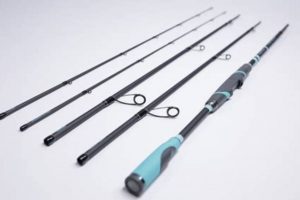
A compact and easily transportable fishing rod, designed for anglers on the move, enables fishing opportunities during travel. These rods prioritize portability and convenience, often featuring multi-piece construction for storage in luggage or backpacks. A typical example would be a four-piece graphite rod that collapses to under two feet in length.
The primary advantage lies in accessibility to fishing locations otherwise unreachable due to travel constraints. They facilitate spontaneous fishing experiences while minimizing space requirements and potential damage during transit. Historically, travel rods evolved from simpler telescoping designs to more sophisticated multi-piece options that maintain performance closer to traditional rods. This evolution addresses the increasing demand for convenient and effective fishing solutions for travelers.
This article will delve into the critical factors to consider when selecting a suitable model, exploring different types available, and providing recommendations based on varying travel styles and fishing preferences. Subsequent sections will examine construction materials, action and power ratings, and storage solutions.
Tips for Selecting a Portable Fishing Rod
Selecting a suitable portable fishing rod requires careful consideration of several factors to ensure optimal performance and convenience while traveling.
Tip 1: Prioritize Collapsed Length: Assess the maximum length acceptable for storage in luggage or carry-on bags. Shorter collapsed lengths enhance portability. For example, consider rods with lengths of 24 inches or less when folded.
Tip 2: Consider Material Composition: Graphite rods generally offer superior sensitivity and lighter weight compared to fiberglass, but may be more fragile. Composite materials provide a balance of durability and performance.
Tip 3: Evaluate Action and Power: Match the rod’s action (flexibility) and power (lifting strength) to the target species and fishing techniques. A medium-action rod is versatile for various species, while heavier power ratings are suitable for larger fish.
Tip 4: Examine Ferrule Quality: The joints (ferrules) connecting rod sections are critical points. Inspect them for tight, secure fit and construction quality to prevent breakage. Look for reinforced ferrules on higher-end models.
Tip 5: Assess Travel Case Durability: A robust travel case is essential for protecting the rod during transit. Hard cases offer maximum protection, while soft cases provide a lighter and more compact option.
Tip 6: Check Component Quality: Examine the guides, reel seat, and handle material. High-quality components enhance performance and longevity. Opt for guides made of corrosion-resistant materials like stainless steel or ceramic.
Tip 7: Read User Reviews: Research user feedback on specific models to gain insights into their real-world performance, durability, and potential drawbacks.
Selecting a portable rod based on these factors will ensure that anglers are equipped with a reliable and convenient tool that will maximize fishing opportunities during travel.
The next section will explore specific models and brands that excel in portable rod design and performance.
1. Portability

Portability is intrinsically linked to the designation of a fishing rod as a superior choice for travel. The core function of a travel rod hinges on its ability to be easily transported, dictating design and construction choices. A rod, irrespective of its fishing performance, is rendered unsuitable if its dimensions preclude convenient storage and transport within standard luggage or backpacking configurations. The primary cause for seeking a specialized travel rod stems from the limitations of traditional one- or two-piece rods, which are cumbersome and susceptible to damage during transit. For example, an angler planning an international trip with layovers and multiple forms of transportation requires a rod that collapses to a manageable size, often under 30 inches, to avoid airline baggage restrictions and potential breakage in transit.
The importance of portability extends beyond mere convenience; it directly impacts the angler’s ability to access remote or otherwise inaccessible fishing locations. Hiking into backcountry streams, utilizing public transportation in urban environments, or stowing gear in small aircraft necessitates a compact and lightweight rod. Consider a scenario where an angler needs to navigate a crowded city bus to reach a fishing spot a standard-length rod presents significant logistical challenges, whereas a multi-piece travel rod easily fits within a backpack. The practical significance of understanding this connection highlights the need to prioritize collapsed length and weight as key selection criteria.
In summary, portability serves as a foundational element in defining the quality of a travel fishing rod. Overlooking this aspect negates the inherent advantages sought in a travel-specific design. The ability to seamlessly integrate a fishing rod into diverse travel scenarios, without compromising ease of movement or increasing the risk of damage, is paramount. Challenges may arise in balancing portability with performance characteristics; however, focusing on materials and construction techniques that minimize size without sacrificing sensitivity and strength remains the ultimate goal.
2. Durability

Durability is a paramount attribute in determining the suitability of a travel fishing rod. Unlike rods used primarily in controlled environments, travel rods are subjected to increased handling, potential impacts during transit, and variable storage conditions. Consequently, a robust construction is critical for maintaining performance and longevity.
- Material Resistance
The materials used in the rod’s construction directly correlate to its ability to withstand physical stress. Graphite, while offering sensitivity, can be brittle and susceptible to fracture under impact. Fiberglass offers increased toughness, but sacrifices sensitivity. Composite materials represent a compromise, blending the advantages of both. For instance, a rod constructed with a high-modulus graphite core reinforced with a woven carbon fiber outer layer provides both sensitivity and impact resistance. This becomes critical when the rod is stored in overhead compartments or cargo holds, where accidental impacts are likely.
- Ferrule Integrity
Multi-piece travel rods rely on ferrules to connect the segments. The quality and design of these ferrules are crucial for structural integrity. Poorly designed or constructed ferrules represent a weak point, prone to failure under stress or during repetitive assembly and disassembly. Examples include spigot ferrules with reinforced sleeves and overlapping designs that distribute stress evenly. A high-quality ferrule system ensures that the rod maintains its action and power even after repeated use and exposure to environmental factors.
- Component Quality
The guides, reel seat, and handle contribute significantly to the overall durability of the rod. Inferior components are vulnerable to corrosion, cracking, and loosening, compromising the rod’s performance and lifespan. Corrosion-resistant guides, such as those made of silicon carbide or stainless steel, are essential for saltwater environments. A securely mounted reel seat, crafted from durable materials like aluminum or graphite-reinforced nylon, prevents reel wobble and ensures a solid connection. Handles constructed from high-density EVA foam or cork resist wear and tear, providing a comfortable and secure grip.
- Protective Casings
The storage and transport case plays a significant role in protecting the rod from damage. A hard-sided case offers superior protection against impacts and crushing forces, while a soft-sided case provides a lighter and more compact option. Cases with internal padding and secure closures minimize movement and prevent abrasion during transport. A well-designed case extends the life of the travel rod by shielding it from the hazards of travel.
The confluence of these durability-related factors determines the overall resilience of a travel fishing rod. Investing in a rod with robust materials, high-quality components, and a protective case ensures that it can withstand the rigors of travel and provide reliable performance for years to come. The cost associated with a more durable rod is often offset by its increased longevity and reduced risk of failure in remote locations where replacement or repair may be impractical.
3. Sensitivity

Sensitivity, in the context of a travel fishing rod, refers to the rod’s capacity to transmit vibrations and tactile information from the lure or bait to the angler’s hand. This characteristic is critical for detecting subtle strikes, identifying changes in bottom structure, and maintaining awareness of lure action, directly impacting fishing success.
- Material Composition and Vibration Transmission
Rod material significantly influences sensitivity. Graphite rods generally offer superior sensitivity due to graphite’s higher stiffness-to-weight ratio compared to fiberglass. High-modulus graphite transmits vibrations more efficiently. For example, a rod constructed with a high-modulus graphite blank will allow the angler to feel the distinct vibration of a lure bouncing off a rocky bottom, while a fiberglass rod may dampen these subtle signals. This difference is crucial when targeting finicky fish or fishing in conditions with limited visibility.
- Rod Design and Blank Exposure
The design of the rod, including the presence of a full or split grip, influences sensitivity. A split grip, where portions of the rod blank are exposed, allows the angler to make direct contact with the blank, enhancing vibration transmission. An example includes a rod with a split grip design where the angler can feel the subtle tap of a fish nibbling on the bait more readily than with a rod featuring a full, heavily padded grip. This design feature becomes valuable when fishing for species that exhibit soft bites.
- Guide System and Line Contact
The type, size, and placement of guides impact sensitivity. Smaller, lighter guides reduce the rod’s overall weight and minimize dampening of vibrations. Guides constructed from materials with low friction, such as silicon carbide (SiC), allow the fishing line to move freely, enhancing the transmission of subtle signals. An example illustrating its importance is when an angler is using a rod with micro guides to detect the delicate take of a trout on a dry fly, translating into quicker hooksets.
- Line and Leader Selection
The fishing line and leader material also influence sensitivity. Low-stretch lines, such as braided lines, transmit vibrations more effectively than monofilament lines, which have greater elasticity. A fluorocarbon leader, known for its low visibility and abrasion resistance, can also enhance sensitivity compared to a monofilament leader. When using a braided line with a fluorocarbon leader, the angler can experience increased sensitivity compared to using a monofilament line throughout.
Sensitivity, therefore, represents a crucial element in the overall performance of a travel fishing rod. A highly sensitive rod enables the angler to detect subtle strikes, maintain awareness of lure presentation, and react quickly to hook fish effectively. Trade-offs exist in balancing sensitivity with other factors, such as durability and portability; however, selecting a travel rod that prioritizes sensitivity without compromising overall functionality is essential for maximizing success on the water.
4. Action

Action, in the context of fishing rods, refers to the degree and location of bend along the rod blank when under load. This characteristic significantly impacts casting distance, lure presentation, and fish-fighting ability, making it a critical consideration when selecting an optimal travel fishing rod. The action dictates how the rod loads energy during a cast, influencing the type and size of lures it can effectively handle. A fast-action rod, bending primarily near the tip, is well-suited for casting heavier lures and providing quick hooksets, while a slow-action rod, bending along a larger portion of the blank, excels at casting lighter lures and absorbing the shock of powerful runs. The appropriateness of the action is contingent upon the target species and fishing techniques employed. For instance, an angler targeting bass with crankbaits might prefer a moderate-action rod to prevent pulling the lure free during the retrieve, whereas an angler targeting trout with small spinners would benefit from a fast-action rod for increased casting accuracy and sensitivity.
The importance of action in a travel fishing rod is amplified by the inherent compromises in portability. Multi-piece construction can sometimes reduce sensitivity and alter the natural bend of the rod compared to one-piece alternatives. Therefore, selecting a travel rod with an action that closely matches the intended fishing style is crucial for minimizing these performance trade-offs. For example, a multi-piece travel rod with a moderate-fast action can provide a versatile balance between casting distance, lure control, and sensitivity, making it suitable for a wide range of fishing scenarios. Furthermore, the action influences the angler’s ability to effectively fight fish. A fast-action rod provides greater control over larger fish, while a slow-action rod cushions against sudden bursts of power, reducing the risk of line breakage. Travel anglers often encounter diverse fishing conditions and species, necessitating a rod with an action that can adapt to various challenges. The challenge lies in finding travel rods that maintain consistent action across all sections when assembled, often requiring higher-quality materials and precise manufacturing techniques.
In summary, the action of a travel fishing rod is inextricably linked to its overall effectiveness. Understanding the relationship between action, lure selection, casting technique, and fish-fighting ability is essential for making an informed purchasing decision. While portability constraints may introduce challenges, prioritizing action alongside other critical factors such as durability and sensitivity ensures that the travel angler is equipped with a tool that maximizes their chances of success. Addressing the potential for altered action in multi-piece rods requires careful consideration of materials and construction, emphasizing the need for high-quality travel rod options that closely emulate the performance of their one-piece counterparts. The ongoing refinement of travel rod technology seeks to minimize these trade-offs, providing anglers with increasingly sophisticated and versatile tools for pursuing their passion while on the move.
5. Collapsed Length

Collapsed length is a primary determinant of suitability when evaluating what constitutes a fishing rod appropriate for travel. The reduced dimensions facilitate ease of storage and transport, which are essential attributes for anglers on the move. Consideration of collapsed length is not merely a matter of convenience but a critical factor influencing the practical feasibility of carrying fishing gear during travel.
- Carry-On Compatibility
A shorter collapsed length often allows a travel fishing rod to meet the size restrictions imposed by airlines for carry-on luggage. This eliminates the need to check the rod as baggage, reducing the risk of damage or loss during transit. For example, a rod that collapses to 22 inches or less is likely to fit within the overhead compartment or under-seat storage on most commercial aircraft. This carry-on capability ensures that the angler retains control over their equipment throughout the journey, mitigating potential logistical complications.
- Backpack Integration
For anglers who engage in backpacking or hiking to reach remote fishing locations, a compact collapsed length is paramount. A rod that can be easily stowed inside or attached to a backpack minimizes bulk and interference with mobility. For instance, a four-piece rod with a collapsed length of 18 inches can be comfortably integrated into a standard backpacking setup, leaving ample space for other essential gear. The reduced dimensions contribute to a more streamlined and manageable load, enhancing comfort and efficiency during travel on foot.
- Vehicle Storage Optimization
Limited space within vehicles, such as cars, boats, or kayaks, necessitates a fishing rod with a minimal collapsed length. This allows the rod to be stored discreetly and securely, without obstructing passenger space or interfering with vehicle operation. Consider a scenario where multiple anglers are traveling in a small vehicle; a rod that collapses to a short length can be stored under seats or in storage compartments, maximizing available space for passengers and other equipment.
- Reduced Risk of Damage
A shorter collapsed length inherently reduces the length of individual rod sections, making them less susceptible to bending or breakage during handling and transport. Compact storage minimizes the exposure of the rod to external forces, such as impacts or compression, which can compromise its structural integrity. For example, a rod that collapses into multiple short sections is less likely to be damaged if accidentally bumped or dropped compared to a single-piece or two-piece rod of comparable length.
The relationship between collapsed length and suitability for travel underscores the practical importance of compact design. While other factors such as material, action, and component quality are also significant, the reduced dimensions afforded by a shorter collapsed length are fundamental to the inherent portability of the best travel fishing rod. Anglers prioritizing convenience and ease of transport should, therefore, place significant emphasis on this attribute during the selection process.
Frequently Asked Questions about “Best Travel Fishing Rod”
This section addresses common inquiries and clarifies essential considerations regarding the selection and utilization of suitable fishing rods for travel.
Question 1: What collapsed length is optimal for airline carry-on compliance?
Rods collapsing to 24 inches or less generally adhere to most airline carry-on size restrictions. However, confirmation with the specific airline’s current policy is recommended prior to travel. Exceeding size limits necessitates checking the rod as baggage, increasing the risk of damage.
Question 2: Does multi-piece construction compromise rod performance?
Multi-piece construction may introduce slight performance alterations compared to single-piece rods. However, advancements in materials and ferrule design have minimized these differences. Selecting high-quality travel rods can mitigate potential performance compromises.
Question 3: What materials are best suited for travel rod durability?
Composite materials, blending graphite and fiberglass, often offer a balance of sensitivity and durability. Graphite provides sensitivity, while fiberglass enhances impact resistance. High-modulus graphite, reinforced with carbon fiber, represents a premium option.
Question 4: How does rod action affect casting and fish-fighting?
Rod action dictates the location of bend under load. Fast-action rods, bending near the tip, provide quick hooksets and are suitable for heavier lures. Slow-action rods, bending along a larger portion of the blank, excel at casting lighter lures and absorbing powerful runs. A moderate action provides versatility.
Question 5: What type of case offers the best protection during transport?
Hard-sided cases provide superior protection against impacts and crushing forces. Soft-sided cases offer a lighter and more compact alternative. Cases with internal padding and secure closures minimize movement and prevent abrasion.
Question 6: How important is the quality of rod components?
Component quality significantly impacts rod performance and longevity. Corrosion-resistant guides, a secure reel seat, and a durable handle are essential. Inferior components are prone to failure, compromising the rod’s overall functionality.
Careful consideration of these aspects ensures the selection of a suitable travel fishing rod that balances portability, performance, and durability.
The following section will provide a comparative analysis of popular models that align with the discussed attributes.
Best Travel Fishing Rod
The preceding discussion has meticulously examined the multifaceted characteristics defining a premium travel fishing rod. Portability, durability, sensitivity, action, and collapsed length emerge as cardinal considerations influencing selection. The optimal choice hinges on balancing these factors in accordance with the anglers specific needs, target species, and travel context. Compromises are often necessary, yet informed decision-making can mitigate potential performance trade-offs.
Selecting the best travel fishing rod equips the angler with a tool that transcends geographical limitations, enabling pursuit of the sport wherever journeys may lead. Continued advancements in materials science and rod design promise to further refine travel rod technology, converging performance characteristics with the convenience demanded by the mobile angler. Diligent research and thoughtful evaluation of personal requirements remain paramount in this pursuit.