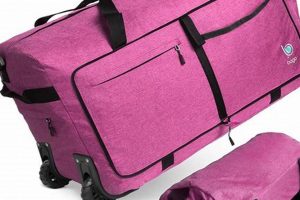
A specialized piece of luggage designed to transport kitesurfing equipment, including the kite itself, board, harness, and related accessories, is essential for kitesurfers who travel. This equipment carrier typically features durable construction, padding for protection, and compartments for organization. For instance, a kitesurfer planning a trip to a windy coastal location would utilize such a bag to safely and efficiently transport their gear.
The value of a suitable equipment carrier lies in its ability to safeguard delicate kitesurfing components from damage during transit, thereby extending their lifespan. Furthermore, it facilitates streamlined travel by consolidating all necessary items into a single, manageable unit. The evolution of these carriers reflects the growing popularity of kitesurfing and the increasing need for convenient and secure transport solutions for specialized sporting equipment.
The selection of the appropriate equipment carrier involves considering factors such as size, weight, durability, and the specific features that align with individual kitesurfing needs and travel habits. Subsequent sections will delve into detailed evaluations of different models, materials, and practical considerations for choosing the optimal solution.
Guidance for Selecting a Kitesurfing Equipment Carrier
The subsequent guidelines aim to inform the prudent selection of a kitesurfing equipment carrier, ensuring the safeguarding and efficient transport of essential gear.
Tip 1: Assess Dimensions and Capacity: Prior to purchase, meticulously measure the dimensions of the kitesurfing board and kite. Verify that the selected carrier adequately accommodates these dimensions, allowing for comfortable packing without excessive compression. For example, a twin-tip board typically requires a longer bag than a directional surfboard.
Tip 2: Evaluate Material Durability: Opt for carriers constructed from robust, water-resistant materials such as reinforced nylon or polyester. Consider models with reinforced stitching and abrasion-resistant panels to withstand the rigors of travel and handling. A damaged seam can compromise the entire bag’s integrity.
Tip 3: Examine Padding and Protection: Adequate padding is crucial for safeguarding kitesurfing equipment against impact. Look for carriers with high-density foam padding, particularly around vulnerable areas such as the board’s edges and kites bladder compartments. Padding minimizes the risk of damage during transit.
Tip 4: Scrutinize Zipper Quality: Heavy-duty zippers are essential for secure closure and long-term reliability. Opt for corrosion-resistant zippers made from stainless steel or durable plastic. Evaluate the zipper’s smoothness of operation and ensure it is protected by a flap or guard to prevent snagging.
Tip 5: Investigate Handle and Wheel Systems: Ergonomic handles and robust wheel systems are essential for ease of transport. Prioritize carriers with padded handles and durable, smooth-rolling wheels. Consider models with telescoping handles for enhanced maneuverability.
Tip 6: Analyze Compartmentalization and Organization: Select carriers with dedicated compartments for specific items such as the kite, board, harness, pump, and wetsuit. This promotes organization, prevents equipment abrasion, and facilitates efficient packing and unpacking.
Tip 7: Consider Weight Restrictions: Be mindful of airline baggage weight restrictions. Lighter carriers allow for more equipment to be packed without exceeding allowable limits. Check the carrier’s empty weight specification before purchase.
Adherence to these guidelines will contribute to the informed acquisition of a kitesurfing equipment carrier that effectively protects and facilitates the transport of valuable kitesurfing gear.
The next section will provide a comparison of leading models on the market, considering factors such as price, features, and user reviews.
1. Protection

The primary function of a specialized kitesurfing equipment carrier is protection. This imperative stems from the inherent fragility of kitesurfing gear and the potential for damage during transportation. Kites, boards, and related accessories are susceptible to punctures, abrasions, and structural damage from impact or improper handling. The causal relationship is straightforward: inadequate protection during transit leads to equipment degradation, potentially rendering it unusable and incurring replacement costs. The selection of a carrier incorporating robust padding, reinforced panels, and secure fastening mechanisms is therefore crucial for mitigating these risks.
Real-world examples underscore the significance of protection. A kite bladder punctured during air travel due to insufficient padding renders the kite unusable, requiring costly repairs or replacement. Similarly, a board with damaged edges due to inadequate protection is compromised structurally, impacting its performance. Carriers utilizing high-density foam padding strategically placed around vulnerable areas significantly reduce the likelihood of such damage. The implementation of internal dividers and compression straps further secures the equipment, preventing movement and abrasion during transit. The practical consequence of prioritizing protection is the preservation of the investment in kitesurfing gear, ensuring its longevity and optimal performance.
In summary, the protective capability of a kitesurfing equipment carrier is its defining attribute. Selecting a model that prioritizes robust construction, ample padding, and secure fastening mechanisms is paramount for safeguarding valuable gear during transport. Addressing the inherent challenges of air travel and rough handling, such protection translates directly into reduced repair costs, extended equipment lifespan, and uninterrupted access to kitesurfing activities. The understanding of this critical linkage between protection and the functionality of the specialized carrier is essential for all kitesurfers seeking to transport their equipment safely and effectively.
2. Dimensions

The dimensions of a kitesurfing equipment carrier are a critical consideration, directly influencing its capacity to accommodate the specific gear it is intended to transport. Precise measurements are essential to ensure compatibility and prevent damage resulting from forced compression or inadequate space.
- Internal Length
Internal length dictates the maximum size of kitesurfing board that can be accommodated. Measuring the board from tip to tail is essential, ensuring the carrier’s internal length exceeds this measurement by a small margin to facilitate easy insertion and removal. Failing to account for the board’s length can result in damage to the board’s tips or the carrier’s seams. For instance, a 140cm board requires a carrier with an internal length of at least 142cm.
- Internal Width
Internal width accommodates the board’s width, as well as any attached fins or pads. A carrier with insufficient width can place undue stress on the board’s edges, potentially leading to delamination or fin damage. Additionally, the width must accommodate the bundled kite, harness, and other accessories. Measuring the widest point of the board, including fins, and ensuring the carrier’s width exceeds this measurement is crucial. For example, a wide-style board with significant width may need a bag with over 50cm width.
- Internal Depth
Internal depth determines the carrier’s capacity to accommodate the thickness of the board and other gear. A shallow carrier may require excessive compression to close, risking damage to the kite or other delicate components. The depth must account for the board’s thickness, the kite’s volume when packed, and the bulk of the harness and wetsuit. Consider that the depth should be enough to allow for the kite to fit along with the board, without over-compressing either.
- External Dimensions
While internal measurements are critical for gear accommodation, external dimensions are crucial for logistical considerations. Airlines impose restrictions on luggage size, and exceeding these limits can incur additional fees or rejection of the luggage. Furthermore, external dimensions affect the carrier’s maneuverability in airports, train stations, and other transportation hubs. Understanding both internal and external measurements allows for the selection of a carrier that balances equipment protection with practical transportability.
In conclusion, the careful consideration of dimensions is fundamental to selecting a suitable kitesurfing equipment carrier. Accurate measurement of kitesurfing gear, coupled with a thorough understanding of internal and external carrier dimensions, ensures both equipment protection and ease of transport. Disregarding these dimensional aspects can lead to equipment damage, logistical complications, and unnecessary expenses.
3. Durability
Durability, as a characteristic of a kitesurfing equipment carrier, directly influences its lifespan and its capacity to protect valuable kitesurfing gear during transit. The materials used in construction, the quality of stitching, and the robustness of zippers and handles contribute to the overall durability. Cause-and-effect relationships are evident: inferior materials result in premature wear and tear, while reinforced construction methods enhance resistance to damage. The importance of durability lies in its ability to safeguard kites, boards, harnesses, and other accessories from the rigors of travel, including rough handling, exposure to the elements, and the stresses of repeated loading and unloading. A durable equipment carrier minimizes the risk of equipment damage, thereby reducing repair costs and extending the lifespan of the kitesurfing gear.
Real-life scenarios underscore the practical significance of durability. A kitesurfer embarking on multiple international trips annually exposes their equipment carrier to significant wear and tear. A carrier constructed from lightweight, non-reinforced materials is likely to develop tears, seam failures, and zipper malfunctions, potentially compromising the protection of the enclosed gear. Conversely, a carrier built with heavy-duty nylon, reinforced stitching, and corrosion-resistant zippers will withstand these stresses, maintaining its integrity and protective function. Furthermore, a durable carrier contributes to environmental sustainability by reducing the need for frequent replacements.
In summary, durability is a critical component of a kitesurfing equipment carrier. Prioritizing robust materials, reinforced construction, and high-quality components ensures the carrier’s longevity and its ability to protect valuable kitesurfing gear. The practical benefits of a durable carrier include reduced repair costs, extended equipment lifespan, and a more sustainable approach to kitesurfing travel. Recognizing the link between durability and performance enables kitesurfers to make informed purchasing decisions, selecting carriers that meet the demands of frequent travel and safeguard their investment.
4. Portability

Portability, in the context of kitesurfing equipment carriers, constitutes a defining characteristic that significantly influences the ease and efficiency with which kitesurfers can transport their gear. This attribute encompasses various design features and functional elements that collectively determine the overall manageability of the carrier during travel.
- Weight Distribution and Design
Weight distribution plays a critical role in the perceived portability of a kitesurfing equipment carrier. A well-designed carrier distributes the weight evenly, minimizing strain on the user’s body during transport. Carriers incorporating internal dividers and compression straps contribute to balanced weight distribution. For instance, a carrier with a poorly distributed weight can feel significantly heavier and more cumbersome than a carrier of the same weight with balanced distribution, particularly when navigating crowded airports or uneven terrain.
- Wheel System Quality
The quality of the wheel system is paramount for effortless mobility, especially across extended distances. Durable, smooth-rolling wheels, preferably constructed from high-quality materials such as polyurethane, facilitate easy navigation on various surfaces. Carriers with inline skate-style wheels tend to offer superior performance compared to smaller, less robust wheel designs. Wheel size is also a factor, with larger wheels typically handling rough terrain more effectively. A malfunctioning or poorly designed wheel system can render an otherwise well-designed carrier significantly less portable.
- Handle Design and Ergonomics
The design and ergonomics of the carrier’s handles directly impact user comfort and control. Padded handles, strategically placed to allow for comfortable lifting and carrying, are essential. Telescoping handles, similar to those found on rolling suitcases, provide adjustable height options, accommodating users of varying heights. The handle material should be durable and resistant to wear and tear. Inadequate handle design can lead to discomfort, strain, and reduced control, particularly when maneuvering the carrier in tight spaces or lifting it onto luggage racks.
- Overall Dimensions and Profile
The overall dimensions and profile of the kitesurfing equipment carrier influence its maneuverability in confined spaces, such as airport security lines or public transportation. A streamlined profile minimizes the risk of snagging or colliding with obstacles. Carriers exceeding standard airline baggage size restrictions may incur additional fees or require special handling. Balancing internal capacity with external dimensions is crucial for optimizing portability without compromising the ability to transport essential gear. Overly bulky carriers can be difficult to manage, particularly when navigating crowded environments.
Collectively, these facets underscore the multifaceted nature of portability in the context of kitesurfing equipment carriers. Prioritizing design elements that promote balanced weight distribution, smooth-rolling wheels, comfortable handles, and manageable dimensions enables kitesurfers to transport their gear with greater ease and efficiency, enhancing the overall travel experience. The integration of these elements represents a significant advancement in the design of specialized luggage for action sports enthusiasts.
5. Organization
Efficient organization within a kitesurfing equipment carrier is paramount for protecting gear, optimizing space utilization, and facilitating rapid access to essential items. A well-organized equipment carrier mitigates the risk of damage during transit and streamlines the packing and unpacking process.
- Dedicated Compartments
Dedicated compartments within the carrier provide segregated spaces for individual items, preventing abrasion and entanglement. A separate compartment for the kite, for instance, prevents the kite fabric from rubbing against the board’s fins or the harness buckles. Similarly, a designated compartment for the wetsuit isolates it from other gear, preventing moisture damage and odor transfer. The incorporation of labeled compartments further enhances organization by providing clear identification of contents, reducing search time. The absence of dedicated compartments results in a chaotic and potentially damaging environment for the equipment.
- Internal Straps and Dividers
Internal straps and dividers secure equipment within the carrier, preventing movement and minimizing the risk of impact damage. Straps can be used to compress the kite, reducing its volume and maximizing space utilization. Dividers create separate sections within the carrier, preventing items from shifting during transit. For example, a divider can separate the board from the kite, preventing the fins from damaging the kite’s canopy. The effective use of straps and dividers transforms the carrier from a mere container into a structured and protective environment for kitesurfing gear.
- Accessory Pouches and Pockets
Accessory pouches and pockets provide convenient storage for smaller items such as the pump, repair kit, spare parts, and personal belongings. These smaller compartments prevent these items from becoming lost or damaged within the larger carrier. Clear, zippered pouches allow for easy identification of contents. For example, a dedicated pouch for the repair kit ensures that it is readily accessible in case of an emergency. The strategic placement of accessory pouches optimizes space utilization and enhances the overall organization of the carrier.
- External Access Points
External access points can increase the accessibility for things, like water bottle pouches or straps for holding helmets or a pump. These can contribute to a seamless transport. Without them, you risk a non-optimized travel bag that can cause harm to the inside items or have the risk for damage to outside items.
In conclusion, effective organization is an integral feature of a well-designed kitesurfing equipment carrier. The incorporation of dedicated compartments, internal straps and dividers, and accessory pouches transforms the carrier from a mere container into a structured and protective environment for valuable kitesurfing gear. A well-organized carrier facilitates efficient packing and unpacking, minimizes the risk of damage, and enhances the overall travel experience for kitesurfers. Neglecting the organizational aspects of the carrier can lead to equipment damage, frustration, and wasted time.
6. Weight
The weight of a specialized kitesurfing equipment carrier is a critical factor influencing its practicality and the overall travel experience. This attribute is inextricably linked to airline baggage restrictions, ease of handling, and potential physical strain on the user. The balance between durability and minimal weight presents a key design challenge for manufacturers.
- Airline Baggage Allowances
Airline baggage weight limits impose a direct constraint on the amount of gear that can be transported without incurring additional fees. Exceeding these limits results in significant surcharges, impacting the overall cost of travel. The weight of the equipment carrier itself subtracts from the available allowance, necessitating a careful consideration of its unladen weight. For instance, a carrier weighing 5 kg reduces the available weight for kites, boards, and accessories by the same amount. Lightweight materials and efficient design minimize this reduction, maximizing the allowable gear. This is why airlines have a maximum weight allowance for passengers to travel.
- Handling and Maneuverability
The weight of the carrier directly affects its ease of handling, particularly during transit through airports, train stations, and other transportation hubs. A heavier carrier requires more physical effort to lift, carry, and maneuver, potentially leading to fatigue and discomfort. The presence of wheels mitigates some of these effects, but a lighter carrier remains inherently easier to manage, especially on uneven surfaces or when navigating stairs. The correlation between weight and maneuverability is significant, influencing the overall travel experience.
- Material Selection and Trade-offs
The weight of a kitesurfing equipment carrier is directly determined by the materials used in its construction. Durable, high-strength materials such as reinforced nylon and polyester offer excellent protection but tend to be heavier than lighter alternatives. Manufacturers must therefore strike a balance between durability and weight, selecting materials that provide adequate protection without adding excessive bulk. The trade-off between durability and weight represents a key engineering challenge in the design of specialized travel equipment.
- Impact on Physical Strain
Repeatedly lifting and carrying a heavy kitesurfing equipment carrier can lead to physical strain and potential injuries, particularly for individuals with pre-existing musculoskeletal conditions. The weight of the carrier combined with the weight of the gear places stress on the back, shoulders, and arms. Minimizing the carrier’s weight reduces this strain, promoting safer and more comfortable travel. The ergonomic design of handles and wheel systems can further mitigate physical strain, but the overall weight remains a primary factor.
The interplay between these facets underscores the critical importance of weight as a defining characteristic of a kitesurfing equipment carrier. The carrier’s weight dictates how easy to travel while in transit. The careful consideration of airline baggage allowances, handling and maneuverability, material selection, and potential physical strain informs the selection of a carrier that balances functionality with practical transportability. Prioritizing lightweight materials and efficient design maximizes the amount of gear that can be transported while minimizing the risk of additional fees, physical discomfort, and potential injuries. The weight of specialized transport carrier must be lightweight for travel.
Frequently Asked Questions
The following frequently asked questions address common concerns and misconceptions regarding specialized luggage designed for transporting kitesurfing equipment. The information provided aims to offer clarity and guidance for informed decision-making.
Question 1: What are the primary differences between a standard suitcase and a specialized kitesurfing equipment carrier?
Specialized kitesurfing equipment carriers are engineered with features specifically designed for the unique dimensions, weight, and fragility of kitesurfing gear. These include reinforced construction, internal padding, dedicated compartments for kites, boards, and accessories, and durable wheel systems designed to withstand the rigors of travel. Standard suitcases lack these features, offering inadequate protection and organizational capabilities for kitesurfing equipment.
Question 2: How do airline baggage restrictions impact the selection of a kitesurfing equipment carrier?
Airline baggage weight and size restrictions directly influence the choice of a kitesurfing equipment carrier. Exceeding these limits results in significant surcharges. Therefore, selecting a lightweight carrier that maximizes internal volume while adhering to dimensional restrictions is crucial for minimizing travel expenses. It is advisable to consult airline regulations prior to selecting a carrier.
Question 3: What materials offer the optimal balance of durability and weight for a kitesurfing equipment carrier?
Reinforced nylon and polyester are commonly employed in the construction of durable yet lightweight kitesurfing equipment carriers. These materials offer resistance to abrasion, tears, and water damage, while maintaining a manageable weight. The addition of reinforced stitching and abrasion-resistant panels further enhances durability.
Question 4: What features contribute to the ease of transporting a fully loaded kitesurfing equipment carrier?
Key features that enhance portability include a robust wheel system with smooth-rolling wheels, telescoping handles for adjustable height, padded handles for comfortable lifting, and a balanced weight distribution design. These elements collectively reduce physical strain and facilitate effortless maneuverability.
Question 5: How can internal organization within a kitesurfing equipment carrier minimize the risk of damage to gear?
Effective internal organization is achieved through dedicated compartments for individual items such as the kite, board, harness, and pump. Internal straps and dividers secure equipment, preventing movement and abrasion during transit. Accessory pouches provide organized storage for smaller items, such as repair kits and spare parts.
Question 6: Is it necessary to deflate a kite completely before packing it into a kitesurfing equipment carrier?
Complete deflation of the kite is recommended prior to packing it into the equipment carrier. This minimizes the risk of damage to the kite’s bladder and reduces the overall volume of the packed gear, optimizing space utilization. Follow the kite manufacturer’s guidelines for proper deflation procedures.
In summary, the selection of a suitable kitesurfing equipment carrier involves careful consideration of airline baggage restrictions, material durability, portability features, and internal organization. A well-chosen carrier protects valuable kitesurfing gear, minimizes travel expenses, and enhances the overall travel experience.
The following section will present practical tips for packing a kitesurfing equipment carrier efficiently and securely.
Conclusion
The preceding analysis has elucidated the multifaceted considerations inherent in the selection and utilization of the specialized luggage known as a kite travel bag. From the imperatives of protection and dimensional compatibility to the nuanced aspects of durability, portability, organization, and weight management, each attribute contributes significantly to the safe and efficient transport of valuable kitesurfing equipment. A thorough understanding of these factors enables informed decision-making, mitigating the risks of equipment damage, unnecessary expenses, and logistical complications.
The judicious application of the outlined principles will empower kitesurfers to safeguard their investment in equipment and optimize their travel experiences. Continuous advancements in material science and design engineering promise further refinements in the functionality and performance of the kite travel bag, ensuring that future iterations will offer even greater levels of protection, convenience, and sustainability for the discerning kitesurfing traveler.

![Best Infant Travel Bag [Guide] | Travel Easier! | Best Travel Tips for Adventurers: Explore the World on a Budget](https://detravellers.com/wp-content/uploads/2026/05/th-102-300x200.jpg "Best Infant Travel Bag [Guide] | Travel Easier! Best Travel Tips for Adventurers: Explore the World on a Budget")