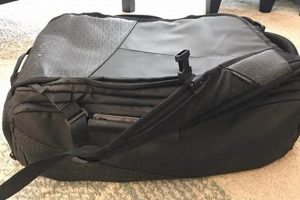
A specialized container designed to maintain the temperature of pharmaceuticals during transportation is crucial for medications requiring refrigeration. This type of bag typically incorporates insulating materials and a cooling system, such as ice packs or gel packs, to prevent the medication from exceeding its safe temperature range. For example, individuals traveling with insulin or certain vaccines rely on these containers to ensure the medication remains effective.
Maintaining the cold chain for temperature-sensitive drugs is paramount to their efficacy and safety. Fluctuations in temperature can degrade the medication, rendering it less effective or even harmful. These containers offer a practical solution for individuals who need to transport refrigerated medication, providing a degree of temperature control not achievable with standard luggage. Historically, healthcare professionals and patients faced significant challenges in transporting these types of medications, leading to the development and refinement of these specialized transport solutions.
The following sections will delve into the key features to consider when selecting a suitable pharmaceutical cooling solution, including insulation properties, cooling methods, size and portability, and the regulatory considerations that may apply when transporting temperature-sensitive medications.
Essential Considerations for Transporting Temperature-Sensitive Pharmaceuticals
Successfully transporting medications requiring refrigeration demands careful planning and execution. The following provides specific guidelines to ensure pharmaceutical integrity is maintained during transit.
Tip 1: Select Appropriate Insulation: The chosen container must possess sufficient insulation to maintain the medication’s required temperature range for the duration of the journey. Consider models with vacuum insulation panels or high-density foam for extended temperature control.
Tip 2: Employ Calibrated Thermometers: Include a calibrated thermometer within the container to continuously monitor the internal temperature. This allows for verification that the medication remains within acceptable parameters and provides documentation in case of temperature excursions.
Tip 3: Utilize Qualified Cooling Agents: Select cooling agents, such as gel packs or phase change materials, that are specifically designed for pharmaceutical transport. Ensure they are properly pre-conditioned (frozen or refrigerated) prior to use and positioned strategically around the medication to maximize cooling efficiency.
Tip 4: Validate Transport Conditions: Prior to departure, conduct a trial run to simulate the anticipated transport conditions. Monitor the temperature within the container to verify that the chosen configuration will maintain the required temperature range for the expected duration of travel. Adjust the amount of cooling agent or insulation as needed.
Tip 5: Comply with Regulatory Guidelines: Familiarize yourself with any applicable regulatory guidelines regarding the transport of temperature-sensitive pharmaceuticals. These regulations may specify requirements for packaging, labeling, and documentation.
Tip 6: Protect Against Physical Damage: Ensure the medication is adequately protected from physical damage during transport. Utilize padding or dividers to prevent vials or other delicate items from shifting or colliding.
Tip 7: Document Transportation Procedures: Maintain detailed records of the transportation process, including the medication name and lot number, the date and time of departure and arrival, the temperature readings throughout the journey, and any deviations from the planned procedure. This documentation may be required for regulatory compliance or insurance purposes.
Adhering to these considerations contributes to the preservation of pharmaceutical integrity, mitigating the risks associated with temperature excursions and ensuring the safety and efficacy of transported medications.
In conclusion, rigorous adherence to established guidelines and best practices is paramount to successfully navigating the challenges inherent in transporting temperature-sensitive pharmaceuticals.
1. Temperature Maintenance

Temperature maintenance constitutes the core functionality of a refrigerated medication transport solution. This functionality directly impacts the stability and efficacy of temperature-sensitive pharmaceuticals. Inadequate temperature control can result in medication degradation, leading to reduced potency, altered chemical composition, or the formation of harmful byproducts. The causality is clear: insufficient temperature control yields compromised medication integrity, potentially endangering the patient.
The refrigerated bag’s design and construction directly influence its capacity for temperature maintenance. Insulation materials, such as vacuum insulation panels or specialized foam, impede heat transfer, slowing the rate at which the medication warms or cools. Cooling elements, such as pre-frozen gel packs or phase-change materials, absorb heat, maintaining the desired temperature range for a specified duration. Consider, for instance, a diabetic individual traveling with insulin. If the insulin is not maintained within its recommended temperature range (typically 2C to 8C), it may lose its effectiveness, leading to inadequate blood sugar control and potentially severe health consequences. Similarly, certain vaccines require strict temperature adherence to maintain their immunogenicity; deviation from the prescribed range can render the vaccine ineffective, leaving the recipient vulnerable to infection.
Accurate temperature monitoring, often achieved through integrated thermometers or temperature data loggers, provides verification of temperature maintenance. Challenges in temperature maintenance include fluctuations in ambient temperature, extended transport times, and improper use of cooling elements. Therefore, selecting a pharmaceutical transport solution with validated temperature performance characteristics and adhering to proper usage protocols are critical to ensuring medication integrity and patient safety. The effectiveness of the bag in maintaining temperature is paramount, and any compromise in this area directly undermines the purpose of the product.
2. Insulation Effectiveness
Insulation effectiveness directly determines the performance of a refrigerated medication transport bag. The bag’s ability to maintain a stable, cool internal environment hinges upon the quality and design of its insulation. Effective insulation minimizes heat transfer between the interior and exterior, thus preserving the medication’s required temperature range for a longer duration. Without adequate insulation, the cooling elements within the bag would be quickly depleted, causing the medication to exceed its safe temperature limits. For instance, consider a chemotherapy drug that requires refrigeration. If the transport bag’s insulation is insufficient, the drug may become ineffective or even toxic before reaching its destination, compromising the patient’s treatment. The selection of appropriate insulation materials and thicknesses is therefore a crucial design consideration.
The type of insulation material utilized significantly impacts its overall effectiveness. Materials such as vacuum insulation panels (VIPs), expanded polystyrene (EPS) foam, and polyurethane foam offer varying degrees of thermal resistance. VIPs, while providing superior insulation performance, are generally more expensive and susceptible to damage. EPS and polyurethane foams offer a more cost-effective alternative but may require greater thicknesses to achieve comparable insulation levels. The design of the insulation also plays a vital role. Seams and closures represent potential points of thermal leakage, and their design must minimize heat transfer to maintain temperature consistency throughout the bag’s interior. The choice of insulation should align with the specific temperature requirements of the medication, the anticipated transport duration, and the environmental conditions expected during transport.
In summary, insulation effectiveness is a critical performance parameter for refrigerated medication transport bags. Superior insulation translates directly into improved temperature stability and extended preservation of medication integrity. Challenges remain in balancing insulation performance with cost, durability, and weight. Ongoing research and development efforts are focused on creating more efficient and robust insulation materials to further enhance the performance of these essential transport solutions. Choosing appropriate Insulation could be vary, but it has a purpose to maintain temperature of drug.
3. Cooling Mechanism
The cooling mechanism represents an indispensable component within a refrigerated medication transport bag. It is responsible for actively maintaining the internal temperature within the range required for the safe storage and transport of temperature-sensitive pharmaceuticals. The selection and implementation of a suitable cooling mechanism are critical factors influencing the overall effectiveness and reliability of the bag.
- Gel Packs and Ice Packs
Gel packs and ice packs are commonly employed cooling agents. They function by absorbing heat as they undergo a phase transition from solid to liquid. Their effectiveness depends on their initial temperature, volume, and thermal properties. For example, when transporting insulin, pre-frozen gel packs strategically placed around the medication can maintain the necessary temperature range for several hours. However, the limited duration of their cooling capacity necessitates careful consideration of the transport time.
- Phase Change Materials (PCMs)
Phase change materials offer a more sophisticated approach to temperature control. PCMs are designed to melt or solidify at a specific temperature, absorbing or releasing heat in the process. This allows for more precise temperature regulation compared to traditional gel packs. For instance, a PCM designed to melt at 5C can effectively maintain the interior of the bag at or below this temperature, preventing the medication from exceeding its upper temperature limit.
- Electric Cooling Systems
Some advanced refrigerated medication transport bags incorporate electric cooling systems, such as thermoelectric coolers (TECs). TECs utilize the Peltier effect to transfer heat from one side of the device to the other, providing active cooling. These systems offer greater temperature control and longer cooling durations compared to passive methods like gel packs. However, they require a power source, such as a battery or AC adapter, which adds complexity and weight to the bag.
- Cryogenic Coolants
While less common due to safety concerns and specialized handling requirements, cryogenic coolants, such as liquid nitrogen, can be used for transporting medications that require extremely low temperatures. These coolants provide exceptional cooling capacity but necessitate specialized containers and trained personnel to handle them safely. The transportation of certain vaccines or biological samples may require such cryogenic cooling methods.
The choice of cooling mechanism significantly impacts the performance and usability of a refrigerated medication transport bag. Factors such as cooling capacity, duration, ease of use, cost, and safety must be carefully considered when selecting a suitable system. Regardless of the chosen method, thorough validation and monitoring of the cooling process are essential to ensure the integrity of the transported medication. The cooling mechanism is really important for a refrigerated medication travel bag.
4. Portability Design
Portability design significantly influences the utility and practicality of a refrigerated medication transport bag. The ease with which an individual can carry and manage the bag directly affects adherence to medication schedules and the feasibility of maintaining the cold chain during travel. Compromises in portability can lead to inconvenience, non-compliance, and potential degradation of the medication.
- Size and Weight Optimization
The dimensions and mass of the bag are primary determinants of its portability. An excessively large or heavy bag can be cumbersome, particularly for individuals with mobility limitations or those traveling with multiple items. Optimizing the size and weight involves balancing the need for adequate insulation and cooling capacity with the constraints of manageable dimensions. For example, a compact design may sacrifice cooling duration, while a larger bag, although providing extended temperature control, could become unwieldy for frequent use. Manufacturers often target specific user needs, offering a range of sizes to accommodate varying medication volumes and travel durations.
- Ergonomic Considerations
Ergonomic design elements enhance the comfort and ease of carrying the bag. Features such as padded shoulder straps, strategically placed handles, and adjustable straps contribute to a more comfortable and secure carrying experience. Bags designed for extended travel may incorporate features found in conventional luggage, such as telescoping handles and integrated wheels. The location of these elements also matters; handles placed at balance points reduce strain, and thoughtfully designed straps distribute weight evenly to prevent discomfort. These elements contribute significantly to the overall user experience, particularly for individuals who must carry the bag for extended periods.
- Form Factor and Integration
The bag’s overall shape and its ability to integrate seamlessly with other luggage or travel accessories also contribute to its portability. A streamlined design that conforms to standard carry-on dimensions facilitates easy storage in overhead compartments or under airplane seats. Some designs incorporate modular components or attachment points that allow the bag to be secured to rolling luggage. For instance, a bag designed to slide over the handle of a suitcase offers enhanced convenience and reduces the burden on the user. These design considerations enhance the bag’s practicality for various travel scenarios.
- Durability and Protection
A well-designed bag incorporates durable materials and robust construction to withstand the rigors of travel. Reinforced seams, water-resistant fabrics, and impact-resistant padding protect the contents from damage and ensure the bag’s longevity. The inclusion of features such as lockable zippers can also enhance security and prevent tampering. A durable and protective design provides peace of mind, knowing that the medication is shielded from the elements and potential hazards encountered during travel. Poor durability negatively impacts portability when the bag is no longer usable to carry drug.
These facets of portability design are critical to ensuring that a refrigerated medication transport bag is not only effective in maintaining medication temperature but also convenient and practical for use in real-world travel situations. A thoughtfully designed bag enhances adherence, reduces user burden, and ultimately contributes to improved patient outcomes. The refrigerated medication travel bag is a product that prioritizes convenience for patients.
5. Regulatory Compliance

Regulatory compliance constitutes a crucial element in the design, manufacturing, and utilization of refrigerated medication transport bags. Failure to adhere to relevant regulations can result in compromised medication integrity, potential harm to patients, and legal ramifications for manufacturers and users. Regulations govern various aspects of the bag, including material composition, insulation performance, temperature monitoring capabilities, and labeling requirements.
Several regulatory bodies, such as the Food and Drug Administration (FDA) in the United States and the European Medicines Agency (EMA) in Europe, establish standards for the storage and transportation of pharmaceuticals. These standards often mandate specific temperature ranges for certain medications and provide guidelines for validating temperature control during transport. For instance, the United States Pharmacopeia (USP) General Chapter 1079 outlines best practices for storing and transporting pharmaceutical products, emphasizing the importance of maintaining the cold chain. Airlines also have policies based on IATA guidelines regarding what can be carried. Non-compliance can lead to rejection of a carried item at the security gate.
In summary, strict adherence to regulatory guidelines is paramount to ensuring the safety and efficacy of medications transported in refrigerated containers. Manufacturers must validate the performance of their products to meet these standards, and users must ensure that they are utilizing the bags in accordance with the manufacturer’s instructions and applicable regulations. The consequences of non-compliance can be severe, highlighting the importance of a comprehensive understanding of the regulatory landscape governing these specialized transport solutions.
6. Durability/Protection

Durability and protection represent critical considerations in the context of refrigerated medication transport bags. These characteristics directly impact the bag’s ability to maintain the integrity of temperature-sensitive medications during transit, safeguarding them from physical damage and environmental hazards. The effectiveness of a refrigerated bag is predicated on its capacity to withstand the rigors of travel while ensuring the medications it contains remain viable.
- Impact Resistance
The bag’s external shell must exhibit sufficient impact resistance to protect the enclosed medications from damage caused by accidental drops, bumps, or collisions. Materials such as high-density polyethylene (HDPE) or reinforced nylon offer superior impact resistance compared to less robust materials. For example, a bag used to transport vials of injectable medication should be able to withstand a drop from a typical carrying height without compromising the integrity of the vials. This protection is essential for preventing medication leakage or contamination, which could render the medication unusable or even harmful.
- Thermal Stability of Materials
The materials used in the bag’s construction must maintain their structural integrity and insulating properties across a range of temperatures. Exposure to extreme heat or cold can cause some materials to degrade, compromising their ability to provide adequate insulation. The selected materials should also resist becoming brittle at low temperatures, which could lead to cracking or breakage. Consider a bag left in a hot car; if the insulating materials degrade, the internal temperature may rise above the safe threshold for the medication, rendering it ineffective. Similarly, materials used inside the bag should not become brittle or crack when subjected to low temperatures from prolonged contact with cold packs.
- Water Resistance
The bag should offer adequate water resistance to protect the medications from moisture damage. Water intrusion can compromise the integrity of medications, especially those in tablet or capsule form, leading to dissolution or degradation. Water resistance can be achieved through the use of water-resistant fabrics, sealed seams, and waterproof zippers. For instance, a bag used to transport medication in humid environments or during outdoor activities should be able to withstand exposure to rain or spills without allowing moisture to penetrate the interior.
- Protection from UV Radiation
Exposure to ultraviolet (UV) radiation can degrade certain medications, reducing their potency or altering their chemical composition. The bag’s outer layer should offer UV protection to shield the medications from the harmful effects of sunlight. This can be achieved through the use of UV-resistant fabrics or coatings. For example, a bag used to transport light-sensitive medications, such as certain antibiotics or vaccines, should provide adequate UV protection to prevent degradation during transport in direct sunlight.
In conclusion, durability and protection are paramount in the design and selection of refrigerated medication transport bags. A bag that offers robust protection from physical damage, temperature extremes, moisture, and UV radiation ensures that the medications remain viable and effective, safeguarding patient health and well-being. Compromises in these areas can have serious consequences, highlighting the importance of prioritizing quality and reliability in pharmaceutical transport solutions. The Durability/Protection has a purpose to maintain pharmaceutical integrity.
7. Temperature Monitoring

Temperature monitoring is inextricably linked to the functionality and efficacy of a refrigerated medication travel bag. The purpose of these bags is to maintain pharmaceuticals within a specific temperature range, and accurate temperature monitoring serves as the verifiable evidence that the bag is fulfilling this requirement. Without consistent temperature monitoring, there is no assurance that the medication remains within its safe and effective temperature parameters during transport. For instance, vaccines exposed to temperatures outside their specified range may become ineffective, rendering vaccinations useless and potentially endangering public health. In this case, the failure in temperature monitoring would lead to failure of the medications.
Temperature monitoring within these bags can be achieved through various methods, ranging from simple visual thermometers to sophisticated electronic data loggers. Visual thermometers provide a snapshot of the temperature at a given moment, while data loggers continuously record temperature fluctuations over time, offering a more comprehensive picture of the temperature conditions experienced during transport. Data loggers are particularly valuable for longer journeys or when transporting highly sensitive medications, as they can identify even brief excursions outside the acceptable temperature range. The data collected can then be used to determine if the medication remains viable or if it needs to be discarded. The real case also can be seen with chemotherapy drugs, if there is a temperature breach, then it is deemed unuseable and cause harm for patients.
In summary, temperature monitoring is not merely an adjunct to a refrigerated medication travel bag but an essential component of its functionality. It provides the necessary data to verify that the medication has been maintained within its required temperature range, ensuring its safety and efficacy. The absence of reliable temperature monitoring undermines the entire purpose of the bag, rendering it a potentially risky and unreliable method for transporting temperature-sensitive pharmaceuticals. It serves as a critical safeguard, protecting both the integrity of the medication and the well-being of the patient relying upon it. Any failure of equipment such as temperature monitoring, means the failure of refrigerated medication travel bag to work.
Frequently Asked Questions
The following addresses common inquiries regarding the use, selection, and maintenance of specialized containers designed to transport temperature-sensitive medications.
Question 1: What types of medications necessitate the use of a refrigerated medication travel bag?
Medications requiring controlled cold chain maintenance, typically ranging from 2C to 8C (36F to 46F), benefit from such containers. Examples include insulin, certain vaccines, injectable biologics, and some chemotherapy drugs. Consult the medication’s packaging or prescribing information to determine specific temperature requirements.
Question 2: How does a refrigerated medication travel bag maintain a consistent temperature?
These bags employ a combination of insulation and cooling elements. Insulation materials, such as vacuum insulation panels or closed-cell foam, reduce heat transfer. Cooling elements, like gel packs or phase-change materials, absorb heat, maintaining the internal temperature within the desired range. Proper conditioning of these cooling elements is critical for optimal performance.
Question 3: How long can a refrigerated medication travel bag maintain a safe temperature for medications?
The duration of temperature control varies depending on the bag’s design, insulation quality, ambient temperature, and the type and quantity of cooling elements used. High-quality bags can maintain temperatures within the required range for several hours, while others may only provide protection for a shorter period. Refer to the manufacturer’s specifications for estimated hold times.
Question 4: What features should be considered when selecting a refrigerated medication travel bag?
Key features include insulation effectiveness, the type and quantity of cooling elements, overall bag size and portability, durability, the presence of a temperature monitoring system, and compliance with relevant regulatory standards.
Question 5: How should a refrigerated medication travel bag be properly prepared for use?
Before use, thoroughly chill or freeze the cooling elements according to the manufacturer’s instructions. Ensure the bag’s interior is clean and dry. Position the cooling elements strategically around the medication to maximize cooling efficiency. Monitor the internal temperature using a calibrated thermometer.
Question 6: Are there any regulatory requirements for transporting refrigerated medications?
Regulations vary depending on the medication, mode of transport, and destination. It is essential to familiarize yourself with any applicable regulations regarding packaging, labeling, and temperature monitoring. Consult with a healthcare professional or transportation authority for specific guidance.
Proper selection, preparation, and adherence to recommended guidelines are paramount for the successful utilization of pharmaceutical cold transport solutions.
The subsequent section will address troubleshooting common issues encountered during the transport of refrigerated medications.
Conclusion
The preceding discussion has comprehensively explored the multifaceted nature of the refrigerated medication travel bag. This specialized container plays a vital role in safeguarding temperature-sensitive pharmaceuticals during transport, thereby ensuring medication efficacy and patient safety. Critical attributes, encompassing insulation effectiveness, cooling mechanism, portability design, regulatory compliance, durability/protection, and temperature monitoring, directly influence the bag’s performance and suitability for intended use.
As pharmaceutical transport solutions continue to evolve, diligent attention to design advancements and adherence to best practices remain paramount. Prioritizing patient well-being demands a commitment to selecting and utilizing refrigerated medication travel bags that demonstrably meet stringent performance criteria and regulatory requirements. A continued focus on innovation and education within this sector will further enhance the reliability and accessibility of these indispensable tools for maintaining the cold chain.