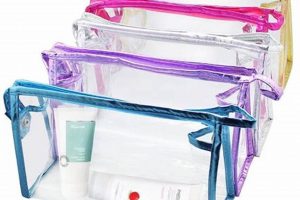
These specialized containers compress clothing and soft goods, reducing the amount of space they occupy within luggage. Functioning through air expulsion, often via a vacuum or rolling action, they enable travelers to pack more items into a limited area. For example, garments stored in these solutions can occupy significantly less volume compared to traditionally packed apparel.
The importance of maximizing luggage capacity is self-evident for frequent travelers or individuals with limited baggage allowances. Such compression methods allow for efficient organization and can minimize the need for additional suitcases or oversized luggage. Historically, techniques for compacting textiles have evolved from simple folding strategies to sophisticated, airtight enclosures that prevent refilling with air, preserving the reduced size.
The subsequent discussion will delve into the various types available, examine their construction materials, and offer practical advice on their effective usage. Furthermore, considerations for choosing the optimal compression solution for specific travel needs will be addressed, alongside best practices for maintenance and longevity.
Effective Utilization Strategies
To optimize the benefits of compression solutions for luggage, adherence to specific usage guidelines is recommended. These suggestions aim to maximize space savings and preserve the integrity of both the storage medium and its contents.
Tip 1: Selective Item Inclusion: Prioritize garments suitable for compression, such as soft fabrics like cotton and synthetics. Exclude items prone to damage from compression, like structured jackets or delicate fabrics.
Tip 2: Optimal Folding Techniques: Employ compact folding methods, such as rolling garments, to minimize wrinkles and maximize space efficiency within the containers.
Tip 3: Controlled Compression: When using vacuum-sealed versions, avoid over-compressing delicate items. Excessive pressure can damage fibers or create permanent creases.
Tip 4: Proper Sealing Verification: Ensure the airtight seal is completely secured after compression. Inspect zippers or valves for leaks that could compromise the compression.
Tip 5: Weight Distribution Awareness: Distribute weight evenly within the luggage to prevent imbalance and potential damage during transit. Heavier compressed items should be strategically placed.
Tip 6: Cleaning and Maintenance: Regularly clean and inspect for damage. Abrasions or punctures can compromise the airtight seal and reduce effectiveness.
Tip 7: Assess Luggage Dimensions: Before packing, measure the internal dimensions of luggage to ensure compressed items fit within specified size restrictions. This is particularly important for carry-on compliance.
By consistently implementing these techniques, individuals can substantially increase available packing space, reduce luggage bulk, and optimize overall travel efficiency.
The subsequent section will address considerations related to selecting the appropriate solution, considering factors such as material durability and closure mechanisms.
1. Volume Reduction

The operational principle of these compression solutions is predicated on significant volume reduction of compressible contents within luggage. The effect is a more manageable luggage footprint, enabling travelers to pack more items within the same dimensional constraints or utilize smaller, lighter suitcases. The level of reduction achieved is a primary determinant of the system’s utility.
Airlines impose restrictions on luggage size and weight, frequently incurring excess baggage fees. Maximizing the use of available space through volume reduction becomes paramount. For instance, a standard suitcase packed with non-compressed clothing might accommodate garments for a week-long trip. By using a vacuum-sealed compression solution, the same suitcase could potentially hold clothing for two weeks or additional personal items, negating the need for a second bag and associated costs.
In essence, efficient volume reduction is not merely a feature but the definitive characteristic of an effective compression solution. Understanding and quantifying this reduction, considering both the type of clothing and the method of compression, is crucial for optimizing luggage management and mitigating potential travel expenses. This core functionality directly addresses the key constraints faced by modern travelers.
2. Airtight Integrity

Airtight integrity represents a fundamental requirement for effective luggage compression. It dictates the ability of the enclosure to maintain a reduced volume state over an extended period, irrespective of external pressure or handling. Loss of airtightness directly negates the benefits of compression, resulting in expanded contents and diminished space savings. The cause of compromised airtight integrity may stem from punctures, zipper malfunctions, or valve failures.
The significance of airtight integrity becomes evident in scenarios involving prolonged travel or storage. For example, luggage stored in unheated cargo holds or subjected to altitude changes experiences pressure variations. Systems lacking a robust seal are susceptible to air ingress, leading to volumetric expansion. Furthermore, fabrics exposed to moisture due to compromised seals are at risk of mildew and odor development. Therefore, the absence of reliable airtightness diminishes the product’s practical utility, regardless of its initial compression capability.
In summary, airtight integrity is not a mere feature, but a critical performance determinant. Its presence ensures the sustained effectiveness of compression solutions, while its absence renders the product largely ineffective. Maintaining and verifying the seal’s integrity through regular inspection and appropriate handling is thus paramount to achieving and preserving optimal luggage space management.
3. Material Durability

Material durability is an essential characteristic defining the longevity and effectiveness of compression solutions for luggage. The capacity of the material to withstand the rigors of travel, including abrasion, punctures, and repeated use, directly impacts the functional lifespan and overall value of the product.
- Puncture Resistance
Puncture resistance is crucial in preventing air leakage and maintaining compression. Materials with high puncture resistance, such as reinforced nylon or multi-layered polymers, are less susceptible to damage from sharp objects encountered during travel. A compromised bag due to puncture loses its ability to maintain a vacuum, negating its space-saving benefits.
- Tensile Strength
Tensile strength determines the material’s ability to withstand stretching and tearing forces. During the compression process and subsequent handling, the material is subjected to considerable stress. Low tensile strength can lead to seam failures and material rupture, rendering the bag unusable. Materials like high-density polyethylene offer enhanced tensile strength.
- Abrasion Resistance
Abrasion resistance is critical for withstanding friction against other luggage and surfaces. Bags with low abrasion resistance can develop holes or thin spots over time, leading to air leakage and reduced compression effectiveness. Fabrics with a tight weave, such as ripstop nylon, provide superior abrasion resistance.
- Chemical Stability
Chemical stability relates to the material’s resistance to degradation from exposure to chemicals, such as cleaning agents or environmental contaminants. Materials prone to chemical degradation can become brittle or develop structural weaknesses, reducing their overall lifespan. Polymers like polyethylene terephthalate (PET) exhibit good chemical stability.
The selection of materials with superior durability characteristics directly correlates with the long-term performance and cost-effectiveness of luggage compression systems. Bags constructed from robust materials offer enhanced resistance to damage and maintain compression integrity throughout numerous trips, providing a reliable solution for efficient luggage management. A comparison can be made to cheaper alternatives utilizing thinner, less robust materials, which may exhibit premature failure and require frequent replacement, ultimately increasing the total cost of ownership.
4. Closure Reliability

Closure reliability is paramount to the sustained performance of luggage compression solutions. It refers to the capacity of the sealing mechanism to maintain an airtight enclosure, thereby preserving the compressed state of the contents within. Failure of the closure mechanism directly negates the volume reduction achieved, diminishing the practicality of such solutions.
- Zipper Integrity
The zipper, a common closure type, must exhibit resistance to separation under pressure. Weak zipper teeth or a compromised slider can lead to air leakage. High-quality zippers, constructed from durable materials and featuring reinforced stitching, are critical. An example of zipper failure is evident when a bag inflates mid-transit due to a separated zipper, rendering the contents uncompressed and negating the intended space savings.
- Valve Functionality
Vacuum compression systems rely on valves to evacuate air and prevent its re-entry. Valve malfunctions, such as cracking or improper sealing, compromise airtightness. Valves constructed from resilient polymers and featuring secure locking mechanisms are essential. A valve that fails to maintain a vacuum allows air to seep back into the bag, negating the prior compression effort.
- Seam Strength
The integrity of the seams surrounding the closure mechanism directly impacts airtightness. Weak seams are prone to tearing or separation under stress, creating pathways for air leakage. Reinforced seams, employing durable threads and precise stitching techniques, are necessary. Compromised seams lead to gradual air infiltration, diminishing the effectiveness of the compression solution over time.
- Material Compatibility
The compatibility between the closure mechanism and the bag material is essential for creating a reliable seal. Incompatible materials can lead to adhesive failures or material degradation, compromising airtightness. Closures and bag materials should be carefully selected to ensure a secure and durable bond. Incompatibility issues result in a seal that weakens over time, leading to air leakage and diminished compression.
These facets collectively illustrate the critical role of closure reliability in maintaining the compressed state of luggage contents. A failure in any of these areas compromises the overall effectiveness of the compression solution, rendering it less practical for travelers seeking to maximize luggage space. Investing in compression solutions with robust closure mechanisms is crucial for achieving sustained volume reduction and efficient luggage management.
5. Portability
Portability, concerning compression solutions for luggage, is not merely a matter of physical weight but a comprehensive evaluation of ease of transport, handling, and integration within the overall travel system. It is a crucial factor influencing the practical utility of these solutions in diverse travel scenarios.
- Weight Contribution
The additional weight imposed by the compression system itself is a primary factor. Heavier systems detract from the available luggage weight allowance. For example, vacuum-sealed bags requiring a separate pump introduce additional weight compared to roll-compression models. This consideration is paramount for airline travel, where weight restrictions are strictly enforced.
- Dimensional Impact
The dimensions of the compression unit, particularly when filled, must be compatible with standard luggage sizes. Overly bulky or rigid systems can impede packing efficiency, despite their compression capabilities. Systems designed to conform to luggage contours maximize usable space and contribute to overall portability.
- Ease of Use in Transit
The complexity of the compression process directly affects portability. Systems requiring specialized equipment or intricate procedures are less practical for on-the-go adjustments. Simple, intuitive designs that can be easily operated in various environments enhance portability. For instance, a roll-compression system can be adjusted in a hotel room without the need for a vacuum pump.
- Durability During Handling
The ability of the compression system to withstand the rigors of travel handling is essential. Fragile systems prone to damage during transit detract from overall portability. Robust designs that can withstand impacts and abrasion are necessary. Compression systems that can maintain their form and integrity throughout the journey are considered more portable.
These interconnected elements collectively define the portability quotient of luggage compression systems. A lightweight, compact, user-friendly, and durable solution is inherently more portable, enabling seamless integration into the travel process. Portability is therefore not an isolated attribute but an integral aspect of the overall functionality and user experience.
6. Textile Protection

Luggage compression solutions, while primarily intended for volume reduction, must also address the crucial aspect of textile protection. The act of compressing garments can induce stress on fibers, potentially leading to damage if not properly managed. Therefore, design features and material choices that mitigate these risks are integral to a functional and reliable compression solution.
One primary concern is wrinkle formation. While some fabrics are naturally wrinkle-resistant, others require careful handling to maintain their appearance. Compression can exacerbate wrinkling, particularly in natural fibers like linen and cotton. Quality compression systems often incorporate features such as smooth interior surfaces and methods for evenly distributing pressure to minimize creases. Furthermore, airtight seals can prevent moisture ingress, which contributes to mildew growth and fabric degradation. Consider, for instance, a traveler packing formal attire; without adequate protection, the garments may emerge significantly wrinkled, necessitating ironing or dry cleaning upon arrival, negating the convenience afforded by space saving.
In summary, textile protection represents a critical, often overlooked, dimension of luggage compression. The ability to compress garments without compromising their condition is paramount to the utility of these systems. Addressing challenges related to wrinkle formation, moisture control, and fiber integrity ensures that compression solutions provide genuine benefits to travelers, preserving the value and usability of their packed items. Without these protections a traveler ends up in a position of having to replace their clothes instead of saving the volume of luggage.
Frequently Asked Questions about Luggage Compression Solutions
The following section addresses common inquiries regarding the functionality, usage, and limitations of luggage compression solutions. These answers are intended to provide clarity and inform decision-making for potential users.
Question 1: Are these compression solutions suitable for all types of clothing?
Luggage compression solutions are generally appropriate for soft, compressible garments such as t-shirts, sweaters, and undergarments. Items with rigid structures, such as structured jackets or garments with embellishments, may not be suitable as they could be damaged by compression.
Question 2: Can the use of these solutions completely eliminate the need for additional luggage?
While luggage compression solutions significantly reduce volume, their effectiveness depends on the quantity and type of items packed. For shorter trips or individuals who pack lightly, these solutions may suffice. However, for extended travel or individuals requiring numerous items, additional luggage may still be necessary.
Question 3: How durable are these compression solutions, and how long can they be expected to last?
The durability of luggage compression solutions varies depending on the materials used and the construction quality. Higher-quality solutions constructed from durable materials, such as reinforced nylon, are expected to withstand more frequent use and resist damage. However, even the most durable solutions are subject to wear and tear over time.
Question 4: Do vacuum-sealed compression systems require a specialized vacuum cleaner?
Some vacuum-sealed compression systems are compatible with standard vacuum cleaners, while others require a specialized hand pump or adapter. It is essential to verify compatibility before purchase.
Question 5: Is it possible to over-compress garments, potentially causing damage?
Yes, over-compressing delicate garments is possible. Over-compression can damage fibers and create permanent creases. It is advisable to compress garments to a reasonable degree, avoiding excessive force.
Question 6: What are the best practices for maintaining compression solutions to prolong their lifespan?
To prolong the lifespan of compression solutions, it is recommended to store them in a clean, dry environment. Avoid exposing them to sharp objects or excessive heat. Regularly inspect zippers, valves, and seams for damage, and promptly repair any issues.
In summary, luggage compression solutions offer a practical means of optimizing luggage space, provided they are used appropriately and maintained properly. Understanding their limitations and selecting appropriate models is crucial for maximizing their effectiveness.
The next section will explore customer reviews and user feedback, providing insights into real-world experiences with various luggage compression products.
Conclusion
The preceding analysis has explored the multifaceted aspects of spacesaver travel bags, encompassing their operational principles, material characteristics, and practical usage considerations. A detailed examination of volume reduction, airtight integrity, material durability, closure reliability, portability, and textile protection has underscored the complexities involved in achieving effective and reliable luggage compression. Furthermore, responses to frequently asked questions have clarified common misconceptions and provided guidance for informed decision-making.
The judicious selection and utilization of spacesaver travel bags, guided by the aforementioned insights, can substantially enhance travel efficiency and reduce logistical burdens. Continued innovation in materials science and design engineering will likely further refine the performance and durability of these solutions, solidifying their role in contemporary travel practices. Therefore, a thorough understanding of the inherent benefits and limitations remains paramount for optimizing the travel experience.
![Best Mens Small Travel Bag [Guide & Reviews] | Best Travel Tips for Adventurers: Explore the World on a Budget](https://detravellers.com/wp-content/uploads/2026/05/th-138-300x200.jpg "Best Mens Small Travel Bag [Guide & Reviews] Best Travel Tips for Adventurers: Explore the World on a Budget")