



Determining the appropriate dimensions for a travel toiletry container is a critical step in efficient packing. The optimal size balances the need to accommodate essential personal care items with constraints related to luggage space and weight restrictions. For instance, a compact, quart-sized bag is frequently preferred for carry-on luggage to comply with Transportation Security Administration (TSA) regulations regarding liquids.
Selecting an adequately sized toiletry bag contributes significantly to streamlined travel experiences. It prevents overpacking, which can lead to increased baggage fees and logistical challenges. Historically, travelers often relied on generic bags or improvised solutions, but the advent of specialized toiletry bags reflects a growing awareness of the benefits of organized and efficient packing strategies.
The subsequent discussion will delve into specific size considerations, including the evaluation of various dimensions and capacity levels, assessment of different bag types based on travel duration and purpose, and practical recommendations for choosing a toiletry container that best suits individual needs and travel styles.
Selecting an Appropriately Sized Travel Toiletry Container
The following guidance provides strategies for selecting a travel toiletry container of appropriate dimensions, ensuring efficient packing and adherence to travel regulations.
Tip 1: Prioritize Essential Items. Begin by listing all necessary toiletries. Eliminate non-essential items to minimize overall volume. Smaller containers are often appropriate, depending on travel duration.
Tip 2: Consider Travel Duration. Extended trips necessitate larger containers or refillable options. Short trips may only require sample-sized or travel-sized products.
Tip 3: Adhere to TSA Regulations. When using carry-on luggage, all liquids, gels, and aerosols must be in containers that are 3.4 ounces (100 milliliters) or less and fit into a single, quart-sized, clear, plastic, zip-top bag. Deviating from this may lead to confiscation.
Tip 4: Evaluate Container Material. Opt for lightweight, durable, and water-resistant materials such as nylon or ripstop fabric. This protects against spills and minimizes added weight.
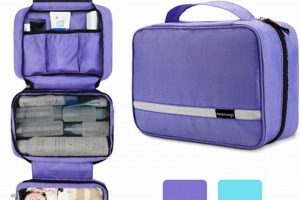
Tip 5: Assess Compartmentalization. Bags with multiple compartments facilitate organization and prevent cross-contamination between items.
Tip 6: Measure Dimensions. Verify the bag’s dimensions to ensure it fits comfortably within the designated luggage space. Consider height, width, and depth.
Tip 7: Account for Solid Toiletries. Bar soaps and solid shampoos eliminate liquid volume concerns, reducing the necessity for larger containers.
By carefully considering these factors, travelers can select a toiletry container that effectively meets their needs without contributing unnecessary bulk or violating travel regulations.
The subsequent section will present a summary of key considerations and concluding remarks regarding effective toiletry container selection for travel.
1. Carry-on Compliance

Carry-on compliance is a defining factor in determining suitable toiletry container dimensions for air travel. Regulations, such as those enforced by the Transportation Security Administration (TSA) in the United States and similar bodies globally, directly dictate permissible liquid volumes and container characteristics. Specifically, liquids, gels, and aerosols must be held in containers no larger than 3.4 ounces (100 milliliters) each. These containers must then fit comfortably within a single, quart-sized, clear plastic, zip-top bag. Failure to adhere to these stipulations results in confiscation of non-compliant items during the security screening process. Therefore, the primary driver in selecting the optimal size for a toiletry bag intended for carry-on use is adherence to these legally mandated restrictions.
The implications of non-compliance extend beyond the mere loss of toiletries. Delays at security checkpoints affect not only the individual traveler but also the efficiency of the entire screening process. Furthermore, reliance on purchasing toiletries at the destination can prove expensive and may limit access to preferred brands or formulations. Choosing appropriately sized containers and ensuring proper containment within the designated clear bag mitigates these potential inconveniences and financial burdens. For example, business travelers often utilize pre-approved TSA-compliant kits containing miniature versions of essential toiletries to ensure seamless passage through security.
In summary, carry-on compliance profoundly influences the dimensions and volume of toiletry containers permitted during air travel. Adhering to size regulations prevents item confiscation, minimizes delays, and allows for the continued use of preferred personal care products. Therefore, understanding and respecting carry-on guidelines constitutes a cornerstone of effective toiletry container selection and efficient travel preparation.
2. Trip duration

The anticipated duration of a trip directly influences the selection of a suitable toiletry container. Extended travel periods necessitate accommodations for larger quantities of essential items, impacting the optimal dimensions of the container.
- Consumption Rate and Product Volume
The rate at which toiletries are consumed dictates the required volume of each item. A short weekend trip requires minimal quantities, allowing for smaller, travel-sized containers or sample products. Conversely, a multi-week journey necessitates larger bottles or provisions for refills. Failure to account for consumption rate can result in the need to purchase additional supplies during the trip, increasing expenses and potentially limiting brand choices.
- Type of Accommodation and Accessibility
The type of accommodation influences toiletry needs. Staying in hotels often provides basic amenities like shampoo and soap, reducing the volume required in the toiletry bag. However, alternative accommodations, such as camping or staying in remote locations, may require packing all necessary toiletries, including specialized items like insect repellent or sunscreen, necessitating a larger container.
- Activities Planned and Special Needs
Planned activities directly affect toiletry requirements. Activities such as swimming or outdoor sports necessitate sunscreen, insect repellent, and specialized hair products. Medical conditions requiring prescription medications or specific skincare products also influence the size and contents of the toiletry bag. Travelers should anticipate these needs and adjust container size accordingly.
- Refill Options and Availability
The availability of refill options at the destination is a critical consideration. For longer trips, selecting refillable containers and verifying the availability of preferred brands at the destination can reduce the initial volume required in the toiletry bag. This requires research into local shopping options and may necessitate packing empty containers for refilling.
These factorsconsumption rate, accommodation type, planned activities, and refill optionscollectively determine the ideal size and contents of a travel toiletry bag. Thoughtful consideration of trip duration and associated needs ensures adequate preparation without unnecessary bulk or weight.
3. Item quantity

Item quantity bears a direct, proportional relationship to the dimensions required for a travel toiletry bag. A greater number of toiletries necessitates a larger container, while a streamlined selection allows for a more compact bag. Overestimation of required items leads to excess bulk and inefficient use of luggage space, while underestimation results in inconvenience and potential unavailability of necessary personal care products. For example, a minimalist traveler carrying only a toothbrush, toothpaste, and deodorant can utilize a small pouch, whereas a traveler requiring multiple skincare products, shaving equipment, and styling tools demands a larger, more compartmentalized bag.
The impact of item quantity extends beyond mere size considerations. The choice of products, influenced by individual needs and preferences, affects the overall dimensions. Liquid-based items, subject to strict volume restrictions for carry-on luggage, impose further constraints on the bag’s capacity. Solid alternatives, such as bar soap and solid shampoo, reduce liquid volume concerns but still require dedicated space. Real-world scenarios illustrate this connection: a business traveler on a short trip may prioritize essential grooming items in travel-sized containers, whereas a family vacation may necessitate larger quantities of sunscreen, insect repellent, and first-aid supplies, leading to a larger and more comprehensive toiletry bag.
In summary, item quantity serves as a fundamental determinant in selecting an appropriately sized travel toiletry bag. Balancing essential needs with available space requires careful consideration of individual requirements and travel circumstances. Understanding the relationship between item quantity and container dimensions allows travelers to optimize packing efficiency, minimize unnecessary bulk, and ensure access to necessary personal care products throughout the journey. This balance is paramount for both short-term and long-term travel, and careful planning is key to ensuring the correct selection is made.
4. Luggage space

Available luggage space is a primary constraint governing the determination of appropriate toiletry container dimensions. The overall volume and configuration of luggage directly influence the feasible size and shape of the toiletry bag.
- Total Luggage Capacity
The total capacity of available luggage dictates the proportion allocated to toiletries. For carry-on-only travel, toiletry containers must comply with size restrictions, often requiring compact and minimalist solutions. Conversely, checked luggage allows for greater flexibility in container size, though limitations still exist to prevent excessive weight and bulk.
- Luggage Compartmentalization
The internal organization of luggage impacts placement and size constraints. Suitcases with dedicated compartments or compression straps can accommodate larger or oddly shaped toiletry bags more efficiently. Backpacks, however, often necessitate smaller, flexible containers that conform to the available space without creating pressure points.
- Travel Style and Priorities
Travel style influences luggage choices and, consequently, toiletry bag dimensions. Minimalist travelers prioritizing efficiency select smaller luggage and correspondingly compact toiletry bags. Leisure travelers with more relaxed constraints may opt for larger luggage and larger toiletry containers, accommodating a wider range of personal care items.
- Additional Packing Requirements
Other packing requirements, such as clothing volume, shoe storage, and electronic devices, compete for available space. The dimensions of the toiletry bag must be balanced against these competing needs. Prioritization and careful planning are essential to ensure all necessary items fit comfortably within the allotted luggage space.
These factorshighlighting total luggage capacity, internal compartmentalization, travel style, and competing packing needsdemonstrate the intricate relationship between available luggage space and the determination of appropriate toiletry container dimensions. Successful travel preparation requires a holistic assessment of these elements to optimize packing efficiency and ensure a comfortable and convenient journey. For example, a digital nomad may need to pack a large laptop which in turn will effect “what size toiletry bag is best for travel” because the laptop will taking the most space already.
5. Weight limits
Weight restrictions imposed by airlines and other transportation providers are a critical determinant in selecting an appropriate toiletry bag. Exceeding these limits results in additional fees and logistical complications. The mass of toiletries, including liquids, gels, and creams, contributes significantly to overall luggage weight, directly influencing the feasibility of various container sizes. Choosing larger containers to accommodate longer trips, for example, may inadvertently breach weight limits, necessitating a reduction in the quantity of other packed items or incurring surcharges.
The material composition of the toiletry bag itself further impacts its weight. Heavy-duty fabrics, while offering enhanced durability, add to the overall mass. Lightweight alternatives, such as nylon or ripstop, mitigate this concern but may compromise resistance to spills and tears. The selection of individual toiletry items also plays a role. Opting for travel-sized versions of shampoos, conditioners, and lotions reduces weight compared to full-sized counterparts. Strategies such as decanting products into smaller, reusable containers help minimize both volume and mass. A practical illustration involves travelers who, upon exceeding weight limits at check-in, are forced to discard or transfer contents, highlighting the importance of pre-trip weight assessment.
In conclusion, adherence to weight limits necessitates careful consideration of both container size and the mass of individual toiletries. Balancing capacity with the overall weight restriction requires strategic planning and material selection. Prioritizing lightweight alternatives and decanting products into smaller containers reduces the risk of incurring fees or necessitating last-minute repacking. By understanding this interplay, travelers can optimize their toiletry bag selection, ensuring compliance with transportation regulations and a streamlined travel experience.
Frequently Asked Questions
The following section addresses common inquiries regarding the selection of appropriately sized toiletry bags for various travel scenarios.
Question 1: What is the maximum permissible volume for liquids in carry-on luggage?
The maximum permissible volume for individual liquid containers in carry-on luggage is 3.4 ounces (100 milliliters). All containers must fit comfortably within a single, quart-sized, clear, plastic, zip-top bag.
Question 2: How does trip duration impact the selection of a toiletry bag?
Extended trips necessitate larger capacity toiletry bags to accommodate sufficient quantities of personal care items. Shorter trips permit the use of smaller, travel-sized containers and more compact bags.
Question 3: What materials are recommended for a durable and lightweight toiletry bag?
Nylon and ripstop fabrics are recommended for their durability, water resistance, and lightweight properties. These materials offer protection against spills while minimizing added weight.
Question 4: Is compartmentalization important in a toiletry bag?
Compartmentalization is beneficial for organizing items and preventing cross-contamination between products. Multiple compartments facilitate efficient packing and retrieval of toiletries.
Question 5: How do solid toiletries influence toiletry bag size considerations?
Solid toiletries, such as bar soaps and solid shampoos, eliminate liquid volume concerns and potentially reduce the necessity for larger containers. They offer a compact and lightweight alternative to liquid products.
Question 6: What strategies can be employed to minimize toiletry bag weight?
Strategies for minimizing weight include selecting lightweight materials, opting for travel-sized containers, decanting products into smaller reusable containers, and prioritizing essential items only.
Selecting an appropriately sized toiletry bag involves careful consideration of carry-on regulations, trip duration, material properties, and item quantity. Employing these strategies ensures efficient packing and a streamlined travel experience.
The following section provides concluding remarks and a summary of key considerations.
Determining Optimal Dimensions for Travel Toiletry Containers
The preceding discussion has emphasized the multifaceted nature of determining what size toiletry bag is best for travel. Key considerations include compliance with carry-on regulations, accommodation of trip duration, prioritization of essential items, limitations of available luggage space, and adherence to weight restrictions. A comprehensive understanding of these factors allows travelers to make informed decisions tailored to their specific needs.
Selecting an appropriately sized toiletry bag represents a critical component of efficient travel preparation. Thoughtful planning and diligent attention to detail ensure a streamlined experience, minimizing potential inconveniences and maximizing overall travel satisfaction. Travelers are encouraged to apply these principles in their future preparations to optimize their journeys.
![Top Cable Organizer Bag for Travel: [Organize & Protect] | Best Travel Tips for Adventurers: Explore the World on a Budget](https://detravellers.com/wp-content/uploads/2026/05/th-85-300x200.jpg "Top Cable Organizer Bag for Travel: [Organize & Protect] Best Travel Tips for Adventurers: Explore the World on a Budget")