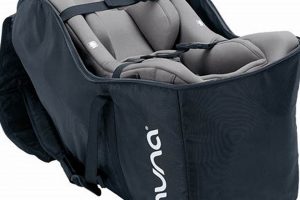
A specialized piece of luggage designed to securely transport skis and related equipment on airplanes is critical for winter sports enthusiasts. These bags vary in size, construction, and features, but their primary purpose is to protect valuable gear from damage during transit. For example, a padded, wheeled container enables skiers to transport their skis, poles, and even boots more easily through airports.
The use of these protective containers mitigates the risk of damage from rough handling by baggage handlers, exposure to weather, and accidental collisions. Furthermore, it allows individuals to consolidate their skiing equipment into a manageable package, simplifying the check-in process. The evolution of these items reflects increased travel and participation in winter sports globally, leading to improvements in materials and design to meet the needs of skiers and snowboarders.
The subsequent sections will delve into the various types available, key features to consider when selecting one, packing techniques for optimal protection, and relevant airline regulations regarding dimensions and weight restrictions to ensure a smooth travel experience. Considerations for selecting appropriate sizes, materials and construction qualities will also be discussed.
Tips for Optimizing Ski Carriage via Air Transport
Proper utilization of a specialized ski bag for air travel can significantly improve the safety and convenience of transporting skiing equipment. Adhering to the following guidelines minimizes the risk of damage and ensures compliance with airline regulations.
Tip 1: Choose an Appropriately Sized Container: Ensure the container’s length accommodates the longest pair of skis. Excessive space inside allows movement during handling, increasing the potential for damage. Opt for a snug fit.
Tip 2: Prioritize Padding and Reinforcement: Select a bag with internal padding, particularly around the tips and bindings of the skis. Reinforcements in high-stress areas, such as the base and zipper seams, enhance durability.
Tip 3: Secure Skis Internally: Utilize internal straps or dividers within the container to prevent skis from shifting during transit. Securing each ski individually minimizes the likelihood of friction and impact.
Tip 4: Utilize Additional Protection: Wrap ski bindings with protective padding, such as bubble wrap or old clothing, to prevent damage from impact or pressure. Focus on areas prone to breakage.
Tip 5: Distribute Weight Evenly: Distribute the weight of the contents evenly throughout the container. Uneven weight distribution can strain the bag’s seams and zippers, leading to premature failure.
Tip 6: Adhere to Weight Restrictions: Be mindful of airline weight restrictions for checked baggage. Overweight bags can incur additional fees and may be subject to inspection, potentially delaying the travel process.
Tip 7: Label Conspicuously: Clearly label the bag with the owner’s name, address, and contact information. This facilitates retrieval in case of loss or misplacement during transit.
Implementing these tips enhances the protection of valuable skiing equipment and streamlines the air travel experience. Careful preparation minimizes the risk of damage and ensures compliance with airline requirements.
The following section will explore different types, materials, and constructions of ski bags available on the market.
1. Size appropriateness

The correlation between size appropriateness and ski bags for air travel is paramount to the protection and efficient transport of skis. A ski bag that is either too large or too small can compromise the safety of the equipment and increase the risk of damage during handling. An oversized container allows skis to shift excessively within the bag, exposing them to impacts and abrasion. Conversely, a container that is too small may subject skis to undue pressure, potentially leading to bending or breakage, particularly at the tips or bindings. The correct fit minimizes internal movement and provides a secure, stable environment for the equipment.
Consider the practical example of a 185cm ski placed within a 200cm ski bag. The excess space allows the ski to move freely, potentially colliding with other items placed within the bag or the bag’s outer walls during transit. This increases the chance of edge damage, binding misalignment, or even complete ski failure. Furthermore, a loosely packed bag is more susceptible to compression, which can exert force on the skis. Alternatively, attempting to force a 190cm ski into a 180cm ski bag risks damaging both the ski and the bag, as well as violating airline regulations concerning baggage dimensions. Thus, a precise fit is not simply a matter of convenience, but a critical aspect of risk mitigation.
In summary, size appropriateness directly affects the level of protection offered by a ski bag for air travel. Careful measurement of ski length and selection of a bag with comparable internal dimensions are crucial steps in ensuring the safe and damage-free transport of skiing equipment. A well-fitted bag minimizes movement, distributes weight effectively, and reduces the likelihood of damage resulting from impact or compression during air travel. Choosing the correct size is an investment in the longevity and performance of skiing equipment.
2. Padding effectiveness

The degree of padding within a ski bag for air travel directly correlates with the protection afforded to the skis and related equipment. Padding acts as a critical buffer against impacts and vibrations experienced during transit, mitigating the risk of damage such as edge chipping, binding misalignment, and structural fractures. The effectiveness of this padding depends on its material composition, thickness, and distribution throughout the bag. Insufficient or poorly placed padding provides inadequate protection, rendering the bag largely ineffective in preventing damage. Conversely, strategically positioned, high-density padding minimizes force transmission, safeguarding the contents against potential harm.
Consider the scenario of a ski bag containing minimal padding sustaining a significant impact during baggage handling. The force of the impact would transfer directly to the skis, potentially resulting in irreparable damage to the edges or bindings. In contrast, a ski bag featuring robust padding, particularly around vulnerable areas such as the tips and bindings, would absorb a substantial portion of the impact energy, thereby reducing the force exerted on the skis. Furthermore, the type of padding material influences its effectiveness. High-density foam or specialized impact-absorbing materials offer superior protection compared to thin, low-density materials. The distribution of padding is also crucial; uniform padding throughout the bag is less effective than strategically placed padding concentrated in high-impact areas. Bags with internal dividers and padding offer superior protection from abrasion as well as impact.
In summary, the effectiveness of padding is a critical factor determining the protective capability of a ski bag for air travel. Selecting a bag with sufficient thickness, high-density materials, and strategic placement of padding is essential to minimize the risk of damage during transport. Compromising on padding quality to save cost can result in significant financial losses due to damage to valuable skiing equipment. Therefore, thorough evaluation of padding effectiveness is an essential consideration when choosing a ski bag for air travel, as it directly translates to the safeguarding of equipment and preservation of investment.
3. Durability factors

The durability of a ski bag for air travel is a primary determinant of its ability to protect valuable skiing equipment throughout the rigors of airline transport. The construction materials, stitching quality, zipper strength, and reinforcement of stress points all contribute to the overall robustness of the bag. Selection of a container constructed from low-quality materials or lacking reinforced seams increases the likelihood of damage, such as tears, rips, or zipper failures, potentially exposing the contents to environmental hazards and physical damage. Therefore, investing in a durable ski bag is paramount to preserving the integrity of skis and related accessories during travel.
Consider the common scenario of a ski bag being subjected to rough handling by baggage handlers, exposure to inclement weather conditions on airport tarmacs, and the pressure of being stacked amongst other heavy luggage items. A ski bag constructed from robust, water-resistant materials such as high-denier nylon or polyester, with reinforced stitching and heavy-duty zippers, is better equipped to withstand these challenges. Conversely, a bag made from flimsy materials is prone to tearing under stress, allowing moisture to penetrate and potentially damage the skis. Similarly, weak zippers can easily break, rendering the bag insecure and exposing the contents to loss or theft. The inclusion of reinforced handles and base further enhances durability, preventing the bag from ripping under the weight of the equipment during lifting and carrying.
In summary, durability factors represent a critical element in the overall performance and longevity of a ski bag for air travel. Neglecting these considerations can lead to equipment damage, increased travel expenses, and potential disruptions to planned skiing activities. Investing in a well-constructed, durable ski bag provides peace of mind and ensures the safe and reliable transport of valuable skiing gear. Prioritizing quality materials, reinforced construction, and robust components is essential for minimizing the risks associated with air travel and maximizing the lifespan of the bag.
4. Airline compliance

Airline compliance is a non-negotiable aspect of ski bag for air travel. Failure to adhere to airline-specific regulations regarding size, weight, and acceptable contents results in consequences ranging from additional fees to outright refusal of carriage. The connection is direct: airlines establish parameters to ensure safe and efficient baggage handling, and ski bags must conform to these standards. For instance, most airlines impose maximum length restrictions, often around 300cm (118 inches) when adding the length, height and width together; exceeding this necessitates oversized baggage fees. Similarly, weight limits, typically around 23kg (50lbs) for standard checked baggage, apply equally to ski bags, requiring careful packing considerations.
The significance of airline compliance manifests in practical terms at the airport. A bag exceeding the permissible weight leads to mandatory repacking, potentially delaying check-in and causing inconvenience. Bags violating size restrictions may not fit standard baggage handling systems, increasing the risk of damage or loss. Moreover, undeclared inclusion of prohibited items within the ski bag, such as flammable liquids or certain tools, results in confiscation and potential penalties. Examples abound of travelers facing unexpected charges or denied boarding due to non-compliant ski bags, underscoring the financial and logistical ramifications of neglecting airline regulations. Furthermore, some airlines require skis to be packed in a hard-shell container as a condition of transport, a regulation that must be verified before travel.
In summary, airline compliance constitutes an essential element of successful ski bag for air travel. Careful assessment of airline baggage policies, accurate measurement of bag dimensions, and diligent weight management are crucial steps in avoiding complications. While the perceived burden of adherence might seem inconvenient, the potential costs and disruptions associated with non-compliance far outweigh the effort required to meet these standards. The responsible skier ensures compliance, safeguarding their equipment and streamlining their travel experience.
5. Portability options
Portability options significantly influence the practicality and convenience of a ski bag for air travel. The ability to easily transport a ski bag, particularly through airports and to and from lodging, directly impacts the overall travel experience. Inadequate portability leads to physical strain, delays, and increased susceptibility to damage. The incorporation of features such as wheels, multiple handles, and adjustable straps serves to mitigate these challenges, enhancing maneuverability and reducing physical exertion. A ski bag lacking effective portability options transforms a simple task into a significant obstacle, particularly when navigating crowded terminals or uneven terrain.
The presence of robust wheels, strategically positioned handles (top, side, and end), and padded shoulder straps fundamentally changes the user experience. For example, a wheeled bag enables effortless gliding across smooth surfaces, while multiple handles facilitate lifting and maneuvering in confined spaces, such as car trunks or baggage claim areas. Padded shoulder straps, when present, allow for hands-free carrying over short distances, offering versatility. Conversely, a bag without these features requires constant lifting and dragging, increasing the risk of back strain and potentially damaging the bag’s fabric. The selection of appropriate portability options should correlate directly with the anticipated travel conditions and individual physical capabilities.
Ultimately, portability options represent a crucial component of ski bag for air travel. The integration of wheels, handles, and straps transforms a potentially cumbersome item into a manageable piece of luggage. Neglecting these features introduces unnecessary difficulty and increases the risk of physical strain and equipment damage. Prioritizing portability ensures a smoother, more efficient travel experience, contributing significantly to the overall enjoyment of a ski trip. The presence and quality of these options should be carefully evaluated when selecting a ski bag for air travel to maximize ease of use and minimize potential inconveniences.
6. Security features
Security features integrated into a ski bag for air travel represent a crucial consideration for protecting valuable equipment against theft and unauthorized access during transit. The presence of robust security measures provides a deterrent to potential thieves and minimizes the risk of loss or tampering. The effectiveness of these features depends on their design, construction, and ease of use, directly influencing the overall security and peace of mind for the traveler.
- Lockable Zippers and Closures
Lockable zippers and closures serve as a primary deterrent to opportunistic theft. Bags equipped with zippers designed to accommodate padlocks or TSA-approved locks prevent easy access to the contents, requiring forced entry that increases the risk of detection. For example, a bag featuring heavy-duty zippers with interlocking sliders that can be secured with a combination lock significantly reduces the likelihood of unauthorized opening compared to a bag with standard, easily bypassed zippers. The implications are clear: enhanced zipper security translates to increased protection against theft and tampering.
- Reinforced Seams and Fabric
Reinforced seams and durable fabric construction enhance the overall security of a ski bag by making it more difficult to slash or cut open. Thieves often target weak points in a bag’s construction to gain access to its contents. A bag constructed from high-denier ballistic nylon or similar cut-resistant material, coupled with reinforced seams at stress points, offers a higher degree of protection. The practical effect is increased resistance to forced entry, deterring casual theft and protecting the contents from potential damage during attempted breaches.
- Concealed Identification and Tracking
Concealed identification and tracking mechanisms aid in the recovery of a lost or stolen ski bag. Features such as hidden identification tags containing contact information or integrated tracking devices, like Bluetooth trackers or GPS locators, provide a means to identify the owner and pinpoint the bag’s location. For example, a bag with a discreetly placed identification label containing the owner’s email address and phone number increases the chances of its return if lost. Similarly, a bag equipped with a GPS tracker allows the owner to monitor its location remotely, facilitating recovery in the event of theft. These features enhance the prospects of retrieving lost or stolen equipment, minimizing financial loss and inconvenience.
- Tamper-Evident Features
Tamper-evident features provide visual indicators of unauthorized access to the bag’s contents. These features might include specialized zipper pulls or seals that break upon opening, alerting the owner to potential tampering. For example, a ski bag with zipper pulls that interlock and require a specific tool to detach would immediately reveal if someone had attempted to open the bag without authorization. Such features offer a layer of security by providing a clear signal of interference, enabling the owner to assess the situation and take appropriate action.
In conclusion, the security features integrated into a ski bag for air travel play a vital role in protecting valuable equipment from theft and unauthorized access. Lockable zippers, reinforced construction, concealed identification, and tamper-evident mechanisms contribute to a layered security approach that deters potential thieves and enhances the prospects of recovery in case of loss. The selection of a ski bag with robust security features represents a prudent investment in safeguarding valuable skiing equipment during the inherent risks associated with airline travel.
Frequently Asked Questions
This section addresses common inquiries concerning the use of a specialized ski bag for air travel, aiming to provide clarity and enhance informed decision-making prior to departure.
Question 1: What constitutes an acceptable ski bag for air travel according to most airlines?
Acceptable ski bags typically consist of durable, padded containers designed specifically for transporting skis and related equipment. Most airlines stipulate that the bag must fully enclose the skis and poles, and some may require additional padding around the bindings. Specific size and weight restrictions vary between carriers and should be verified prior to travel.
Question 2: Are there limitations on what can be packed inside a ski bag for air travel?
While skis, poles, and related ski apparel are generally permitted, restrictions apply to other items. Sharp objects, tools, and hazardous materials are typically prohibited. Some airlines allow ski boots to be packed within the bag, while others require them to be transported in a separate boot bag. Compliance with airline regulations regarding prohibited items is essential to avoid delays or confiscation.
Question 3: What are the potential consequences of exceeding airline weight restrictions for a ski bag?
Exceeding airline weight restrictions for a ski bag typically results in additional baggage fees, which can vary significantly depending on the carrier and the extent of the overweight. In some instances, airlines may refuse to accept overweight bags, requiring the traveler to redistribute the contents or ship the excess weight separately.
Question 4: Does a standard ski bag offer adequate protection against damage during air travel?
The level of protection offered by a ski bag varies depending on its construction and padding. While basic ski bags provide some level of protection against scratches and minor impacts, more robust, padded bags offer enhanced protection against more significant damage. Hard-shell ski bags provide the highest level of protection but may be more cumbersome to transport.
Question 5: Are there specific packing techniques that can minimize the risk of damage to skis during air travel?
Yes, several packing techniques can minimize the risk of damage. Wrapping ski bindings with protective padding, securing skis with internal straps to prevent shifting, and distributing weight evenly within the bag are all recommended practices. Placing soft items, such as clothing, around the skis can also provide additional cushioning and protection.
Question 6: Is it advisable to purchase travel insurance to cover potential damage or loss of skis during air travel?
Purchasing travel insurance that specifically covers ski equipment is a prudent measure to mitigate financial risk. Travel insurance can provide reimbursement for the cost of repairs or replacement in the event of damage, loss, or theft of skis during air travel. Policy terms and coverage limits should be carefully reviewed prior to purchase.
Careful planning, adherence to airline regulations, and the selection of appropriate protective measures contribute significantly to a successful ski travel experience.
The subsequent discussion will address purchasing considerations of the best ski bag for individual need.
Concluding Remarks
Throughout this examination, the selection and proper utilization of a ski bag for air travel have been emphasized as critical components of a successful ski trip. Considerations spanning size appropriateness, padding effectiveness, durability, airline compliance, portability, and security features have been detailed. Each element contributes to the protection of valuable equipment and the mitigation of potential complications during transit. Understanding these aspects enables informed decision-making and responsible travel practices.
The prudent traveler recognizes the value of investing in a quality ski bag and adhering to recommended packing and transportation guidelines. Such diligence safeguards equipment, minimizes the risk of incurring additional fees, and streamlines the overall travel experience. As participation in winter sports continues to grow, the significance of informed planning and responsible execution remains paramount for enthusiasts seeking to transport their gear safely and efficiently.