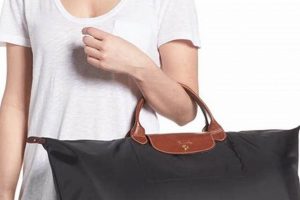
Items designed for travelers, these bags incorporate radio-frequency identification (RFID) blocking technology. This feature aims to protect personal information stored on credit cards, passports, and identification cards from unauthorized scanning. These specialized bags typically resemble standard luggage, backpacks, wallets, or other carrying cases but include a lining or pocket constructed with materials that impede RFID signals.
The incorporation of RFID-blocking technology is driven by increasing concerns regarding electronic theft. As more personal and financial data is stored on RFID chips, the risk of skimming or unauthorized access rises. These protective bags offer a measure of security and peace of mind for individuals concerned about identity theft while traveling. Their development and adoption reflect a growing awareness of digital security vulnerabilities in a connected world.
The following sections will delve into the various types, materials, efficacy, and considerations for choosing such a travel accessory, enabling informed decisions based on individual travel needs and security concerns.
Guidance on Selecting Protective Travel Bags
This section provides several key considerations for those seeking to acquire travel bags equipped with RFID-blocking technology.
Tip 1: Assess Actual Needs. Determine the specific types of items requiring protection. If only a passport and a few credit cards necessitate shielding, a smaller wallet or pouch might suffice, rather than a full-sized bag.
Tip 2: Evaluate Material Quality. Examine the construction materials of both the bag and the RFID-blocking lining. Durable, high-quality materials ensure longevity and effective signal blockage.
Tip 3: Verify RFID-Blocking Effectiveness. Though difficult to test independently, research the manufacturer’s claims and look for certifications or independent testing reports that validate the RFID-blocking capability.
Tip 4: Consider Bag Style and Functionality. Select a style that aligns with individual travel preferences and needs. Backpacks, cross-body bags, and wallets offer varying levels of accessibility and security.
Tip 5: Prioritize Comfort and Ergonomics. When considering larger bags, evaluate the weight distribution, strap design, and overall ergonomics to ensure comfortable carrying, especially during extended travel.
Tip 6: Research Reputable Brands. Opt for manufacturers known for producing quality travel accessories and transparently disclosing the specifications and testing results of their RFID-blocking features.
Adhering to these guidelines facilitates a more informed decision-making process, leading to the selection of a travel bag that effectively addresses individual security concerns and travel requirements.
The following section presents a discussion on the efficacy and limitations of RFID-blocking technology.
1. Signal-blocking effectiveness

The core function of an RFID travel bag resides in its signal-blocking effectiveness. This effectiveness determines the degree to which the bag impedes radio waves used to read RFID chips embedded in items such as passports and credit cards. A compromised signal-blocking capability renders the bag effectively useless, negating its intended purpose. For instance, a bag claiming RFID protection but constructed with insufficient shielding material would fail to prevent unauthorized scanning attempts, leaving sensitive data vulnerable.
Signal-blocking is achieved through the integration of specialized materials, typically metallic meshes or layers, within the bag’s construction. The efficacy of these materials depends on factors such as density, composition, and the frequency range of the RFID signals they are designed to block. Higher frequencies often necessitate more robust shielding. The implementation of these materials can add cost and potentially increase the bag’s weight, necessitating a trade-off between protection and practicality.
Ultimately, signal-blocking effectiveness is the key determinant of an RFID travel bag’s value. Without reliable and verifiable shielding, the bag’s other features become secondary. Consumers should prioritize certifications and testing data when evaluating such products to ensure they receive the intended level of protection, recognizing the practical significance of this assessment in safeguarding personal information.
2. Material durability

The longevity and protective capabilities of such travel bags are directly dependent on the durability of the materials used in their construction. Material durability extends beyond mere resistance to wear and tear; it encompasses the capacity to withstand environmental stressors, maintain structural integrity, and preserve the functionality of the integrated RFID-blocking components over time. For instance, a bag constructed with low-grade nylon may exhibit early signs of abrasion, seam failure, or zipper malfunction, compromising its overall utility and potentially affecting the integrity of the RFID-blocking liner. Conversely, a bag employing high-denier ballistic nylon or reinforced stitching would offer enhanced resistance to these issues, prolonging its useful lifespan and maintaining its protective function.
The RFID-blocking liner itself also requires durable materials. A thin, easily torn metallic lining, even if initially effective, may degrade with repeated use, crumpling, or exposure to moisture. This degradation can lead to gaps or weakened areas in the shielding, rendering the bag vulnerable to RFID skimming attempts. A more robust lining, composed of tear-resistant fabrics interwoven with metallic threads or a multi-layered construction, provides superior and more enduring protection. Consider the example of a wallet-style protector where frequent folding and unfolding causes stress. A poorly chosen material here will quickly lose its shielding effectiveness.
In summary, material durability is an indispensable attribute, not merely an aesthetic consideration, when evaluating protective travel bags. It directly impacts the bag’s long-term effectiveness in safeguarding personal data and its ability to withstand the rigors of travel. Prioritizing bags constructed from durable, high-quality materials ensures a more reliable and cost-effective investment, mitigating the risk of premature failure and safeguarding sensitive information over an extended period.
3. Bag style

The selection of bag style profoundly influences the practicality and utility of any protective travel bag. It dictates not only the aesthetic appeal but also its suitability for various travel scenarios and the ease with which it can be integrated into an individual’s travel routine. Considering the variety of bag styles available, alignment with specific needs is critical.
- Wallet/Cardholder
These compact options provide targeted protection for credit cards and identification. Their small size renders them highly portable, fitting easily into pockets or larger bags. However, they offer limited storage capacity and do not protect larger items such as passports. Their use is suitable for minimalists or those prioritizing discreetness.
- Passport Holder
Specifically designed to safeguard passports, these holders often include additional slots for a few essential cards. Their compact form factor is convenient for navigating airport security. Their primary limitation lies in their single-purpose design, offering no protection for other valuable items. A traveler with only a passport and a debit card may find this is their best choice.
- Crossbody Bag/Small Shoulder Bag
These bags offer a balance between storage capacity and portability. Worn across the body, they enhance security by keeping valuables close to the wearer and deterring theft. Their larger size accommodates passports, phones, wallets, and other small items. However, their capacity is limited compared to larger backpacks or luggage options. A common use case is for day trips while traveling.
- Backpack
Backpacks offer substantial storage capacity and can accommodate laptops, tablets, and a variety of travel essentials. Those with RFID-blocking pockets provide comprehensive protection for multiple items. Their larger size may be less convenient for crowded environments or situations requiring quick access to valuables. Backpacks are often preferred for air travel when a traveler wants to bring their technology and minimal belongings.
In conclusion, bag style is a pivotal consideration when choosing a protective travel bag. The optimal choice depends on individual travel patterns, the volume of items requiring protection, and the desired balance between security, portability, and storage capacity. Weighing these factors ensures the selection of a bag style that effectively meets individual needs and travel preferences.
4. Storage capacity
Storage capacity, in the context of RFID travel bags, represents the volume of items the bag can securely accommodate while effectively maintaining its RFID-blocking capabilities. It is a critical attribute directly impacting the bag’s practicality and its suitability for diverse travel requirements. Insufficient capacity renders the bag impractical, forcing users to carry unprotected items separately, thus negating the bag’s intended security benefits. Conversely, excessive capacity may lead to unnecessary bulk and weight, compromising portability and convenience. A small wallet with RFID-blocking capabilities might only accommodate a few credit cards, limiting its utility for a traveler carrying multiple cards, a passport, and other identification documents.
The design and construction of RFID travel bags must carefully balance storage capacity with the integrity of the RFID-blocking lining. As capacity increases, ensuring consistent and complete signal blockage becomes more challenging. Larger bags necessitate more extensive shielding materials, potentially adding weight and bulk. Furthermore, the arrangement of internal compartments must be optimized to prevent items from pressing against the RFID-blocking liner, potentially causing wear and tear that could compromise its effectiveness. For instance, a backpack with a dedicated RFID-blocking pocket must ensure the pocket’s construction withstands the weight and pressure of heavier items within the main compartment. Another design choice is a backpack for carrying your technology that protects your laptop and tablet.
Therefore, storage capacity must be viewed as an integral component of RFID travel bags, inextricably linked to their functional effectiveness and overall user experience. An informed selection process necessitates a thorough assessment of individual storage needs, coupled with a careful evaluation of the bag’s design, materials, and RFID-blocking capabilities, ensuring a harmonious balance between practicality and security during travel. The challenge lies in choosing the optimal storage solution while guaranteeing the continued effectiveness of the RFID-blocking technology, addressing the need for secure and efficient travel.
5. Portability

Portability is a crucial factor in the selection of RFID travel bags, as it directly affects the user’s convenience and comfort during travel. The effectiveness of these bags in protecting personal data is contingent upon their practical usability and integration into travel routines. A bag that is cumbersome or difficult to manage will likely be less consistently used, thus diminishing its security benefits.
- Weight and Size
The weight and dimensions of the bag significantly influence its portability. A lightweight bag, even if spacious, is easier to carry for extended periods. Similarly, a compact design facilitates maneuverability in crowded environments, such as airports or train stations. Large, heavy bags, conversely, can become burdensome and impede mobility. For example, a small RFID-blocking wallet that fits comfortably in a pocket offers greater portability than a bulky RFID-protected backpack.
- Carrying Method
The means by which the bag is carriedshoulder strap, backpack straps, handleplays a vital role in its portability. A well-designed shoulder strap distributes weight evenly, reducing strain. Backpack straps should be padded and adjustable to ensure a comfortable fit. Handles should be sturdy and ergonomically designed for easy gripping. A poorly designed carrying method can lead to discomfort and fatigue, discouraging consistent use of the bag. Imagine a poorly-padded strap on a cross-body bag causing shoulder pain, prompting the user to forgo its use on subsequent trips.
- Ease of Access
Portability also encompasses the ease with which items can be accessed within the bag. A well-organized bag with readily accessible compartments allows for quick retrieval of essential items, such as passports or credit cards, without requiring extensive rummaging. Difficult access can be particularly problematic in security checkpoints or during transactions, potentially exposing personal information to unnecessary scrutiny. For instance, an RFID-protected passport holder with a clear, accessible window allows for easy presentation of identification without complete removal.
- Collapsibility/Packability
The ability to collapse or pack the bag into a smaller form factor when not in use can significantly enhance its portability, especially for travelers who prioritize efficient packing. A bag that can be folded flat or compressed occupies minimal space in luggage, freeing up room for other essentials. This feature is particularly valuable for travelers who prefer minimalist packing or those who anticipate needing extra storage capacity during their return journey. An example would be an RFID-protected shopping bag that folds into a small pouch when empty.
In conclusion, portability is an indispensable aspect of RFID travel bags, directly influencing their usability, convenience, and ultimately, their effectiveness in safeguarding personal information. The optimal balance between security, storage capacity, and ease of carrying is crucial in selecting a bag that seamlessly integrates into travel routines and provides consistent protection against electronic data theft. Prioritizing lightweight materials, ergonomic design, ease of access, and packability ensures that the bag remains a valuable asset throughout the travel experience.
Frequently Asked Questions About RFID Travel Bags
The following section addresses common inquiries regarding RFID travel bags, offering factual information to aid in informed decision-making. It aims to clarify misconceptions and provide a concise understanding of their functionality and limitations.
Question 1: What is the primary function of an RFID travel bag?
The primary function is to impede radio frequency identification (RFID) signals, preventing unauthorized access to personal information stored on RFID chips embedded in passports, credit cards, and identification cards.
Question 2: How effective are RFID travel bags in blocking RFID signals?
Effectiveness varies depending on the materials used and the bag’s construction. Bags certified by independent testing organizations provide a greater assurance of signal-blocking capability. It is recommended to examine testing data from trustworthy, third-party source.
Question 3: Are all compartments within an RFID travel bag RFID-protected?
Not necessarily. Typically, only designated pockets or compartments incorporate RFID-blocking materials. It is essential to verify which areas provide protection before purchasing and ensure that valuable items are placed in protected compartments.
Question 4: Can RFID travel bags protect against all types of electronic theft?
No. RFID travel bags primarily address RFID skimming. They do not protect against other forms of electronic theft, such as malware or phishing attacks. Further security measures must be taken for a complete shield.
Question 5: How can the effectiveness of an RFID travel bag be assessed?
Independent testing and certifications can provide assurance. However, testing under realistic conditions is difficult for the average consumer. Researching reputable brands and reviewing customer feedback can offer additional insights into real-world performance.
Question 6: What are the limitations of RFID-blocking technology in travel bags?
RFID-blocking technology can be compromised if the bag is damaged or if the shielding material degrades over time. Furthermore, it only protects against RFID skimming, not other forms of theft. The shielding is also only effective when the RFID-enabled device is fully enclosed within the protected area.
In summary, RFID travel bags offer a layer of protection against electronic data theft. However, they are not a foolproof solution and should be used in conjunction with other security measures. Awareness of their functionality and limitations is crucial for making informed decisions.
The following section offers guidance on the maintenance and care of travel bags.
Conclusion
This exploration of rfid travel bags has examined their function, material properties, style variations, storage capacities, and portability considerations. These protective solutions aim to mitigate the risk of unauthorized access to personal data stored on RFID chips. While not a panacea, rfid travel bags offer a tangible measure of security against electronic skimming when selected judiciously and utilized correctly.
Travelers are encouraged to conduct thorough research and consider individual needs when choosing rfid travel bags. A comprehensive understanding of the technology’s capabilities and limitations is essential for informed decision-making and maximizing the benefits of this security measure. Maintaining vigilance and employing layered security practices remains paramount in the ongoing effort to safeguard personal data.
![Best Multiple Shoe Travel Bag for Organized Trips [2024] | Best Travel Tips for Adventurers: Explore the World on a Budget](https://detravellers.com/wp-content/uploads/2026/05/th-144-300x200.jpg "Best Multiple Shoe Travel Bag for Organized Trips [2024] Best Travel Tips for Adventurers: Explore the World on a Budget")
![Best Soap Travel Bag [Guide] | Clean & Organized | Best Travel Tips for Adventurers: Explore the World on a Budget](https://detravellers.com/wp-content/uploads/2026/05/th-142-300x200.jpg "Best Soap Travel Bag [Guide] | Clean & Organized Best Travel Tips for Adventurers: Explore the World on a Budget")
![Best Mens Small Travel Bag [Guide & Reviews] | Best Travel Tips for Adventurers: Explore the World on a Budget](https://detravellers.com/wp-content/uploads/2026/05/th-138-300x200.jpg "Best Mens Small Travel Bag [Guide & Reviews] Best Travel Tips for Adventurers: Explore the World on a Budget")