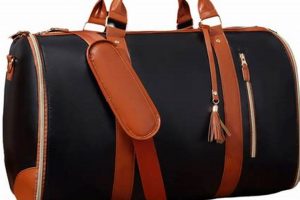
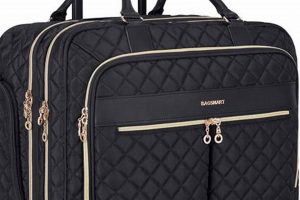
A compact luggage option, commonly adhering to many airlines’ carry-on size restrictions, provides portability and convenience for travelers. As an example, a piece of luggage measuring 20 inches in height is suitable for short trips or as a supplementary bag alongside larger checked baggage.
The utility of this size category stems from its ability to accommodate essentials while remaining manageable and easily stored. Its historical context is rooted in the evolution of air travel and the increasing need for standardized luggage dimensions. This size also provides an alternative to larger luggage, allowing faster airport navigation and reduced checked baggage fees.
The following sections will delve into the specific features, benefits, and selection criteria associated with this popular size of travel companion. Key considerations, such as materials, construction, and internal organization, will be addressed to guide informed purchasing decisions.
Guidance for Selecting Optimal Carry-On Luggage
The following recommendations offer practical advice for choosing a suitable carry-on, emphasizing functionality, durability, and adherence to airline regulations. Prioritizing these aspects ensures a more efficient and stress-free travel experience.
Tip 1: Verify Airline Size Restrictions: Dimensions may vary between carriers. Consult the specific airline’s website to confirm the allowable height, width, and depth for carry-on items before departure. Failure to comply could result in gate-checking fees.
Tip 2: Prioritize Lightweight Materials: Opt for luggage constructed from durable yet lightweight materials such as nylon or polycarbonate. This maximizes packing capacity without exceeding weight limits imposed by airlines. A difference of even a pound or two can be significant.
Tip 3: Assess Wheel System Quality: Evaluate the quality and maneuverability of the wheel system. Spinner wheels (four wheels) offer greater flexibility compared to in-line wheels (two wheels), particularly on smooth surfaces. High-quality wheels enhance overall ease of transport.
Tip 4: Examine Handle Durability: Inspect the extendable handle for robustness and smooth operation. A telescoping handle made of sturdy aluminum alloy withstands greater strain than one of cheaper material. Ensure the handle locks securely in both extended and retracted positions.
Tip 5: Evaluate Internal Organization: Consider the internal organization features, such as compartments, compression straps, and zippered pockets. A well-organized interior simplifies packing and unpacking, allowing for efficient use of space and preventing contents from shifting during transit.
Tip 6: Investigate Water Resistance: Select a piece constructed from water-resistant materials, or consider a protective cover. This protects contents from rain, spills, and other potential moisture damage, particularly during ground transportation or in inclement weather conditions.
Tip 7: Consider TSA-Approved Locks: Integrate a Transportation Security Administration (TSA)-approved lock for added security. This permits security personnel to inspect the contents of the luggage without damaging the lock itself, preventing potential delays or complications during screening.
By following these guidelines, individuals can select a carry-on that balances size constraints with practical functionality, ultimately contributing to a smoother and more enjoyable journey. Proper selection mitigates potential issues related to weight restrictions, space limitations, and the security of personal belongings.
The subsequent sections will explore the various styles and design considerations, offering a comprehensive overview of available options and addressing specific needs for different travel scenarios.
1. Carry-on compliance

Carry-on compliance represents a fundamental constraint in the selection and utilization of luggage, particularly that described nominally as ’20 inch’. The degree to which a bag adheres to stipulated size and weight restrictions directly impacts its usability. Exceeding these limitations frequently results in mandatory gate-checking, incurring additional fees and the potential for damage or loss of contents. Therefore, strict adherence to published airline specifications becomes a core determining factor in its practicality. For example, airlines like United and Delta maintain specific size constraints, and any variance from these dimensions can trigger non-compliance penalties.
The correlation between stated size and actual compliance is not always absolute. Manufacturing tolerances, external pocket protrusions, or overpacking can subtly alter the dimensions, thereby compromising adherence. To mitigate this risk, prospective purchasers should prioritize verifiable external dimensions from manufacturers and consider a slightly smaller bag to account for these potential deviations. Real-world experience indicates that even a seemingly minor inch difference can lead to rejection at the gate, causing inconvenience and financial repercussions. Choosing soft-sided luggage can provide a little more flexibility, and compression straps and cubes help maximize space while remaining compliant.
In summary, carry-on compliance is an indispensable attribute of any luggage represented as a 20-inch variant. Disregard for mandated dimensional limitations negates the advantages of its intended utility as a convenient and cost-effective travel solution. Vigilant verification of airline policies and a conservative approach to packing are essential to prevent potential challenges and ensure a smooth travel experience. Ignoring this aspect can convert a seemingly efficient travel aid into a source of considerable frustration and unexpected expense.
2. Internal capacity

Internal capacity, in the context of a 20-inch travel bag, defines the usable volume available for storing belongings. It is a critical factor in determining the bag’s suitability for a given trip and impacts its overall utility.
- Volume Optimization
Effective internal capacity is not solely determined by the raw volume of the bag but also by its internal design. Well-placed dividers, compression straps, and pockets can significantly increase the amount of usable space. For example, a bag with integrated compression straps can compact clothing, creating more room for other items. Similarly, multiple compartments facilitate the separation of items, preventing shifting and maximizing space utilization.
- Impact of External Features
External features, such as wheels, handles, and frames, intrude into the internal space, reducing the available packing area. The design and positioning of these features can affect the net capacity. A 20-inch bag with recessed wheels and a slimline handle may offer more internal space compared to one with protruding components. Purchasers must evaluate this trade-off between external convenience and internal volume.
- Material Influence
The material from which the travel bag is constructed directly impacts its capacity. Soft-sided bags offer a degree of flexibility, allowing for slight overpacking, while hard-sided models maintain a fixed shape, limiting capacity to the designated volume. The flexibility of soft materials also permits conforming to irregular shapes, potentially accommodating more items than a rigid alternative. The selected material must therefore balance durability, weight, and capacity requirements.
- Organizational Systems
Effective use of space within a 20-inch bag relies heavily on internal organizational systems. Compartments dedicated to specific items, such as shoes, toiletries, or electronics, enable efficient packing and minimize wasted space. Furthermore, removable or adjustable dividers allow for customization, adapting the bag’s internal layout to suit the specific needs of each trip. The presence and design of these systems critically influence the overall usable capacity and packing efficiency.
The interaction between internal capacity and various design elements defines the practicality of the travel bag. Maximizing usable space while adhering to airline size and weight restrictions is a primary consideration. A careful evaluation of internal features and their impact on volume allows for informed selection and optimized packing, ensuring that the chosen luggage meets the specific demands of each journey.
3. Material durability
Material durability, with respect to a travel bag of approximately 20 inches, signifies the capacity of the bag’s constituent materials to withstand wear, tear, and environmental factors encountered during travel. The selection of robust materials directly influences the lifespan and protective capabilities of the bag. For instance, a bag constructed from ballistic nylon exhibits superior resistance to abrasion and puncture compared to one made from standard polyester. This enhanced resistance translates to a prolonged service life, particularly under the stress of frequent handling and transport. Damage, such as tears or seam failures, resulting from inferior materials compromises the bag’s integrity and exposes contents to potential loss or damage. Examples of durable materials include high-denier nylons, reinforced polyesters, and polycarbonate for hard-sided cases. The choice depends on the intended use and desired balance between weight and protection.
The impact of material durability extends beyond the physical integrity of the bag. Water resistance, often achieved through material coatings or inherent properties, safeguards contents from moisture damage. Ultraviolet (UV) resistance prevents material degradation and color fading caused by prolonged sun exposure. Furthermore, the ability of a material to withstand temperature variations is crucial for maintaining structural integrity in diverse climates. The performance of zippers, handles, and other hardware components also contributes to overall durability. For example, a travel bag with a robust zipper system constructed from high-quality metal and reinforced stitching is less prone to failure, preventing access to the bag’s contents and adding more security.
In conclusion, material durability is a non-negotiable attribute of a travel bag. Selection dictates the bag’s resilience to common travel-related stresses. Although cost considerations may influence the choice, investing in a bag constructed from durable materials offers long-term value by minimizing the need for frequent replacements and safeguarding valuable belongings. The understanding of material properties and their influence on performance empowers consumers to make informed decisions, ensuring that the chosen bag provides reliable service throughout its intended lifespan.
4. Maneuverability
Maneuverability, concerning a 20-inch travel bag, directly influences the ease and efficiency with which a traveler can navigate various environments, including airports, train stations, and city streets. The design of the wheel system and the extendable handle are key determinants. A bag that handles well reduces physical strain on the user and contributes to a more seamless travel experience. For instance, a bag equipped with spinner wheels allows for effortless movement in any direction, minimizing the need to tilt or drag the luggage. In contrast, a bag with fixed wheels requires more effort and can be challenging to maneuver in crowded areas.
The effectiveness of maneuverability is also contingent upon surface conditions. Spinner wheels excel on smooth surfaces, while larger, sturdier wheels are better suited for uneven terrain. The handle’s ergonomics play a significant role; an adjustable handle allows users to customize the height, preventing back strain. The material composition of the wheels affects their durability and noise level. High-quality rubber wheels provide better grip and generate less noise compared to plastic wheels. A poorly designed wheel system can lead to instability, making the bag difficult to control, especially when fully packed.
In summary, maneuverability is a critical aspect of a 20-inch travel bag, affecting user comfort and convenience. A well-designed wheel system and handle enhance the travel experience, while a substandard design can create unnecessary difficulties. Understanding the interplay between these elements and the intended use environment is essential for selecting luggage that meets the traveler’s specific needs.
5. Weight
Weight, in the context of a 20-inch travel bag, represents a critical parameter impacting usability and practicality. Its significance stems from direct correlation with airline restrictions, ease of handling, and the overall travel experience. A heavier bag, even if within size limitations, increases the physical burden on the traveler and may lead to additional fees levied by airlines enforcing weight restrictions. Conversely, an excessively lightweight bag might compromise durability, potentially resulting in damage during transit. For example, a fully loaded 20-inch bag exceeding an airline’s 7 kg (approximately 15 lbs) carry-on weight limit will likely be subjected to gate-checking, negating its intended purpose as a carry-on item. Therefore, an optimal weight balance, considering both content capacity and user comfort, becomes paramount.
The material composition of a 20-inch bag profoundly influences its weight. Hard-sided bags, frequently constructed from polycarbonate or ABS plastic, often exhibit higher inherent weight compared to soft-sided counterparts made from nylon or polyester. However, hard-sided bags may offer superior protection for fragile contents. Design elements, such as the wheel system and handle mechanism, also contribute to the overall weight. A bag featuring robust, multi-directional spinner wheels and a telescoping handle constructed from aluminum may weigh more than a simpler design. Practical application dictates prioritizing weight reduction without sacrificing durability or functionality; therefore, a compromise must be achieved based on individual travel requirements. For instance, a frequent business traveler prioritizing ease of movement and adherence to strict weight limits may opt for a lightweight soft-sided bag, while a traveler transporting delicate equipment may favor a heavier, hard-sided option.
In summary, the weight of a 20-inch travel bag is a multifaceted consideration inextricably linked to airline regulations, user convenience, and material selection. Ignoring this aspect can lead to unanticipated complications and diminished travel enjoyment. A pragmatic approach involves meticulous assessment of airline-specific weight restrictions, judicious selection of lightweight yet durable materials, and a conscientious evaluation of design elements that contribute to overall weight. Achieving this balance ensures a seamless and efficient travel experience, mitigating potential challenges associated with overweight luggage.
Frequently Asked Questions
The following addresses common inquiries pertaining to luggage characterized by a height of approximately 20 inches, intended for use as carry-on baggage. The responses aim to provide clarity and facilitate informed decision-making.
Question 1: What are the typical dimensions permitted for carry-on luggage by major airlines?
While specific dimensions vary, a common standard is 22 inches x 14 inches x 9 inches (approximately 56 cm x 36 cm x 23 cm). It is imperative to verify the specific airline’s guidelines before travel, as non-compliance may result in mandatory gate-checking and associated fees. A piece labeled as “20-inch” luggage may or may not meet this requirement depending on its width and depth.
Question 2: What is the approximate internal capacity of a 20-inch travel bag?
The internal capacity generally ranges from 35 to 45 liters (approximately 2100 to 2700 cubic inches). This range varies based on the bag’s construction materials, internal organization, and external dimensions. Models with streamlined designs and minimal external protrusions tend to maximize internal capacity. Internal dividers and compression straps also impact the usable space.
Question 3: What materials are commonly used in the construction of such luggage, and what are their respective advantages?
Common materials include ballistic nylon, polyester, polycarbonate, and ABS plastic. Ballistic nylon offers high abrasion resistance and durability. Polyester is a lighter and more cost-effective alternative, but less durable. Polycarbonate provides excellent impact resistance and protection for fragile contents, suitable for hard-sided suitcases. ABS plastic is less expensive but also less robust than polycarbonate.
Question 4: What factors should be considered when evaluating the wheel system?
Key considerations include wheel type (spinner or in-line), wheel material, and overall robustness. Spinner wheels offer superior maneuverability on smooth surfaces. Larger, sturdier wheels are preferable for navigating uneven terrain. High-quality rubber wheels reduce noise and improve grip. The wheel system should be able to withstand repeated use and resist damage from impacts.
Question 5: Are there specific security features recommended for such luggage?
The integration of a Transportation Security Administration (TSA)-approved lock is advisable. This allows security personnel to inspect the contents without damaging the lock. Reinforced zippers and tamper-evident closures can also enhance security. Some models incorporate RFID-blocking pockets to protect electronic passports and credit cards from unauthorized scanning.
Question 6: What are some common packing strategies to maximize space within a 20-inch travel bag?
Strategies include rolling clothing to minimize wrinkles and conserve space, utilizing compression packing cubes to compress garments, and strategically placing heavier items at the bottom of the bag near the wheels to improve stability. Filling empty spaces within shoes and other items with smaller articles of clothing can also optimize space utilization.
In summary, this guidance assists in addressing key considerations associated with carry-on-sized luggage, leading to optimal selection and use. Understanding the interrelationship between size compliance, capacity, material properties, and security features maximizes utility and convenience.
The succeeding segment will delve into various usage scenarios, offering practical advice based on trip duration and travel style.
Conclusion
The preceding discourse has explored various facets of the 20 inch travel bag, encompassing dimensions, material composition, maneuverability, and weight considerations. An optimal selection necessitates a comprehensive understanding of airline-specific restrictions and individual travel requirements. The interplay between internal capacity, external durability, and user convenience dictates the overall utility of the luggage.
Ultimately, the suitability of a 20 inch travel bag hinges on a pragmatic assessment of its compliance with regulatory standards and its capacity to accommodate essential belongings while ensuring ease of transport. Continued advancements in materials and design may further refine the functionality and enhance the user experience, solidifying its role as a mainstay in modern travel.